 listicle
Best Drain Cleaning Method for Main Line Clogs (2026)
Table of Contents
- Comparing the Best Main Line Drain Cleaning Methods
- Signs of Main Sewer Line Blockage You Shouldn't Ignore
- DIY Methods: Snakes, Enzymatic Cleaners, and Natural Solutions
- Hydro Jetting vs. Snaking Cost: What to Expect
- Locating and Using Your Cleanout Access
- Why Camera Inspection Matters Before You Dig
- Sewer Line Cleaning Frequency: How Often Is Enough?
- When to Call a Professional Plumber
- Frequently Asked Questions
Last Updated: September 16, 2026
Comparing the Best Main Line Drain Cleaning Methods
Finding the best drain cleaning method for main line clogs starts with one hard truth: no single method works on every blockage. A baking soda flush clears grease film but not a root mass. A sewer snake punches through a soft clog but leaves pipe walls coated. Hydro-jetting scours the full diameter but costs more.
| Method |
|---|
| --- |
| Baking soda and vinegar |
| Chemical gel (Drano Max Gel) |
| Enzymatic cleaner (Bio-Clean) |
| Main line opener (Green Gobbler) |
| Manual or motorized snake |
| Professional snaking/rodding |
| Hydro-jetting |
| Camera inspection |
How We Evaluated These Methods
We scored each method on four criteria: effectiveness against the actual clog type, safety for common pipe materials, upfront cost, and how long the result lasts. A method that clears a blockage today but damages a clay sewer lateral is not a win.
Signs of Main Sewer Line Blockage You Shouldn't Ignore
Multiple slow drains at once are the clearest sign of a main sewer line blockage. When a sink, tub, and toilet all drain sluggishly, the problem sits in the shared lateral, not one fixture.
Watch for these signals:
- Gurgling sounds from toilets or drains after you run water elsewhere
- Sewage odor in the basement or around floor drains
- Water backing up into the lowest drain in the home
- Slow drainage across several fixtures at the same time
- Soggy patches or unusually green grass above the sewer lateral
DIY Methods: Snakes, Enzymatic Cleaners, and Natural Solutions
DIY clearing works on soft, organic clogs you catch early. It fails against roots, collapsed pipe, and heavy sludge. Match the method to the blockage and you save a service call. Guess wrong and you risk a sewage backup.
Using a Sewer Snake or Auger Safely
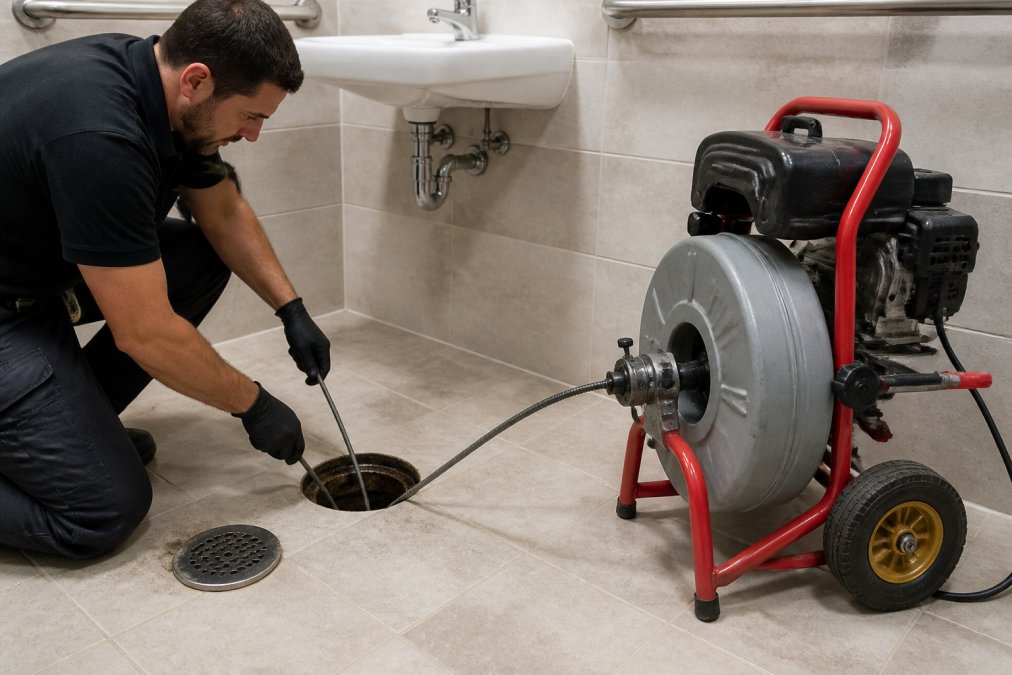
A sewer snake, also called an auger, is a flexible cable that physically breaks up or retrieves obstructions. Feed it through the cleanout, not a fixture, whenever the cleanout is accessible.
- Locate the cleanout and remove the cap slowly, standing to the side.
- Feed the cable into the pipe until you feel resistance.
- Crank clockwise to bite into the clog, then pull back.
- Repeat until water flows freely.
- Flush with hot water to clear loosened debris.
Chemical vs. Enzymatic Cleaners
Green Gobbler Main Line Opener sits between the two categories. It uses a non-caustic blend of sodium and potassium hydroxide to reach up to 15 meters into the line and dissolve grease and sludge. It will not touch tree roots.
Pipe Material Compatibility: What Most Guides Skip
Before you pour anything down the cleanout, know what your lateral is made of. The wrong chemical on the wrong pipe turns a clog into a replacement job.
- Clay tile (common in homes built before the 1970s): Harsh acids and caustic gels can erode the mortar joints between tiles, widening gaps that let roots and soil in. Stick to enzymatic products or mechanical methods.
- Cast iron (pre-1975): Repeated caustic use accelerates internal corrosion and can pit the pipe wall. A snake or hydro-jet is safer.
- PVC and ABS (post-1975): Tolerant of most consumer cleaners, but high-heat reactions from caustic products can soften joints over time.
- Orangeburg (1945-1972): A tar-paper pipe that should never see chemical cleaners or high-pressure jetting. If you have it, call a professional.
Verifying the Clog Is Actually Cleared
Water draining is not proof the clog is gone. It may just be pushed further down the line, where it will re-form within weeks.
Run this check after any DIY method:
- Fill the lowest fixture (usually a basement floor drain or tub) to the brim.
- Release it and time how long the water takes to clear.
- Run two fixtures at once, a sink and a toilet flush, and watch for gurgling or backup at the lowest drain.
- If drainage is slow, gurgling returns, or water rises in another fixture, the clog is still there. Stop and call a professional.
Hydro Jetting vs. Snaking Cost: What to Expect
Hydro-jetting costs more upfront than snaking, but it cleans more thoroughly and lasts longer. That tradeoff is the entire decision.
Locating and Using Your Cleanout Access
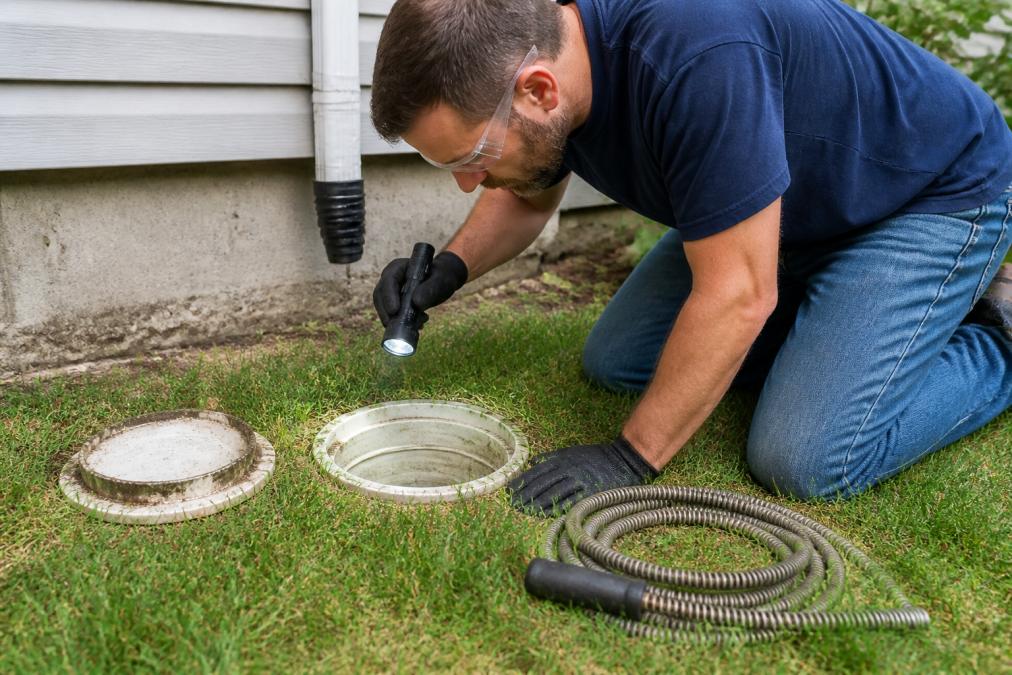
The cleanout is the capped access point that lets you reach the main line without pulling a toilet. Finding it first saves hours of work.
- Basement or crawlspace: Look near the foundation wall where the main line exits.
- Exterior wall: A capped pipe stub close to the foundation, often at ground level.
- Front yard: A capped riser near the property line or sidewalk.
- Under the lowest fixture: Some homes route the cleanout through a floor drain.
Why Camera Inspection Matters Before You Dig
Camera inspection matters most in three situations: recurring clogs in the same spot, a home older than 30 years, and any plan to dig. Digging without one is how homeowners end up replacing the wrong section of pipe.
Sewer Line Cleaning Frequency: How Often Is Enough?
Most homes need professional sewer line cleaning every 18 to 24 months. Homes with mature trees near the lateral, older clay or cast-iron pipes, or a history of clogs need it more often.
A Diagnostic Framework, Not a Fixed Schedule
The right interval depends on what the camera sees, not the calendar. Use these findings to set your next visit:
- Clear pipe, no root intrusion: Re-inspect in 24 months.
- Light grease or scale film: Clean now, re-inspect in 12 months.
- Early root hairs at a joint: Clean and re-inspect in 6 to 9 months. Consider root foaming between visits.
- Active root mass or offset joint: Clean now, re-inspect in 3 to 6 months, and budget for a repair.
- Cracked or collapsed section: Stop cleaning. Repair or replace before the next clog.
Signs You Need to Shorten the Interval
- Two or more clogs in a single year
- Root intrusion found in a previous inspection
- A kitchen that sends heavy grease down the drain
- A home with original clay sewer lateral
- A new tree planted within 3 meters of the lateral
Post-Cleaning Verification: Did It Actually Work?
A cleared clog is not the same as a clean pipe. After any professional cleaning, ask for a post-clean camera pass; the footage should show the full interior diameter with no remaining debris, root mass, or standing water.
At home, run this check within 48 hours:
- Fill the lowest fixture to the brim and release it. Time the drain.
- Run two fixtures at once and watch for gurgling or backup.
- Check the cleanout for standing water or a sewage smell.
Between Professional Visits
Enzymatic cleaners like Bio-Clean and Zep Drain Defense Enzyme Powder support the schedule between professional visits by digesting organic buildup before it hardens. They do not replace a proper cleaning and will not touch roots or scale.
When to Call a Professional Plumber
Call a professional when the clog returns, when multiple fixtures back up at once, or when you smell sewage indoors. These point to a main line problem that DIY methods cannot fix.
Specific situations that need a licensed plumber:
- Sewage backing up into the basement or lowest drain
- A cleanout you cannot locate or open
- Repeated clogs in the same location
- Suspected root intrusion or a collapsed pipe
- Any sign of pipe damage after snaking
Frequently Asked Questions
What is the most effective way to clear a main sewer line clog?
Hydro jetting is the most thorough method for main line drain cleaning, using high-pressure water to scour the entire pipe diameter and remove grease, sludge, and tree roots. Professional snaking with a motorized auger is faster and costs less, making it a solid choice for urgent blockages. For minor organic buildup, enzymatic cleaners work as maintenance. The right choice depends on the clog's cause, pipe material, and whether you need immediate flow restored or long-term cleaning.
Can I use chemical drain cleaners on a main sewer line?
Most chemical cleaners are designed for sink or tub drains, not main sewer lines. Products like Drano Max Gel can handle localized clogs affecting main line flow, but they cannot dissolve tree roots or heavy sludge. Harsh caustic formulas can also damage older pipes or create dangerous fumes in enclosed cleanouts. For main line blockages, a sewer snake or professional service is safer and more effective than repeated chemical treatments.
How do I know if my main sewer line is clogged?
Common signs of main sewer line blockage include multiple drains backing up at once, sewage odors in the basement, gurgling sounds from toilets after flushing, and water pooling around floor drains. A slow drain in just one fixture usually points to a local clog, but when several fixtures act up together, the main line is the likely culprit. Camera inspection confirms the location and cause before any cleaning begins.
Is hydro jetting better than snaking for main lines?
Hydro jetting cleans the full interior of the pipe and removes buildup that snaking leaves behind, which makes it better for recurring clogs and root intrusion. Snaking is faster, costs less, and works well for immediate emergencies. Many plumbers snake first to restore flow, then recommend hydro jetting for a deeper clean. The hydro jetting vs snaking cost difference reflects the extra equipment and time involved.
How often should a main sewer line be cleaned?
Most homes benefit from professional cleaning every 18 to 24 months, but sewer line cleaning frequency depends on your pipes, trees, and household habits. Homes with mature trees near the sewer lateral may need annual service to manage root intrusion. Older clay or cast iron pipes accumulate buildup faster than PVC. If you have recurring clogs, a camera inspection will show whether a maintenance schedule makes sense.
A main line clog never picks a convenient moment, and the wrong method can turn a manageable blockage into a damaged pipe. The right approach starts with diagnosis, not a bottle of chemicals. UMark Plumbing and Drain Inc. brings 20+ years of experience, a certified team, and 24/7 emergency service to every call, with camera inspection, professional snaking, and hydro-jetting on hand to match the method to the clog. Get a free quote from UMark Plumbing and Drain Inc. and clear the line for good.