 listicle
Best Plumbing Maintenance for Businesses
Table of Contents
- 1. Implement a Commercial Plumbing Maintenance Checklist
- 2. Prevent Commercial Plumbing Emergencies Before They Start
- 3. Monitor Water Pressure and Pipe Integrity
- 4. Schedule Regular Water Heater Maintenance and Sediment Flushing
- 5. Test and Maintain Your Sump Pump System
- 6. Understand the Benefits of Preventative Plumbing Maintenance
- 7. Prepare an Emergency Response Plan and Compliance Strategy
- Conclusion
- Frequently Asked Questions
Last Updated: September 4, 2026
Every business owner knows the sinking feeling of a call from the facility manager: water pooling on the floor, a strange odor from the drains, or the water heater that just stopped working. The best plumbing maintenance for businesses isn't a single fix; it's a systematic approach that prevents these disruptions before they cost you operational downtime. At UMark Plumbing and Drain Inc., we've spent over 20 years responding to commercial plumbing emergencies, and the pattern is always the same: the failures that close businesses were almost always preventable with a structured maintenance routine.
Most guides treat commercial plumbing maintenance as a list of reactive fixes. That approach is backward. The goal is to eliminate surprises through a proactive, scheduled plan that protects your plumbing infrastructure, your budget, and your ability to operate. This guide outlines the essential maintenance practices every commercial facility should adopt, from monthly inspection checklists to emergency response planning, giving you a clear framework to protect your property.
1. Implement a Commercial Plumbing Maintenance Checklist
A commercial plumbing maintenance checklist is the cornerstone of any effective preventative strategy. It transforms maintenance from a reaction to a scheduled, documented process that protects your facility and extends the life of your systems.
Monthly inspection tasks
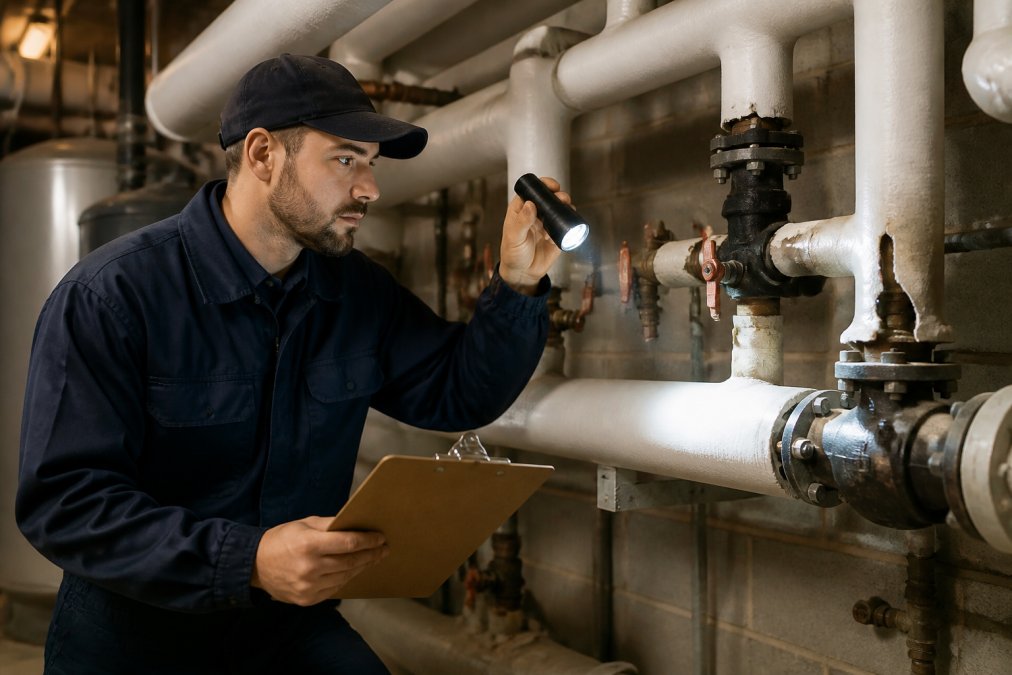
Your team should conduct a visual walkthrough of all accessible plumbing monthly. This includes checking under sinks for leaks, inspecting exposed piping for signs of pipe corrosion or condensation buildup, and verifying that all fixtures drain properly. Look for water stains on ceilings or walls, which often indicate hidden leaks. A monthly inspection also means testing shutoff valves and confirming that your sump pump activates correctly. Catching a small drip or a slow drain now prevents a costly emergency later.
Quarterly deep-dive reviews
Quarterly, move beyond the visual check. This is when you should perform a more detailed review of your entire plumbing system. Flush water heaters to remove sediment buildup, inspect the drainage system for any signs of sewer backup or slow flow, and test water pressure across the facility. You should also review your service schedule and the logs from the previous months to identify any recurring issues. A quarterly review is also the right time to schedule professional preventative maintenance, ensuring that a certified technician examines components you cannot easily access.
2. Prevent Commercial Plumbing Emergencies Before They Start
The most effective way to handle a commercial plumbing emergency is to prevent it from happening. A small issue left unaddressed can quickly escalate into a major disruption, costing far more in repairs and lost revenue than routine maintenance ever would.
Drain cleaning and clog prevention
Drain maintenance is a leading cause of commercial plumbing issues. Grease, food debris, soap scum, and other materials accumulate in pipes over time, leading to slow drains and, eventually, complete blockages. For businesses in the food service or hospitality industries, this risk is even higher. Implement a regular schedule for drain cleaning that includes using biological cleaners to break down organic matter and, for high-usage drains, professional hydro-jetting to clear persistent buildup. Clog prevention is always cheaper than emergency drain repair.
Shutoff valve accessibility and testing
Knowing where your main shutoff valves are located is critical. In the event of a burst pipe, the first step is to stop the water flow. Ensure all shutoff valves are clearly labeled and accessible to your staff. Test them regularly, as valves can seize up if left unused for long periods. An accessible and functional shutoff valve can be the difference between a contained leak and a flooded building. Train your team on the location and operation of these valves as part of your emergency response plan.
3. Monitor Water Pressure and Pipe Integrity
High water pressure is a silent killer for commercial plumbing systems. While it might feel strong at the tap, excessive pressure puts constant strain on your pipes, joints, and fixtures, leading to premature failure and leaks. The ideal range for most commercial buildings is between 40 and 60 psi (aspe.org). You can check your pressure with a simple gauge attached to an outdoor spigot or a laundry faucet.
If your pressure is consistently above this range, installing a pressure-reducing valve is a wise investment. Monitoring water pressure is also a key part of assessing pipe integrity. Fluctuations in pressure can indicate a problem elsewhere in the system, such as a leak or a failing component. Consistent pressure helps prevent water hammer, which can damage pipes over time. Regular monitoring is a simple task that provides significant long-term protection for your plumbing infrastructure.
4. Schedule Regular Water Heater Maintenance and Sediment Flushing
Water heaters are among the most expensive plumbing components in a commercial facility, and they are also one of the most neglected. Regular maintenance is not optional; it is essential for ensuring energy efficiency and extending the system's lifespan. The primary maintenance task is flushing the tank to remove sediment buildup. Over time, minerals and sediment settle at the bottom of the tank, creating a barrier between the heating element and the water. This forces the unit to work harder, increasing energy costs and reducing its lifespan.
The process of sediment flushing involves connecting a hose to the drain valve at the bottom of the tank and allowing the water to run until it is clear. This task should be performed at least every six months, and more frequently in areas with hard water (energy.gov). Beyond flushing, inspect the anode rod, which protects the tank from corrosion, and check the pressure relief valve to ensure it is functioning correctly. Regular water heater maintenance prevents the sudden failure that leads to cold showers and potential water damage.
5. Test and Maintain Your Sump Pump System
For commercial facilities with basements or below-grade spaces, the sump pump is a critical line of defense against flooding. A sump pump failure during a heavy rainstorm can result in significant water damage and operational downtime. Preventative maintenance is key to ensuring your pump operates when you need it most.
Testing your sump pump is a straightforward process. Pour a bucket of water into the sump pit; the pump should activate automatically and drain the water efficiently. Check the discharge line to ensure it is clear of obstructions and that water is being directed away from the building's foundation. Clean the pump and the pit of any debris that could clog the intake. It is also wise to have a backup power source, such as a battery or generator, because power outages often accompany the severe storms that cause flooding. A few minutes of testing each month can prevent a catastrophic flood.
6. Understand the Benefits of Preventative Plumbing Maintenance
The benefits of preventative plumbing maintenance extend far beyond avoiding an emergency call. For a commercial facility, it is a strategic investment that protects your bottom line and ensures business continuity. While the upfront cost of a maintenance schedule may seem like an expense, it is a fraction of the cost of a major repair or the revenue lost during an unexpected closure. Preventative maintenance is the most cost-effective approach to managing your building's plumbing infrastructure.
Reduced operational downtime
Operational downtime is the most significant cost associated with commercial plumbing failures. A burst pipe or a sewer backup can force you to close your doors for days, resulting in lost revenue and a damaged reputation. Preventative maintenance is designed to minimize this risk by identifying and correcting small issues before they become major disruptions. A scheduled service plan ensures your systems are running efficiently and reduces the likelihood of an emergency that halts your operations. For businesses like medical facilities or schools, where uninterrupted service is critical, this reliability is non-negotiable.
Extended system lifespan and water conservation
Like any complex system, your plumbing infrastructure lasts longer when it is properly cared for. Regular maintenance prevents the premature wear and tear that leads to pipe corrosion and fixture failure, extending the lifespan of your equipment and delaying costly capital replacement projects. Furthermore, a well-maintained system is a water-efficient system. Fixing leaks promptly and ensuring fixtures are in good working order contributes to water conservation and lowers your utility bills. This is not only good for the environment but also for your operating budget.
7. Prepare an Emergency Response Plan and Compliance Strategy
Even with the best preventative maintenance, emergencies can still occur. The difference between a manageable incident and a disaster often lies in the preparation. A clear, documented emergency response plan ensures your team knows exactly what to do when a pipe bursts or a major leak is discovered, minimizing damage and downtime.
Emergency contact protocols
Your emergency plan should include a clear chain of command and contact information. First, staff should know how to shut off the main water supply. Second, they need access to a list of approved emergency plumbing contacts. When you need a reliable partner at 3 AM, you need a company that offers 24/7 emergency services. UMark Plumbing and Drain Inc. provides prompt, certified response for commercial clients, ensuring a quick resolution to protect your property and get you back in business. The plan should be reviewed with your team regularly and posted in a visible location.
Regulatory compliance and backflow prevention
Commercial plumbing is subject to regulations designed to protect public health and safety. A critical component of compliance is backflow prevention. Backflow occurs when water flows in the reverse direction, potentially contaminating the potable water supply. Commercial facilities, particularly those in sectors like medical or food service, are often required to have backflow prevention devices installed and tested annually by a certified professional. The Canadian Plumbing Code and local municipal regulations set the standards for these safety measures. A professional plumbing audit can help you ensure your facility meets all regulatory requirements and maintains proper pipe integrity and water quality.
Conclusion
The cost of inaction on commercial plumbing maintenance is far higher than the cost of a proactive plan. The choice for business owners is clear: invest in a routine that prevents emergencies, or pay for the consequences of a failure that halts your operations. Preventative maintenance protects your revenue, your property, and your reputation.
UMark Plumbing and Drain Inc. offers the expertise and 24/7 availability to support your commercial facility. Our certified team provides the full range of services needed to implement a strong maintenance program, from routine inspections and water heater flushing to emergency leak and pipe burst response. Get a free quote today and put a reliable maintenance plan in place for your business.
Frequently Asked Questions
What should be included in a commercial plumbing maintenance checklist?
A comprehensive commercial plumbing maintenance checklist should cover monthly inspections of drains, fixtures, and visible pipes for leaks or corrosion; quarterly water pressure testing; annual water heater sediment flushing; sump pump functionality tests; shutoff valve accessibility verification; and backflow prevention device inspection. Document all findings and schedule follow-up work based on severity. This systematic approach prevents small issues from becoming costly emergencies that disrupt business operations.
How often should a business schedule professional plumbing inspections?
Most commercial facilities benefit from professional plumbing inspections at least twice yearly, with quarterly checks for facilities with high water usage or aging infrastructure. Monthly visual inspections by staff can catch obvious leaks or pressure changes between professional visits. Preventative plumbing maintenance on this schedule identifies pipe corrosion, sediment buildup, and drainage system problems early, reducing the risk of unexpected downtime and expensive emergency repairs.
Why is preventative plumbing maintenance critical for commercial buildings?
Preventative maintenance protects your plumbing infrastructure from costly failures that disrupt business operations. A single burst pipe or sewer backup can force temporary closure, damage inventory, and create liability issues. Regular drain cleaning, water heater flushing, and leak detection catch problems before they escalate. This approach extends system lifespan, improves water quality, supports compliance with local regulations, and delivers far greater savings than emergency repairs, often preventing thousands in operational downtime and property damage.
What's the fastest way to prevent commercial plumbing emergencies?
Start with three immediate steps: identify and label all shutoff valves so staff can respond quickly to leaks; establish a drain cleaning schedule to prevent backups; and install water pressure monitoring to detect pipe stress early. Then schedule a professional plumbing audit to assess your facility's drainage system, water heater condition, and exposed piping for corrosion. This combination of staff readiness and professional oversight catches most emergencies before they occur, and ensures rapid response if something does fail.
This article was written using GrandRanker