 listicle
10 Signs Your Water Heater Needs Replacement
Table of Contents
- 1. Your Water Heater Is Over 10 Years Old
- 2. Rusty or Discolored Water Coming From Taps
- 3. Leaking Around the Tank Base or Connections
- 4. Strange Noises: Popping, Rumbling, or Banging Sounds
- 5. Inconsistent Water Temperature or Sudden Cold Showers
- Average Lifespan of a Water Heater and When Replacement Makes Sense
- Water Heater Repair vs Replacement: Cost-Benefit Analysis
- Tank vs Tankless Water Heater Cost and Efficiency Comparison
- Frequently Asked Questions
Last Updated: September 21, 2026
1. Your Water Heater Is Over 10 Years Old
The age of your water heater is the single most reliable indicator that replacement is approaching. Most residential water heaters have a lifespan of 8 to 12 years, depending on the model, water quality, and maintenance history. If your unit is pushing a decade old, a water heater needs replacement sooner rather than later, waiting until failure means emergency costs and no hot water when you need it most.
Check the manufacturer's date code on the tank's serial number, usually found on a sticker near the top. The first two digits typically indicate the year of manufacture. A unit installed in 2016 or earlier is already in its final years of reliable operation.
Why age matters so much: over time, the sacrificial anode rod inside the tank corrodes to protect the steel lining. Once that rod is depleted, rust and corrosion accelerate rapidly. Sediment also accumulates at the bottom, reducing efficiency and heating capacity. Even if your current unit still produces hot water, the internal deterioration is likely advanced. We've seen countless homeowners caught off guard when an aging tank suddenly fails, leaving them without hot water and facing emergency replacement costs that could have been avoided with planned maintenance.
Replacement becomes especially urgent if the unit has already required repairs. A repair on an aging tank often signals that internal components are failing, and another breakdown is likely within months.
2. Rusty or Discolored Water Coming From Taps
Water that comes out rust-colored, brown, or cloudy is a red flag that internal corrosion is underway. This discolored water indicates that the protective lining inside the tank is compromised, and iron oxide (rust) is being released into your supply.
Run the hot water tap for 30 seconds and observe the color. If it clears after a few seconds, the rust may be isolated to the pipes themselves. But if the discolored water persists, the problem originates in the tank. Rust-colored water from the hot tap alone, while cold water remains clear, confirms that your water heater is corroding from the inside.
This is different from sediment buildup, which causes cloudiness. Rust means the steel tank walls are actively oxidizing. Once rust appears in your hot water, structural failure of the tank is not far behind. Corrosion weakens the metal, increasing the risk of leaks and complete failure.
If you notice this sign, contact a professional plumber immediately. They can inspect the tank and advise whether replacement is urgent or whether you have a few weeks to plan. We've handled emergency water heater replacements caused by sudden tank ruptures, a situation far more costly than planned replacement.
3. Leaking Around the Tank Base or Connections
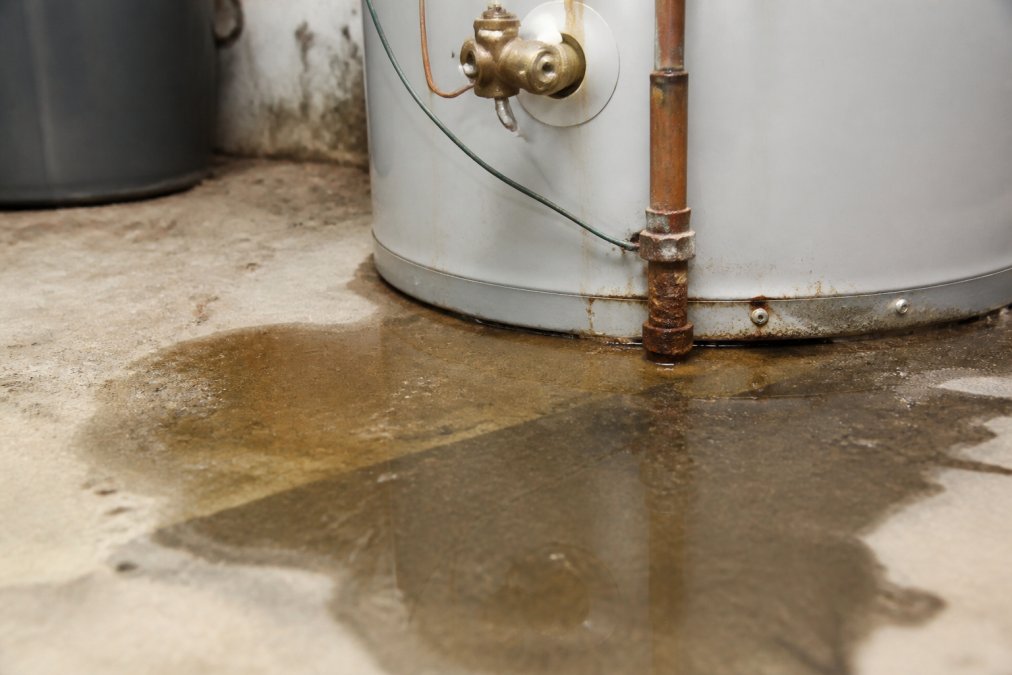
Leaks around the tank base are a critical warning sign. Small drips may seem minor, but they indicate that the tank itself is corroding or that internal pressure is forcing water through weakened seams.
Distinguish between two types of leaks. First, condensation: on cold days, a small amount of moisture around the base is normal as warm water inside the tank causes condensation on the exterior. Wipe the area dry and monitor it. If moisture reappears within minutes, you have an active leak. Second, connection leaks: water dripping from the inlet or outlet pipes at the top of the tank indicates loose fittings or corroded connections. These can sometimes be tightened or resealed, but if the leak persists after adjustment, the fitting itself is failing.
Leaks from the tank base itself, not the connections, signal that the steel is corroding through. Once a leak starts at the base, it will only worsen. The tank will eventually fail completely, potentially causing significant water damage to your home.
Check the area around your water heater regularly. Place a towel underneath to catch any drips and monitor the rate. A slow drip that fills a cup in an hour is less urgent than a steady stream, but both warrant professional inspection. A professional plumber can determine whether the leak is repairable or if replacement is necessary.
4. Strange Noises: Popping, Rumbling, or Banging Sounds
Unusual sounds coming from your water heater indicate that sediment has accumulated at the bottom of the tank. As the heating element warms the water, sediment particles are heated, causing them to pop and shift. This produces popping or crackling sounds, similar to the noise of a pot boiling on the stove.
Rumbling or banging sounds are more serious. They occur when sediment hardens and the heating element struggles to warm water efficiently. The pressure and temperature fluctuations cause the tank to expand and contract, creating loud banging noises. These sounds are a sign that thermal expansion is stressing the tank.
Sediment buildup reduces efficiency significantly. Your water heater must work harder to heat water, consuming more energy and increasing your utility bills. Over time, sediment also accelerates corrosion by trapping moisture against the tank walls.
Flushing the tank can sometimes reduce these noises by removing sediment. However, if the buildup is severe or the tank is already old, flushing may not restore quiet operation. Persistent noises after flushing are a sign that replacement is more practical than continued repairs.
5. Inconsistent Water Temperature or Sudden Cold Showers
Inconsistent hot water, where temperature fluctuates dramatically or you get sudden cold bursts, indicates that the heating system is failing. This can result from a faulty thermocouple (the device that senses water temperature), a broken thermostat, or sediment buildup blocking the heating element.
For gas water heaters, the thermocouple is a safety device that detects the pilot light flame. If it fails, the burner won't ignite reliably, causing temperature swings. For electric units, a faulty heating element or thermostat produces similar symptoms.
If you're running out of hot water faster than you used to, the tank's heating capacity has diminished. This often happens when sediment insulates the heating element, making it less efficient. Your shower may start hot but turn cold halfway through because the tank can't maintain temperature under demand.
Test your water heater's consistency by setting a thermometer to measure hot water temperature at the tap. It should remain steady. If it fluctuates by more than 5-10 degrees, the thermostat or heating element is likely failing.
Sudden temperature swings are annoying and can be dangerous, scalding water followed by cold water creates a hazard. If your unit is over 8 years old and showing these signs, replacement is often more cost-effective than repairing individual components.
Average Lifespan of a Water Heater and When Replacement Makes Sense
Most residential water heaters last between 8 and 12 years, though some units may stretch to 15 years with excellent maintenance. The lifespan depends on several factors: water quality, frequency of use, maintenance history, and the initial build quality of the unit.
Hard water, water with high mineral content, accelerates sediment buildup and corrosion, shortening lifespan to 7-8 years. Soft water extends lifespan because minerals don't accumulate as quickly. If you're unsure about your water quality, a professional plumber can assess it.
Tank-style water heaters degrade predictably because the sacrificial anode rod depletes over time.
Water Heater Repair vs Replacement: Cost-Benefit Analysis
Deciding whether to repair or replace depends on three factors: the age of the unit, the cost of the repair, and the likelihood of future failures.
| Factor | Repair Makes Sense | Replacement Makes Sense |
|---|---|---|
| Unit age | Under 7 years | Over 10 years |
| Repair cost vs. new unit | Under 40% of replacement cost | Over 50% of replacement cost |
| Repair history | First or second repair | Three or more repairs |
| Warranty remaining | Still under manufacturer warranty | Warranty expired or expiring |
| Expected lifespan remaining | 5+ years likely | 1-2 years likely |
Tank vs Tankless Water Heater Cost and Efficiency Comparison
When replacing a water heater, you have two main options: a traditional tank-style unit or a modern tankless (on-demand) system. Each has distinct advantages and trade-offs.
Frequently Asked Questions
What are the most common signs of a failing water heater?
The most common signs include rusty or discolored water, leaking around the tank base, strange noises like popping or rumbling, inconsistent water temperature, and reduced hot water supply. If your water heater is over 10 years old and showing any of these signs, replacement is often the best option. A certified plumber can diagnose the exact issue and recommend whether repair or replacement is more cost-effective.
How long does the average lifespan of a water heater last?
Most residential water heaters last between 8 and 12 years with proper maintenance. Factors like water quality, sediment buildup, sacrificial anode rod condition, and how often the unit is serviced affect longevity. Hard water areas may see shorter lifespans due to mineral deposits and scale buildup. Once your unit approaches 10 years, monitoring for warning signs becomes important, and planning for eventual replacement helps avoid emergency failures.
Should I repair or replace my water heater if it's leaking?
A small leak from a connection or valve can sometimes be repaired, but a leak from the tank itself means replacement is necessary, the tank cannot be safely repaired. Compare the cost of repair against the age of the unit and remaining warranty period. If your heater is over 8 years old and leaking from the tank, replacement is usually more economical than repair, especially considering potential water damage and energy efficiency gains with a new unit.
What's the difference in cost between tank and tankless water heater options?
Traditional tank water heaters and tankless models have different cost structures. Tankless units save space and energy, but require higher upfront installation costs and professional gas or electrical expertise. Tank-style heaters are cheaper to install but use more energy over time. Your choice depends on household size, budget, and long-term efficiency goals. Request a professional assessment for your specific situation.