 Listicle
Which Tankless Water Heater Brands Handle Cold Climates?
Quick Summary
Brands that appear often in tankless comparisons include Rinnai, Navien, Noritz, A. O. Smith, Bradford White and Rheem, but no brand is best for every home. Judge tankless water heater brands by model-level cold-climate criteria, such as flow at a winter temperature rise and the rated minimum inlet temperature, and confirm them with an installer.
- Cold Ontario groundwater forces a tankless unit to deliver a larger temperature rise, which lowers achievable flow.
- Size the unit using your winter inlet temperature, not a mild-weather measurement.
- Check flow at a cold temperature rise, since marketing figures usually use mild rises.
- Compare the minimum operating temperature and freeze protection in each model's installation manual.
- Annual descaling and cleaning the inlet filter keep winter flow from dropping due to scale.
Table of Contents
- Why Cold Groundwater Changes Tankless Performance
- How Temperature Rise and Flow Rate Decide Your Size
- Winter Flow Rate: What BTU Output and GPM Really Mean
- Best Tankless Water Heater Brands for Cold Climates
- Freeze Protection and Installing in Ontario Winters
- Descaling, Maintenance and Keeping Output Consistent
- Booking a Cold-Climate Tankless Assessment in North York
- Frequently Asked Questions
Why Cold Groundwater Changes Tankless Performance
Last Updated: November 19, 2026
Choosing among the best tankless water heater brands for cold climates starts with one fact: in Ontario, the water entering your home can drop close to freezing in winter, and your heater has to work much harder to bring it up to temperature.
Cold incoming water matters because a tankless unit heats water as it flows through, rather than storing a tank full of it.
Three things change when groundwater gets cold:
- Flow drops at the same setting. The unit produces less hot water per minute when the temperature rise is larger.
- Shower temperature wavers. Mixing a sudden cold burst can leave you with a lukewarm rinse.
- Units may cycle or shut down. Some models cut back or stop when the required heating exceeds their capacity.
Before comparing brands, check the groundwater temperature assumption in the manufacturer's sizing chart. A unit rated at a warm inlet temperature will not deliver the same output in a cold Ontario basement.
How Temperature Rise and Flow Rate Decide Your Size
Temperature rise is the difference between the cold water entering the heater and the hot water leaving it. To size a tankless unit, you need three numbers: your inlet water temperature, your target outlet temperature, and the flow rate you need at the same time.
A simple way to frame the calculation:
- Find your winter inlet temperature. Assume it is near the coldest point of the year, not the average. Confirm the actual winter inlet temperature with your installer rather than relying on a summer measurement.
- Set your target outlet temperature. Most households use about 49°C (120°F) at the tap.
- Calculate the temperature rise. Subtract the inlet temperature from the outlet target. A colder inlet produces a larger rise and therefore less achievable flow.
- Match the rise to the unit's flow rating. Check the manufacturer's chart for flow at that rise, not at a mild-weather rise.
The result is only as good as your demand estimate. Add up the fixtures you might run at the same time, such as a shower, a kitchen tap and a washing machine, and size for that combined flow.
A worked North York example
Consider a household with two bathrooms where the peak winter scenario is two showers plus a kitchen tap. A typical low-flow showerhead might draw around 7.6 LPM (2 GPM), and a kitchen tap around 5.7 LPM (1.5 GPM). That combined peak is roughly 21 LPM (about 5.5 GPM).
For a single-bathroom household, the peak might be one shower plus a kitchen tap, roughly 13 LPM (about 3.5 GPM) at the same rise. That is a smaller unit, but it still has to be checked at the cold-season rise. A common pattern is that a unit sized for summer demand looks adequate on paper and then runs short in January.
Size for the cold season, not the mild one. A unit that matches your peak winter demand will serve you well all year. Bring your fixture list and your winter inlet assumption to the assessment so the sizing is based on your household.
Winter Flow Rate: What BTU Output and GPM Really Mean
Two numbers on every tankless spec sheet drive performance: BTU input (or kW for electric units) and flow rate in gallons per minute (GPM) or litres per minute (LPM). They are linked. A higher BTU rating lets a unit heat more water per minute, but only up to the point where the temperature rise it must cover is reached.
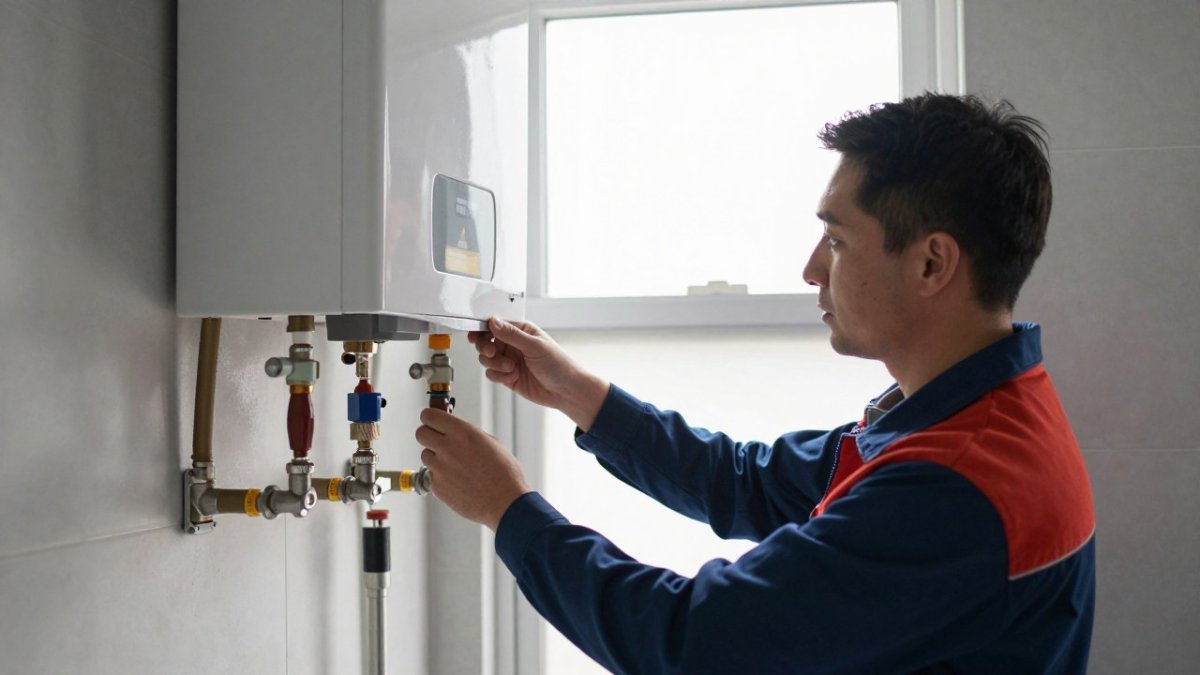
In practice, the flow rate you see on a spec sheet is usually measured at a mild temperature rise. In a cold Ontario winter, the same unit may deliver noticeably less. Ask a plumber to check the rated flow at a temperature rise close to your winter conditions.
Keep three points in mind when reading the specs:
- BTU is a capacity, not a guarantee. A higher number helps, but the real figure is the flow it sustains at your rise.
- GPM is the number that affects comfort. It determines whether two showers and a dishwasher can run together.
- Gas and electric units behave differently. Electric units are limited by the electrical service supplying them, which can cap flow even when the unit itself is capable.
If you are unsure which rating to use, our team can help you read the chart against your home's winter conditions.
Best Tankless Water Heater Brands for Cold Climates
No brand is the best choice for every home, and a brand name alone tells you little about winter performance.
Use these five criteria when you compare any two models:
- Published minimum operating temperature and freeze protection. Check the installation manual for the lowest inlet temperature the unit is rated for and whether freeze protection is built in, requires power, or is an accessory.
- Flow at a cold temperature rise. Ask for the flow rating at a rise close to your winter conditions, not the mild-rise figure usually featured in marketing.
- Turndown ratio and minimum activation flow. A wide turndown lets the unit modulate down for a single tap instead of cycling; a low activation flow helps small draws.
Having a qualified installer assess your home before choosing a model matters more than any brand name.
Brands that appear often in tankless comparisons include:
- Rinnai: a leading option in gas projects, with a broad residential lineup.
- Navien: a whole-home system option, including condensing models with recirculation features.
- Noritz: an established tankless brand with gas residential models.
- A. O. Smith: another brand in the same comparisons, with both gas and electric tankless lines.
Electric units suit homes without gas, but they need adequate electrical service to hit the flow you want in winter.
Check each model's current pricing directly with the manufacturer or your installer, because pricing depends on capacity, fuel type and installation work.
Pros and Cons by Brand
Rinnai
- Pros: Appears in several brand comparisons, and it is specifically associated with gas projects.
- Cons: Canadian model pricing and verified cold-climate figures are not in the sources reviewed.
- Best for: homeowners evaluating gas tankless units, subject to fuel availability and an installer's assessment.
Navien
- Pros: Included in multiple comparisons and highlighted for whole-home systems.
- Cons: Model-level cold-weather performance and Canadian pricing still need confirmation.
- Best for: whole-home systems, once a qualified installer confirms the model suits your home.
Noritz
- Pros: Included in a 2026 tankless comparison.
- Cons: Model details, cold-weather figures and Canadian availability need checking.
- Best for: homeowners who want to compare another established brand with a local installer.
A. O. Smith
- Pros: Included in a 2026 tankless comparison.
- Cons: Specific cold-climate models and Canadian pricing need verification.
- Best for: buyers comparing brands who will confirm model availability locally.
Bradford White
- Pros: Included in a 2026 tankless comparison.
- Cons: Model specifications and cold-weather performance need verification.
- Best for: homeowners whose installer can confirm specific models and local availability.
Rheem
- Pros: Offers a residential tankless range and also makes tank and point-of-use units.
- Cons: No specific cold-climate model or Canadian price is identified in the sources reviewed.
- Best for: homeowners comparing tankless options across several water-heater formats.
Electric models (EcoSmart ECO 11, Rheem RTEX-18, Stiebel Eltron Tempra 36 Plus)
- Pros: Electric operation can suit homes without gas, and the ECO 11 and RTEX-18 list specific power ratings.
- Cons: Winter whole-home flow and Canadian availability are not verified in the sources reviewed.
- Best for: buyers who will have an electrician confirm capacity against their winter demand.
Watch out: a brand that ranks well in a general review may not publish cold-weather flow figures at all, so do not treat a general recommendation as evidence of winter performance.
The article's brand notes and selection criteria can be compared at a glance in the table below.
| Criterion | What to check | Why it matters |
|---|---|---|
| Minimum operating temperature | Lowest rated inlet temperature in the manual | Confirms the unit handles cold groundwater |
| Flow at cold temperature rise | Flow rating near your winter conditions | Marketing figures use mild rises |
| Turndown ratio | Modulation range and minimum activation flow | Avoids cycling on small draws |
| Venting and condensate | Neutralizer need and vent termination | Condensate can freeze at the termination |
| Warranty terms | Heat exchanger, parts and labor coverage | Coverage differs for combination use |
Freeze Protection and Installing in Ontario Winters
Freezing is a real concern for any water heater installed in a cold location. A tankless unit with water left inside a cold exterior wall or unheated space can be damaged if the water freezes.
Protect your system by:
- Installing indoors in a heated space, such as a basement utility room.
- Insulating exposed pipes that run through cold areas.
- Confirming the unit's freeze protection in the manufacturer's installation manual.
- Keeping the power or gas supply on through winter, including during travel.
Installation in freezing temperatures also depends on venting and clearances, which vary by unit and by the local code. Have a licensed professional confirm the venting and placement before work begins.
Descaling, Maintenance and Keeping Output Consistent
Hard water builds scale inside a tankless heat exchanger over time. Scale reduces heat transfer and can cut flow, which is exactly what you do not want during a cold winter.
A reasonable routine includes:
- Annual descaling, or more often if your water is hard.
- Checking the inlet filter and cleaning it when flow drops.
- Reviewing the manufacturer's service interval and keeping records.
- Scheduling a service visit if you notice lukewarm water, cycling or error codes.
Watch out: a unit that loses flow gradually may look like a sizing problem when the real cause is scale. Clean it before you assume it is undersized.
Booking a Cold-Climate Tankless Assessment in North York
If you are weighing tankless brands for a North York home, the most useful next step is an assessment before you buy. Learn how to choose the right water heater size before you call, or check whether a tankless water heater is worth it in Canada for your situation. If your current unit is struggling, our guide to signs your water heater needs replacement can help you decide whether to repair or replace. When you are ready to book, find a plumber near you in North York or ask about plumbing repair in North York.
Frequently Asked Questions
What are the best tankless water heater brands for cold climates?
Brands that appear often in tankless comparisons include Rinnai, Navien, Noritz, A. O. Smith, Bradford White and Rheem. The best fit depends on fuel type, required hot-water flow and installation site. Cold-weather performance varies by model, so confirm the specific unit's minimum operating temperature and winter flow rating with a licensed installer before buying. A qualified installer can review your home's incoming water temperature and recommend a suitable model for your household.
Do tankless water heaters work well in Canadian winters?
They can, but output drops when incoming groundwater is very cold, because the unit must add more temperature rise to reach the set temperature. Incoming water is colder in winter than in summer, which lowers the flow rate a unit can deliver. Choosing a model sized for winter conditions, not summer averages, prevents lukewarm showers during the coldest months.
How often should a tankless water heater be descaled?
Descaling frequency depends on water hardness and usage. In areas with hard water, many manufacturers recommend descaling at least once a year, and more often if output or heating efficiency declines. Check your model's manual for the required interval, since warranty coverage may depend on following it. Regular maintenance keeps the heat exchanger clear and preserves consistent hot-water output.
Can a tankless water heater be installed outdoors in Ontario?
Some models are rated for outdoor installation, but they still need freeze protection, proper venting and clearance from the building as set out in the manufacturer's instructions and the applicable Canadian installation code. Indoor installation in a heated space is generally the safer choice in Ontario winters. An installer can confirm whether a specific model and site meet these requirements before work begins.