 listicle
Cost-Effective Plumbing Maintenance Tips for Landlords
Table of Contents
- Why Preventative Plumbing Maintenance Saves Landlords Money
- 1. Conduct Regular Inspections to Catch Problems Early
- 2. Build a Preventative Plumbing Maintenance Checklist
- 3. Understand Your Landlord Plumbing Repair Responsibilities
- 4. How to Reduce Plumbing Repair Costs Through Smart Choices
- 5. Protect Pipes From Freezing and Corrosion
- 6. Use Property Management Tools to Track Maintenance Costs
- 7. Partner With Certified Plumbers for Routine Maintenance
- Frequently Asked Questions
Last Updated: September 29, 2026
Why Preventative Plumbing Maintenance Saves Landlords Money
Preventative plumbing maintenance is one of the smartest investments a landlord can make. A burst pipe at 2 AM costs far more than catching a slow leak during a routine inspection.
A leaking faucet might seem minor, but it wastes thousands of litres annually. Water damage from a preventable leak can cost tens of thousands to remediate.
Cost effective plumbing maintenance tips for landlords focus on identifying problems before they become emergencies through routine inspections, understanding repair responsibilities, and knowing when to hire certified professionals.
1. Conduct Regular Inspections to Catch Problems Early
Regular inspections are the foundation of cost effective plumbing maintenance tips for landlords. A systematic routine catches small issues before they escalate into expensive repairs and tenant disruptions.
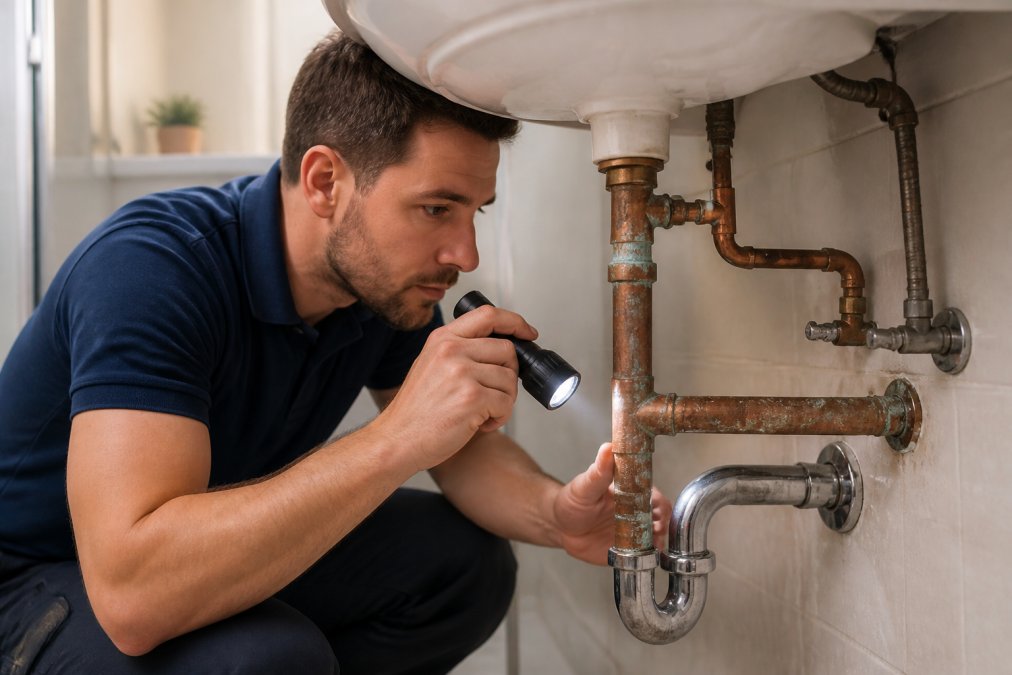
Schedule inspections twice yearly, before winter and after spring thaw. Look for water stains, soft drywall, rust on pipes, and pooling water. Check shut-off valves operate smoothly and test water pressure; weak flow signals corrosion or sediment buildup.
Document everything with photos. This baseline tracks deterioration, helps prioritize repairs, and protects you from liability claims when selling.
For multi-unit properties, document condition at move-in and move-out to protect against deposit disputes and catch problems early.
2. Build a Preventative Plumbing Maintenance Checklist
A written checklist ensures consistent inspections, prevents missed tasks, and creates legal protection.
Annual inspection tasks
Annually, flush the water heater to remove sediment, test the pressure relief valve, inspect the main water line for leaks or corrosion, and check visible pipes for rust and water damage.
Test toilets for silent leaks using food colouring. A leaking toilet wastes hundreds of litres daily. Test all shut-off valves to ensure they operate.
Quarterly and seasonal checks
Quarterly, check for water stains, soft drywall, or musty odours. Before winter, drain outdoor faucets and insulate exposed pipes. After heavy rain, check for water intrusion signalling drainage problems.
In spring, inspect the exterior for signs of water damage. Look at downspouts and grading around the foundation, water pooling near the house can force its way into the basement and compromise your plumbing infrastructure.
| Task | Frequency | Priority | Notes |
|---|---|---|---|
| Inspect visible pipes for corrosion | Annually | High | Look under sinks and in basement |
| Flush water heater | Annually | High | Removes sediment; improves efficiency |
| Test shut-off valves | Annually | High | Ensure they operate smoothly |
| Check for silent toilet leaks | Quarterly | Medium | Use food colouring test |
| Inspect basement for water intrusion | Quarterly | Medium | Check after heavy rain or snow melt |
| Insulate exterior pipes | Before winter | High | Prevent freeze damage and bursts |
3. Understand Your Landlord Plumbing Repair Responsibilities
Landlord plumbing repair responsibilities vary by province and municipality, but most jurisdictions require landlords to maintain plumbing systems in safe, working condition. Repairs that affect habitability, hot water, functioning toilets, non-leaking pipes, are typically your legal obligation. Cosmetic upgrades or tenant-caused damage may fall to the tenant.
In most Canadian provinces, landlords must provide and maintain plumbing that delivers hot and cold water to all fixtures. This includes the main water line, supply pipes, drain lines, and fixtures like sinks, toilets, and showers. You're responsible for repairing leaks, replacing corroded pipes, and fixing water heaters. Tenants are generally responsible for not causing damage through misuse.
The distinction matters financially. If a tenant flushes non-flushable items and clogs the drain, that's typically the tenant's responsibility. If your aging pipes develop a crack due to age and corrosion, that's yours. Document everything, tenant reports, your repair requests, and professional assessments, to protect yourself if disputes arise.
Some provinces require landlords to carry liability insurance that covers plumbing-related water damage. Check your provincial rental housing legislation and your insurance policy to understand your exact obligations. Ignorance won't protect you if a preventable plumbing failure causes damage to a tenant's belongings or neighbouring units.
4. How to Reduce Plumbing Repair Costs Through Smart Choices
Reducing plumbing repair costs doesn't mean deferring maintenance, it means being strategic about how you approach it. The goal is to catch problems early, avoid emergency service calls, and choose cost-effective solutions that actually last.
Drain maintenance and chemical cleaner alternatives
Chemical drain cleaners are tempting because they're cheap and seem fast. They're also dangerous. Caustic chemicals damage older pipes, create toxic fumes, and often don't solve the underlying problem. If a drain backs up again two weeks later, you've spent money twice, once on chemicals and again on a professional plumber.
Instead, use mechanical methods. A plunger works for minor clogs. For stubborn blockages, rent or purchase a drain snake (also called a plumbing auger). These cost under fifty dollars and last for years. For serious issues, call a professional plumber who can use a camera to diagnose the exact problem before quoting a repair.
Prevent clogs by installing drain screens on all sinks and tubs. These cost a few dollars and catch hair and debris before they enter the pipes. In kitchens, install sink strainers and remind tenants to scrape food waste into the garbage, not down the drain. Grease is a major culprit, it solidifies in pipes as it cools and creates blockages that are expensive to clear.
For rental properties, consider permanent drain screens like Semper Screen's sink protection system, which prevents tenant-caused blockages. These reduce emergency drain cleaning calls significantly over time.
Water pressure regulation and leak detection
High water pressure stresses pipes and fixtures, causing leaks and premature failure. Most homes operate at 60-80 PSI (pounds per square inch). If yours runs higher, install a pressure regulator on the main water line. This inexpensive device protects your entire system and reduces water waste.
Leak detection saves thousands. Small leaks go unnoticed for months, wasting water and damaging structures. Install shut-off valves at key points, under sinks, near the water heater, and at the main water line. Know where your main shut-off is located and ensure it works. In an emergency, you need to stop water flow immediately.
Monitor your water bill for unexplained increases. A sudden jump often signals a hidden leak. Check meter readings before and after a period when no water is being used. If the meter moves, you have a leak somewhere in the system.
5. Protect Pipes From Freezing and Corrosion
Frozen pipes burst and cause catastrophic water damage. Corrosion weakens pipes and causes leaks. Both are preventable with proper maintenance.
Pipe freezing occurs when water inside exposed pipes freezes and expands. Pipes in unheated basements, crawl spaces, exterior walls, and attics are most vulnerable. Insulate these pipes with foam pipe insulation (available at any hardware store for a few dollars per metre). For exterior faucets, disconnect hoses in fall and install frost-proof faucet covers.
Maintain consistent indoor temperatures during winter. Even if you're not occupying a rental unit, keep it heated to at least 10°C to prevent freezing. This is often a lease requirement for tenants as well.
Corrosion occurs in older copper and galvanized steel pipes. Copper develops blue-green stains and pinholes that leak. Galvanized steel rusts from the inside, gradually reducing water flow.
6. Use Property Management Tools to Track Maintenance Costs
Tracking maintenance spending reveals patterns and helps you budget accurately. When you know how much you've spent on plumbing repairs over three years, you can forecast future capital expenses and plan replacements strategically.
7. Partner With Certified Plumbers for Routine Maintenance
Not every plumbing task requires a professional, but many do. Knowing when to call a certified plumber saves money in the long run because professionals catch problems you'd miss and prevent expensive mistakes.
Frequently Asked Questions
What is included in a preventative plumbing maintenance checklist for rental properties?
A preventative plumbing maintenance checklist should include annual inspections of water heater condition, pipe insulation, and shut-off valves; quarterly checks of exterior faucets and hose connections; drain cleaning to prevent sediment buildup; water pressure testing; and seasonal winterization of exposed pipes. Regular checks help identify corrosion, dampness, and early leak detection before they become emergency repairs that cost significantly more.
Are landlords responsible for all plumbing repairs, or do tenants share responsibility?
Landlord plumbing repair responsibilities typically include structural issues like burst pipes, water heater failures, and main sewer line problems. Tenants are usually responsible for misuse-related damage, such as clogs caused by improper disposal. However, responsibilities vary by local rental regulations. Clear tenant communication about proper plumbing use and how to report issues protects both parties and reduces unnecessary emergency repairs that damage your property investment.
How can I reduce plumbing repair costs without cutting corners on quality?
To reduce plumbing repair costs, schedule preventative maintenance annually rather than waiting for emergencies; install faucet aerators and screen devices to prevent drain blockages; maintain proper water pressure to avoid pipe stress; flush water heaters regularly to remove sediment buildup; and use certified plumbers for routine work. Proactive maintenance is significantly more cost-effective than reactive repairs.
What's the fastest way to find a reliable, affordable plumber for routine maintenance?
Look for certified plumbers with established experience in rental property maintenance. Request free quotes before committing, and ask for references from other landlords. Property management platforms like Buildium or SingleKey help track vendor performance and maintenance costs. Building a relationship with one trusted plumber for routine work ensures consistent pricing and faster response times than calling different contractors for each issue.