 how-to
Emergency Plumbing for Small Businesses: 2026 Guide
Table of Contents
- What Counts as a Commercial Plumbing Emergency
- How to Shut Off Water in a Commercial Building: Step-by-Step
- Emergency Plumbing for Small Businesses: What to Do Before the Technician Arrives
- Emergency Plumber Cost Per Hour in Canada: What to Expect
- Commercial Plumbing Maintenance Checklist for Small Businesses
- Why 24/7 Emergency Plumbing Response Matters for Business Continuity
- Choosing a Licensed, Insured Emergency Plumber in North York and Vaughan
- Conclusion
Last Updated: August 10, 2026
What Counts as a Commercial Plumbing Emergency
A commercial plumbing emergency is any plumbing failure that poses an immediate risk to your building's safety, operations, or inventory. Understanding what qualifies matters because it determines how quickly you need to act and who to call.
Burst Pipes and Sudden Leaks
Burst pipes are the most destructive plumbing event a small business can face. A single rupture can release hundreds of litres of water within minutes, damaging flooring, drywall, electrical systems, and inventory. In Canadian climates, burst pipes most commonly occur during freeze-thaw cycles. Sudden leaks from supply lines or fittings that cannot be controlled manually also qualify as emergencies.
Drain Blockages, Sewer Line Backup, and Overflowing Toilets
A sewer line backup is critical: every drain in the building becomes a potential overflow point. Sewage entering a commercial space creates health hazards, triggers regulatory obligations under provincial health codes, and typically forces immediate closure. Overflowing toilets in customer-facing businesses are never minor issues.
Water Heater Failure and Water Pressure Issues
Water heater failure affects any business relying on hot water: food service, healthcare, hospitality, personal care. A failed water heater means lost revenue within hours. Sudden drops in water pressure often signal a break in the supply line or a developing leak, requiring urgent diagnosis.
How to Shut Off Water in a Commercial Building: Step-by-Step
Knowing how to shut off water before a technician arrives is the single most effective way to limit water damage. Here is the standard procedure:
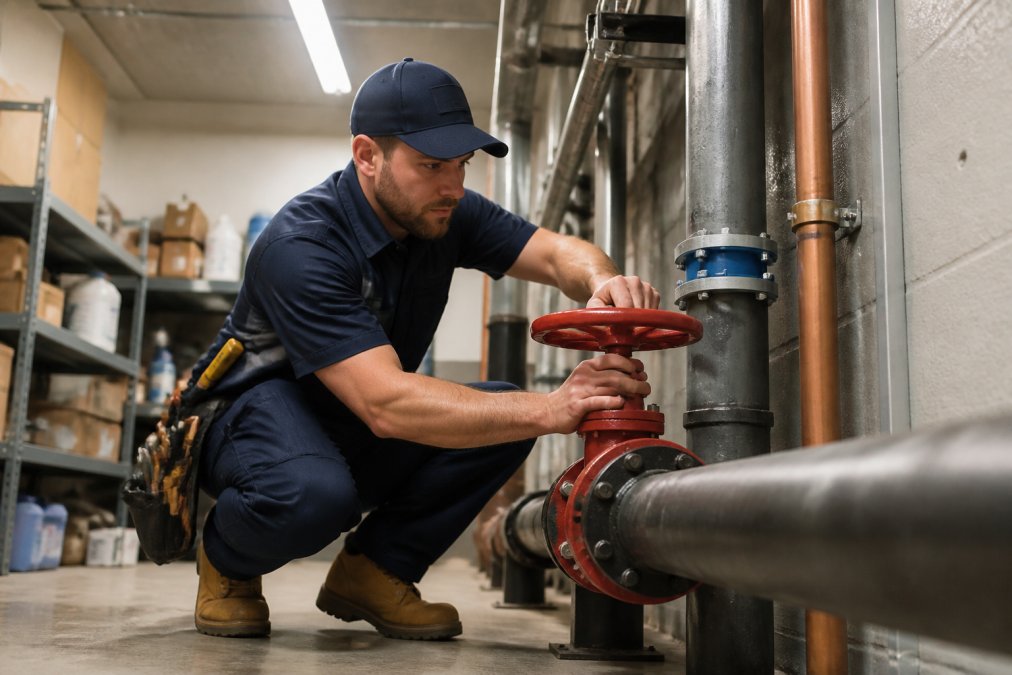
- Locate the main water shut-off valve. In most commercial buildings, this is in the mechanical room, basement utility area, or near the water meter, typically a large gate valve or ball valve on the main supply line.
- Turn the valve clockwise to close it. For a ball valve, rotate the handle 90 degrees until perpendicular to the pipe. For a gate valve, turn clockwise until fully closed.
- Open a nearby tap to confirm flow has stopped. This verifies the valve has fully closed and releases residual pressure.
- Shut off the water heater. Switch to "pilot" or "off" setting to prevent damage to an empty tank.
- Notify your property manager or building superintendent if you are a tenant in a multi-unit building, as the shut-off may affect other tenants.
- Mark the location clearly after the crisis. A laminated card near the valve with instructions can save critical minutes next time.
According to the City of Toronto's water service guidelines, property owners are responsible for the water service pipe from the property line to the building, which means the shut-off valve and everything downstream is your responsibility.
Emergency Plumbing for Small Businesses: What to Do Before the Technician Arrives
The gap between when a plumbing failure starts and when a technician arrives is when most damage happens. Focus on what you do in the first 15 minutes.
Temporary Mitigation Steps to Limit Water Damage
Once the main water shut-off is closed, focus on containment:
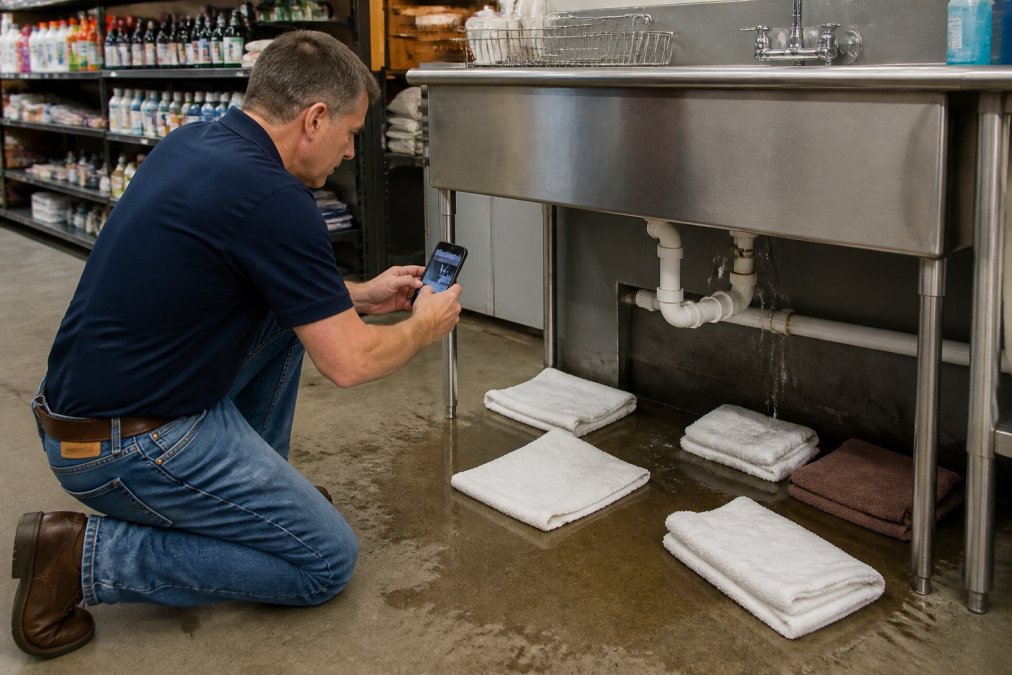
- Place towels, mops, or absorbent mats around the affected area to slow water spread
- Move inventory, equipment, and furniture away from the water source
- If water is near electrical panels or equipment, do not enter until power is confirmed off at the breaker
- Open windows or doors to begin ventilation
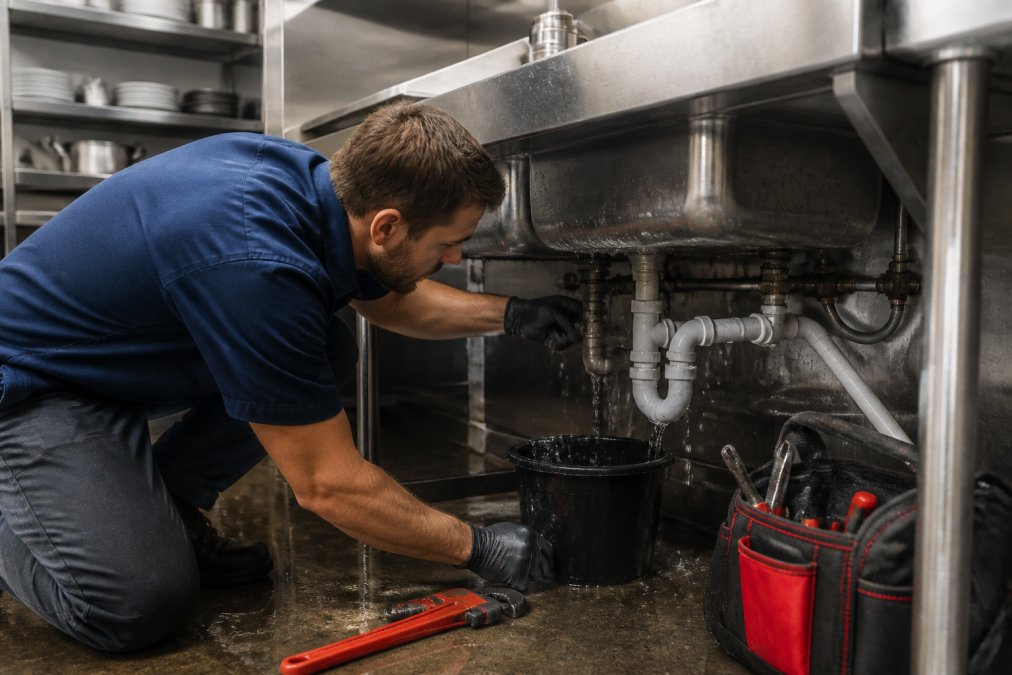
- Use buckets to catch active drips from overhead leaks
- Do not attempt to repair burst pipes with tape or sealant; these obscure the failure point for the technician
Avoid running fans immediately over standing water, as this spreads moisture into walls and subfloors, worsening mould risk.
Insurance Documentation: What to Record Right Now
Document everything before cleanup begins:
- Photograph all visible water damage from multiple angles
- Video the active leak or overflow before the supply is shut off, if safe
- Record the time and date the issue was discovered
- Note which fixtures, systems, or areas are affected
- Keep all damaged inventory in place until your insurer confirms disposal
- Save receipts for emergency supplies purchased
The Insurance Bureau of Canada's commercial property claims guidance recommends notifying your insurer as soon as possible after a loss event, ideally before cleanup begins.
Emergency Plumber Cost Per Hour in Canada: What to Expect
Emergency plumber cost per hour in Canada varies based on region, time of call, job complexity, and whether work involves specialized systems like backflow prevention or sewer line diagnostics.
| Cost Factor | What It Affects |
|---|---|
| After-hours vs. business hours | After-hours and weekend calls typically carry a premium rate |
| Scope of work | Drain cleaning differs significantly from burst pipe repair |
| Parts and materials | Specialty commercial fixtures cost more than residential equivalents |
| Access difficulty | Pipes in concrete slabs or behind finished walls add labour time |
| Diagnostic equipment | Leak detection or camera inspection adds to the service call |
Be cautious of any provider who quotes a firm price over the phone without asking detailed questions. A transparent estimate before work begins protects you during both payment and insurance reimbursement.
UMark Plumbing and Drain Inc. provides upfront estimates so you know what you are approving before any work starts. For current pricing, visit the UMark Plumbing and Drain Inc. pricing page or request a free quote.
Commercial Plumbing Maintenance Checklist for Small Businesses
The best emergency plumbing call is the one you never have to make. A maintenance checklist gives small business owners a structured way to catch developing problems before they become urgent repairs.
Monthly:
- Check all visible pipes under sinks and in utility areas for drips or corrosion
- Test all drains for slow drainage
- Inspect toilet tanks for running water
- Confirm the main water shut-off valve turns freely and is accessible
Quarterly:
- Flush and inspect floor drains in kitchens, washrooms, and mechanical rooms
- Test water pressure at multiple fixtures
- Inspect water heater for sediment buildup, corrosion, or unusual sounds
- Check backflow prevention devices are intact
- Inspect sump pump function if your building has a basement
Annually:
- Schedule a professional drain cleaning for main lines
- Have a licensed technician inspect sewer line condition, especially in buildings over 20 years old
- Review your plumbing infrastructure for aging components
- Confirm emergency shut-off valve locations are documented and staff know them
According to Ontario's Building Code requirements for commercial plumbing maintenance, building owners have a legal obligation to maintain plumbing systems in good working order.
Why 24/7 Emergency Plumbing Response Matters for Business Continuity
Plumbing failures do not schedule themselves around business hours. A burst pipe on a Saturday night or sewer line backup discovered Monday morning affects your ability to operate and generate revenue.
The financial impact extends beyond repair costs to include lost revenue for every hour the business cannot operate, potential inventory loss, costs of temporary closure notices, and remediation expenses if water damage leads to mould or structural issues.
Having a relationship with a 24/7 emergency plumbing provider before you need one is essential.
Choosing a Licensed, Insured Emergency Plumber in North York and Vaughan
Not every company advertising emergency plumbing can deliver on that promise. Here is what to verify before you commit:
Licensing: In Ontario, plumbers must hold a valid Certificate of Qualification issued through the Ontario College of Trades. Ask for the technician's certification number.
Insurance: The contractor must carry general liability insurance and WSIB coverage. An uninsured worker injured on your property creates significant liability exposure.
Response time commitment: Ask directly: what is your average response time for commercial emergency calls in North York and Vaughan?
Commercial experience: Commercial and residential plumbing differ substantially. Confirm the provider has direct experience with commercial property maintenance.
Transparent pricing: A reputable provider will give you a written estimate before work begins.
UMark Plumbing and Drain Inc. has served commercial clients across North York and Vaughan for over 20 years, with a certified team available around the clock for emergency response.
Plumbing emergencies do not give small businesses much warning, and the cost of a slow response compounds quickly. The gap between a manageable repair and significant business disruption often comes down to how fast a qualified technician reaches your property. UMark Plumbing and Drain Inc. offers 24/7 emergency plumbing service across North York and Vaughan, backed by over 20 years of commercial experience and a certified team. Get a free quote from UMark Plumbing and Drain Inc. and have your emergency contact confirmed before you need it.
Frequently Asked Questions
What constitutes a commercial plumbing emergency?
A commercial plumbing emergency is any plumbing failure that threatens property, health, or your ability to operate. This includes burst pipes, sewer line backup, overflowing toilets that can't be isolated, complete water heater failure, and significant leak detection failures causing active water damage. If the issue is spreading, affecting multiple fixtures, or forcing you to close, treat it as an emergency and call a licensed technician immediately rather than waiting for a scheduled service call.
How much does emergency plumbing service cost in Canada?
Emergency plumber rates in Canada vary by region, time of call, and job complexity. After-hours and weekend calls typically carry a higher service call fee than standard business-hours visits. The final cost depends on parts, labour time, and the scope of repairs needed. To avoid bill shock, ask for a written estimate before work begins. UMark Plumbing and Drain Inc. offers transparent pricing, visit the website or request a free quote to get figures specific to your situation in North York or Vaughan.
How do I shut off the main water supply in a commercial building?
Locate the main shut-off valve, usually found in the mechanical room, basement, or near the water meter. Turn the valve clockwise until it stops to cut water flow to the entire building. In larger commercial properties, zone valves let you isolate one floor or section without shutting down the whole building. Post the valve locations on a visible emergency plan so any staff member can act fast. If you can't find the shut-off, call your emergency plumber immediately, every minute of active flow increases water damage.
Are small businesses responsible for plumbing repairs in leased spaces?
Responsibility depends on your lease agreement. In most commercial leases in Ontario, the landlord handles structural plumbing like main lines and building infrastructure, while tenants are responsible for damage caused by their own operations or fixtures. Review your lease carefully and document any plumbing issue with photos and written notice to your landlord as soon as it occurs. This protects you if an insurer or landlord disputes liability after a water damage event.
This article was written using GrandRanker