 How-to
How Often Should You Maintain a Basement Floor Drain?
Quick Summary
Pour about one gallon of water into a basement floor drain once a month to refill the trap and block sewer gas. Warm, dry basements or rarely used drains may need water more often. Clean the drain every few months, or whenever you notice slow draining or a smell.
- Pour about one gallon of water into the drain once a month.
- Drains in warm, dry basements or rarely used drains need water more often.
- Clean the drain every few months, or sooner if draining slows or smells.
- Pour water slowly by bucket, since hose pressure can push debris deeper.
- If the smell returns within days of cleaning, diagnose the cause instead of repeating the routine.
Table of Contents
- What a Basement Floor Drain Does and Why Its Trap Matters
- How Often to Pour Water Down a Floor Drain
- Basement Floor Drain Cleaning: A Step-by-Step Routine
- Floor Drain Cleaning Tools You Need
- How to Unclog a Basement Floor Drain Safely
- Seasonal Prep and a Maintenance Log for North York Homes
- When to Book a Plumber to Inspect Your Floor Drain
- Frequently Asked Questions
What a Basement Floor Drain Does and Why Its Trap Matters
Last Updated: November 18, 2026
A basement floor drain catches water from a washing machine, a sump pump, a water heater or a spill, and sends it to the sewer.
A floor drain is a simple outlet with a removable grate on top.
The trap is a U-shaped section of pipe that holds water to block sewer gas. Without it, gases from the sewer line would rise straight into your basement.
How the trap and water seal keep sewer gas out
The water sitting in the trap is called the trap seal. It works as a barrier between your home and the sewer. Sewer gas, which carries an unpleasant smell, cannot pass through standing water.
The seal only works when it stays full. Water evaporates over time, especially in a dry or heated basement. When the water level drops, gas can move up through the drain. That is the most common reason a basement floor drain starts to smell.
Here is what keeps the seal in place:
- Regular small amounts of water poured into the drain
- A trap that is intact, with no cracks or loose fittings
- A drain that is not blocked by debris or buildup
- A basement that is not overly dry, or a drain covered when not in use
How Often to Pour Water Down a Floor Drain
For most basement floor drains, pour about a gallon of water into the drain once a month.
If you cannot remember the last time you added water, start now. Even a drain that smells fine can have a low seal.
Pour water slowly. A bucket works well, and warm water helps loosen light residue.
The article gives a simple refill schedule and a few cues for when a drain needs more water.
| Situation | Water needed | Note |
|---|---|---|
| Typical basement drain | About 1 gallon monthly | Refills the trap and replaces evaporated water |
| Warm, dry basement | More often than monthly | Water evaporates faster |
| Rarely used drain | More often than monthly | Seal dries out faster without use |
| Pouring method | Slowly, by bucket | Hose pressure can push debris deeper |
Basement Floor Drain Cleaning: A Step-by-Step Routine
Cleaning a floor drain takes about 20 to 30 minutes. Do it every few months, or any time you notice slow draining or a smell. The routine below is written so you can tell the difference between a drain that is merely dirty and one that has a deeper problem.
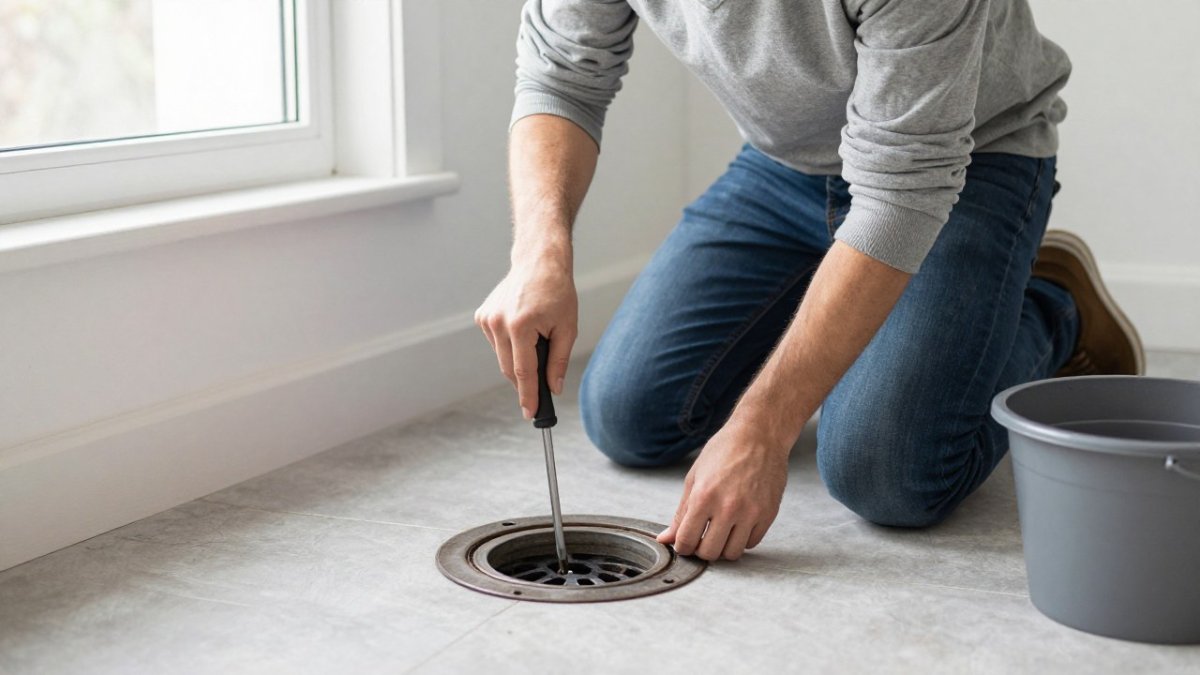
Removing the cover and clearing visible debris
- Put on gloves and set a bucket and rag nearby. A flashlight helps you see into the opening.
- Lift off the grate. Some grates lift straight out. Others need a flat screwdriver pried gently at one edge. Work slowly so you do not chip the surrounding concrete or bend the grate.
- Use a small scoop or old spoon to remove hair, sediment and soap scum from the top of the drain. Put the debris in the bucket, not back down the drain.
- Check the grate itself. Wash it in a sink or bucket with mild dish soap, then rinse and set it aside to dry.
- Look at the water level in the trap below. If you can see standing water, the seal is likely intact. If the opening looks dry, the trap has evaporated and needs refilling before you clean further.
A homeowner in a tidy basement kneeling beside a round floor drain grate, removing the cover with a screwdriver and placing a small bucket nearby.
Flushing the drain and cleaning the opening
- Pour a bucket of warm water into the drain to loosen remaining buildup. Pour slowly so the water does not splash back.
- Scrub the inside of the opening with a stiff brush. Reach as far in as the brush allows. This removes the film that holds odor and catches new debris.
- Pour a half cup of baking soda down the drain, then a cup of white vinegar. Let it fizz for about 15 minutes, then flush with warm water.
- Refill the trap with a final bucket of water so the seal is full.
Watch out: do not pour boiling water into a plastic pipe or an older drain with solvent-welded joints, because heat can soften or crack the fittings. Warm tap water is enough for routine cleaning.
Knowing when cleaning is not the fix
A drain that still smells after a full clean and refill usually has a cause other than dirt. A dry trap, a blocked vent, a failing trap seal or a sewer backup all produce similar odors, and each needs a different response. If the smell returns within a few days of cleaning, stop repeating the routine and move to diagnosis.
Floor Drain Cleaning Tools You Need
You do not need much to keep a basement floor drain clean. Most items are already in a home.
- Rubber gloves
- A bucket
- A stiff cleaning brush with a long handle
- A small scoop or old spoon
- A flat screwdriver for lifting the grate
- Baking soda and white vinegar
- Mild dish soap
A plumbing auger, sometimes called a drain snake, is useful for clogs deeper in the pipe. Use one carefully, as described below.
How to Unclog a Basement Floor Drain Safely
Start with the gentlest methods. Most slow drains clear with hot water, baking soda and vinegar, or a stiff brush.
If the water still drains slowly:
- Remove the grate and clear visible hair and debris by hand.
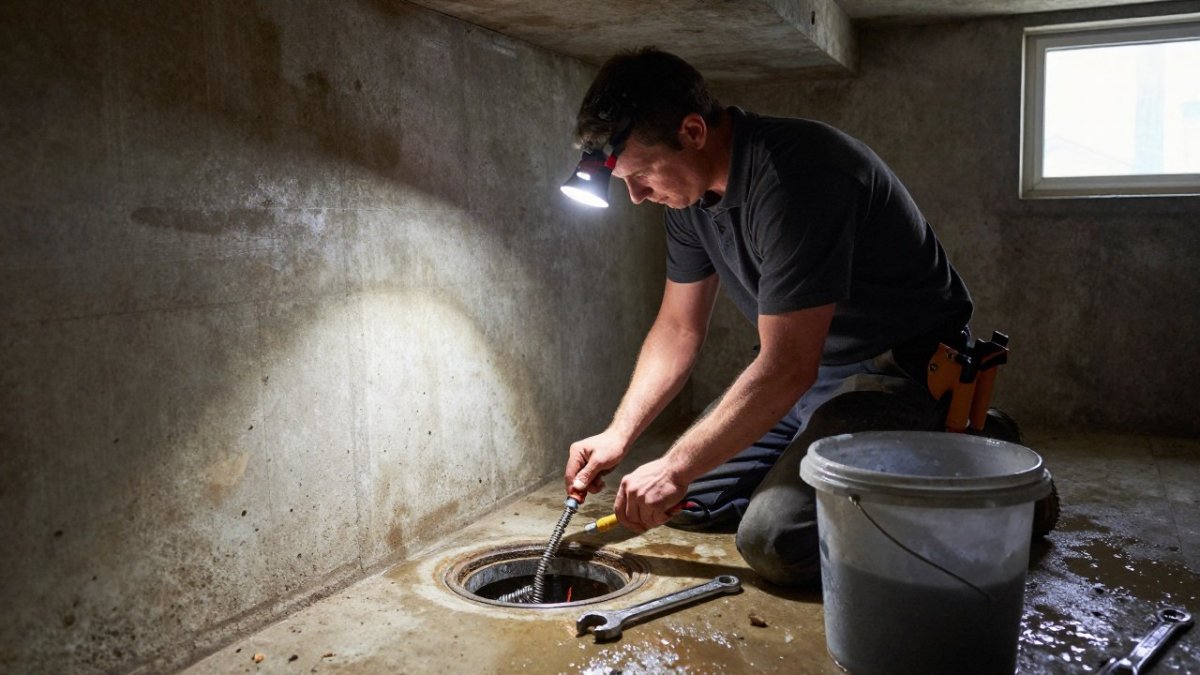
- Use a plumbing auger, turning it slowly to hook the clog. Do not force it.
- Pull out what you can, then flush with warm water to check the flow.
Stop and call a professional if:
- The drain backs up into the basement when you run a fixture
- Water rises in the drain after heavy rain or snowmelt
- The auger does not reach the clog or keeps stopping
- You smell sewage that stays after cleaning
- You see water staining on the floor or walls near the drain
Do not use harsh chemical drain cleaners. They can damage old pipes, and they add risk if you have to call a plumber later.
Seasonal Prep and a Maintenance Log for North York Homes
North York winters bring heavy snowmelt and spring rain, and both can push more water toward your floor drain. The freeze-thaw cycle matters here: water that seeps into the ground during a thaw can find its way into weeping tiles and foundation drainage, and if the municipal storm or sanitary system is already loaded, that water can back up through the lowest opening in the basement, which is often the floor drain.
A pass/fail seasonal check
Use these checks before the first hard freeze and again before spring storms. Each one has a clear pass or fail so you are not guessing.
- Trap seal: Pass if you see standing water below the grate. Fail if the opening is dry or the water level is low; refill with a bucket of water.
- Grate and opening: Pass if the grate sits flush and the opening is clear. Fail if debris, grit or leaves are packed around the rim; clear them before the next rain.
- Drain response: Pass if a bucket of water drains away within a minute or two. Fail if water stands or drains slowly; note it and treat it as a possible clog.
- Backup signs: Pass if the drain stays dry when you run a nearby fixture. Fail if water rises in the drain when the washing machine or sink drains; stop using that fixture and call a plumber.
- Sump and downspout routing: Pass if sump discharge and downspouts send water away from the foundation. Fail if either empties near the floor drain or against the foundation wall, which concentrates water exactly where you do not want it.
What to do before and after the thaw
Before the freeze, refill the trap and clear the grate so meltwater has a clear path. After the thaw, check the drain again, because frost heave and saturated ground can shift pipes and open small cracks that were not there in the fall. If you see water staining on the floor or walls near the drain after a thaw, treat it as a sign of a possible pipe or seal problem rather than a cleaning issue.
Keeping a maintenance log
Keep a simple log. Write down the date you added water, when you cleaned the drain, and any smell or slow draining you noticed. Over a year, the log shows patterns, such as a drain that dries out faster in summer heat or one that backs up only after heavy rain.
A licensed plumber can confirm what applies to your home before any change to a drain connection.
When to Book a Plumber to Inspect Your Floor Drain
Call a plumber if the drain keeps smelling after you refill the trap, backs up, or shows signs of a cracked pipe or a failing seal. A professional can check the trap, the pipe and whether the drain connects to the sewer correctly.
UMark Plumbing and Drain Inc. offers 24/7 emergency and routine plumbing service. If you need help, book a plumbing inspection to have your floor drain checked by a certified technician. Before you hire anyone, you can also compare local plumbing companies to see what each one offers.
For a rough idea of what a visit involves, see what to expect from a plumbing quote before you book. If a slow drain is the problem and you want to try a gentler fix first, read our tips on clearing a clogged drain naturally. For ongoing upkeep in your home, residential drain cleaning tips for North York homes cover seasonal care in more detail.
Frequently Asked Questions
How often should you clean a basement floor drain?
Most basement floor drains that are used rarely need a light cleaning about once a year, with the cover removed, visible debris lifted out and the opening wiped clean. Drains in laundry areas or drains that see frequent water use may need checking every few months. Pair the cleaning with a monthly routine of pouring water into the drain so the trap seal stays full. If you notice a slow drain or an odour, clean it sooner rather than waiting for the next scheduled check.
Should you pour water down a basement floor drain?
Yes. Pouring about a litre of water into a basement floor drain every few weeks, and especially every month in a home where the drain is rarely used, keeps the water seal in the P-trap topped up. Without that seal, sewer gas can rise into the basement and cause an unpleasant smell. Use plain tap water rather than harsh chemicals, and pour it in whenever you are not sure how long it has been since the drain was used.
How do you stop a basement floor drain from smelling?
Odours usually come from a dry trap, so the first step is to refill the trap with water. If the smell continues, remove the cover and clean the drain opening and the surrounding grate to clear soap scum and debris. Check that the floor drain is not connected to a dry or broken line, and that no cracks have opened around the drain. If the odour returns after a refill and cleaning, book a plumber to inspect the drain line.
When should you call a plumber about a basement floor drain?
Call a plumber if the drain still backs up after you have cleaned it, if water rises out of the drain during heavy rain or when a nearby fixture is used, or if the smell persists after refilling the trap. Sewer odour that does not clear, gurgling sounds from the drain, or water pooling on the basement floor are also signs of a problem in the line. UMark Plumbing and Drain Inc. offers inspections and repairs, and you can request a free quote through the company website.