 How-to
How to Flush Sediment From a Water Heater Step by Step
Last Updated: November 16, 2026
Quick Summary
To flush sediment from water heater tanks, first cut the power or gas and shut off the cold-water supply, then let the tank cool. Attach a hose to the drain valve, drain the tank, and flush with cold water until the output runs clear.
- Switch off the breaker or set the gas control to Pilot before draining the tank.
- Let the tank cool for a few hours before opening the drain valve.
- Flush with cold water in short bursts until the water runs clear.
- Refill the tank completely before restoring power or gas.
- Flush once a year, or every six months in hard-water homes.
Table of Contents
- Why Sediment Builds Up in Your Water Heater
- Tools and Materials You Will Need
- How to Drain and Flush a Water Heater Safely
- Flushing an Electric Water Heater Step by Step
- What to Do When the Water Heater Drain Valve Clogged With Sediment
- How Long Flushing a Water Heater Takes and How Often to Do It
- Restarting Your Water Heater and Knowing When to Call a Professional
- Frequently Asked Questions
Water heaters that rumble, pop, or run out of hot water too fast are a common sign of sediment buildup. According to Natural Resources Canada energy efficiency data, maintaining your water heater is a primary way to ensure energy efficiency. Learning how to flush sediment water heater tanks is one of the most effective ways to bring the tank back to full performance. This guide walks through how to flush sediment from a water heater step by step, which tools you need, and when the job is better left to a pro.
Why Sediment Builds Up in Your Water Heater
Water carries minerals, and when the tank heats that water, some of those minerals settle at the bottom. Over time they form a layer of sediment. In hard-water areas, the buildup can get thick enough to cover the heating element on electric models or trap heat under the burner on gas models. The result is slower heating, higher energy use, and that popping or rumbling noise as water boils under the layer.
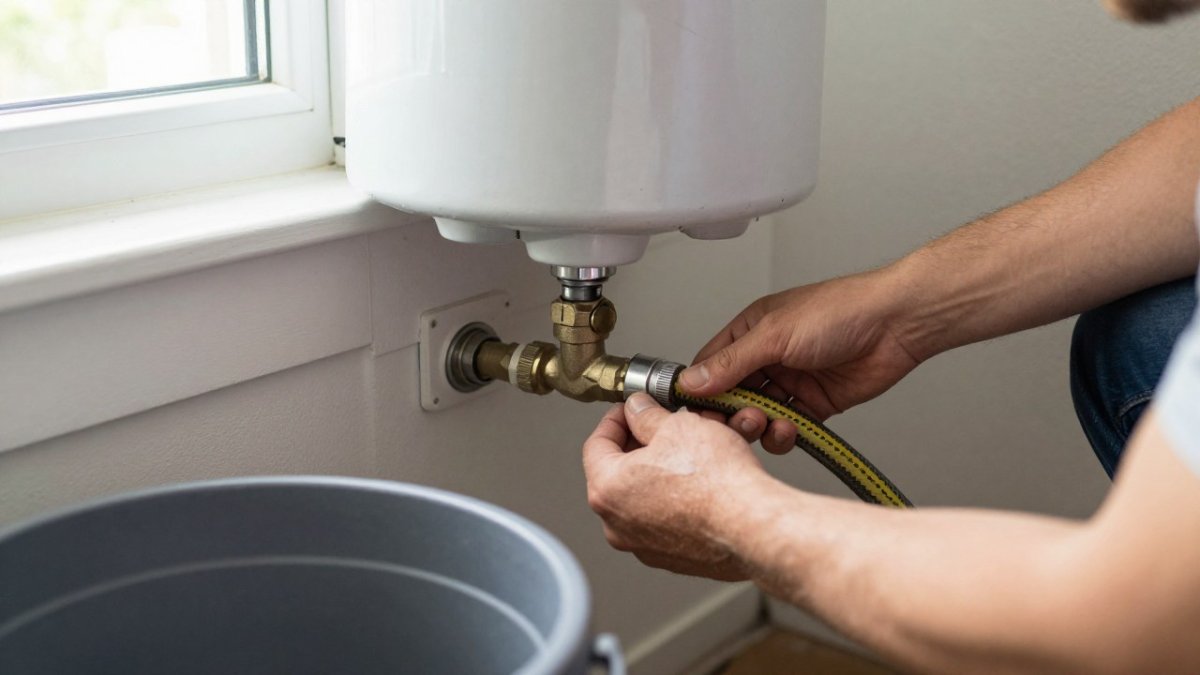
Sediment is also the most common reason a drain valve clogs. If you have never flushed sediment water heater tanks, the valve may be packed with grit. A tank that is very old or leaking should be inspected before you do anything. For more on that noise, see our guide on Why Does My Water Heater Make a Popping Sound?
Tools and Materials You Will Need
Gather everything before you start, so you are not hunting for parts with the power off:
- A garden hose that reaches a floor drain or outdoor drain
- A flathead screwdriver or adjustable pliers for the drain valve
- A bucket or two for catching hot water during draining
- Rubber gloves and safety glasses
- A non-contact voltage tester for electric models
- A flashlight
- Optional: a small wire brush or stiff rod to clear the valve opening
How to Drain and Flush a Water Heater Safely
Safety comes first. The water inside a tank can be 60°C or hotter, which is hot enough to cause a serious scald in under a second, and gas or electric controls can cause injury if handled carelessly. Plan the whole job before you touch a valve, and take your time with the steps below.
Shutting Off Power or Gas and the Cold-Water Supply
Start by cutting the heat source so the element or burner stops running:
- Electric models: Switch off the breaker that feeds the water heater at the panel. Label it or tape it so nobody flips it back on while you are working. Confirm with a non-contact voltage tester at the element terminals before you drain anything.
- Gas models: Turn the gas control valve to "Pilot" or "Off." Do not light the burner while the tank is empty. If you smell gas at any point, stop, leave the area, and call your gas utility's emergency line.
Next, shut off the cold-water supply valve at the top of the tank. Then open a hot-water tap somewhere in the house to relieve pressure and let air into the system. Let the tank sit for a few hours so the water cools before you drain it.
Draining the Tank and Flushing With Cold Water
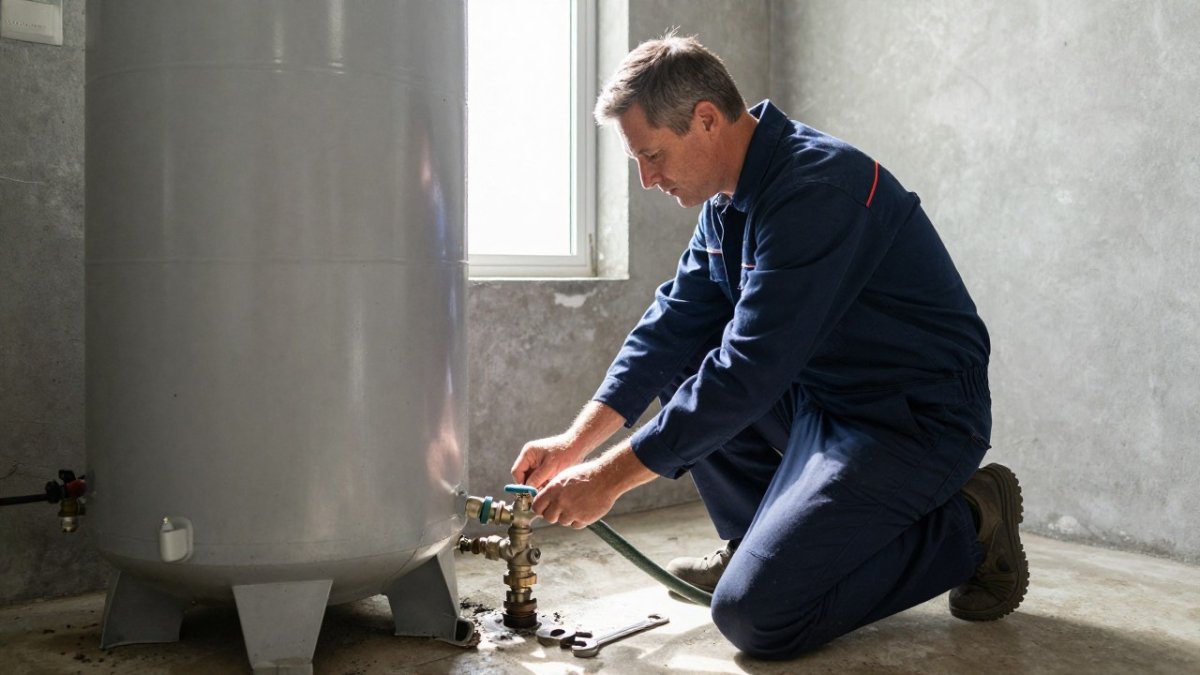
Attach the garden hose to the drain valve at the bottom of the tank. Run the other end to a floor drain, laundry sink, or outdoor drain that can handle hot water and sediment. Secure the hose so it cannot whip or slip out when the valve opens.
Watch out: the first water out of the tank can be hot enough to scald, and it will carry grit that can stain or damage nearby surfaces. Keep children and pets away from the discharge area, and do not let the hose outlet sit against grass, flooring, or a finished wall.
Open the valve slowly. If it sputters or stops, sediment is likely blocking it. Open the hot tap again to let air in and keep water moving. Once the water runs clear, turn on the cold-water supply for a short burst to stir up remaining sediment, let it drain out, and repeat a few times until the water coming out of the hose is clear.
Then close the drain valve, remove the hose, and refill the tank by opening the cold supply with a hot tap open until water flows steadily. Do not restore power or gas until the tank is completely full. Running an electric element or gas burner with a partly empty tank can damage the heater and create a safety hazard.
Flushing an Electric Water Heater Step by Step
Electric models follow the same basic flush, with a few differences that matter for both safety and equipment life:
- Turn off the breaker at the panel and confirm there is no power at the element terminals with a non-contact voltage tester. Do not rely on the thermostat setting alone.
- Shut off the cold-water supply and drain the tank as described above. Open a hot tap to break the vacuum and keep water moving.
- Flush with cold water until the output runs clear. If the water is heavily gritty, repeat the burst-flush cycle two or three times.
- Refill the tank completely before turning the power back on. Running the element with an empty or partly empty tank can burn it out in seconds. Wait until water flows steadily with no sputtering before you touch the breaker.
- Once the tank is full and hot water is flowing from the taps, switch the breaker back on and let the water heat fully before testing.
Many electric tanks also have an access panel behind insulation. With the power off and the tank drained, you can check the element and thermostat for scale buildup. Watch out: do not pull on wiring or force the element, and do not remove the thermostat unless you are comfortable reinstalling it correctly. If the element is heavily scaled or the tank shows corrosion, stop and call a licensed plumber rather than reassembling a damaged unit.
If your home has a tankless electric unit, do not follow these steps. Tankless heaters are flushed differently, usually with a descaling pump and manufacturer-specific ports, and the procedure does not involve draining a storage tank.
What to Do When the Water Heater Drain Valve Clogged With Sediment
A clogged drain valve is one of the most common problems people run into. If your drain valve is clogged and the tank may be failing, our guide on what to do if your hot water tank bursts explains the steps to take. Do not force it. Here is what to try:
- Open the hot-water tap in the house to let air in, then try the valve again.
- Gently push a thin wire or rod into the valve opening to break up grit.
- Close the valve, then reopen it with a small burst of cold water from the supply to flush debris out.
If the valve still will not open or leaks after you have tried these steps, stop. A cracked or damaged valve can flood the room. Shut off the supply and call a plumber. Our guide on how to troubleshoot common water heater issues at home covers other warning signs to watch for.
How Long Flushing a Water Heater Takes and How Often to Do It
Most homeowners can complete a basic flush in one to two hours, plus cooling time. Allow an extra hour or two if the valve is clogged or the tank is heavily scaled. According to Statistics Canada housing maintenance data, regular maintenance is key to extending the lifespan of household appliances.
For most homes, flushing once a year is a good routine. Homes with hard water may need it every six months. Signs that a flush is due include slower hot water, rumbling noises, and a rusty or cloudy color when you draw hot water.
| Item | Value | Note |
|---|---|---|
| Basic flush time | One to two hours | Plus cooling time |
| Clogged valve extra time | One to two hours | Allow extra for heavy scaling |
| Standard flush frequency | Once a year | Good routine for most homes |
| Hard water frequency | Every six months | For hard-water homes |
| Water temperature | 60°C or hotter | Can scald in under a second |
Restarting Your Water Heater and Knowing When to Call a Professional
After the tank is full, check for leaks around the drain valve and fittings before restoring power or gas. Relight a gas pilot according to the manufacturer's label, and turn the electric breaker back on only once the tank is full. Let the water heat fully, then run a hot tap to confirm it works.
Call a professional if you see leaks, smell gas, notice the pilot will not stay lit, or find that the drain valve is damaged. If you need help, UMark Plumbing and Drain Inc. offers 24/7 emergency and routine plumbing services. For sudden leaks or bursts, see our guide on signs of a burst pipe emergency. You can also get a quote from our team for plumbing repairs.
Frequently Asked Questions
How do you flush sediment out of a water heater?
Turn off the power or gas supply, then shut off the cold-water inlet valve. Attach a garden hose to the drain valve at the bottom of the tank and run the other end to a floor drain or outdoor area. Open the drain valve and let the water run out completely. Briefly open the cold-water supply to stir up remaining sediment, and drain again until the water runs clear. Close the drain valve, remove the hose, open the cold-water supply to refill the tank, and only restore power or gas once the tank is full and hot-water taps have run to clear air.
How long does it take to flush a water heater?
Most flushes take about one to two hours from start to finish, though a tank that is heavily clogged can take longer. Draining a typical tank often takes 20 to 30 minutes, and the refill plus purging air from the lines adds more time. Plan for a longer job if the drain valve is slow or partially blocked. For current pricing, ask UMark Plumbing and Drain Inc. or check the business's pricing page.
How often should you flush a water heater in Ontario?
Many homeowners flush a tank water heater about once a year, and more often if your water is hard or the tank shows signs of sediment such as rumbling, popping, or reduced hot-water capacity. Tankless units need a different descaling routine. Older tanks that have never been maintained should be approached carefully, so have a professional assess it first.
What should you do if sediment keeps coming out of the drain valve?
If the drain valve keeps releasing sediment or stays clogged after several flushes, the tank may have heavy buildup that a basic hose flush cannot clear. Do not force the valve open or use excessive force, which can crack it. Repeated sediment returns and a valve that will not drain fully are good reasons to call UMark Plumbing and Drain Inc. for an inspection and repair or replacement of the valve.