 how-to
Hiring Certified Plumbers for Rentals: A 2026 Guide
Table of Contents
- Why Hiring Certified Plumbers for Rentals Is Non-Negotiable
- How to Verify Plumbing Trade Certification in Your Province
- Landlord Liability for Plumbing Repairs: What Canadian Law Requires
- Contractor Vetting Checklist for Landlords
- Emergency vs. Routine Maintenance: Setting Up the Right Protocols
- Pricing Models for Certified Plumbers for Rentals
- Full-Time Maintenance Technician vs. Independent Plumbing Contractor
- Conclusion
Last Updated: August 8, 2026
Why Hiring Certified Plumbers for Rentals Is Non-Negotiable
Certified plumbers for rentals are a legal and financial necessity for Canadian landlords. When plumbing work fails, liability falls on the property owner. Unlicensed repairs void insurance policies, breach provincial tenancy law, and expose landlords to significant legal claims. At UMark Plumbing and Drain Inc., we work with property managers across North York and Vaughan who have learned this lesson the hard way.
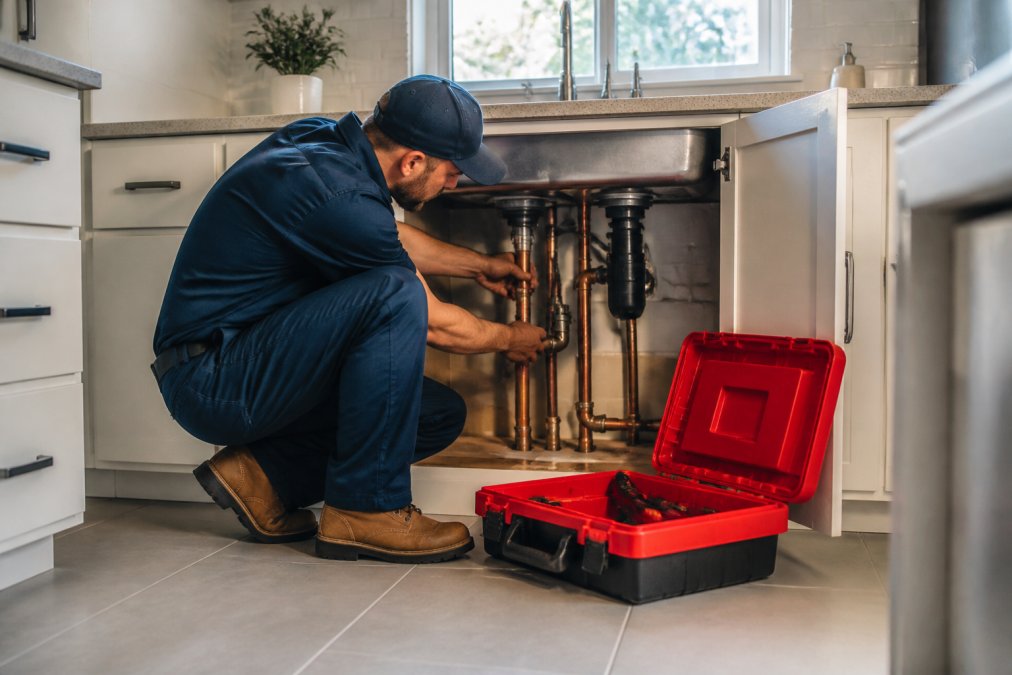
A certified plumber has passed provincially regulated trade examinations, carries liability insurance, and performs work that can be inspected and permitted. An unlicensed handyman carries none of that accountability. For landlords managing multiple units, the difference is between a defensible repair record and uninsured liability.
Plumbing systems in rental properties face heavier wear than owner-occupied homes due to tenant turnover, inconsistent maintenance, and aging infrastructure. This creates frequent service calls and tempts landlords to cut costs with cheaper, unqualified labour, a costly mistake.
According to Ontario's Residential Tenancies Act guidance, landlords must maintain rental units in good repair and fit for habitation, including all mechanical systems. Plumbing is explicitly covered. Failure to meet this standard can result in rent abatements, tribunal orders, and civil liability.
How to Verify Plumbing Trade Certification in Your Province
Verifying a plumber's credentials before hiring is essential. The process differs slightly by province, but the core principle is consistent: always confirm licensure before work begins.
Red Seal vs. Provincial Journeyperson Certificates
A Red Seal certificate is nationally recognized through the Interprovincial Standards Program, confirming competency across all participating provinces and territories.
A provincial journeyperson certificate is issued by provincial authorities and confirms completion of apprenticeship and a provincial trade exam. In Ontario, the College of Trades oversees plumbing certification; a licensed plumber must hold a Certificate of Qualification as a 306A (Plumber) journeyperson.
For most rental property repairs, a licensed provincial journeyperson is sufficient. Red Seal becomes relevant when hiring a plumber trained in a different province.
Where to Check a Plumber's License Online
- Ontario: Search the Ontario College of Trades certificate verification tool to confirm active Certificate of Qualification.
- British Columbia: Check the BC Industry Training Authority credential registry for journeyperson status.
- Alberta: The Alberta Apprenticeship and Industry Training office maintains a public registry for certified tradespeople.
Always ask for the plumber's certificate number and verify it yourself before signing any agreement. A legitimate licensed plumber will provide this without hesitation.
Landlord Liability for Plumbing Repairs: What Canadian Law Requires
Provincial residential tenancy legislation places the obligation for maintaining plumbing systems firmly on the landlord. This includes emergency repairs and routine upkeep of pipes, fixtures, drains, and water supply systems.
The standard is not simply "fix it when it breaks." Landlords must maintain systems proactively. If a landlord knew or reasonably should have known that a plumbing system was deteriorating and failed to act, that negligence can be used against them in a tenancy tribunal hearing.
How Unlicensed Work Affects Your Insurance Coverage
Many property insurance policies void coverage for damage caused by unlicensed contractors. If a pipe bursts following a repair by an unlicensed individual, your insurer may deny the claim on the basis that the repair was not performed to code.
Consequences compound quickly: water damage goes uninsured, mould remediation costs fall on the landlord, tenants may pursue legal action, and municipal inspectors may require full system re-inspection.
A licensed plumber performing permitted work creates a documented paper trail, your primary defence in an insurance dispute or tenancy tribunal proceeding.
Contractor Vetting Checklist for Landlords
For rental property owners, the contractor vetting process should prioritize risk reduction first and cost second.
Here is a practical contractor vetting checklist:
- Confirm provincial journeyperson certification and verify the certificate number through the relevant provincial registry
- Request proof of liability insurance (minimum $2 million general liability is standard)
- Ask for WSIB or WCB clearance to confirm registration with the provincial workers' compensation board
- Review plumbing code familiarity, specifically Ontario Building Code or your provincial equivalent
- Request references from other rental property clients
- Clarify emergency availability and on-call service
- Get the scope of work in writing with a signed work order
- Confirm permit-pulling responsibility for work requiring permits

Insurance and Liability Coverage to Require
Liability insurance and WSIB coverage are non-negotiable. Without them, a landlord can be held personally liable for injuries during a plumbing repair.
| Coverage Type | What to Require | Why It Matters |
|---|---|---|
| General Liability Insurance | Current certificate of insurance | Covers property damage caused by the contractor |
| WSIB / WCB Clearance | Current clearance certificate | Protects landlord from injury liability on site |
| Plumbing Contractor License | Provincial journeyperson certificate | Confirms legal authorization to perform plumbing work |
| Commercial Auto Insurance | If contractor uses a vehicle on site | Covers incidents involving contractor vehicles |
Always request certificates directly from the insurer, not copies from the contractor.
Evaluating Technical Proficiency and Troubleshooting Ability
Ask candidates to walk you through how they would diagnose a recurring drain backup or water pressure drop. A skilled plumber describes a systematic diagnostic process; a less experienced one describes what they would replace first.
Emergency vs. Routine Maintenance: Setting Up the Right Protocols
Emergency repairs and routine maintenance require different contractor relationships, response timelines, and budgets.
Emergency repairs include burst pipes, sewage backups, complete water loss, and active leaks causing structural damage. These require a plumber with confirmed on-call availability and a guaranteed response window.
Routine maintenance includes annual inspections, drain cleaning, water heater servicing, and preventative checks. These can be scheduled in advance and batched to reduce per-visit costs.
Maintain two contractor relationships: a primary certified plumber for routine work and a confirmed emergency contact with documented on-call availability.
A well-structured emergency protocol should include:
- The certified plumber's direct after-hours contact number
- A confirmed maximum response time in writing
- Pre-authorization for emergency repairs up to a set dollar threshold
- A tenant communication template for reporting issues
Pricing Models for Certified Plumbers for Rentals
Pricing varies based on job type, urgency, geography, and contractor overhead. For rental property owners managing multiple units, understanding pricing models is important.
For current pricing on certified plumbing services in North York and Vaughan, visit the UMark Plumbing and Drain Inc. pricing page or request a free quote.
Hourly Rate vs. Fixed Fee: Which Works Better for Landlords
Hourly rate pricing is standard for diagnostic work and repairs where scope is unknown. An experienced plumber will give a time estimate upfront.
Fixed fee pricing is preferable for defined-scope work: replacing a water heater, installing a toilet, re-piping a bathroom. When scope is clear, a fixed fee protects the landlord from cost creep.
| Pricing Model | Best For | Landlord Risk | How to Manage |
|---|---|---|---|
| Hourly Rate | Diagnostics, unknown-scope repairs | Cost overruns | Get written time estimate upfront |
| Fixed Fee | Defined installations, replacements | Scope creep disputes | Specify scope in writing before work starts |
| Retainer / Service Agreement | Multi-unit properties, routine maintenance | Underuse of contract | Tie to specific service call volume |
For multi-unit properties, a retainer or service agreement with a certified plumbing contractor often delivers better value than ad-hoc calls.
Full-Time Maintenance Technician vs. Independent Plumbing Contractor
Property managers sometimes weigh hiring a full-time maintenance technician against maintaining relationships with independent plumbing contractors.
A full-time maintenance technician provides on-site availability and lower per-task cost at scale. The limitation is scope: a general technician is not a licensed plumber. Any work involving the plumbing system beyond basic fixture tightening requires a licensed journeyperson under Ontario Building Code. Using a technician for unlicensed plumbing work creates the same liability exposure as hiring an unlicensed contractor.
An independent plumbing contractor brings full certification, insurance, and code compliance. The trade-off is response time and cost per visit.
The practical solution for most portfolios is a hybrid: a general maintenance technician for day-to-day tasks, combined with a standing contractor agreement with a certified plumbing company for all plumbing-specific work. According to Canada Mortgage and Housing Corporation's rental property maintenance guidelines, maintaining documented maintenance records, including contractor credentials, is a best practice.
Rental property plumbing failures do not wait for convenient timing, and consequences of substandard repairs accumulate fast. UMark Plumbing and Drain Inc. brings over 20 years of certified plumbing experience to residential and commercial properties across North York and Vaughan, with 24/7 emergency availability and a certified team that documents every repair. Get a free quote from UMark Plumbing and Drain Inc. and have a certified contractor relationship in place before you need one.
Frequently Asked Questions
Are landlords required to hire licensed plumbers in Canada?
Yes. In most Canadian provinces, plumbing work on residential rental properties must be performed by a licensed plumber holding a valid journeyperson certificate or equivalent provincial credential. Ontario's Ontario Building Code, for example, requires permits and licensed tradespeople for most plumbing alterations. Failing to use a licensed plumber can void building permits, breach municipal plumbing codes, and expose landlords to fines or liability claims from tenants under provincial residential tenancy legislation.
How do I verify a plumber's certification in my province?
Each province maintains a public registry. In Ontario, you can confirm a plumber's Certificate of Qualification through the Ontario College of Trades (now operating under Skilled Trades Ontario). Other provinces use similar bodies. Ask the plumber for their license number, then cross-reference it on the provincial regulator's website. Also confirm their employer holds a valid contractor agreement and carries current liability insurance. A certified plumber for rentals should provide documentation without hesitation.
What are the risks of hiring an unlicensed plumber for rental repairs?
Hiring an unlicensed plumber puts you at serious risk on several fronts. Insurance policies for rental properties typically exclude damage caused by unlicensed work, meaning a burst pipe repaired improperly could leave you covering tens of thousands of dollars out of pocket. Provincial residential tenancy acts also hold landlords responsible for maintaining units in a good state of repair. If faulty plumbing injures a tenant and the work was done by an uncertified contractor, you face direct liability.
How can I find affordable, certified plumbers for rental properties?
Start by asking local property management associations for referrals to licensed plumbing contractors familiar with rental property requirements. Request itemized quotes from at least two or three providers so you can compare hourly rates, fixed-fee service call structures, and on-call availability for emergency repairs. Prioritize plumbers who offer preventative maintenance agreements, as scheduled service visits typically cost less than emergency call-outs. Check that any contractor you hire carries liability insurance and holds a current plumbing license before signing a contractor agreement.
This article was written using GrandRanker