 how-to
How to Clear a Clogged Drain Naturally
Table of Contents
- Diagnose Your Clogged Drain Before You Start
- Clear a Clogged Drain with Boiling Water
- Use Baking Soda and White Vinegar for Stubborn Clogs
- How to Use a Plumbing Snake for Deeper Blockages
- Remove Hair and Grease with Salt and Soda Crystals
- Signs of a Main Sewer Line Blockage
- When to Call a Professional Plumber
- Prevent Future Clogs with Maintenance
- Frequently Asked Questions
Last Updated: September 27, 2026
Diagnose Your Clogged Drain Before You Start
A clogged drain naturally requires different approaches depending on where the blockage sits and what's causing it. Identifying the problem first saves time and prevents damage to your plumbing system.
Identify the clog location and type
A slow-draining sink usually points to a partial blockage near the drain opening, while standing water suggests a deeper obstruction.
Ask yourself these questions:
- Is one fixture affected or multiple drains in your home?
- Does water drain slowly or not at all?
- Have you noticed any unusual odors?
- When did the problem start?
Visual and tactile diagnostic guide
Before you commit to a remedy, perform these quick checks to confirm the clog type and severity:
For kitchen sinks:
- Appearance: Cloudy water with visible grease film
- Smell: Rancid or sour odor
- Best remedy: Boiling water first, then baking soda and vinegar if needed
- Why: Heat breaks down grease; chemical reaction dislodges hardened deposits
For bathroom sinks and showers:
- Appearance: Hair visible around drain opening; slow drainage
- Smell: Musty or mildew-like
- Best remedy: Plumbing snake or baking soda and vinegar
- Why: Physical removal works fastest for hair; chemical reaction breaks soap scum bonds
For mixed clogs (kitchen or laundry areas):
- Best remedy: Salt and soda crystals with boiling water, followed by a plumbing snake if needed
- Why: Soda crystals soften deposits; salt provides abrasive action; boiling water dissolves grease; snake removes hair
For deep clogs (affecting multiple drains or main line):
- Appearance: Water backing up into multiple fixtures simultaneously; slow drainage throughout the home
- Smell: Sewage or foul odor from drains or yard
- Gurgling sounds: Toilets or drains make bubbling noises when other fixtures drain
- Best remedy: Call a professional plumber
- Why: DIY methods cannot reach or diagnose blockages in main sewer lines; attempting them risks pushing debris deeper or damaging pipes
Check your pipe material for safety
Drain pipes come in different materials requiring different approaches. Cast iron corrodes over time; copper resists damage; PVC is common in modern homes. Older homes may have fragile clay or galvanized steel pipes that need gentler methods. If your home was built before 1980, assume older materials until confirmed.
Material-specific remedy guide:
- PVC (white or light grey plastic): Safe for all natural methods; boiling water is fine
- Copper (reddish-brown metal): Safe for all natural methods; most durable option
- Cast iron (dark grey or black, often corroded-looking): Avoid aggressive plumbing snakes; use boiling water and baking soda/vinegar safely
- Galvanized steel (silver-grey metal with visible corrosion): Use gentler methods only; avoid boiling water poured rapidly; prefer baking soda and vinegar
- Clay or ceramic (visible in very old homes, often cracked or discoloured): Call a professional; DIY methods risk pipe damage
Clear a Clogged Drain with Boiling Water
Boiling water is often the simplest and most effective method to clear a clogged drain naturally. Heat breaks down grease and loosens debris in minutes, but pipe material determines safety.
How boiling water works
Heat softens grease buildup, allowing debris to move through the drain. Grease melts around 40-50°C, so boiling water (100°C) is most effective for kitchen drains with grease accumulation.
Material-specific safety guidelines
Safe for these pipe materials:
- PVC: Safe when poured slowly to minimize thermal shock
- Copper: Highly heat-resistant; no risk from boiling water
- Cast iron: Generally safe; use hot (not boiling) tap water if pipes show visible corrosion
Proceed with caution:
- Galvanized steel: Use hot tap water (60°C) instead of boiling water to avoid stressing the zinc coating
- Clay or ceramic: Avoid boiling water; use baking soda and vinegar instead
Check under the sink to identify material: PVC is white/light grey plastic; copper is reddish-brown; cast iron is dark grey/black; galvanized steel is silver-grey with bumpy texture.
Step-by-step boiling water method
- Boil 3-4 litres of water
- Remove standing water from the sink or tub
- Pour boiling water slowly down the drain
- Wait 5-10 minutes
- Flush with hot tap water for 30 seconds
- Repeat if needed
When boiling water works best
Boiling water works best for fresh grease clogs in kitchen sinks and partial blockages in PVC or copper pipes. It's less effective for hair clogs, hardened grease, soap scum, and deep blockages.
Use Baking Soda and White Vinegar for Stubborn Clogs
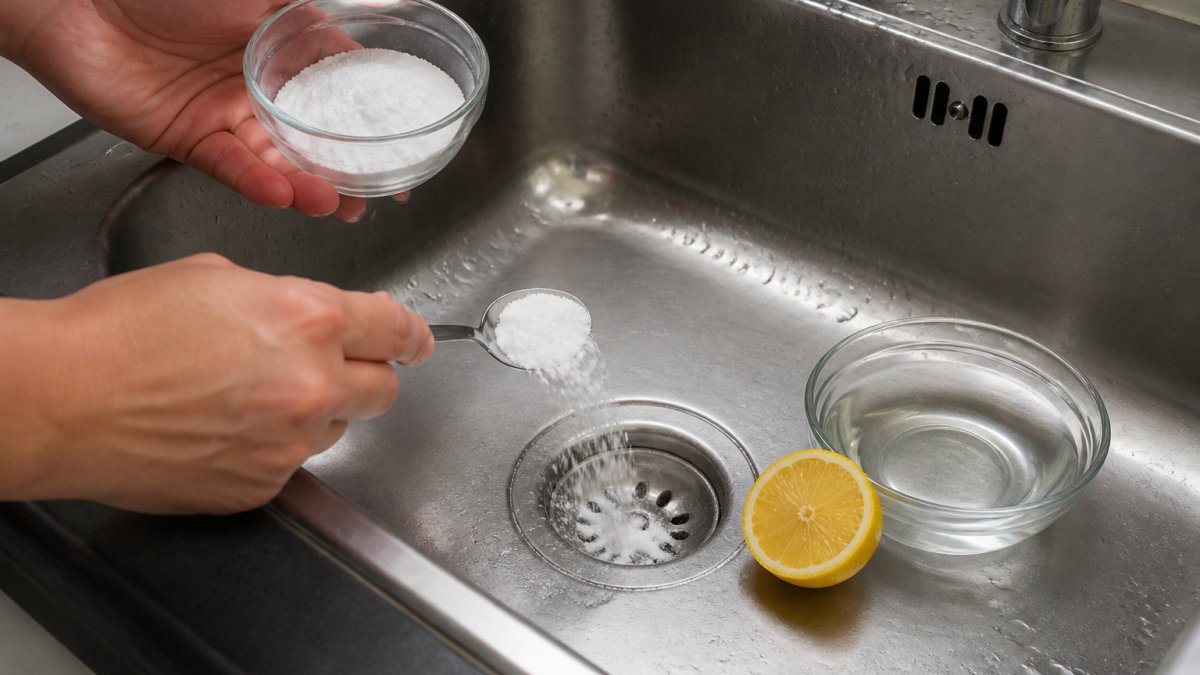
The baking soda and vinegar reaction creates fizzing action that breaks apart debris. This chemical-free method is safe for septic systems and all pipe materials.
Step-by-step process:
- Remove standing water
- Pour half a cup of baking soda down the drain
- Follow with half a cup of white vinegar
- Cover the drain opening
- Let sit for 30 minutes (or 1 hour for tougher clogs)
- Flush with hot water
- Repeat if needed
How to Use a Plumbing Snake for Deeper Blockages
A plumbing snake reaches deeper blockages by breaking apart clogs and pulling out debris like hair. You can rent one inexpensively or buy a basic model.
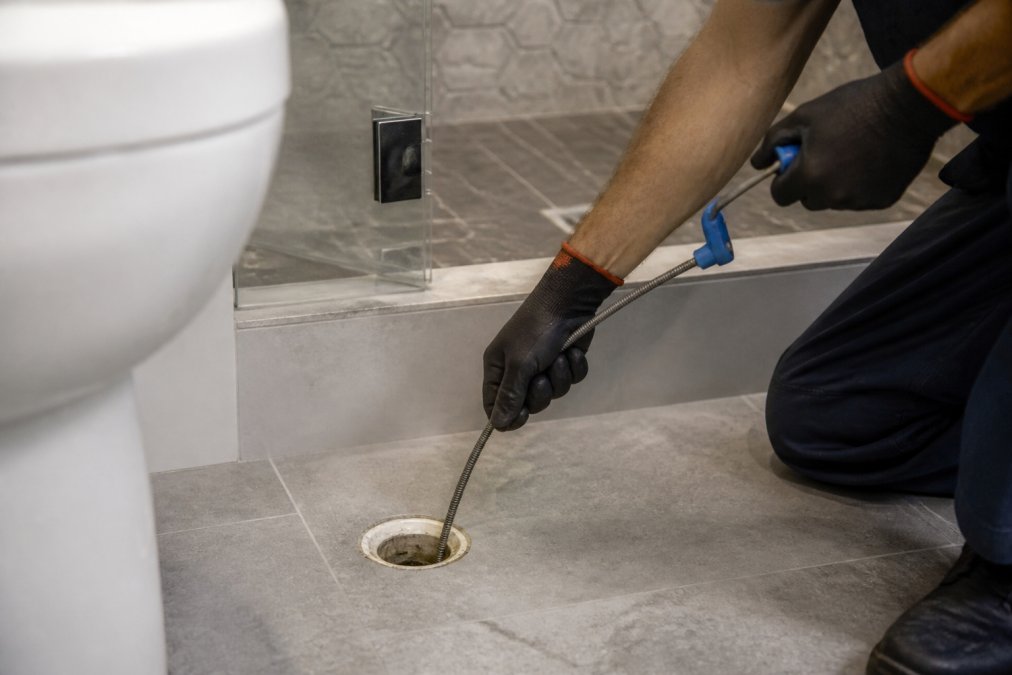
How to use a drain snake:
- Insert the snake head into the drain opening
- Turn the handle clockwise while pushing gently forward
- When you feel resistance, turn and push to break through the clog
- Pull the snake back slowly to remove debris
- Repeat until water drains freely
- Flush with hot water
Remove Hair and Grease with Salt and Soda Crystals
Salt and soda crystals create an abrasive combination that scrubs away buildup. This natural method works well for mixed clogs containing both hair and grease. Soda crystals are stronger than baking soda and work better for stubborn deposits.
How to use salt and soda crystals:
- Pour half a cup of soda crystals down the drain
- Add half a cup of salt
- Follow with a kettle of boiling water
- Let sit for 30 minutes
- Flush with hot tap water
Salt and soda crystals work because:
- Salt provides abrasive scrubbing action
- Soda crystals soften mineral deposits
- Boiling water dissolves grease
- The combination tackles multiple clog types
Signs of a Main Sewer Line Blockage
A main sewer line blockage affects your entire home's drainage. Multiple drains backing up at once signals a serious problem. This is beyond DIY territory and requires professional attention.
Watch for these warning signs:
- Multiple drains draining slowly (kitchen, bathroom, laundry)
- Gurgling sounds from drains or toilets
- Sewage smell inside or outside your home
- Raw sewage backing up into showers or tubs
- Unusually lush patches of grass in your yard (from sewage leaking underground)
When to Call a Professional Plumber
Call a professional if:
- Natural methods don't work after two attempts
- You suspect a main sewer line blockage
- You have older pipes that might be fragile
- Water is backing up into multiple drains
- You see sewage or foul-smelling water
- A clog keeps returning within weeks
Our certified team at UMark Plumbing and Drain Inc. responds 24/7 to drain emergencies. Quick professional service prevents water damage and keeps your system running properly.
Prevent Future Clogs with Maintenance
Prevention is easier than clearing clogs. Simple maintenance habits keep your drains flowing freely and extend the life of your plumbing system.
Monthly drain maintenance:
- Pour boiling water down drains once a month
- Use drain strainers to catch hair and debris
- Wipe grease off dishes before washing
- Never pour cooking oil down drains
Quarterly deep cleaning:
- Use the baking soda and vinegar method quarterly
- Flush drains with hot water regularly
- Clean drain covers and remove visible debris
Habits that prevent clogs:
- Install drain covers in showers and tubs
- Use a hair trap in bathroom sinks
- Dispose of food waste in the trash, not the sink
- Avoid flushing anything except toilet paper
Frequently Asked Questions
Can baking soda and vinegar damage your pipes when clearing a clogged drain?
Baking soda and vinegar create a safe, non-toxic reaction that works well for minor clogs in most modern plastic or metal pipes. However, if your home has older cast iron or clay pipes, the effervescent reaction can sometimes dislodge debris that causes blockages elsewhere. Always check your pipe material first. The reaction is gentler than chemical drain cleaners and won't corrode your drainage system when used properly.
How do you know if a clogged drain requires professional plumbing services?
Call a professional plumber if standing water won't drain after trying natural methods, if multiple drains are slow simultaneously (suggesting a main line issue), if you see sewage backing up, or if you hear gurgling sounds from your pipes. Also contact a plumber if the clog keeps returning within weeks or if you're unsure about your pipe material. A certified technician can diagnose the root cause and prevent costly damage to your drainage system.
What's the fastest way to unclog a drain naturally?
Boiling water works fastest for grease buildup and minor clogs, typically clearing the drain in minutes. Pour a full kettle of boiling water slowly down the drain and let it sit for 5-10 minutes. For hair clogs, a plumbing snake removes the blockage physically in one attempt. Baking soda and vinegar take longer (30-60 minutes) but work well for moderate buildup. The fastest method depends on your clog type, so diagnosis first saves time.
Why should you avoid harsh chemical drain cleaners?
Chemical drain cleaners contain caustic substances that corrode pipes over time, especially older cast iron or clay lines. They release toxic fumes harmful to your health and the environment, and they're not septic-safe. Natural methods like baking soda, vinegar, and boiling water achieve the same result without damaging your plumbing fixture or creating health hazards. Professional plumbers recommend chemical-free solutions to protect both your drainage system and your home.