 how-to
How to Detect Hidden Water Leaks in Basement
Table of Contents
- Signs of Basement Water Damage to Watch For
- Common Causes of Basement Water Infiltration
- Step-by-Step Visual Inspection for Hidden Leaks
- Using Basement Moisture Detection Tools
- Differentiating Condensation from Active Water Seepage
- Exterior Drainage Inspection and Groundwater Assessment
- Cost of Professional Leak Detection Services
- When to Call a Professional Leak Detection Service
- Frequently Asked Questions
Last Updated: September 25, 2026
Signs of Basement Water Damage to Watch For
Learning how to detect hidden water leaks in a basement is crucial because water damage rarely announces itself loudly. It starts small: a damp smell, a faint discoloration on concrete, mineral deposits on foundation walls. These early signals matter because they tell you a problem exists before it becomes expensive.
The most common signs of basement water damage include musty odors, visible water stains on walls or floors, and efflorescence (white, chalky mineral deposits on concrete surfaces). You might also notice mold or mildew growth, peeling paint, rust stains from corroded pipes, or a general dampness that persists even on dry days.
Look for these specific indicators:
- Musty, earthy smells that suggest moisture and mold growth
- Water stains appearing as dark patches or rings on basement walls and floors
- Efflorescence (white crusty buildup) on concrete, a sign water is moving through the foundation
- Peeling paint or wallpaper on basement walls
- Rust streaks running down walls or foundation surfaces
- Visible mold or mildew spots, especially in corners and along baseboards
- Warped wood on basement framing, joists, or stored items
- Damp insulation or soggy materials stored in the basement
If you spot any of these, water is already present in your basement. The question becomes: where is it coming from, and how much damage has it already caused? That's where systematic inspection begins. At UMark Plumbing and Drain Inc., we've helped homeowners identify water problems early, before they turn into structural issues.
Common Causes of Basement Water Infiltration
Not all basement water comes from the same source. Understanding what's causing the moisture is critical because the fix depends entirely on the root cause.
Hydrostatic pressure is one of the most damaging culprits. When soil around your foundation becomes saturated (from heavy rain, poor drainage, or high water tables), it pushes water against your basement walls with significant force. This pressure forces water through tiny cracks in concrete, through porous foundation materials, and even through mortar joints.
Foundation cracks are the highways water uses to enter. Vertical cracks, horizontal cracks, and cracks at corners all allow water seepage. Some cracks develop from settling or structural movement; others appear because concrete naturally shrinks as it cures.
Poor exterior drainage is another major cause. If your downspouts empty too close to the foundation, or if grading slopes toward your house instead of away from it, water collects against basement walls. Surface runoff that pools near the foundation will eventually find its way inside.
Plumbing leaks from supply lines, drain pipes, or fixtures can create persistent dampness. These leaks are often hidden inside walls or under floors, making them harder to spot than obvious water infiltration from outside.
Condensation builds up when warm, humid air meets cold basement walls or pipes. This is especially common in summer months and is often mistaken for active water seepage.
Common causes at a glance:
- Hydrostatic pressure from saturated soil pushing against foundation walls
- Foundation cracks (vertical, horizontal, or at corners) allowing seepage
- Poor grading or surface runoff directing water toward the foundation
- Clogged or missing gutters and downspouts
- Inadequate weeping tile or drainage system performance
- Plumbing leaks from supply lines or drain pipes
- High water table or groundwater rising above foundation level
- Basement window wells collecting water
- Deteriorating foundation mortar or concrete porosity
Step-by-Step Visual Inspection for Hidden Leaks
A systematic visual inspection is your first line of defense. You don't need expensive equipment to spot many water problems, just careful observation and knowing what to look for.
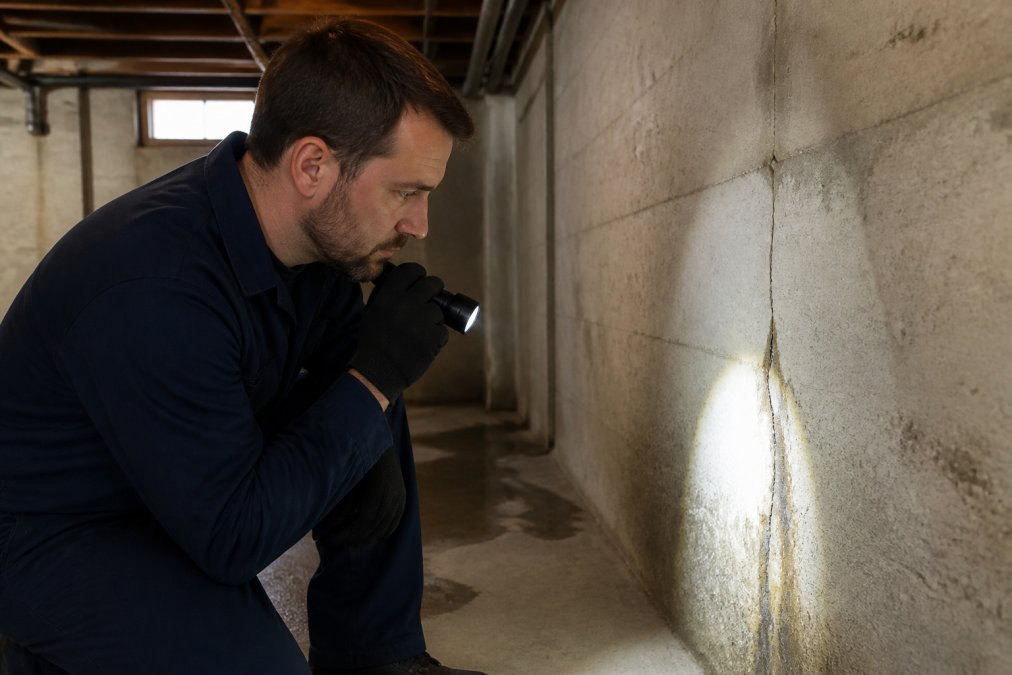
Start with a flashlight and a clear view. Move slowly around your entire basement, examining every wall, corner, and floor. Pay special attention to areas where walls meet floors, where pipes enter the foundation, and around window wells.
Inspecting Exposed Pipes and Plumbing
Plumbing leaks often hide in plain sight. Start by checking all visible pipes, both supply lines and drain pipes, for obvious signs of water damage.
Look for these specific issues:
- Corrosion or rust on copper or steel pipes, which indicates water exposure or pipe deterioration
- Green or white mineral buildup on copper pipes, a sign of active leaking
- Wet spots or dripping water around pipe joints or connections
- Discoloration or staining on insulation wrapped around pipes
- Pipe sweating, condensation beading on cold water supply lines (distinguish this from active leaks)
- Soft or spongy insulation around pipes, indicating prolonged moisture exposure
Identifying Foundation Cracks and Seepage
Foundation cracks come in different forms, and not all of them leak. The size, direction, and location determine whether water will infiltrate.
Using Basement Moisture Detection Tools
Beyond visual inspection, moisture detection tools give you objective data about where water is present and how much moisture your basement contains.
Here's how to use these tools effectively:
- Take baseline readings on dry days to establish normal moisture levels.
- Re-measure after rain or snow melt to see how moisture changes.
- Test multiple surfaces: concrete walls, floors, wood framing, and basement contents.
- Record locations and readings so you can track changes over time.
- Compare readings near suspected problem areas with readings from dry areas.
Differentiating Condensation from Active Water Seepage
This distinction matters because the fixes are completely different. Condensation requires ventilation and humidity control. Seepage requires waterproofing or drainage improvements.
To distinguish between them:
- Timing: Condensation appears consistently in humid weather. Seepage appears during or shortly after rain.
- Location: Condensation forms on cold surfaces (pipes, exterior walls). Seepage typically enters at cracks, joints, or low points where water naturally collects.
- Persistence: Wipe condensation away and it returns within hours. Seepage leaves visible water marks and staining.
- Smell: Condensation-only dampness has minimal odor. Seepage often brings a musty, earthy smell.
Exterior Drainage Inspection and Groundwater Assessment
What happens outside your basement directly determines what happens inside. Poor exterior drainage is one of the most common causes of basement water problems, yet it's often overlooked during inspections.
- Grading: Does the ground slope away from your foundation? Ideally, soil should drop at least 6 inches over the first 10 feet from the house. If ground slopes toward your foundation, water collects against basement walls.
- Gutters and downspouts: Are gutters clean and properly attached? Do downspouts extend at least 6 feet from the foundation? Gutters that overflow or downspouts that empty too close to the house direct water straight to your basement walls.
- Surface runoff: During rain, where does water flow? Does it pool near the foundation or drain away? Pooling water will eventually seep into your basement.
- Weeping tile condition: If your foundation has a visible weeping tile (perforated drainage pipe at the base of the foundation), is it clogged, damaged, or buried under debris?
- Basement window wells: Do window wells have proper drainage? Debris-clogged wells become water traps that force water against basement windows.
Cost of Professional Leak Detection Services
Professional leak detection services range widely depending on the complexity of your situation. Factors affecting cost include the size of your basement, the severity of suspected leaks, and the tools the technician uses.
When to Call a Professional Leak Detection Service
You can handle basic visual inspection and moisture monitoring yourself. But certain situations require professional expertise.
- Active water flowing into your basement during rain or after snow melt
- Horizontal foundation cracks, especially if they're growing or actively leaking
- Water damage to structural elements like wooden beams, joists, or basement framing
- Persistent mold or mildew that returns quickly after cleaning
- Moisture readings consistently above 20% on concrete surfaces
- Plumbing leaks you cannot locate despite visible signs of water damage
- Basement water problems that worsen despite your efforts to improve drainage
- Uncertainty about whether water is coming from plumbing, groundwater, or condensation
Frequently Asked Questions
How do I find a water leak that isn't visible?
Start with your senses: look for musty odors, water stains, and dampness on walls and floors. Use a moisture meter to detect hidden moisture in drywall and concrete. Check for efflorescence (white mineral deposits) on foundation walls, which indicates water movement. Inspect crawlspace areas and behind baseboards where leaks often hide. If visual inspection and moisture detection don't reveal the source, a professional leak detection service can use thermal imaging and pressure testing to pinpoint hidden leaks in pipes and foundation walls.
What are the early warning signs of basement water infiltration?
Early warning signs include musty odors, visible water stains on walls or floors, peeling paint, mold or mildew growth, and efflorescence on concrete surfaces. You may also notice damp baseboard areas, pipe sweating, or condensation on windows. Vertical cracks in foundation walls can allow groundwater to seep in, especially after heavy rain or snowmelt. Hydrostatic pressure from surrounding soil forces water through porous concrete. Addressing these signs promptly prevents structural damage and mold growth that can affect your home's integrity and your family's health.
How long can a water leak go unnoticed in a basement?
Small leaks can go unnoticed for weeks or months, especially if they're slow seepage from foundation cracks or condensation that blends with normal humidity. However, the damage accumulates silently: frame rot develops, mineral buildup increases, and mold growth accelerates in damp conditions. A plumbing leak may be hidden behind walls or under flooring for even longer. Regular visual inspections and moisture meter readings catch problems early. If you notice water stains, efflorescence, or musty odors, have the source identified immediately to prevent costly structural damage and health issues from prolonged moisture exposure.
What's the difference between condensation and active water seepage in a basement?
Condensation occurs when humid air meets cold surfaces like pipes or foundation walls, creating beads of moisture. It's usually temporary and appears during temperature changes. Active seepage is water infiltration from groundwater, plumbing leaks, or surface runoff entering through foundation cracks or porous concrete. To distinguish them, wipe the affected area dry and place a plastic sheet over it for 24 hours. If moisture reappears under the sheet, it's condensation; if moisture appears on the wall side, it's active seepage. Condensation requires humidity control and ventilation, while seepage needs waterproofing and drainage system repairs.
Basement water problems rarely resolve themselves. Small leaks become expensive damage if left unchecked, and structural issues compound over time. If you've spotted signs of moisture or detected hidden water in your basement, professional assessment protects your home's foundation and your investment. Contact UMark Plumbing and Drain Inc. for a free quote and let our certified technicians identify exactly what's happening in your basement and how to fix it.