 how-to
How to Manage Tenant Plumbing Complaints as a Landlord
Table of Contents
- Landlord Plumbing Responsibilities in Ontario
- Step 1: Receive and Log Every Complaint in Writing
- Step 2: Triage Emergencies From Routine Repairs
- Step 3: Respond to a Tenant Water Leak Immediately
- Step 4: Set a Maintenance Request Response Time and Keep Tenants Informed
- Step 5: Use a Tenant Maintenance Request Template for Plumbing
- Step 6: Coordinate the Repair, Confirm the Fix and Record It
- Booking a Licensed Plumber for Your Next Tenant Complaint
- Frequently Asked Questions
Last Updated: November 1, 2026
Landlord Plumbing Responsibilities in Ontario
Tenant plumbing complaints are among the most common calls a landlord receives. Knowing your legal duties in Ontario before the phone rings makes every complaint easier to handle, and it helps you separate a repair obligation from a damage dispute.
The statutory duty to repair
Ontario's Residential Tenancies Act, 2006 requires landlords to keep rental units and the residential complex in a good state of repair and fit for habitation, and to comply with health, safety, housing and maintenance standards. For the exact wording, check the official Residential Tenancies Act, 2006 (Ontario).
Ontario Regulation 517/06 (Maintenance Standards) under the Act sets out specific expectations for plumbing systems, including that every unit must have an adequate supply of potable water and a functioning toilet, sink and bathing facility.
What the tenant is responsible for
Tenants have a duty not to cause undue damage and to keep the unit reasonably clean. A clog caused by flushing wipes, paper towels or grease is usually tenant-caused damage. A cracked supply line behind the wall, a failed shut-off valve, or a collapsing drain stack is usually the landlord's repair. The line between the two is where most disputes start, so investigate before you charge anyone.
Investigating responsibility before you allocate cost
Do not assume a tenant caused a problem just because the complaint came from their unit. A common pattern is a slow leak that a tenant reports late, where the real cause is a failing seal or a corroded fitting. Before you send an invoice or deduct from a deposit:
- Ask the plumber to note the cause in writing on the invoice or service report.
- Photograph the failed part before it is replaced.
- Compare the failure to the unit's maintenance history and the building's age.
- Give the tenant a chance to respond to the finding in writing.
If the evidence points to tenant misuse, Ontario law allows a landlord to seek compensation, but the amount must be reasonable and supported by records. Deducting from a last month's rent deposit for damage is not automatic and can be challenged at the LTB. A safer path is a written demand with the plumber's report attached, followed by an LTB application if the tenant disputes it.
Local standards and municipal channels
Municipal property standards bylaws can add requirements on top of provincial law. In Toronto, for example, the city's property standards bylaw and Municipal Licensing and Standards handle maintenance complaints, and tenants can call 311 to request an inspection. In North York and the rest of the former City of Toronto, the same 311 channel applies. These local channels do not replace the Residential Tenancies Act or the LTB, but a property standards order can create a separate compliance obligation and a paper trail.
- Landlords must keep plumbing in a good state of repair under the Residential Tenancies Act, 2006
- Ontario Regulation 517/06 sets specific maintenance standards for water, toilets and bathing facilities
- Tenants must avoid damage from misuse, but the landlord must prove cause before charging
- Municipal property standards bylaws, such as Toronto's, can add local requirements and inspection channels
- Your lease should describe who handles what, but it cannot override the statutory repair duty
Step 1: Receive and Log Every Complaint in Writing
Ask every tenant to report plumbing problems in writing, even if they call first.
Write down the date, time, the tenant's description and any photos they send. Keep the log in one place so you can find it quickly if a dispute comes up later.
Watch out: a verbal-only complaint is easy to forget or dispute. Confirm every phone call with a short written summary sent to the tenant.
Step 2: Triage Emergencies From Routine Repairs
Not every plumbing complaint needs a same-day visit, but every complaint needs a decision within minutes of arriving. A simple triage framework lets you act fast on the calls that can cause real damage and schedule the rest without guessing.
The triage decision tree
Ask the tenant three questions in order:
- Is water escaping where it should not be? If yes, treat it as an emergency until proven otherwise.
- Is there a sewage or gas smell, or no water at all? If yes, treat it as an emergency.
- Is the problem contained to one fixture and not causing damage? If yes, it is likely routine.
That sequence moves you from the highest-risk condition to the lowest, so you do not spend time classifying a slow drain while a supply line is spraying behind a wall.
Emergency: act within hours
An emergency is a condition that threatens health, safety, or the building structure. Examples include a burst pipe, an active leak that cannot be contained, a sewage backup into the unit, a complete loss of water, or a gas smell near a water heater.
Immediate containment steps to give the tenant by phone or text:
- Shut off the nearest fixture valve or the unit's main shut-off valve if it is safe and accessible.
- Move furniture, rugs and electronics away from the water.
- Do not use electrical outlets or switches in a wet area.
- If there is a gas smell, leave the unit and call the gas utility's emergency line before calling anyone else.
Then dispatch a licensed plumber and attend or arrange access as soon as possible. Ontario's entry rules allow less than 24 hours' notice in a genuine emergency, but document why you treated it as one.
Urgent: respond within a day
Urgent issues are not immediately dangerous but will get worse or make the unit partly unusable. Examples include an active drip under a sink, a toilet that will not stop running, no hot water in winter, or a leak that a tenant has contained with a bucket.
Aim to have a plumber booked or on site within 24 hours, and send the tenant a written update the same day with the appointment window.
Routine: schedule within a reasonable time
Routine complaints include a slow drain, a dripping faucet, a loose handle, or a running toilet that still flushes. These can be batched into a scheduled maintenance visit, but "reasonable" still means days, not weeks. A common practice is to schedule routine plumbing work within five to ten business days and tell the tenant the target date at intake.
Response-time targets at a glance
| Category | Examples | Target response |
|---|---|---|
| Emergency | Burst pipe, sewage backup, no water, gas smell | Containment advice immediately; plumber dispatched within hours |
| Urgent | Active drip, running toilet, no hot water in winter | Plumber booked or on site within 24 hours |
| Routine | Slow drain, dripping faucet, loose handle | Scheduled within five to ten business days |
These targets are operational practice, not statutory deadlines. The legal standard is still the repair duty under the Residential Tenancies Act, 2006, so treat your targets as the floor, not the ceiling.
- Use three questions to sort every complaint
- Give containment steps first for any escaping water
- Dispatch a plumber within hours for emergencies and within a day for urgent issues
- Batch routine work but keep the tenant informed of the target date
Step 3: Respond to a Tenant Water Leak Immediately
A leak can cause far more damage the longer it runs. Your first priority is to stop the water, not to wait for a perfect repair plan.
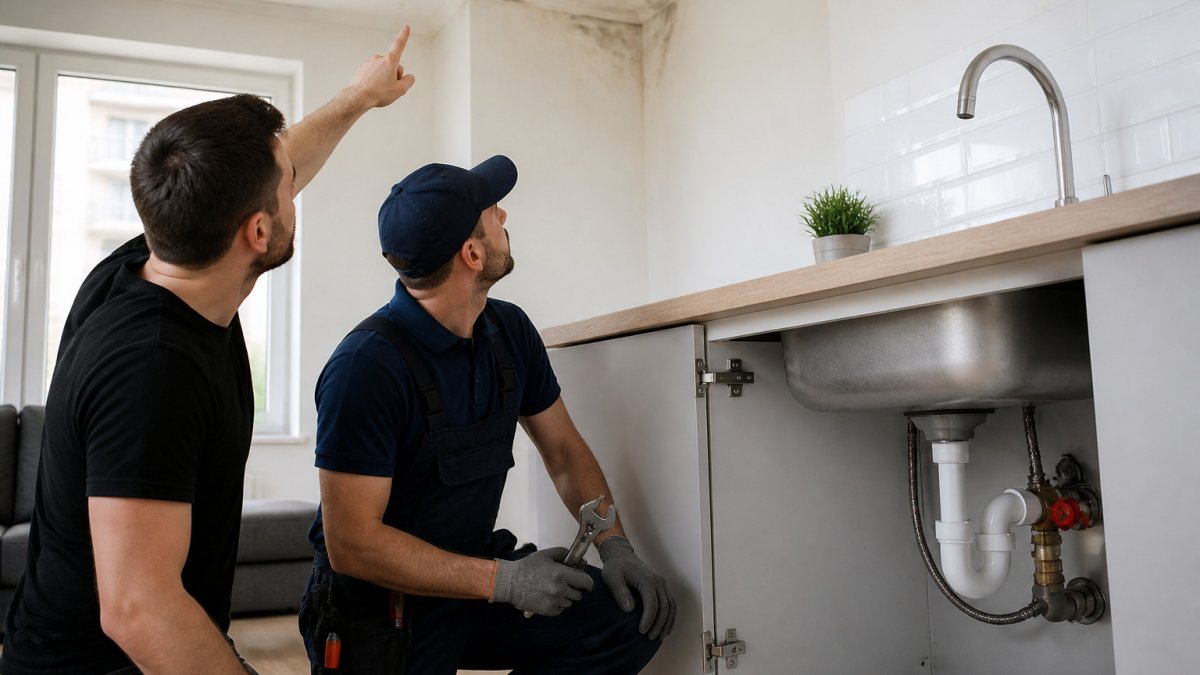
Ask the tenant to shut off the nearest valve if it is safe to do so. Then arrange a visit with a licensed plumber as fast as you can.
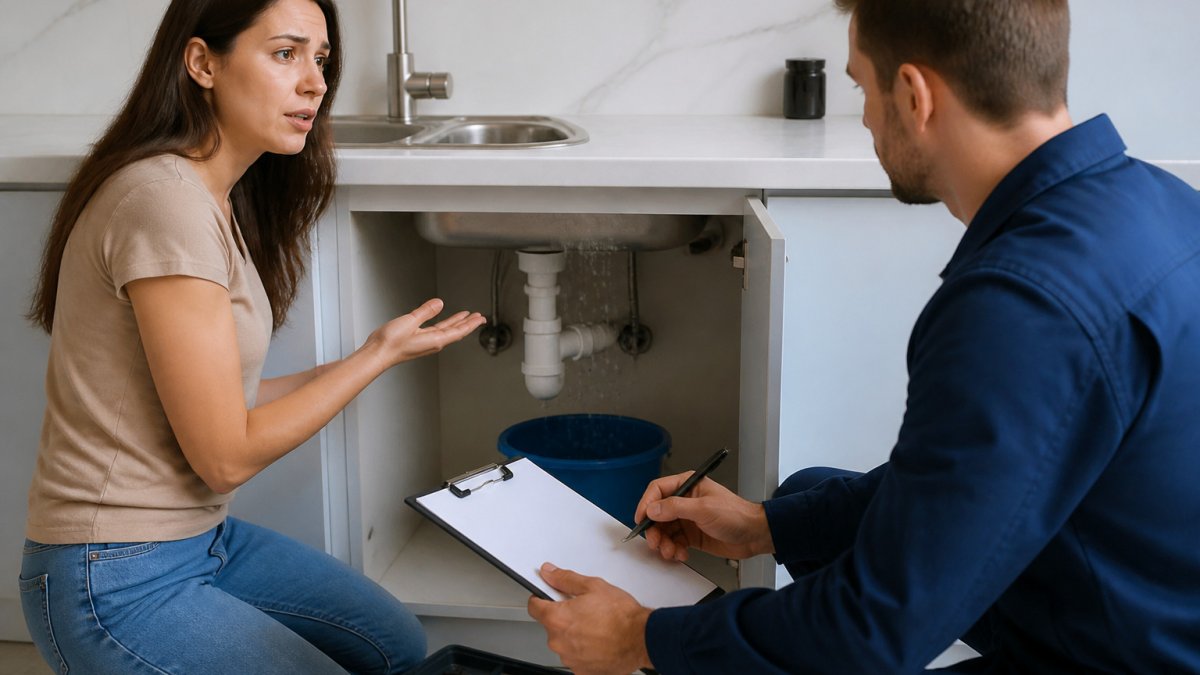
Under-sink leaks are often fixed with a shut-off valve and a new supply line. Ceiling stains from upstairs leaks need a plumber to find the source before drywall is patched.
Step 4: Set a Maintenance Request Response Time and Keep Tenants Informed
Tenants trust landlords who say what will happen and when. Set a clear response time for each category from Step 2, and share it in your lease or welcome package.
Send a short update after each complaint. Confirm that you received it, say when a plumber will visit and explain what happens next.
Many landlords find that a simple update message prevents most follow-up calls. Silence is what turns a small problem into a formal complaint.
Step 5: Use a Tenant Maintenance Request Template for Plumbing
A standard form makes every complaint easier to record and act on. Ask tenants to include the information below so you can triage faster.
Plumbing Maintenance Request
- Tenant name and unit number:
- Date and time the problem started:
- Location of the problem (kitchen, bathroom, basement):
- Describe the problem (leak, clog, no water, noise):
- Is water actively leaking? Yes / No
- Is there any sewage or gas smell? Yes / No
- Photos attached? Yes / No
- Best times for access:
- Tenant signature and date:
Share the template in your lease package and make it easy to submit by email or text. Store completed forms with your complaint log.
Step 6: Coordinate the Repair, Confirm the Fix and Record It
Once a plumber is booked, confirm the appointment with the tenant and give proper notice before entry. Ontario rules require reasonable notice, generally at least 24 hours, unless it is an emergency.
After the repair, ask the tenant to confirm the problem is solved. Keep the plumber's invoice, a short description of the work and any photos in the unit's file.
Ongoing care matters too. Schedule periodic checks of water heaters, shut-off valves and drain lines, especially in older buildings.
Booking a Licensed Plumber for Your Next Tenant Complaint
When a complaint needs a professional, choose a licensed plumber who answers quickly and explains the work clearly. UMark Plumbing and Drain Inc. offers 24/7 emergency and routine plumbing service.
Our certified technicians can handle emergency leaks, pipe bursts and drain problems. One of our customers wrote, "Technician came on time, he provided us with an estimate and fixed it right away. Very good service!"
Keep your complaint log and maintenance form handy so the technician has the details they need on arrival.
Frequently Asked Questions
How quickly should a landlord respond to a tenant's plumbing complaint in Ontario?
Ontario does not set one fixed deadline for every plumbing complaint, but landlords must keep rental units in a good state of repair under the Residential Tenancies Act, 2006. In practice, acknowledge the complaint the same day, treat active leaks, sewage backups and no-water situations as urgent, and arrange a repair visit as quickly as possible. Routine issues such as a slow drain can be scheduled within a few days. Written acknowledgements and a clear timeline protect both parties if the issue escalates to the Landlord and Tenant Board.
What plumbing repairs are landlords responsible for in Ontario?
Under the Residential Tenancies Act, 2006, landlords must maintain the rental unit and the residential complex in a good state of repair and fit for habitation, and must comply with health, safety, housing and maintenance standards. This generally includes the building's plumbing, drains, water supply, and fixtures that came with the unit. Tenants remain responsible for damage they cause through misuse, such as flushing inappropriate items or blocking a drain through neglect. Where a dispute arises, the Landlord and Tenant Board decides responsibility.
What should a landlord do when a tenant reports a leak?
First, ask the tenant to shut off the nearest valve if it is safe, and to take photographs of the damage. Confirm the complaint in writing with the date and time. Determine whether the leak is active and whether it threatens electrical systems or adjoining units. Book a licensed plumber as soon as possible, and tell the tenant when to expect the visit. Keep the photographs, invoices and the plumber's report on file so the repair and its cost are documented.
What should tenants include when reporting a plumbing problem?
A useful report includes the unit number, the specific location of the problem, when it started, whether the issue is getting worse, and whether water is leaking, backing up or missing entirely. Photographs or a short video help a landlord judge urgency. Tenants should also note any steps already taken, such as turning off a valve, and state their availability for access. Reporting in writing creates a record that protects both the tenant and the landlord.