 how-to
How Do You Fix a Loose Toilet Base Step by Step?
Last Updated: November 2, 2026
Quick Summary
A loose toilet base comes from loose closet bolts, a worn wax ring, or an uneven or soft floor under the base. Find the cause first, then tighten the bolts in small even quarter turns, or shim an uneven floor, and stop as soon as the bowl sits flat with no movement.
- Press down on opposite corners of the bowl to tell loose bolts from a floor or flange problem.
- Tighten closet bolts a quarter turn at a time, alternating sides, and stop when the bowl stops moving.
- Use plastic shims for a small even gap on smooth tile and rubber shims for rough floors.
- Stop shimming if the gap is wider than about 6 mm, since that usually means a settled flange.
- Do not reuse an old wax ring once the toilet has been pulled.
Table of Contents
- Diagnose the Rock Before You Tighten a Loose Toilet Base
- How to Tighten Toilet Bolts Without Cracking the Porcelain
- Toilet Shims for a Rocking Toilet: Plastic or Rubber
- Toilet Wax Ring Leak Symptoms You Should Not Ignore
- Toilet Flange Repair: When the Problem Is Under the Bowl
- Step-by-Step: Removing and Reinstalling the Toilet Safely
- Book a Loose Toilet Repair in North York
- Frequently Asked Questions
Diagnose the Rock Before You Tighten a Loose Toilet Base
A rocking toilet is almost never just a loose bolt. Before you pick up a wrench, work out what is actually moving. Fixing a loose toilet base step by step only works when you know which part has failed, and a common pattern is that someone tightens the bolts, the rocking stops for a week, then the wobble returns worse than before.
Here is the short answer. A loose toilet base comes from one of three things:
- Loose closet bolts holding the bowl to the flange
- A worn wax ring that let the bowl settle
- An uneven or soft floor under the base
Find the cause first. Tightening a bolt when the floor is rotten just cracks porcelain.
Check the Closet Bolts and the Floor First
Start by pressing down on opposite corners of the bowl. If the movement is even and slight, the bolts are likely loose. If one side dips hard, the flange or floor is the problem.
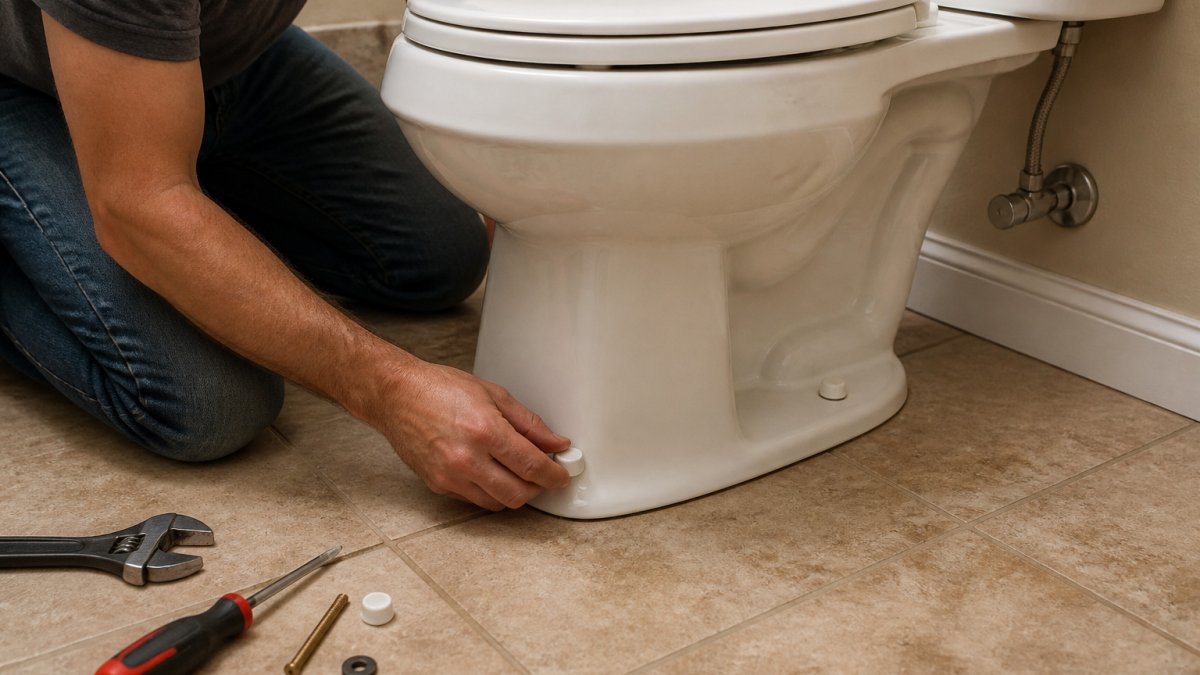
Then check the bolts. Pop off the plastic caps at the base and look at the nuts. Hand-tight is normal. Wobbly and finger-loose means they backed off.
Next, look at the floor. Run your hand along the base and feel for soft spots, cracked tile, or a gap that opens when you lean on the bowl. Any softness means water has been getting under the toilet. That is a different repair.
A wobble that keeps coming back alongside slow drains can point to a recurring underlying problem, so an inspection is worthwhile.
How to Tighten Toilet Bolts Without Cracking the Porcelain
Tightening closet bolts is the step where most DIY loose-toilet repairs go wrong. Porcelain is strong in compression but brittle at the bolt slots, and a flange is only plastic or cast iron.
Here is a common sequence:
- Hand-start both nuts so they sit evenly on the bolts.
- Snug one nut a quarter turn with a wrench or a nut driver.
- Move to the opposite nut and give it the same quarter turn.
- Alternate sides so the bowl pulls down evenly, not one corner at a time.
- Press down on opposite corners of the bowl after every pass.
- Stop as soon as the base sits flat with no movement. Do not add "one more turn for luck."
A quarter turn is roughly the amount you can make with light wrist pressure, not a full arm pull. If you feel the nut suddenly give or hear a sharp tick, stop and inspect. That sound is often porcelain starting to crack at the slot.
Watch out: if a nut spins freely without getting tight, the bolt has pulled through the flange or the flange slot is broken. Stop and read the flange section below. Cranking harder will crack the bowl or tear the flange out of the floor.
Also check that each bolt sits straight in its slot. A bolt leaning against the porcelain edge will chip it as you tighten. If a bolt is bent, replace it rather than forcing it straight. New closet bolts and washers are inexpensive and come with most wax ring kits.
If the bolts tighten but the bowl still rocks, the problem is not the bolts. Move on to shims or the flange. Tightening past the point of contact only loads the porcelain and the flange without fixing the movement.
Toilet Shims for a Rocking Toilet: Plastic or Rubber
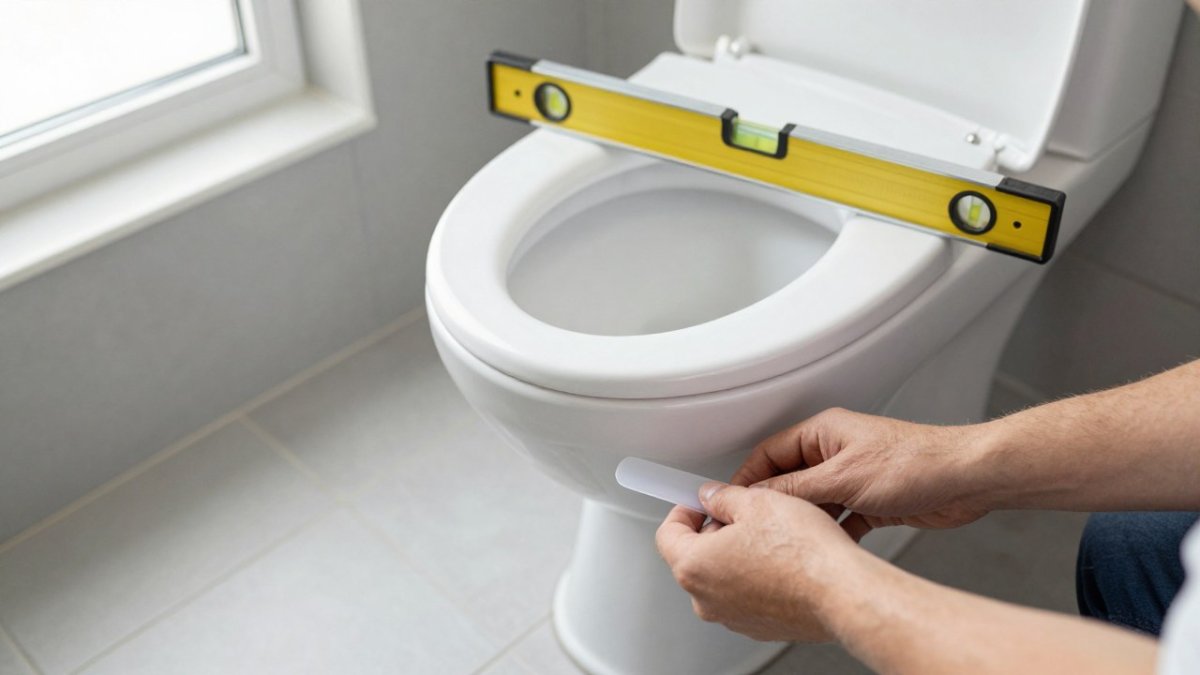
Shims fix a rock caused by an uneven floor, and the choice between plastic and rubber depends on the gap and the surface. Plastic shims are thin, rigid, and easy to trim flush with a utility knife. They work best when the gap is small and even, such as a slight dip in a tile floor.
Use this quick decision guide:
- Small, even gap on smooth tile: plastic shims, stacked no more than two deep.
- Rough floor, grout lines, or slight vibration: rubber shims.
- Gap wider than about 6 mm: stop shimming. A gap that size usually means a settled flange or soft subfloor, and shims will only mask it.
How to shim a toilet base:
- Press down on opposite corners to find the exact low point.
- Push a shim into the gap where the bowl lifts, tapered end first.
- Add a second shim from the opposite side so the bowl sits level.
- Test the wobble after each shim; add only what removes movement.
- Trim the excess flush with the base using a utility knife.
- Recheck with a spirit level on the bowl rim before sealing.
Watch out: do not run a bead of silicone all the way around the base to hide a rock. A full seal can trap water and hide a leaking wax ring, so moisture may spread into the subfloor unnoticed. A common approach is to leave a gap at the back or front of the base as an inspection window.
If shims fix the rock but it returns within a few weeks, the floor or flange is moving. That is a different repair, covered in the flange section below.
Toilet Wax Ring Leak Symptoms You Should Not Ignore
A wax ring leak rarely shows as a puddle. It shows as a smell, a stain, or a soft floor. The wax seal sits between the bowl and the flange, and once it fails, water seeps under the toilet instead of down the drain.
Signs to watch for:
- A sewer smell in the bathroom that does not clear
- Water staining on the ceiling below
- A soft or spongy floor around the base
- The toilet rocking after months of sitting firm
- Slow flushing with no obvious clog
If you see any of these, stop tightening bolts. A rocking toilet plus a soft floor usually means the wax ring has been leaking for a while. That is water damage, and it gets worse every flush.
Toilet Flange Repair: When the Problem Is Under the Bowl
A broken flange is the reason most loose toilets cannot be fixed from above. The flange is the ring that anchors the toilet to the drain pipe. When it cracks or the bolt slots break out, no amount of tightening will hold the bowl down.
You can spot a flange problem before pulling the toilet:
- A bolt that spins freely or pulls up out of the floor
- Rust or white crust around the bolt slots
- The bowl will not sit flat even with new shims
Flange repair usually means a repair ring that fits over the old flange, or a full flange replacement if the plastic is cracked through. Both jobs need the toilet off the floor. If the toilet is old and the flange is gone, it is worth weighing whether repair is the right choice before you spend on parts.
Step-by-Step: Removing and Reinstalling the Toilet Safely
Pulling the toilet is the only way to fix a bad flange or a failed wax ring. It is a two-person job because a porcelain bowl is heavy and awkward.
Before you start, shut off the water supply if the toilet's own shutoff is seized or leaking. Then follow this order:
- Turn off the supply and flush the tank empty
- Sponge out the remaining water in the tank and bowl
- Disconnect the supply line from the tank
- Pry off the bolt caps and remove the nuts
- Rock the bowl gently to break the wax seal
- Lift the toilet straight up and set it on cardboard
- Scrape the old wax off the flange and check it for cracks
- Fit a new wax ring, set the bowl, and tighten the bolts evenly
- Reconnect the supply, turn the water on, and flush twice
- Check for leaks at the base and the supply for the first hour
Watch out: do not reuse an old wax ring. They cost little and fail fast once disturbed.
Pulling the toilet is the only way to fix a bad flange or a failed wax ring, and this is the order to do it in.
| Step | What to do |
|---|---|
| 1 | Turn off the supply and flush the tank empty |
| 2 | Sponge out the remaining water in the tank and bowl |
| 3 | Disconnect the supply line from the tank |
| 4 | Pry off the bolt caps and remove the nuts |
| 5 | Rock the bowl gently to break the wax seal |
| 6 | Lift the toilet straight up and set it on cardboard |
| 7 | Scrape the old wax off the flange and check it for cracks |
| 8 | Fit a new wax ring, set the bowl, and tighten the bolts evenly |
Book a Loose Toilet Repair in North York
Some loose toilet base repairs are a ten-minute tighten. Others are a flange rebuild with water damage underneath. If the bolts spin, the floor is soft, or you smell sewer gas, it is time to call. Why professional plumbing repairs last longer than a DIY fix is worth knowing before you decide.
UMark Plumbing and Drain Inc. offers 24/7 emergency and routine plumbing service in North York and Vaughan, with over 20 years of experience and a certified team. We serve both residential and commercial clients.
To get a free quote, visit the UMark Plumbing and Drain Inc. website.
Frequently Asked Questions
Why is my toilet loose or rocking at the base?
A rocking toilet usually means the closet bolts have loosened, the wax ring has compressed or failed, the flange is damaged, or the floor beneath the base is uneven. Start by checking the bolts and the floor for movement. If the bolts are tight but the bowl still rocks, the seal or flange is likely the cause, and the toilet may need to come up for a proper fix.
Can I tighten a loose toilet without removing it?
Yes, in many cases. If the rocking comes from loose closet bolts, you can tighten them with a wrench and add shims under the base without lifting the toilet. Tighten each bolt a quarter turn at a time and stop as soon as the bowl feels firm, since overtightening can crack the porcelain. If the floor is soft or you smell sewer gas, removal is the safer route.
Should I caulk around the base of a loose toilet?
Caulk hides movement but does not fix it, and it can trap water from a leaking wax ring against the floor, which leads to rot and mold. Fix the rocking first with bolts, shims, or a new seal, then apply a thin bead of silicone caulk around the base, leaving a small gap at the back so any future leak stays visible.
When should I call a plumber to fix a loose toilet?
Call a plumber if the floor feels soft or spongy, if water stains appear around the base or on the ceiling below, if you smell sewer gas, or if the flange is cracked or broken. These point to toilet flange repair or subfloor damage that goes beyond tightening bolts. A certified plumber can confirm the cause and quote the work before starting.
A rocking toilet is a small problem until water gets under the floor. If you have tightened the bolts once and the wobble is back, let us look at it before the damage spreads. UMark Plumbing and Drain Inc. offers 24/7 emergency service, certified technicians, and upfront estimates, so you know the cost before we start. Get started with UMark Plumbing and Drain Inc. and get your bathroom back to solid, quiet, and leak-free.