 how-to
Why Does My Water Heater Make a Popping Sound?
Last Updated: October 29, 2026
Quick Summary
Why does my water heater make a popping sound? It is almost always sediment: minerals in your water bake onto the tank bottom, trapping water that boils into steam bubbles and bursts upward through the scale. The standard fix is a proper flush, done safely.
- Sediment acts like a blanket, slowing heat transfer, wasting energy and setting up the popping.
- A thicker sediment layer traps more water, so you may notice a reduced hot-water supply and higher bills.
- A popping tank is rarely dangerous alone, but it stresses the metal and can lead to a leak.
- Never drain an electric tank with the power on, or the upper element will burn out within seconds.
- Homes with hard water should flush every 6 months rather than annually.
Table of Contents
- Water Heater Popping Noise Causes: What's Really Happening Inside the Tank
- Other Water Heater Noises and What They Tell You
- Is a Popping Water Heater Dangerous?
- How to Flush a Water Heater: Step-by-Step
- Water Heater Maintenance: A Prevention Schedule That Works
- Hard Water, Local Conditions, and Tankless or Heat-Pump Units
- Book a Water Heater Inspection with UMark Plumbing and Drain Inc.
- Frequently Asked Questions
Water Heater Popping Noise Causes: What's Really Happening Inside the Tank
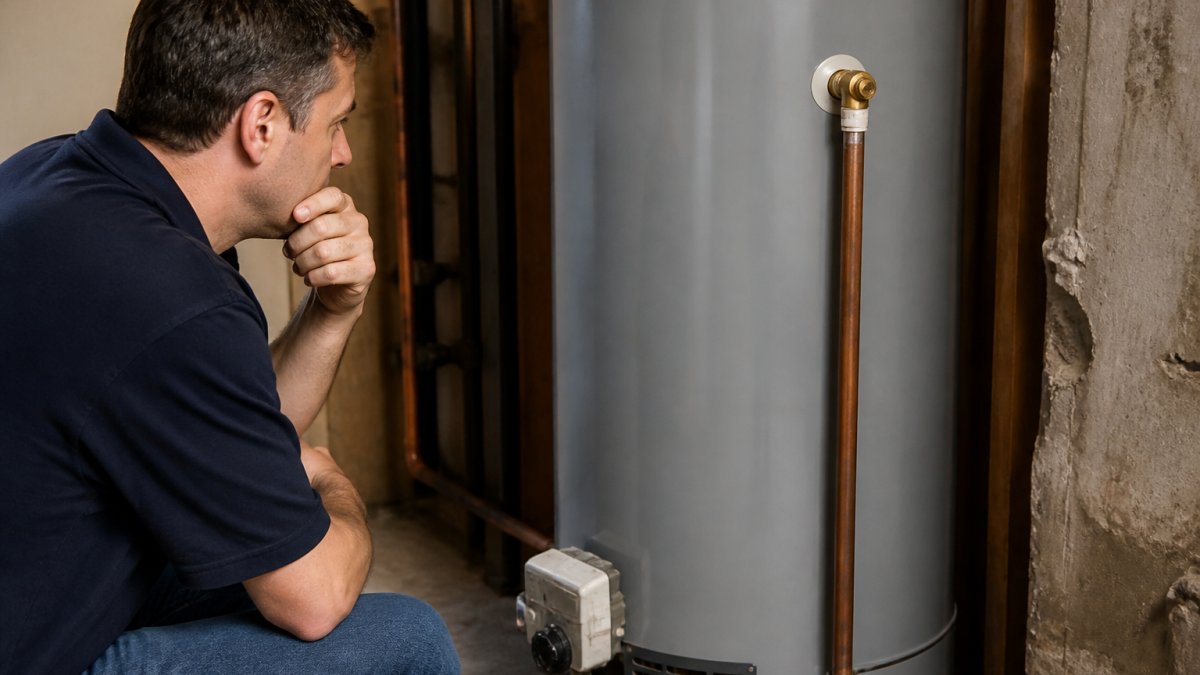
If you are wondering why does my water heater make a popping sound, the answer almost always comes down to one thing: sediment.
A popping noise is the sound of trapped water and steam bubbles bursting under a layer of sediment as the burner or heating element heats the tank. The fix is usually a flush, done properly and safely.
Sediment and Mineral Scale on the Tank Bottom
Sediment buildup is the most common cause of a popping or rumbling water heater. It happens when minerals in your water settle out and bake onto the tank floor.
Every tank holds water full of dissolved calcium and magnesium.
The layer acts like a blanket. Heat from the burner has to push through it to reach the water. That slows heat transfer, wastes energy, and sets up the popping.
Trapped Water and Steam Bubbles
So where does the actual sound come from? Water gets trapped under the sediment layer. When the burner heats it, that trapped water boils into steam bubbles.
It is like a pot of water boiling under a lid that is too tight: pressure builds, then releases in a burst.
The problem worsens over time: a thicker layer traps more water and blocks more heat, so you may notice a reduced hot-water supply and higher energy bills alongside the noise.
Other Water Heater Noises and What They Tell You
Not every sound means the same thing. The type of noise points to a different cause.
- Popping or rumbling: Sediment and boiling water under scale. Most common in gas and electric tank units.
- Knocking or banging: Often a sign of water hammer, a loose pipe, or expanding and contracting metal as the tank heats.
- Hissing: Usually normal steam release, but constant hissing can point to a faulty pressure relief valve or a tank running too hot.
Here is how to separate normal versus abnormal sounds:
| Sound | Likely Cause | Normal? | Action |
|---|---|---|---|
| Faint ticking | Metal expanding | Yes | None |
| Light popping | Early sediment | Borderline | Plan a flush |
| Loud popping or banging | Heavy sediment, water hammer | No | Flush or call a pro |
| Constant hissing | Pressure relief valve issue | No | Get it checked |
| Sizzling | Leak onto burner | No | Call a plumber |
If the noise started small and has grown louder, that is your cue. Early sediment is easy to clear. A thick, baked-on layer is not.
Is a Popping Water Heater Dangerous?
A popping water heater is rarely dangerous on its own, but it is a warning you should not ignore. The noise will not hurt anyone, but the conditions behind it can cause real problems.
- It overheats the tank bottom, which stresses the metal and can lead to a leak or crack.
- It forces the heater to run longer, raising your energy bill and shortening the heater lifespan.
- It can damage the anode rod, the part that fights corrosion inside the tank.
Watch out: a popping tank that also shows water pooling near the base or a rusty hot-water supply points to a failing tank and needs a professional inspection quickly. Before you call, you can see what a repair would realistically cost.
How to Flush a Water Heater: Step-by-Step
Flushing the tank is the standard fix for a popping water heater, but the procedure differs between gas and electric models, and doing it wrong can damage the tank, scald you, or leave you with a bigger repair bill.
Total time: about 45 to 90 minutes, depending on tank size and sediment volume. Difficulty: beginner to moderate.
What you'll need:
- A garden hose long enough to reach a floor drain or outside (never drain into a basement floor drain if local bylaws prohibit it, check with the City of Toronto before discharging)
- Work gloves and eye protection
- A bucket
Electric water heater flush
- Shut off the breaker. Find the dedicated breaker in your panel and switch it off. Confirm the tank is off by checking that the upper element has cooled, do not rely on the thermostat alone. Never drain an electric tank with the power on; the upper element will burn out within seconds of being exposed to air.
- Close the cold-water supply. Turn the valve on the cold inlet line clockwise until it stops.
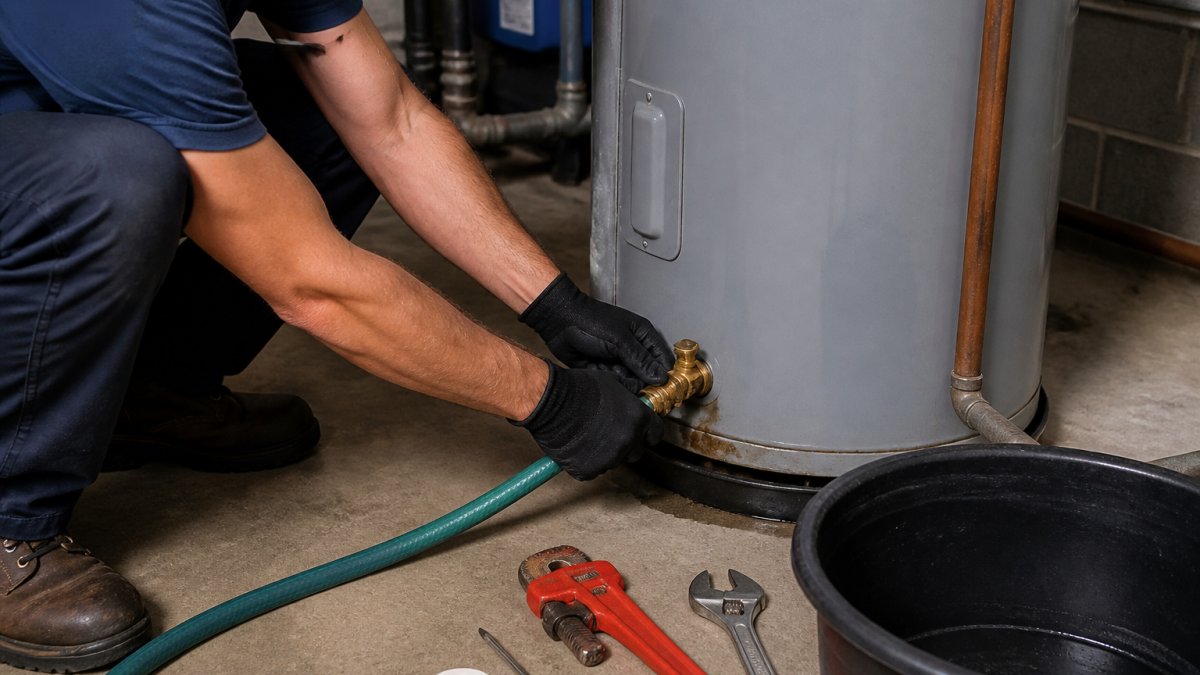
- Connect the hose. Attach one end to the drain valve at the tank bottom. Run the other end to a floor drain, outside, or a bucket. Secure the hose so it does not whip when the valve opens.
- Open a hot tap. Open a hot-water faucet at the highest fixture in the house to break the vacuum and let the tank drain freely.
- Open the drain valve. Let the water run. The first water will likely be cloudy or gritty, that is the sediment leaving. If flow slows to a trickle, the drain valve may be clogged with scale; close the valve, disconnect the hose, and clear the port with a wire or call a plumber.
- Flush until clear. Once the water runs clear, close the drain valve. For heavy sediment, some technicians partially refill and drain a second time to stir up remaining scale.
- Refill the tank. Open the cold-water supply and let the tank fill. Keep the hot tap open until water flows steadily with no sputtering, then close it. Do not restore power until the tank is completely full, a dry element will fail.
- Restore power. Turn the breaker back on and confirm the tank is heating.
Gas water heater flush
- Set the thermostat to pilot or off. Do not drain a tank while the burner is firing.
- Close the cold-water supply and connect the hose exactly as for an electric model.
- Open a hot tap to break the vacuum.
- Open the drain valve and let the tank drain, watching for the same clogging issue at the valve.
- Flush until clear, then close the drain valve.
- Refill the tank with the hot tap open until water flows steadily.
- Relight the pilot according to the label on the tank, or restore the thermostat to its previous setting. If the pilot will not stay lit, stop and call a licensed gas technician, do not keep trying.
When flushing is unsafe or won't fix the noise
Flushing is not always the answer, and forcing it can turn a simple DIY job into a more expensive repair. Stop and call a licensed plumber if any of the following apply:
- The drain valve is stuck, leaking, or corroded. Forcing a stuck valve can snap it off and flood the area; a corroded valve often needs replacement before flushing.
- You see rust, water, or moisture around the tank base. That points to a failing tank lining, and draining may accelerate a leak. Learn how to tell if your water heater is leaking.
- The tank is more than 10 years old and the noise continues after a flush. Baked-on scale in an aging tank often signals the unit is near end of life.
If flushing does not quiet the noise, the sediment may be baked on too hard to clear, often the point where you need to judge whether the tank is failing. These signs your water heater needs replacement help you decide.
Water Heater Maintenance: A Prevention Schedule That Works
The best cure for a popping water heater is a simple schedule. Sediment builds up slowly, so routine care keeps the noise away.
- Every 6 to 12 months: Flush the tank to clear fresh sediment. Homes with hard water should lean toward every 6 months.
- Every year: Test the pressure relief valve by lifting the lever and letting it snap back; it should release water freely.
- Every 2 to 3 years: Check the anode rod and replace it if heavily corroded to protect the tank.
Hard Water, Local Conditions, and Tankless or Heat-Pump Units
North York and the surrounding Ontario region sit in an area where hard water is common, and that matters more here than in many Canadian cities. Hard water carries dissolved calcium and magnesium, which settle out faster as scale and make popping noises appear sooner.
If your home tests hard, a water softener can slow how fast sediment forms, but it is not a cure, softened water still leaves some scale, and softeners need their own maintenance. Is a water softener worth it walks through the costs and benefits. For most North York homeowners, the practical takeaway is to flush every 6 months instead of annually if hardness is high, and to watch for gritty water at the tap as an early sign of scale.
Tankless water heaters
Tankless units have no storage tank, so they do not make the same sediment-popping sound. Instead, popping or kettling in a tankless heater usually means scale has built up on the heat exchanger. These units need periodic descaling, typically every 6 to 12 months in hard-water areas, using a manufacturer-approved descaling kit. Do not drain a tankless unit like a tank; follow the manual's descaling procedure or have a technician do it.
Heat-pump water heaters
Heat-pump units make different noises. Rumbling or gurgling can come from the compressor, refrigerant circulation, or scale in the tank. A popping sound in a heat-pump model is less common but can still indicate sediment in the storage tank. These units need a technician for compressor or refrigerant issues, do not attempt DIY service on the sealed system.
What this means for your next step
If you are not sure which type of heater you have, or the noise does not match these patterns, get it looked at. A quick professional inspection tells you what is going on and what it will take to fix. A professional inspection can check the drain valve and anode rod, since local water conditions can drive sediment problems.
Book a Water Heater Inspection with UMark Plumbing and Drain Inc.
Popping that will not quit usually means the sediment is too deep for a simple flush. UMark Plumbing and Drain Inc. offers 24/7 emergency and routine plumbing service, with over 20 years of experience and a certified team.
Looking for a plumber near me in North York? Contact UMark Plumbing and Drain Inc. to confirm service in your area.
Get started with UMark Plumbing and Drain Inc. and get that popping sound fixed for good. Get a free quote today.
Frequently Asked Questions
Why does my water heater make a popping sound?
Popping comes from sediment and mineral scale settling on the tank bottom. The burner or heating element heats through that layer, and trapped water underneath turns to steam. As the bubbles push up through the sediment, you hear the pop. It is most common in older tank-style units and in homes with hard water, where minerals build up faster.
Is a popping water heater dangerous?
The noise itself is rarely an immediate hazard, but the cause behind it can shorten the tank's life. Sediment overheats the steel, speeds up corrosion, and can lead to a leak or a tank failure. If you also see water around the base, smell gas, or hear banging alongside the popping, shut off the unit and call a licensed plumber.
Should I flush my water heater if it is popping?
Flushing is the usual first step, but it works best when the buildup is light. On a tank with years of hardened scale, a flush may not clear it and the noise can return. Follow the manufacturer's instructions for your model, and have a technician check the anode rod and drain valve at the same time.
How much does it cost to flush a water heater?
Pricing depends on the tank size, its condition, and whether the drain valve needs replacing, so ask for a written estimate before work starts. A technician can confirm whether a flush will solve the noise or whether the sediment is too far gone and replacement makes more sense.
A noisy water heater is your tank telling you something. Ignore it and you risk higher bills, a shorter lifespan, and a surprise leak. Call a certified team that shows up when it says it will. UMark Plumbing and Drain Inc. is ready around the clock to inspect, flush, or repair your system and keep your hot water running quiet.