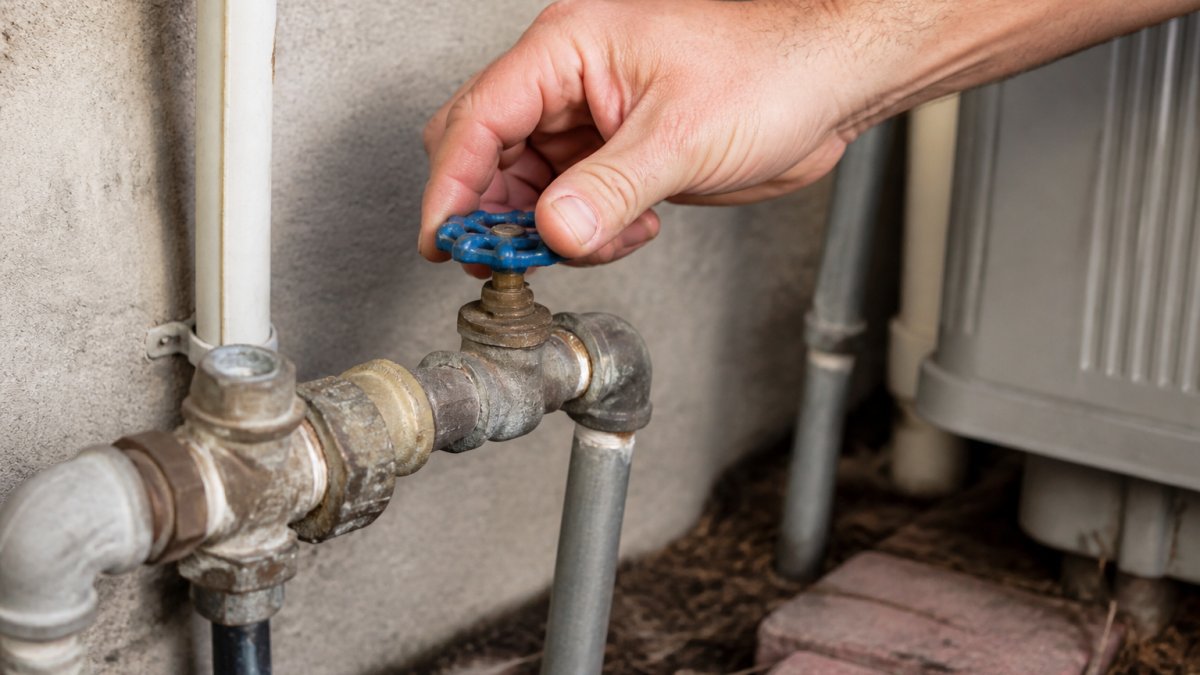
 how-to
How to Shut Off Main Water Valve: Step-by-Step
Table of Contents
- Why Knowing How to Shut Off Your Main Water Valve Matters
- Main Water Shut-Off Valve Types and How to Identify Yours
- Where to Find Your Main Water Shut-Off Valve
- Step-by-Step: How to Shut Off Your Main Water Valve
- How to Drain Pipes After Turning Off Water
- What to Do If Your Main Water Valve Is Stuck
- When to Call a Professional Plumber
- Conclusion
- Frequently Asked Questions
Last Updated: September 30, 2026
Why Knowing How to Shut Off Your Main Water Valve Matters
A burst pipe at 2 AM. A sudden leak under the sink. A water heater malfunction flooding your basement. In moments like these, knowing how to shut off main water valve can save thousands in damage and prevent water from pouring through your home uncontrolled.
Main Water Shut-Off Valve Types and How to Identify Yours
Not all main water shut-off valves work the same way. Understanding which type you have will help you operate it correctly and troubleshoot if it becomes stuck or difficult to turn.
Gate Valve
A gate valve uses a flat metal gate that slides up and down inside the valve body to stop water flow. When you turn the handle clockwise, the gate lowers and blocks the water supply. These valves are common in older homes and are reliable when maintained properly.
Gate valves have several characteristics:
- Round or oval handle that turns many times (usually 4-8 full rotations)
- Slower operation than ball valves
- Prone to corrosion if not used regularly
- Can become stuck or difficult to turn after years of inactivity
Ball Valve
A ball valve contains a hollow ball with a hole through the center. When the handle is perpendicular to the pipe, water flows freely. When you turn the handle 90 degrees so it's parallel to the pipe, the hole rotates and blocks the flow.
Ball valves have these identifying features:
- Lever-style handle (looks like a small rod or arm)
- Quick operation, just a quarter turn
- Modern standard in newer homes
- Less prone to corrosion than gate valves
- Can develop internal leaks over time
Anti-Siphon Valve
An anti-siphon valve prevents contaminated water from flowing backward into your clean water supply. While not technically a main shut-off valve, many homes have one installed where the water supply enters the house.
These valves:
- Often have a small cap or button on top
- May look similar to a ball valve but with additional components
- Serve a protective function rather than a primary shut-off role
- Require periodic maintenance to function properly
Where to Find Your Main Water Shut-Off Valve
Your main water shut-off valve is typically located where the water supply line enters your home. The exact location depends on your home's design and your regional climate.
Common locations include:
- Basement or crawl space: Most common in homes with basements. Look along the foundation wall where the water main enters the building.
- Utility room: Often installed near the water heater or main electrical panel.
- Under the kitchen sink: In some homes, especially condos and apartments, the valve is tucked under the sink on the main supply line.
- Garage: If your home has an attached garage with utility access, the valve may be there.
- Outdoor meter box: In warmer climates, the shut-off valve may be outside in a covered box near the street or property line.
Step-by-Step: How to Shut Off Your Main Water Valve
Now that you understand valve types and know where to look, let's walk through how to shut off main water valve with the actual shut-off process. The steps are simple, but the execution matters.
Before You Begin: Safety and Preparation
Before you touch anything, take a moment to prepare:
- Locate the valve and identify its type. Is it a gate valve (round handle that turns multiple times) or a ball valve (lever handle that turns 90 degrees)? Knowing this prevents mistakes.
- Clear the area around the valve. Move boxes, tools, or other items so you have full access and can see what you're doing.
- Turn off your water heater. If you're shutting off water for maintenance, turn off the water heater first to prevent damage when you restart the system.
- Alert anyone else in your home. Let family members know water is being shut off so they don't try to use taps while you're working.
- Have a bucket or towels nearby. Even with the valve closed, there may be residual water in the pipes that needs to catch.
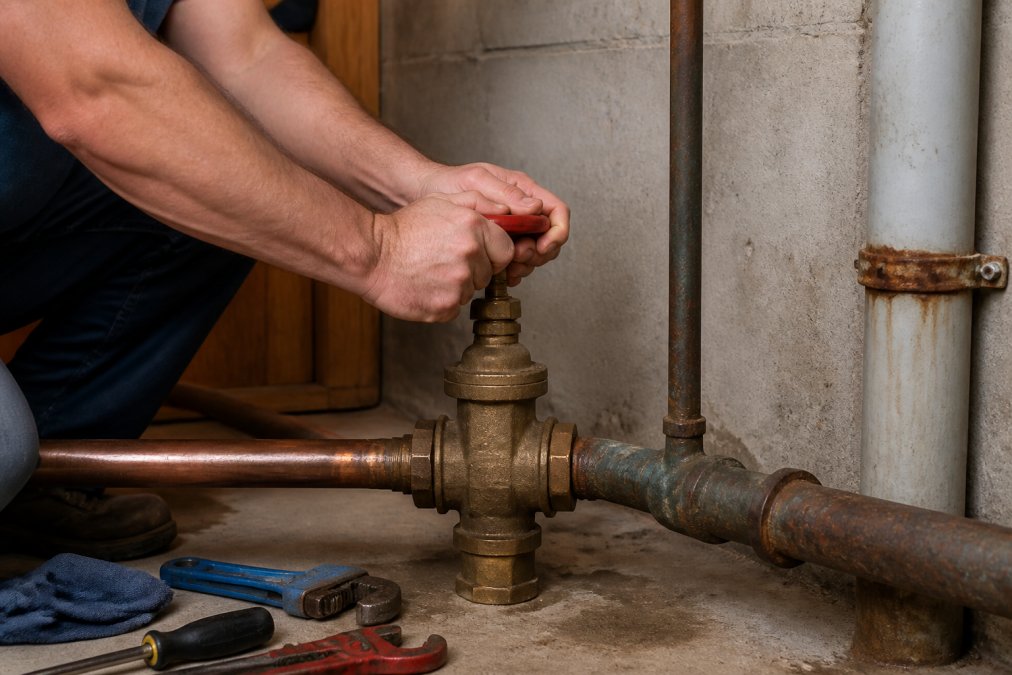
The Shut-Off Process
For a ball valve:
- Locate the lever handle on your ball valve.
- Check its current position. If it's parallel to the pipe, water is flowing. If it's perpendicular (at a right angle), water is already shut off.
- Grasp the handle firmly and turn it 90 degrees so the handle is perpendicular to the pipe.
- Turn slowly and deliberately, do not force it.
- You should feel slight resistance as the internal ball rotates into the blocking position.
- Once the handle is perpendicular, the water supply is shut off.
For a gate valve:
- Locate the round handle on your gate valve.
- Turn the handle clockwise (to the right) slowly and steadily.
- Count the rotations or simply turn until you feel resistance, do not force it past that point.
- The gate inside the valve is now lowered and blocking water flow.
- Some gate valves have a small indicator that shows when they're fully closed.
Verification step (critical):
After closing the valve, turn on a cold water tap in your home. If water stops flowing within a few seconds, your shut-off was successful. If water continues to flow, return to the valve and check that it's fully closed. If it still flows, the valve may be faulty and you should contact a plumber.
How to Drain Pipes After Turning Off Water
Once you've shut off the main water valve, air and residual water remain in your pipes. For most routine maintenance, this isn't a problem. But for certain tasks, like winterizing your system or replacing fixtures, you need to drain the lines.
To drain your pipes:
- Turn off the main water valve as described above.
- Open the lowest cold water tap in your home (usually a basement faucet or outdoor spigot). This releases air pressure and allows remaining water to drain out.
- Open the highest cold water tap in your home (usually an upstairs bathroom sink). This breaks the vacuum and helps water drain faster.
- Leave these taps open for several minutes until water stops flowing.
- For a complete drain, locate the water heater drain valve and open it as well (if your water heater needs to be drained for maintenance).
What to Do If Your Main Water Valve Is Stuck
A stuck valve is one of the most frustrating problems homeowners face. If you've located your valve but can't turn the handle, don't panic. There are steps you can take before calling a professional.
If your valve won't budge:
- Apply penetrating oil. Spray a penetrating lubricant (like WD-40) around the valve stem where the handle connects to the valve body. Let it sit for 15-30 minutes to work into the corrosion.
- Try gentle pressure. After the oil has soaked, grasp the handle firmly and apply slow, steady pressure. Do not jerk or force it, sudden pressure can break the handle or damage the valve internally.
- Tap gently with a hammer. If the valve still won't budge, gently tap around the valve body (not the handle) with a rubber mallet. This can help break up corrosion inside.
- Wait and try again. Sometimes the penetrating oil needs more time to work. Wait another 15-30 minutes and try again with slow, steady pressure.
If the valve still won't turn after these steps:
Prevention is easier than repair:
When to Call a Professional Plumber
Knowing how to shut off your main water valve is essential knowledge for every homeowner. But some situations require professional help. Call a plumber if:
- Your valve is stuck and won't turn after you've applied penetrating oil and waited.
- Water continues to flow after you've closed the valve fully. This indicates an internal leak or faulty valve that needs replacement.
- You can't locate your main valve and the water utility can't help you find it.
- The valve handle is broken or damaged and you can't operate it safely.
- You need the valve replaced. If your valve is old, corroded, or unreliable, replacement is a smart preventive step.
- You're dealing with a major emergency and you're unsure whether you've shut off water correctly. A plumber can verify and handle the situation professionally.
Conclusion
Knowing how to shut off your main water valve is one of the most practical skills a homeowner can develop. Whether you're facing an emergency leak or performing routine maintenance, the ability to stop water flow quickly can save thousands in damage and give you control in a crisis.
Frequently Asked Questions
Which way do you turn a main water valve to shut it off?
Turn the valve handle clockwise to shut off water flow. For gate valves, rotate the handle to the right until it stops, do not force it. For ball valves, turn the handle 90 degrees so it aligns perpendicular to the pipe. Most homeowners find ball valves easier to operate because they require only a quarter turn. If you're unsure which direction, remember: clockwise closes the valve and stops water from flowing through your plumbing system.
How long does it take for water to stop after turning off the main valve?
Water stops flowing almost immediately once you close the main water shut-off valve, typically within seconds. However, residual water may continue dripping from open taps and fixtures for a few moments as pressure releases from the pipes. If you need to drain the lines completely, open the lowest cold water tap in your home and let it run until water stops flowing. This process usually takes a few minutes depending on how much water is trapped in your plumbing system.
What should I do if my main water valve won't shut off?
If the valve handle is stuck or won't turn, do not force it, you risk breaking the valve handle or damaging the valve itself. Apply a penetrating oil like WD-40 around the valve stem and wait 15-20 minutes for it to soak. Gently try turning the handle again with steady pressure. If it remains stuck, try wrapping the handle with a cloth for better grip. For gate valves showing signs of corrosion or mineral buildup, this is often a sign the valve needs replacement. Contact a certified plumber if the valve cannot be freed, a stuck valve is a safety concern in emergencies.
Where is the main water shut-off valve typically located?
The main water shut-off valve is usually found where the water supply line enters your home. Common locations include the basement, crawl space, utility room, or mechanical room near the water heater. In homes without basements, check under the kitchen sink, in a wall-mounted box on the exterior, or near the foundation. Look for a pipe coming from outside with a valve handle attached. If you cannot find it, check your home inspection report or contact your local municipality, they can direct you to the water main access point on your property.
If you need help locating your valve, freeing a stuck one, or ensuring your plumbing system is ready for winter or other seasonal maintenance, UMark Plumbing and Drain Inc. is here to help. Our certified team has over 20 years of experience with residential and commercial plumbing systems. Get a free quote and let us ensure your home's water system is safe, reliable, and ready for whatever comes next.