 how-to
How to Tell If Your Water Heater Is Leaking
Table of Contents
- Signs Your Water Heater Is Failing
- How to Inspect the Top of the Tank
- Checking for Leaks at the Bottom of the Tank
- Identifying Cold Water Inlet and Hot Water Outlet Leaks
- Condensation vs. Leak Test
- Emergency Plumbing Shut Off Procedures
- Water Heater Repair vs Replacement Cost
- Frequently Asked Questions
Last Updated: September 22, 2026
Signs Your Water Heater Is Failing
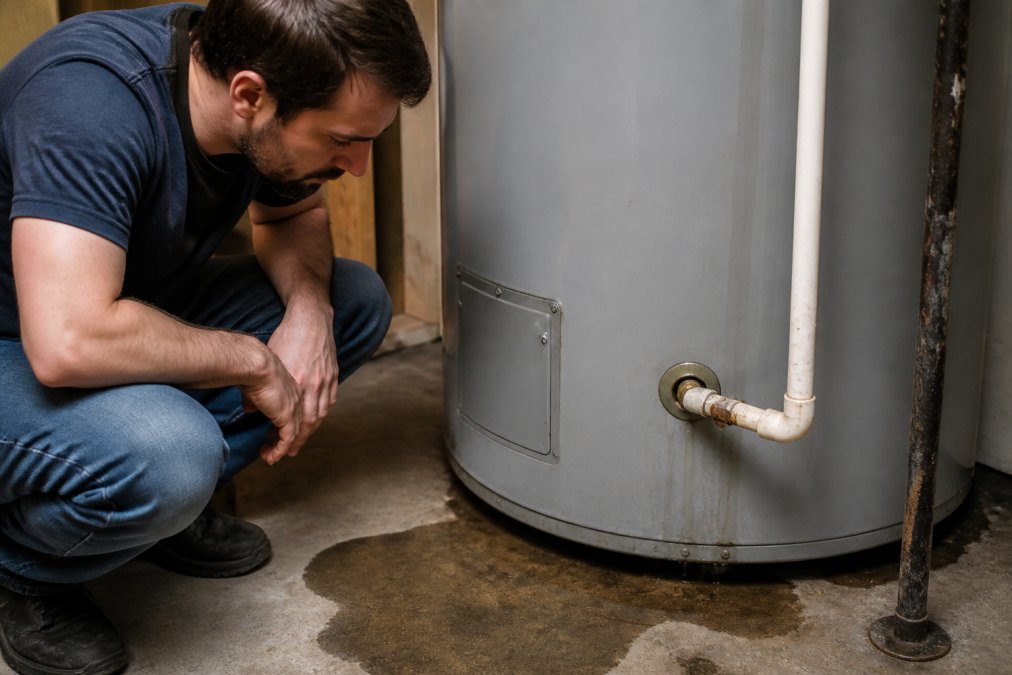
Learning how to tell if your water heater is leaking starts with recognizing specific warning signs of failure. The most common indicators include visible water pooling around the tank base, rust-colored water coming from your taps, and strange popping or rumbling noises during operation. These symptoms often appear weeks or months before a complete failure, giving you time to act.
A leaking water heater can cause serious damage to your home. Water damage spreads quickly through flooring, drywall, and surrounding structures. Catching the problem early prevents costly repairs and potential mold growth.
Many homeowners miss early warning signs because they don't know what to look for. You might notice dampness near the tank but assume it's condensation. You could hear unusual sounds and dismiss them as normal operation. These assumptions cost time and money.
Common signs your water heater needs attention:
- Water pooling or dripping around the base
- Rusty or discolored water from hot taps
- Reduced hot water supply or inconsistent temperature
- Popping, cracking, or rumbling sounds
- Visible corrosion on the tank exterior
- Leaks from pipe connections at the top
Most homeowners call plumbers only after they spot standing water. By then, the problem has often progressed beyond simple repair.
How to Inspect the Top of the Tank
Start your inspection at the top of the tank where the cold water inlet and hot water outlet connect. These connection points are common leak sources because they experience constant pressure and temperature changes. Use a dry cloth to wipe the area and check for active dripping or recent moisture.
Look closely at the pipe connections where they enter the tank. Tighten any loose fittings by hand first. If water continues dripping after tightening, the connection likely needs professional attention. Do not over-tighten, this can crack the fitting or damage the tank.
Examine the temperature and pressure relief valve (TPR valve) on the side of the tank. This valve prevents dangerous pressure buildup inside the tank. A leaking TPR valve releases water as a safety feature, but persistent leaking indicates the valve needs replacement. The valve has a small pipe running down to near the floor, check this pipe for water.
Your inspection should identify these specific points:
- Cold water inlet connection at the top
- Hot water outlet connection at the top
- Temperature and pressure relief valve location
- Drain valve position at the bottom
- Any visible corrosion or mineral deposits
If you find water dripping from connections, turn off the water supply immediately. Locate your main water shut-off valve and close it. This stops additional water from entering the tank while you arrange for repairs.
Checking for Leaks at the Bottom of the Tank
The tank base is where most serious leaks develop. Water heater tanks corrode from the inside out over time. Sediment buildup at the bottom accelerates this process. When the internal lining fails, water seeps through the tank wall near the drain valve.
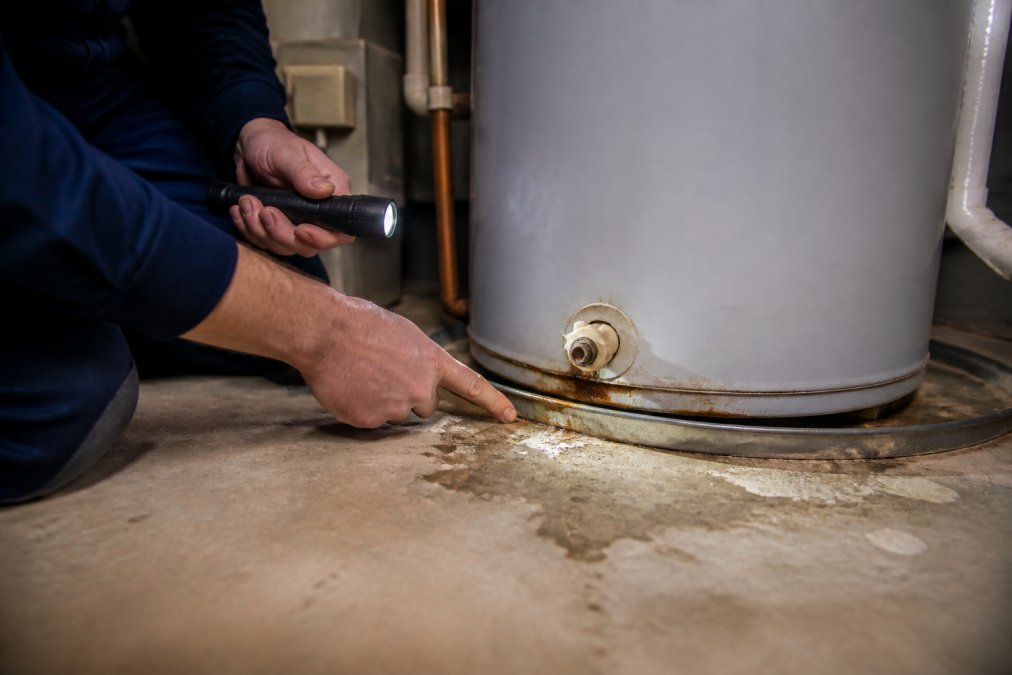
To understand how to tell if your water heater is leaking, get down low and look directly at the tank bottom. Use a flashlight to see clearly. Check for active dripping, standing water, or damp spots on the concrete or flooring. Even small moisture indicates a developing leak.
Feel the floor around the tank base with your hand. A wet or damp surface means water is actively leaking or has leaked recently. Mark the damp area with tape so you can monitor if it spreads.
The drain valve sits at the lowest point of the tank. This valve allows you to empty the tank for maintenance or removal. Check for water around this valve's base and handle. Tightening the valve handle sometimes stops minor leaks, but a corroded valve usually cannot be repaired.
Signs of a serious bottom leak:
- Standing water pooling under the tank
- Wet concrete or flooring extending several inches from the tank
- Discoloration or staining on the floor around the base
- Visible corrosion holes in the tank wall
- Water dripping steadily from the drain valve
If you find standing water, your water heater needs immediate attention. Call a certified plumber right away. Do not delay, the leak will worsen and cause additional damage to your home.
Identifying Cold Water Inlet and Hot Water Outlet Leaks
The cold water inlet brings fresh water into the tank. The hot water outlet delivers heated water to your home. Both connections experience high pressure and temperature cycling. This stress causes leaks at connection points over time.
Locate the cold water inlet, it's the pipe bringing water into the top of the tank from your main supply line. This pipe usually has a shut-off valve attached. Check where this pipe connects to the tank. Look for water dripping or moisture around the connection point.
The hot water outlet is the pipe leaving the top of the tank carrying hot water to your home. This connection also experiences constant pressure changes. Inspect it for dripping water or visible corrosion.
Leaks at these connections often start small. You might notice just a few drops per hour. Over days and weeks, these small drips add up to gallons of wasted water and potential damage.
How to distinguish between connection leaks and tank leaks:
- Connection leaks drip from the fitting itself, not the tank wall
- Tank leaks seep from the tank body near the base or sides
- Connection leaks can sometimes be fixed by tightening or replacing the fitting
- Tank leaks require tank replacement
If tightening the connection stops the leak, the problem was a loose fitting.
Condensation vs. Leak Test
Condensation forms on water heater tanks when cold water enters on humid days. The temperature difference between the cold water inside and warm air outside causes moisture to bead on the tank surface. This looks like a leak but is actually normal.
Condensation typically occurs:
- During humid weather or summer months
- When cold groundwater enters the tank
- On the lower third of the tank where water is coldest
- As a light, even coating rather than drips
Real leaks produce:
- Water pooling under the tank
- Drips from specific connection points
- Moisture concentrated in one area
- Wet flooring or foundation damage
- Persistent water despite wiping it away
Emergency Plumbing Shut Off Procedures
When you discover an active leak, stopping water flow is your first priority. Every water heater has a shut-off valve on the cold water inlet line. This valve stops water from entering the tank immediately.
Steps to shut off water during an emergency:
- Close the cold water inlet valve on top of the water heater
- Turn off the main water shut-off valve at your home's entry point
- Turn off the power to your water heater (flip the breaker for electric units)
- Open a hot water tap in your home to release pressure
- Call a certified plumber immediately
Water Heater Repair vs Replacement Cost
Deciding whether to repair or replace your water heater depends on several factors. Most water heaters last 8 to 12 years with proper maintenance. If your unit is older than 10 years, replacement is usually the better choice.
Factors to consider when choosing repair or replacement:
- Age of your current water heater
- Type and location of the leak
- Energy efficiency of your current unit
- Whether you want to upgrade to a larger capacity
- Your budget for replacement
Frequently Asked Questions
Can I still use water if the water heater is leaking?
Yes, you can use cold water normally since the cold water inlet feeds the whole house. However, hot water may become unavailable as the tank loses pressure. If the leak is active and substantial, stop using hot water immediately to prevent further tank damage and potential water damage to your home. A leaking water heater tank should be addressed within hours, not days.
Where is the most common place a water heater leaks?
The bottom of the tank is the most common leak location due to corrosion and sediment buildup over time. The drain valve at the base is the second most common failure point. Leaks at the top typically come from the cold water inlet or hot water outlet connections, which are easier to repair. Tank-bottom leaks often signal terminal failure and usually require replacement rather than repair.
How do I tell the difference between condensation and a real leak?
Condensation appears as light moisture around the base and dries quickly when wiped. A real leak produces continuous water pooling or dripping. To test: dry the area completely with a towel, place dry paper towels underneath, and wait 30 minutes. If moisture reappears on the paper, it's a leak. Condensation forms when cold inlet water cools the tank exterior in humid conditions and typically stops once the heater cycles.
What should I do immediately if I find a puddle under my water heater?
First, locate and close the shut-off valve on the cold water inlet line (usually a ball valve on the pipe entering the top of the tank). Turn it clockwise until it stops. Next, open a hot water tap in your home to release pressure inside the tank. Then call a licensed plumber for emergency inspection. Do not attempt repairs yourself. If water is actively pooling, place towels and buckets to contain it and prevent water damage to surrounding areas.
Discovering your water heater is leaking creates stress and urgency. Acting quickly prevents water damage to your home and saves money on repairs. When you need professional help, UMark Plumbing and Drain Inc. provides certified, 24/7 emergency plumbing services. Our team responds promptly to leaks and can diagnose whether repair or replacement is best for your situation. Get a free quote today and protect your home from water damage.