 listicle
Reliable Commercial Plumbing Services: 2026 Guide
Table of Contents
- Why Reliable Commercial Plumbing Services Matter
- Emergency Commercial Plumbing Repair: Response and Resolution
- Commercial Plumbing Maintenance Checklist: Prevention Strategies
- Cost of Commercial Plumbing Services: Understanding Your Investment
- Specialized Commercial Plumbing Solutions
- What Sets Professional Commercial Plumbing Apart
- Choosing the Right Commercial Plumbing Partner
- Conclusion
Last Updated: August 14, 2026
Why Reliable Commercial Plumbing Services Matter
Commercial plumbing systems face pressures residential systems don't. A burst pipe in a restaurant kitchen means water damage, lost revenue, health code violations, and potential closure. When your facility depends on reliable water flow and drainage, downtime becomes a financial emergency.
At UMark Plumbing and Drain Inc., we understand that commercial plumbing is infrastructure, not a convenience. A single failure cascades through operations, affecting staff productivity, customer experience, and your bottom line. Choosing reliable commercial plumbing services means partnering with professionals who understand the stakes and respond accordingly.
The difference between a good commercial plumbing provider and a mediocre one comes down to response time, technical expertise, and accountability. Facilities managers need partners who show up when promised, diagnose accurately, and deliver durable solutions.
Emergency Commercial Plumbing Repair: Response and Resolution
When a commercial plumbing emergency strikes, burst pipes, severe leaks, backed-up drains, every minute matters. A reliable emergency service arrives quickly, assesses accurately, and begins work immediately.
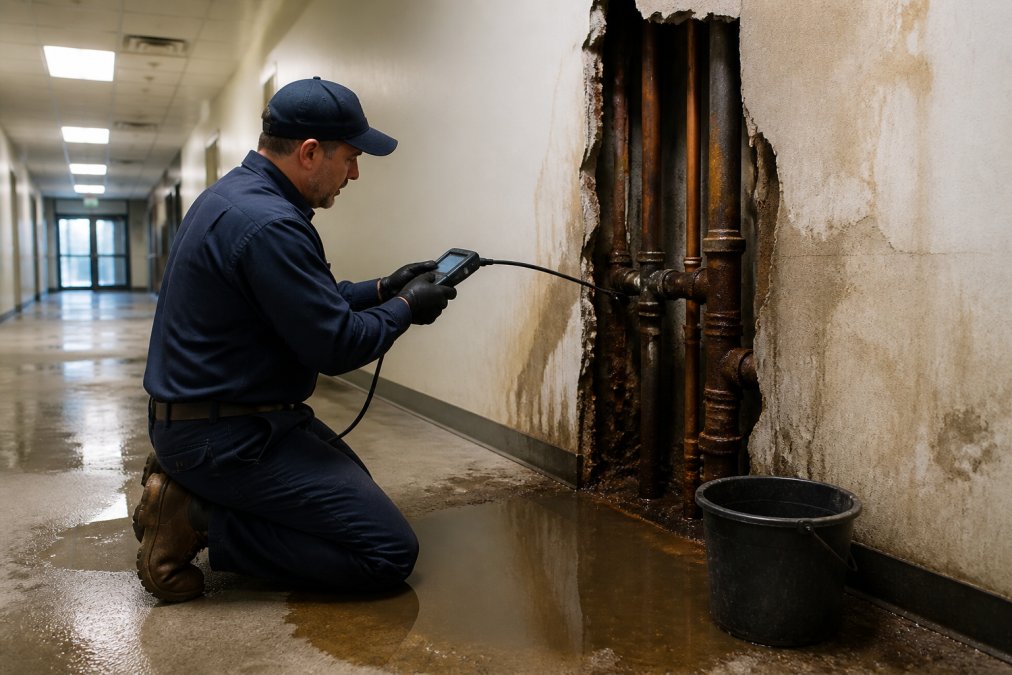
UMark Plumbing and Drain Inc. maintains a certified team ready to respond around the clock because a four-hour delay in a commercial setting can cost thousands in lost operations.
Common Signs of Commercial Plumbing Emergencies
Burst pipes are the clearest emergency signal, water spraying from a visible break causes immediate flooding. Severe leaks, where water continuously drips or flows from joints or fixtures, also require urgent attention, especially near electrical systems.
Backed-up drains in commercial facilities escalate quickly. A single blocked drain in a restaurant or medical facility violates health codes and forces closure. If multiple drains are slow or backing up simultaneously, the problem likely sits in your main sewer line.
Sewage odors or visible sewage indicate a sewer line problem demanding urgent intervention. Water pooling in parking lots or unusual wet patches on floors suggest underground breaks that will worsen rapidly.
What to Expect During Emergency Response
When you contact a reliable emergency service, the dispatcher asks targeted questions to understand severity and location, then dispatches the nearest certified technician with appropriate equipment.
Upon arrival, the plumber performs a rapid visual assessment, identifies the immediate threat, and communicates clearly. For a burst pipe, this means shutting off water supply. For a backed-up drain, it means determining whether the blockage is accessible or requires specialized equipment like hydro-jetting.
The technician should provide a clear explanation of what's happening, what caused it, and what repair options exist. Transparent communication during emergencies helps you make informed decisions under pressure.
Commercial Plumbing Maintenance Checklist: Prevention Strategies
The most effective commercial plumbing strategy is prevention. A structured maintenance program catches small issues before they become expensive failures, keeps systems compliant with building codes, and extends equipment lifespan.
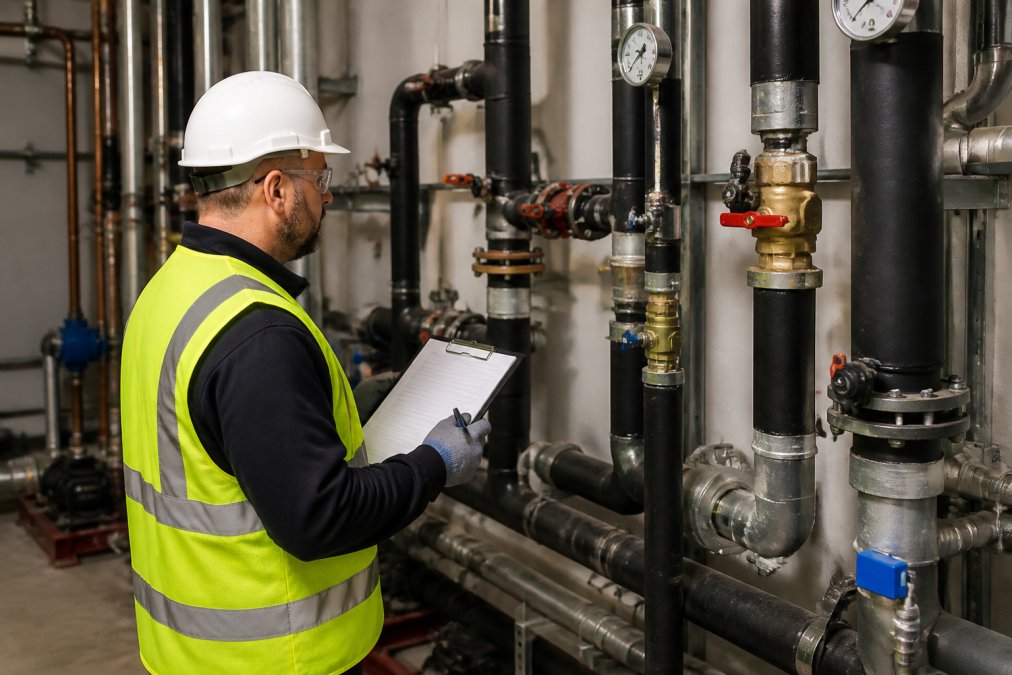
Prevention through regular maintenance reduces emergency calls significantly. Facilities that implement a commercial plumbing maintenance checklist experience fewer unexpected failures, lower overall costs, and better code compliance.
Monthly and Quarterly Tasks
Monthly inspections catch developing problems early. Walk through accessible plumbing areas, under sinks, around water heaters, in mechanical rooms, looking for leaks, corrosion, or water stains. Check that drains flow freely and listen for unusual sounds.
Quarterly tasks include testing backflow prevention devices (required by code in many jurisdictions), inspecting visible pipes for corrosion or damage, and reviewing water pressure. High water pressure stresses fittings; a pressure regulator may be needed.
In commercial kitchens, monthly drain maintenance means cleaning grease traps and ensuring drain lines flow freely. In office buildings, check that restroom and break room drains aren't accumulating debris.
Annual Inspections and Professional Audits
Annual professional inspections are essential for commercial facilities. A certified plumber performs a comprehensive checklist including video camera inspection of main sewer lines, testing all fixtures, inspecting water heaters and boilers, and verifying code compliance.
This audit identifies aging equipment approaching failure, code violations creating liability, and efficiency improvements that reduce water consumption and operating costs. Many facilities discover during these inspections that equipment installed 15+ years ago is nearing end-of-life, allowing them to budget for replacement rather than face emergency failure.
Cost of Commercial Plumbing Services: Understanding Your Investment
Commercial plumbing costs vary based on scope of work, facility complexity, and local market conditions. Understanding what drives pricing helps you evaluate quotes fairly.
Factors That Affect Pricing
Labor is the primary cost driver, how long the work takes and how many technicians are required. A simple drain cleaning might take one technician 30 minutes; a sewer line replacement requires multiple days and specialized equipment.
Equipment and materials add significant cost. Hydro-jetting equipment, video inspection cameras, and pipe replacement materials are expensive. Facilities with older infrastructure often face higher material costs because outdated pipe materials are harder to work with than modern options.
Emergency work typically costs more than scheduled maintenance. After-hours response, weekend availability, and rapid diagnosis all increase emergency costs. This is why prevention through maintenance contracts makes financial sense, you avoid the emergency premium entirely.
Location and facility type affect pricing. A restaurant with complex grease management systems costs more to service than a small office building.
Maintenance Contracts vs. Per-Call Services
Many facilities choose maintenance contracts because they provide predictable costs and priority response. A maintenance contract typically includes quarterly or semi-annual inspections, routine drain cleaning, and emergency response with reduced or waived service call fees.
The cost-benefit analysis favors contracts for facilities with regular plumbing needs. A restaurant, medical office, or large commercial building benefits from scheduled maintenance that prevents emergencies. A small office with minimal plumbing demands may be better served by per-call service.
When evaluating contracts, ask what's included. Does it cover emergency response? Are parts included or charged separately? What's the response time guarantee?
Specialized Commercial Plumbing Solutions
Different commercial facilities have different plumbing demands. A restaurant's plumbing challenges differ fundamentally from a medical office or warehouse. Reliable commercial plumbing services means having expertise in the specialized systems your facility requires.
Drain Cleaning and Sewer Line Services
Commercial drains handle higher volume and more varied waste than residential systems. Restaurants accumulate grease; medical offices deal with specialized waste; manufacturing facilities have process-specific demands.
Routine drain cleaning removes buildup and restores flow. Hydro-jetting uses high-pressure water to scour pipe interiors, removing years of accumulated debris. For stubborn blockages or tree root intrusion, video camera inspection identifies the exact problem location, allowing targeted repair.
Sewer line repair ranges from cleaning and clearing to full replacement. A reliable provider can often repair sections without excavating the entire line, reducing disruption and cost.
Backflow Prevention and Code Compliance
Backflow prevention protects public water supplies from contamination. When pressure in a building's plumbing system exceeds street pressure, contaminated water can flow backward into the main supply. Most jurisdictions require backflow prevention devices on commercial facilities, with annual testing and certification.
Compliance is a legal requirement enforced by health departments and building authorities. Facilities without current backflow certification face closure orders and fines. A reliable commercial plumbing services provider ensures your facility maintains current certification.
Water Efficiency and Sustainability
Modern commercial facilities increasingly prioritize water efficiency. Low-flow fixtures reduce consumption without sacrificing performance. Leak detection identifies hidden losses before they waste thousands of gallons. Water-efficient upgrades often qualify for utility rebates, offsetting upgrade costs.
Sustainability is both environmental responsibility and financial sense. A facility that reduces water consumption lowers utility bills and operating costs.
What Sets Professional Commercial Plumbing Apart
Not all plumbers are equipped to handle commercial systems. The difference between a residential plumber and a commercial professional comes down to certification, experience, and commitment to standards.
Certification and Licensing Standards
Commercial plumbing requires specialized knowledge. Licensed plumbers in Canada must meet provincial requirements, typically including apprenticeship hours, technical training, and licensing exams. Red Seal certification indicates interprovincial recognition and specialized expertise.
Certification ensures the technician understands current building codes, safety standards, and best practices. An uncertified plumber might make repairs that technically work but violate code, creating liability for the facility owner.
UMark Plumbing and Drain Inc. maintains a certified team because commercial facilities require professionals who understand code compliance, system complexity, and the stakes of failure.
Response Time and Availability
24/7 availability means nothing if response time is measured in hours. A reliable commercial plumbing services provider maintains staffing and equipment distribution that enables rapid dispatch. When you call at 2 AM with a burst pipe, the technician should arrive within 30-60 minutes.
This responsiveness requires infrastructure: strategically located technicians, fully equipped service vehicles, and dispatch systems that prioritize urgent calls. Reliable providers make this investment because response time directly affects customer outcomes.
Choosing the Right Commercial Plumbing Partner
Selecting a commercial plumbing services provider is a significant decision. You're entrusting your facility's critical infrastructure to a professional, so the evaluation process matters.
Questions to Ask Before Hiring
Start by asking about licensing and certification. Are technicians Red Seal certified? Is the company licensed and insured for commercial work? Can they provide proof?
Ask about response time guarantees. What's the typical response time for emergency calls? Do they guarantee arrival within a specific timeframe? Get this in writing.
Request references from similar facilities. A company that services restaurants should have restaurant clients willing to discuss their experience. Ask about reliability, communication, and whether repairs held up over time.
Ask about their approach to diagnosis and estimation. How do they determine what's wrong? Do they use video inspection for drain problems? Will they provide a written estimate before beginning work?
Inquire about maintenance programs. Do they offer contracts? What's included? How do they handle emergency calls for contract customers?
Red Flags to Avoid
Vague responses to specific questions suggest the company lacks clear processes. If they can't articulate response time or diagnostic approach, they're either disorganized or hiding something.
Pressure to decide immediately is a warning sign. Legitimate providers give you time to evaluate quotes and ask questions.
Unwillingness to provide references or proof of licensing is disqualifying. If a company won't document credentials or provide customer references, find someone else.
Extremely low quotes relative to others suggest inexperience or hidden costs. Commercial plumbing requires proper training, equipment, and insurance.
Lack of communication during the estimate or service process indicates poor customer service. A professional explains what they're doing, why, and what it costs.
Reliable commercial plumbing services depend on three factors: rapid response when emergencies strike, prevention through consistent maintenance, and professional expertise that understands your facility's specific needs. When evaluating options, prioritize companies that demonstrate all three. UMark Plumbing and Drain Inc. brings 20+ years of experience, a certified team ready 24/7, and a commitment to transparent, affordable solutions that keep your facility running smoothly. Get a free quote and discover the difference professional, responsive service makes.
Frequently Asked Questions
What should I look for when hiring a commercial plumbing service?
Verify that technicians hold current professional certification and that the company carries comprehensive liability insurance. Ask about response times for emergencies and request references from similar commercial properties. Confirm they understand local building codes and can provide detailed estimates before work begins. Experience with your specific facility type, whether restaurant, medical office, or industrial, matters significantly for quality outcomes.
How often should commercial plumbing systems be inspected?
Most commercial plumbing systems benefit from professional inspection at least annually, though high-use facilities like restaurants or medical offices may need quarterly reviews. A commercial plumbing maintenance checklist should guide these inspections, covering backflow prevention devices, water heater efficiency, drain function, and pipe integrity. Regular audits help catch minor issues before they become costly emergencies and extend system lifespan.
What is the typical cost of commercial plumbing services?
The cost of commercial plumbing services depends on the scope of work, facility size, and complexity of your plumbing infrastructure. Emergency calls often cost more than scheduled maintenance. Many providers offer maintenance contracts that spread costs predictably throughout the year, which can be more economical than paying per-call rates. Contact your service provider for a detailed estimate based on your specific needs.
What are the common signs of a commercial plumbing emergency?
Watch for burst pipes, water pooling in unexpected areas, sewage backups, loss of water pressure, or unusual odours from drains. Any of these signals require immediate emergency commercial plumbing repair to prevent property damage, contamination, or business interruption. Slow drains, recurring clogs, or visible corrosion on pipes are warning signs that professional inspection is overdue.
This article was written using GrandRanker