 how-to
Shower Head Replacement for Low Water Pressure
Table of Contents
- Diagnose the Real Problem Before Replacing Your Shower Head
- How to Fix Low Pressure in a Shower
- Best Shower Head for Low Water Pressure
- How to Replace a Shower Head
- Verify Your Results and Know When to Call a Plumber
- Frequently Asked Questions
Last Updated: October 10, 2026
Diagnose the Real Problem Before Replacing Your Shower Head
A weak shower spray feels frustrating, but jumping straight to replacement is a mistake. The real problem might not be your shower head at all. At UMark Plumbing and Drain Inc., we've helped homeowners discover that what feels like a shower head issue is often something else entirely. Understanding the difference between pressure and flow rate, and knowing how to identify where the problem actually lives, saves you time and money.
Pressure vs. Flow Rate: What You're Actually Measuring
Pressure and flow rate are not the same thing, and this distinction matters when you're troubleshooting. Pressure is the force pushing water through your pipes, measured in pounds per square inch (PSI). Flow rate is the volume of water coming out, measured in liters per minute (LPM). You can have high pressure with low flow, or vice versa.
When you turn on your shower and feel a weak spray, you're often noticing low flow rate, not low pressure. The water might be coming out slowly, or the spray pattern might feel thin and scattered. These are different problems with different solutions. If your shower head has a focused, concentrated stream but very little volume, that's one issue. If water trickles out no matter what, that's another.
Is the Problem Your Shower Head or Your Water Supply?
Before you buy anything, run a simple test. Turn on other fixtures in your home, the kitchen sink, bathroom sink, garden hose. Do they also have weak water flow?
If other fixtures are fine, the problem is isolated to your shower. This points to your shower head, inlet screen, or the hose connecting them. If everything in your home has low flow, the issue is upstream: your main water supply, pressure regulator, or a partially closed valve. That's a job for a plumber, not a new shower head.
Check your water main valve (usually near the street or in your basement). Make sure it's fully open. A valve that's only partially open creates the illusion of low pressure throughout the house. If that's not the issue, or if you're not comfortable checking it, call a professional.
How to Fix Low Pressure in a Shower
Sometimes the fix is simpler than replacement. Mineral buildup and debris clog nozzles and screens, reducing flow. Before you invest in a new shower head, try cleaning what you have.
Clean Clogged Nozzles and Remove Mineral Buildup
Mineral deposits accumulate over time, especially in areas with hard water. They block the tiny openings in your shower head nozzles, restricting water flow. Cleaning takes 15 minutes and costs nothing.
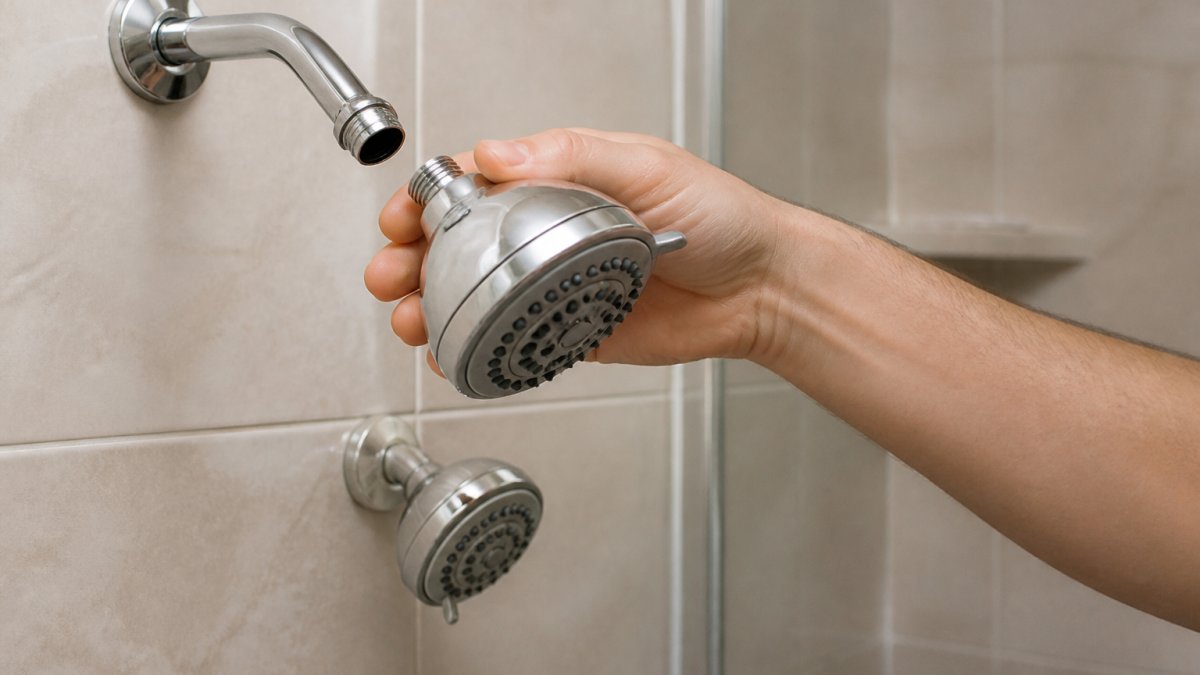
Remove your shower head by turning it counterclockwise by hand. If it's stuck, wrap a cloth around it and use a wrench for grip; don't force it or you'll damage the threads.
Use an old toothbrush to scrub the nozzles gently. For stubborn deposits, use a small pin or needle to clear each opening individually. Rinse thoroughly under running water. Screw it back on, hand-tight, and test. Many homeowners find this alone restores acceptable flow.
If soaking doesn't work, you may have sediment trapped deeper inside. Disassemble the shower head if possible (many unscrew into parts). Clean each component separately.
Check and Clean the Inlet Screen
Your shower head has a small screen inside where water enters. This screen catches debris and mineral particles before they clog the nozzles. Over time, this screen gets blocked.
Remove the shower head as described above. Look for a small screen or filter just inside the base where the water line connects. It's usually a fine mesh. Remove it carefully; it may be glued or just sitting loosely.
Rinse the screen under running water, rubbing gently with your finger. If it's heavily clogged, soak it in vinegar. A soft brush works too. Reinstall it, making sure it's seated correctly, then reattach the shower head.
This simple step often improves flow noticeably. If the screen is damaged or disintegrating, replace it. Replacement screens are inexpensive and available at any hardware store.
Best Shower Head for Low Water Pressure
If cleaning doesn't solve the problem, or if your shower head is old and damaged, replacement is the right move. The best shower head for low water pressure prioritizes high-pressure spray design and nozzle configuration.
High-Pressure Spray Design and Nozzle Configuration
The most effective shower heads for low-pressure situations use concentrated nozzle design. Instead of spreading water across a wide area, they focus the spray into a narrower stream. This creates the sensation of stronger pressure even when actual flow rate is modest.
Look for shower heads with fewer, larger nozzles rather than many small ones. Fewer nozzles mean less resistance, so water flows more freely. The nozzles should be angled slightly inward, converging the spray. This design increases perceived pressure without requiring your water supply to change.
Some shower heads include adjustable spray settings. A focused, pencil-thin stream will feel more powerful than a wide rainfall pattern, even at identical flow rates.
Materials matter too. Brass and stainless steel internals resist mineral buildup better than plastic. This means your shower head stays cleaner longer and maintains its performance.
Fixed vs. Handheld: Which Delivers Better Results
Fixed shower heads mounted to the wall deliver more consistent pressure than handheld models because the water travels a shorter distance from the valve to the nozzle. Less distance means less friction loss.
Handheld shower heads require water to travel through a longer hose before exiting. This extra distance creates additional resistance, which can reduce perceived pressure. However, a high-quality handheld with a concentrated spray pattern can still perform well.
For pure pressure sensation, a fixed high-pressure model is your best bet. If you want flexibility (rinsing hair, cleaning the tub, adjusting angle), accept a slight trade-off in pressure. Many people choose a combination: a fixed overhead head for daily use and a handheld for specific tasks.
How to Replace a Shower Head
Shower head replacement for low water pressure is straightforward if you follow the right steps. You don't need a plumber for this job, and it takes about 10 minutes.
What You'll Need and Compatibility Checks
Gather these tools before you start:
- An adjustable wrench or pipe wrench
- A cloth or old towel
- Thread seal tape (also called plumber's tape or PTFE tape)
- Your new shower head
- A bucket or towel to catch water drips
Before buying a new shower head, verify compatibility. Most shower arms use a standard 1/2-inch NPT (National Pipe Thread) connection. Your new head should fit this standard. Check the product specifications; they'll state the connection size. Measure your existing shower arm if you're unsure.
Examine the shower arm itself. Is it brass, galvanized steel, or chrome-plated? Chrome-plated arms are more fragile and can crack if you apply too much force. Use extra caution with these.
Check whether your current shower head has a flow restrictor. Many modern heads include one to meet water-efficiency standards. If you're removing a restrictor to increase flow, understand that this increases water consumption.
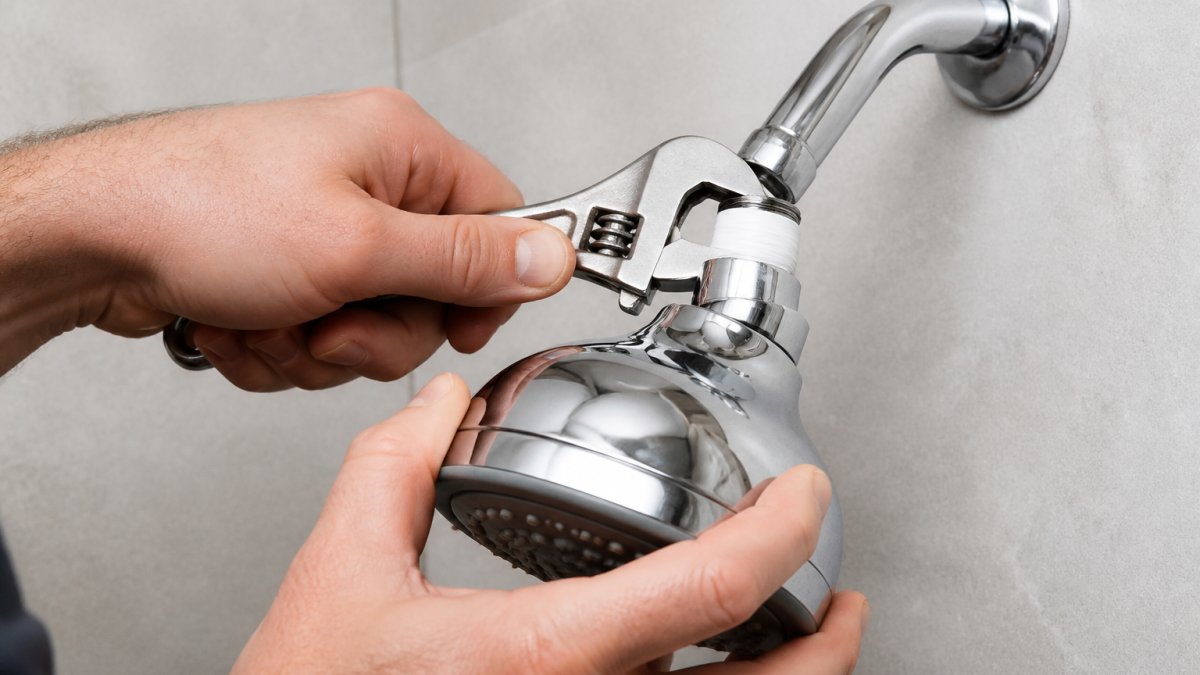
Step-by-Step Replacement and Leak Testing
Step 1: Turn off the water (Time: 1 minute) Before you disconnect anything, turn off the water at the shower valve if possible.
Step 2: Remove the old shower head (Time: 3 minutes) Grip the shower arm with one wrench to hold it steady.
Step 3: Clean the threads (Time: 2 minutes) Once the old head is off, you'll see threads on the shower arm.
Step 4: Apply thread seal tape (Time: 2 minutes) Wrap the threads with thread seal tape, going clockwise around the arm 3-4 times.
Step 5: Install the new shower head (Time: 2 minutes) Screw the new shower head onto the arm by hand first, turning clockwise.
Step 6: Test for leaks (Time: 2 minutes) Turn the water back on slowly.
If no water drips from the connection, test the spray. You should notice an immediate improvement if you chose a high-pressure design.
Verify Your Results and Know When to Call a Plumber
After installation, take time to assess whether the new shower head solved your problem. Not every replacement delivers a dramatic difference, and understanding why helps you decide if professional help is needed.
Pressure Testing After Installation
Run your shower for a full minute and observe the spray pattern and flow. Does it feel noticeably stronger than before? A good high-pressure shower head should deliver a concentrated, forceful spray. If the improvement is minimal, your water supply itself may be the limiting factor.
To confirm, turn on other fixtures while the shower runs. If the kitchen sink or toilet loses pressure, your main supply is weak. If other fixtures maintain normal pressure, your shower's water line may have a partial blockage or your shower valve may be failing.
Check that you haven't accidentally left a flow restrictor in place inside the new head. Some shower heads have removable restrictors. If your head came with one and you haven't removed it, that could explain disappointing results. Consult the manufacturer's instructions.
Common Issues That Require Professional Help
If you've cleaned your old shower head, replaced it with a high-pressure model, and still have weak flow, the problem is beyond the shower head. These situations warrant a professional inspection:
Low pressure throughout the home. This indicates a main water supply issue, failed pressure regulator, or partially closed shutoff valve. A plumber can diagnose and fix it.
Pressure that fluctuates or drops when other fixtures run. This suggests undersized pipes, a failing water heater, or pressure tank issues in well systems.
Water leaking from inside the wall after you've installed the new head. You may have damaged the shower valve or cracked the arm.
Persistent leaks at the connection despite proper installation. The threads on your shower arm may be stripped or corroded. A plumber can replace the arm or repair the connection.
Discolored or foul-smelling water when you first turn on the shower. This points to sediment or bacterial growth in your supply line, not your shower head.
When in doubt, contact a professional.
Low water pressure in your shower is often fixable without a plumber, but sometimes it signals a deeper issue in your plumbing system.
Frequently Asked Questions
Can replacing a shower head improve water pressure?
Yes, but only if the problem is with the shower head itself. A high-pressure shower head with concentrated spray nozzles can make weak flow feel stronger by directing water in a focused stream. However, if your water supply pressure is genuinely low (below 40 psi), replacement alone won't solve it. Always diagnose first: test pressure at other fixtures, clean existing nozzles, and check the inlet screen before investing in a new shower head.
How do I know if a clogged shower head is causing low pressure?
Turn off water at the shower valve and unscrew the shower head. Look for white or orange mineral buildup on the nozzles or a debris-clogged inlet screen. If you see visible blockage, soak the head in white vinegar for 2-4 hours, then scrub nozzles with an old toothbrush. Rinse and reinstall. If pressure improves significantly, the clog was your problem. If pressure remains weak, the issue lies in your water supply line or valve.
What should I check if a new shower head does not improve the flow?
First, verify you installed it correctly with a tight seal at the shower arm connection. Run water and check for leaks. If the seal is good but pressure is still low, the problem is upstream: test water pressure at a sink faucet using a pressure gauge (normal range is 40-80 psi). If all fixtures have weak pressure, contact a plumber to inspect your water supply line, pressure regulator, or main shutoff valve. If only the shower is affected, the shower valve itself may be faulty.
Can a low-flow shower head feel stronger than a standard shower head?
Yes. Low-flow heads concentrate water into a tighter, faster spray pattern, which increases perceived pressure even though total flow is lower. A head rated at 1.5 gallons per minute with focused nozzles can feel more powerful than a standard 2.5 gpm head with dispersed spray. This is why spray pattern and nozzle design matter more than flow rate alone when addressing low-pressure complaints.