 how-to
How Much Does a Plumber Cost for 3 Hours?
Table of Contents
- What a 3-Hour Plumbing Service Call Actually Costs
- Understanding Plumber Hourly Rate and Call-Out Fees
- Plumber Flat-Rate Pricing vs Hourly Rate: Which Saves You Money
- Breaking Down a Sample 3-Hour Plumbing Invoice
- Factors That Affect Your Final Plumbing Bill
- Getting an Accurate Plumbing Repair Estimate Before Work Begins
- How to Avoid Unexpected Plumbing Costs
- Frequently Asked Questions
Last Updated: October 4, 2026
What a 3-Hour Plumbing Service Call Actually Costs
When you call a plumber, you're not just paying for three hours of labor. You're paying for the service call itself, the expertise, the parts, and often a minimum charge that applies regardless of how long the work takes. Understanding what goes into that final invoice helps you budget accurately and avoid sticker shock.
At UMark Plumbing and Drain Inc., we've worked with homeowners who were surprised by their plumbing bills. The biggest shock isn't usually the hourly rate, it's the combination of fees, parts, and time that add up faster than expected. A straightforward three-hour job might cost significantly more than three times the hourly rate, depending on what's involved.
The reality is this: plumber pricing has multiple layers. You need to understand each one to know what you're actually paying for. Let's break down exactly what a three-hour plumbing service costs and why the numbers land where they do.
Understanding Plumber Hourly Rate and Call-Out Fees
A plumber's hourly rate is just the starting point. Most plumbers charge an hourly rate for labor, depending on experience, location, and the complexity of the work. But you'll also pay a call-out fee or service charge just for showing up.
How Hourly Billing Works for Plumbing Services
Hourly billing means you pay for every hour the plumber spends at your home. This includes time spent diagnosing the problem, doing the actual repair, and cleaning up afterward. Travel time is typically not billed, but diagnostic time absolutely is.
For a three-hour job, you're looking at three hours of labor charges. If the hourly rate is $150, that's $450 just for labor. But the clock doesn't start when the plumber arrives, it starts when they begin working on your specific issue. Many homeowners don't realize that time spent assessing the problem, explaining the fix, and discussing options counts toward billable hours.
What a Plumber Call-Out Fee Covers
Most licensed plumbers charge a call-out fee (also called a service charge or dispatch fee) just for coming to your home. This fee covers the cost of sending a truck, fuel, and the plumber's time getting to your location. This charge applies whether the plumber is there for 30 minutes or three hours.
The call-out fee is separate from hourly labor charges. It's a baseline cost you pay to get a professional in the door. Some plumbers waive this fee if you proceed with the repair, while others keep it as a diagnosis charge. Always ask about this upfront, it makes a significant difference in your total bill.
Plumber Flat-Rate Pricing vs Hourly Rate: Which Saves You Money
Some plumbers offer flat-rate pricing instead of hourly billing. With flat-rate pricing, you pay one set price for a specific job, regardless of how long it takes. For example, fixing a running toilet might cost $250 flat, whether it takes 20 minutes or two hours.
Flat-rate pricing works best for common, straightforward repairs where the plumber knows exactly what's involved. The advantage is predictability, you know the cost before work begins. The disadvantage is that unusual problems or complications can push you into a higher flat-rate category, and you might end up paying more than you would have with hourly billing.
Hourly billing works better for complex jobs where the scope isn't clear until the plumber starts working. You're paying for actual time spent, which can be fairer if the job turns out to be more complicated than expected. However, hourly billing also means the bill can grow if the plumber encounters unexpected issues.
You'll pay the call-out fee plus three hours of labor at the plumber's hourly rate.
Breaking Down a Sample 3-Hour Plumbing Invoice
Let's walk through exactly how a three-hour plumbing job reaches its final invoice total.
Step-by-Step Cost Calculation:
1. Service Call / Dispatch Fee: $100 This is a fixed charge for sending a truck and technician to your home. It covers fuel, vehicle overhead, and the plumber's travel time.
2. Labor (3 hours at $150/hour): $450 The clock starts when the plumber begins assessing your problem, not when they arrive at your door. For a three-hour job, you pay for all three hours of labor.
3. Parts and Materials: $120 This job requires new pipe fittings, sealant, and a section of PVC or copper pipe. The plumber's cost for these materials is roughly $70-$80; the invoice marks them up 40-50%, which is standard in the industry.
4. Diagnostic Fee (if applicable): $0 Some plumbers charge a separate diagnostic fee ($50-$75) if you don't proceed with the repair. In this example, you've authorized the work, so the diagnostic fee is waived or rolled into the service call charge.
Subtotal (before tax):
5. Sales Tax (13% HST in Ontario, 15% in other provinces): $87 In Ontario and most provinces, HST applies to both labor and parts. In some provinces, tax applies only to materials. Confirm your province's rules; this can add $70-$100 to the bill.
Final Invoice Total:
Why the Total Is Not Simply 3 × $150:
Many homeowners expect to pay a certain amount for three hours of work and are surprised when the bill arrives higher. Here's why:
- The call-out fee is fixed, not hourly. You pay it regardless of duration.
- Parts are marked up, not billed at cost. A part's cost is marked up on the invoice.
- Tax applies to the entire subtotal, including the markup on parts and the service fee.
- Unexpected complications can extend the job. If the plumber discovers corroded fittings or a second issue, the three hours can stretch to four, and the bill grows accordingly.
What This Means for Your Budget:
For a straightforward three-hour plumbing job, budget accordingly depending on parts costs and your province's tax rate.
Getting a Written Estimate:
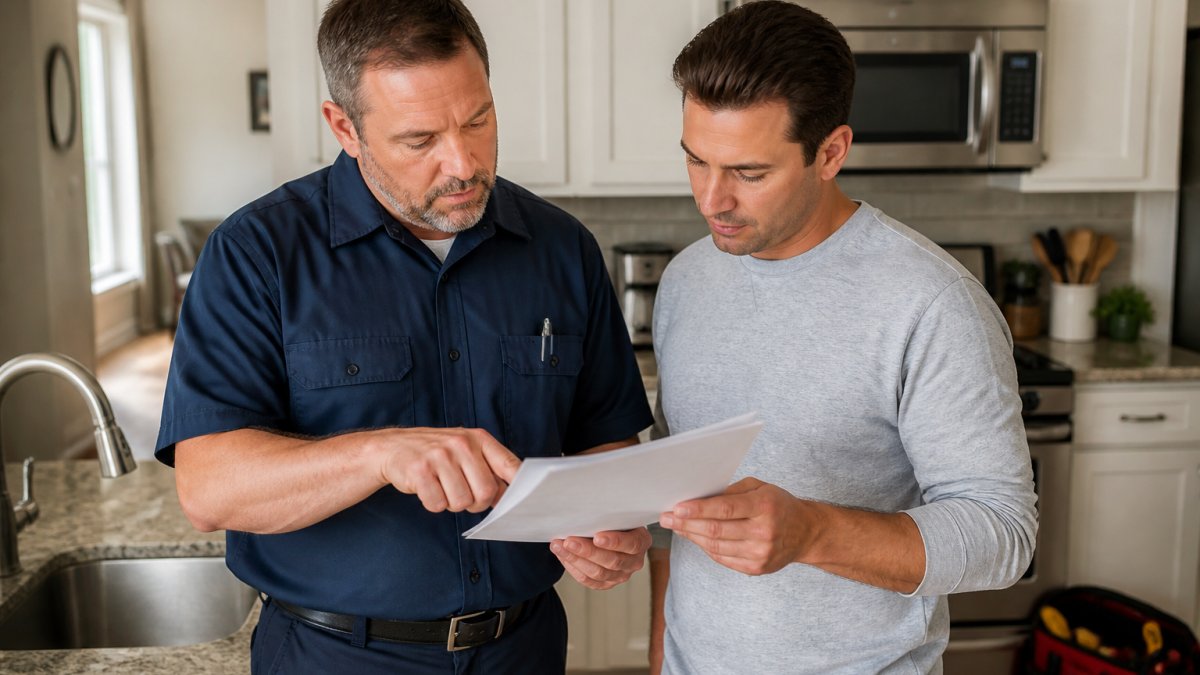
Before work begins, ask the plumber for a written estimate that breaks down each line item: call-out fee, hourly rate, estimated hours, estimated parts cost, and tax. A clear estimate protects you from surprises.
Factors That Affect Your Final Plumbing Bill
Not all three-hour jobs cost the same. Several factors push the price up or down, and understanding them helps you predict what you'll actually pay.
Complexity of the job. A simple repair takes less time and mental effort than diagnosing a tricky problem. If the plumber has to troubleshoot, test, and try multiple approaches, the hours add up fast.
Parts availability. If the plumber needs to order parts or make a second trip, you might pay extra. Some jobs require specialized fittings or materials that aren't in the truck.
Accessibility. If pipes are behind walls, under the house, or in tight spaces, the job takes longer. Accessibility issues can easily add an extra hour or more to the estimate.
Emergency or after-hours timing. This is where costs spike significantly.
Emergency and After-Hours Pricing
If you call a plumber at 2 a.m. on a Sunday because a pipe burst, you're not paying the standard rate. Emergency and after-hours calls typically cost more than the regular hourly rate, depending on the time and day.
After-hours surcharges are common:
- Evening calls (after 5 p.m.): 25-50% surcharge
- Weekend calls (Saturday-Sunday): 50-100% surcharge
- Overnight calls (10 p.m.-6 a.m.): 50-100% surcharge
- Holiday calls: 100-200% surcharge
A three-hour job normally costs a certain amount in labor. The same job on a Sunday night might cost more just for labor, before parts and fees. This is why many homeowners try to schedule routine maintenance during business hours and save emergency calls for actual emergencies.
UMark Plumbing and Drain Inc. offers 24/7 emergency services because burst pipes and severe leaks don't wait for business hours. When you need help at any time of day, having a certified team available makes a real difference in preventing water damage and costly repairs down the line.
Getting an Accurate Plumbing Repair Estimate Before Work Begins
Before a plumber starts work, ask for a written estimate. This estimate should include:
- The call-out fee
- The estimated hourly rate
- The estimated number of hours (or a range)
- Estimated parts and materials costs
- Any surcharges (emergency, after-hours, etc.)
- Whether the estimate includes tax
- The plumber's warranty or guarantee on the work
A good estimate gives you a ballpark figure so you're not blindsided by the final bill. It's not a guarantee, unexpected complications can change the scope, but it shows the plumber has thought through the job.
Ask the plumber to call you if the job looks like it will exceed the estimate by more than 10-15%. This gives you a chance to decide whether to proceed or stop and get a second opinion.
Also verify that the plumber is licensed. A licensed plumber has passed exams, carries liability insurance, and is held to building codes and safety standards. An unlicensed handyman might charge less upfront, but you have no recourse if something goes wrong, and you could face issues with your home insurance or when you sell.
How to Avoid Unexpected Plumbing Costs
The best way to avoid a shocking bill is to prevent emergencies in the first place. Regular maintenance catches small problems before they become big ones.
Schedule preventive maintenance. Annual inspections help identify issues like slow leaks, corroded pipes, or failing water heaters before they fail catastrophically. Catching a slow leak costs far less than dealing with water damage.
Know where your main water shut-off is. If a pipe bursts, you can stop the water immediately and limit damage.
Address small problems quickly. A dripping faucet or slow drain seems minor, but it often signals a bigger issue. Fixing it early prevents emergency calls later.
Get multiple quotes for major work. If you need a water heater replacement or significant pipe repair, call two or three plumbers. Prices vary, and you might find better value or a different approach.
Ask about warranties. Some plumbers guarantee their work for a year or more. If the same problem happens again within the warranty period, they'll fix it for free. This protects you against shoddy work.
Understand what's included in the price. Before you agree, confirm whether the quote includes parts, labor, tax, and call-out fees. Some plumbers quote labor only, and parts are extra.
A three-hour plumbing service call typically costs a certain amount when you factor in the call-out fee, labor, parts, and tax.
When you need a plumber you can trust, UMark Plumbing and Drain Inc. provides certified technicians and 24/7 availability for emergencies.
Frequently Asked Questions
How much would a plumber charge per hour in a typical 3-hour service call?
A licensed plumber's hourly rate varies by location, experience, and job complexity, but your total cost for 3 hours includes more than just labor time multiplied by three. The invoice typically shows the call-out fee, the hourly labor rate applied to actual work time, parts and materials, and any emergency or after-hours surcharge. To get an accurate figure for your specific repair, contact a licensed plumber for a plumbing repair estimate that breaks down each component.
What is a reasonable plumber call-out fee?
A call-out fee (also called a dispatch or service fee) covers the plumber's travel time, vehicle costs, and the diagnostic visit. Some licensed plumbers apply this fee toward the final bill if you authorize the repair; others keep it as a separate charge. Always ask whether the call-out fee is credited to your total cost before the plumber arrives, so you know what to expect on your final invoice.
Is it cheaper to hire a plumber at a flat rate or by the hour for a 3-hour job?
For a 3-hour job, flat-rate pricing can be more predictable and sometimes cheaper if the work finishes early, since you pay a set price regardless of actual time spent. Hourly billing charges you for every minute worked, plus the call-out fee. Flat-rate pricing works best when the scope is clear (e.g., toilet installation), while hourly rates suit complex diagnostics where the job scope isn't known upfront. Request both options and compare the plumber flat-rate pricing vs hourly rate to see which fits your job.
What should I ask a plumber before approving a 3-hour repair?
Before authorizing work, ask for a written plumbing repair estimate that itemizes labor hours, call-out fees, parts, taxes, and any after-hours surcharges. Confirm whether the estimate is binding and what happens if the job takes longer or requires additional parts. Ask if the plumber is licensed and whether the work includes a warranty. Get clarity on payment terms and whether the call-out fee is credited to the final bill. A reputable licensed plumber will provide this detail upfront and explain any discrepancies before presenting the final invoice.