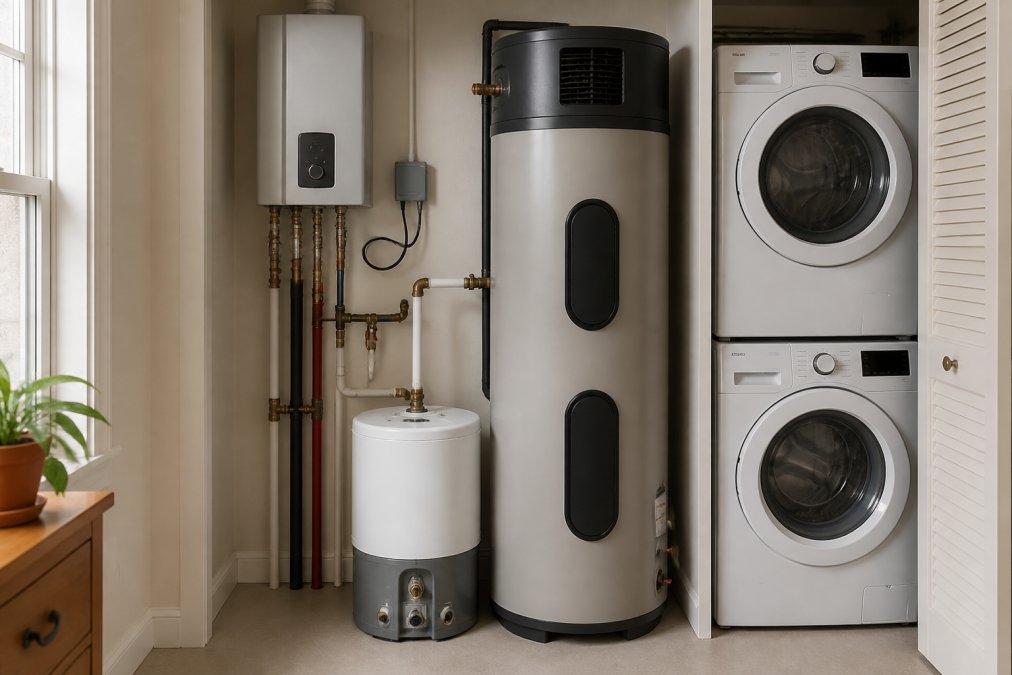
 comparison
Water Heater Alternatives for Small Homes
Table of Contents
- Why Tankless Systems Aren't Always the Best Choice for Small Spaces
- Point-of-Use Water Heater Pros and Cons
- Hybrid Heat Pump Water Heaters for Maximum Efficiency
- Electric Tankless Systems: Compact and Vent-Free
- Propane and Gas Tankless Options for Off-Grid Living
- Plumbing Requirements for Water Heater Installation
- Total Cost of Ownership: Initial Investment vs. Long-Term Savings
- Frequently Asked Questions
Last Updated: September 23, 2026
Why Tankless Systems Aren't Always the Best Choice for Small Spaces
Tankless water heaters are often discussed for small homes, but other water heater alternatives may be better suited to compact households. The reality is more nuanced than "tankless is always better."
Tankless units in small spaces can create unanticipated constraints: they require significant electrical or gas infrastructure upgrades, precise venting that's costly in older homes, and can struggle with multiple simultaneous hot water demands.
Smart choices depend on understanding your actual water usage patterns and space constraints. Some homes benefit from tankless technology; others perform better with less complex alternatives.
Point-of-Use Water Heater Pros and Cons
A point-of-use water heater is a compact system that heats water at the source, under a sink or near a shower, rather than from a central tank or tankless unit.
These units eliminate the lag time between turning on a tap and receiving hot water. In homes with long plumbing runs (30+ feet from the main heater), they reduce water and energy waste.
Electric point-of-use units deliver 1.5-3 GPM with a 10-20°C temperature rise, producing 20-30°C water in moderate climates, adequate for hand-washing but not comfortable showers. Gas-fired units (like the Eccotemp EL5) achieve a 20-30°C rise, making them viable for showers in single-fixture scenarios.
You get hot water in 3-5 seconds versus 15-30 seconds from a central heater, saving approximately 75-150 litres of water per day per fixture. Water conservation tips
Point-of-use units work best for single-fixture applications. Running multiple fixtures simultaneously can drop the temperature by 10-15°C. Whole-home coverage requires multiple units, increasing the total cost to $2,000-3,500.
In cold climates (groundwater 1-4°C), electric units struggle without supplemental mixing; gas-fired units perform better. In moderate climates, electric units work adequately for hand-washing and light kitchen use.
Maintenance is minimal, but replacement costs $300-600 plus $200-400 labor. UMark Plumbing and Drain Inc. offers professional installation for these units.
Point-of-use systems excel for single-fixture applications: guest bathrooms, basement workshops, rentals, or tiny homes. They're less effective for homes with multiple simultaneous demands or extended cold winters.
Hybrid Heat Pump Water Heaters for Maximum Efficiency
Hybrid heat pump water heaters extract warmth from surrounding air and transfer it to water, combining storage tank capacity with heat pump technology for exceptional efficiency.
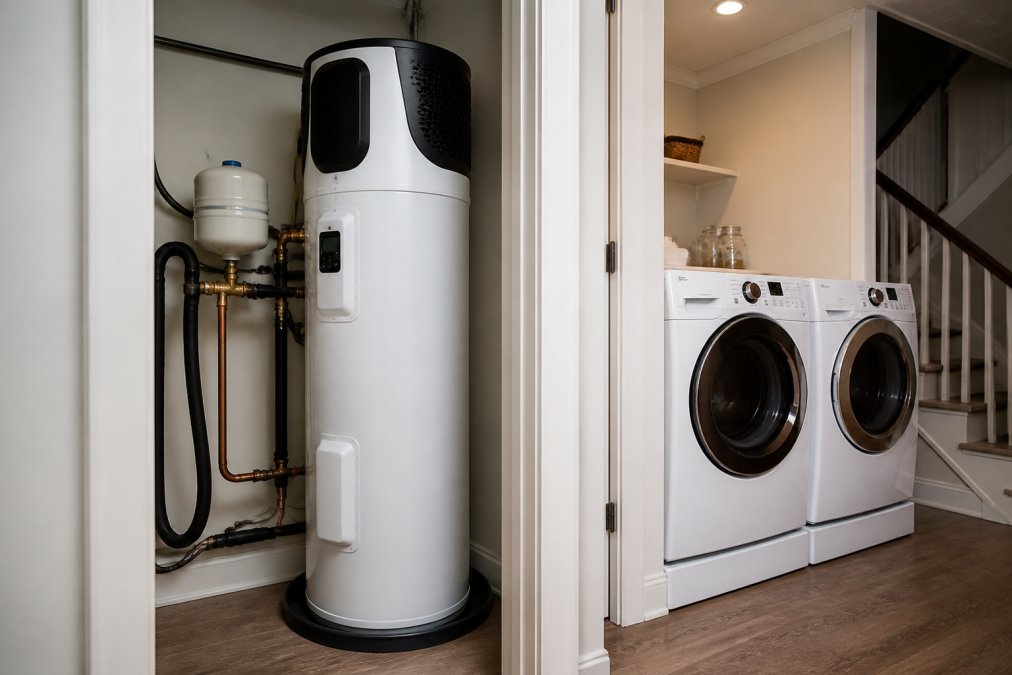
These systems move existing heat from air into water, using significantly less energy than conventional methods and delivering measurable utility bill reductions.
The Rheem ProTerra exemplifies this technology, with Wi-Fi monitoring, a compact footprint for small closets, and multiple operating modes for different usage patterns.
While the initial investment is higher than standard tanks, operational savings appear within two to three years. Provincial rebates often offset upfront costs, and 10+ year lifespans compound savings. Energy efficiency programs
Hybrid systems require vertical clearance and perform best in moderate climates; efficiency diminishes in prolonged extreme cold.
For small homes in moderate climates where energy costs are a concern, hybrid systems often deliver the strongest total cost of ownership advantage.
Electric Tankless Systems: Compact and Vent-Free
Electric tankless water heaters deliver hot water on demand without requiring venting, making them ideal for small spaces where ductwork or exhaust routing isn't feasible.
The Stiebel Eltron Tempra 24 Plus maintains consistent temperature with advanced flow control. Because it requires no venting, installation is simpler in compact homes.
Electric tankless units sidestep venting requirements entirely; they mount to a wall and connect to your water line.
The trade-off is electrical demand. Older panels may need $1,500-3,000 upgrades to accommodate the 40-60 amp draw, negating the simplicity advantage.
For homes with modern electrical service and limited venting options, electric tankless units provide genuine value. They're whisper-quiet, occupy minimal wall space, and deliver consistent hot water. However, the electrical infrastructure requirement makes them a poor choice for homes that would need panel upgrades.
Propane and Gas Tankless Options for Off-Grid Living
Gas-powered tankless water heaters remain the most flexible solution for homes without reliable electrical infrastructure or those seeking fuel independence.
The Rinnai RE199iN exemplifies high-performance gas technology, capturing heat from exhaust gases for superior efficiency and a 15+ year lifespan versus 8-10 years for standard units.
Condensing technology recovers heat that escapes in standard units, reducing energy consumption and monthly costs. Many condensing units rival hybrid electric system efficiency.
The Eccotemp EL5 serves tiny homes, seasonal cabins, and off-grid properties, mounting outdoors with no indoor footprint.
The practical limitation of outdoor-mounted propane units is climate exposure. In regions with extended sub-zero winters, outdoor installation becomes problematic. Propane flow diminishes in extreme cold, and the unit's performance degrades. For seasonal use or moderate climates, this approach works well. For year-round operation in harsh winters, you'll need either indoor installation or a hybrid approach.
Gas tankless systems make the strongest sense for homes with existing gas infrastructure, or properties seeking fuel independence. The condensing models deliver efficiency comparable to hybrid electric systems while avoiding electrical infrastructure constraints.
Plumbing Requirements for Water Heater Installation
Water heater installation success hinges on matching your system choice to your home's existing plumbing configuration, available infrastructure, and climate-specific constraints that most guides overlook.
Pressure and flow rate compatibility: Every water heater alternative demands different plumbing characteristics. Tankless systems perform optimally with water pressure between 20-80 PSI and minimum flow rates around 0.5 GPM. Homes with low-pressure systems (below 20 PSI) or extensive plumbing runs may experience inconsistent performance, with temperature swings of 10-20°C when multiple fixtures run simultaneously. Point-of-use units actually prefer moderate pressure (40-60 PSI) because excessive pressure (above 80 PSI) can create temperature spikes and scalding hazards. Hybrid heat pump systems are pressure-tolerant but require adequate flow to trigger their heating cycle, typically 0.5 GPM minimum.
Before selecting any system, have your water pressure tested at the main supply line. Low-pressure homes may need a pressure-boosting pump ($400-800 installed) to make tankless systems viable. This cost often shifts the economics toward hybrid or point-of-use alternatives.
Venting requirements and climate impact: Gas-powered systems demand proper venting that meets code requirements, and venting choice directly affects performance in cold climates. Direct vent systems draw combustion air from outside and exhaust to the exterior; they need a clear path through exterior walls.
Safe for experienced DIYers (with proper permits):
- Electric tankless units with existing 240V circuits: These require no venting, no gas connections, and no combustion safety concerns. If your home already has a 240V circuit nearby and your electrical panel has available capacity, installation is straightforward: mount the unit, connect water lines, and wire to the circuit. Cost savings: $400-600 in labor. Risk: Electrical shock if wiring is incorrect; always hire a licensed electrician for final connections if you're uncertain.
- Point-of-use electric units: Minimal plumbing knowledge required if you're comfortable with basic compression fittings. No venting, no gas, no electrical work beyond a standard 120V outlet. Most DIYers can install these in 1-2 hours.
Requires licensed professional installation:
- Gas tankless systems (propane or natural gas): Gas connections demand certification in most provinces. Improper connections create carbon monoxide and explosion hazards. Venting must meet code, and combustion air pathways must be verified. Professional installation is mandatory.
- Hybrid heat pump systems: These require proper condensation drain routing, electrical connections to 240V circuits, and refrigerant handling in some models. While some manufacturers allow DIY installation, improper setup can void warranties and create performance issues. Professional installation ($500-800) is strongly recommended.
- Whole-house tankless systems with electrical panel upgrades: If your system requires a new 60-amp circuit or panel expansion, only a licensed electrician can legally perform this work. Attempting it yourself creates fire and electrocution hazards.
Total Cost of Ownership: Initial Investment vs. Long-Term Savings
Comparing water heater alternatives requires looking beyond purchase price to the complete financial picture over the system's lifespan.
Frequently Asked Questions
What is the best water heater alternative for a tiny house?
The best choice depends on your space, fuel availability, and climate. Point-of-use systems work well for single bathrooms and kitchens with limited space. Heat pump water heaters offer excellent energy efficiency if you have 1.5 metres of vertical clearance. For off-grid tiny homes, propane tankless units eliminate venting concerns. Electric tankless systems suit homes with upgraded electrical service. A certified plumber from UMark Plumbing and Drain Inc. can assess your plumbing configuration and recommend the right fit for your specific needs.
Why might a homeowner choose a traditional tank over a tankless system?
Traditional tanks handle simultaneous hot water demands better; multiple showers or appliances running at once won't cause temperature fluctuations. They cost less upfront and require fewer plumbing modifications. Tanks also work in extreme climates where groundwater temperature is very cold, as they maintain consistent storage. Maintenance is straightforward, and they tolerate water pressure variations. For homes with limited electrical or gas capacity, tanks avoid expensive service upgrades. They're also simpler to install in older homes with existing plumbing configurations.
How does a point-of-use water heater compare to a whole-home tankless unit?
Point-of-use heaters serve single fixtures or rooms, delivering instant hot water at the tap without waiting for water to travel through long pipes. They require no venting and minimal space. Whole-home tankless units provide hot water throughout the house but demand higher flow rates, larger gas lines or electrical service, and venting requirements. Point-of-use systems cost less initially and suit small homes or rental properties. Whole-home systems offer convenience for multiple simultaneous users but need professional installation and higher maintenance cycles like descaling.
What plumbing upgrades are needed for water heater installation?
Installation requirements vary by system type. Electric tankless units may need 200-amp electrical service upgrades and dedicated circuits with high amperage. Gas units require properly sized natural gas or propane lines and direct vent or non-condensing venting systems. Heat pump systems need adequate clearance and drainage for condensate. Point-of-use heaters require minimal changes, just connection to existing water lines. All installations must meet local plumbing codes and may need pressure relief valves or backflow preventers. A certified plumber should assess your current infrastructure before recommending any system.
What are the energy efficiency differences between water heater alternatives?
Heat pump water heaters achieve the highest energy factor, using air to extract warmth and reducing consumption by 50% or more versus standard electric tanks. Condensing gas tankless units capture exhaust heat for superior thermal efficiency. Non-condensing gas models offer moderate efficiency gains. Electric tankless systems provide on-demand heating with no standby heat loss but consume more electricity per use. Point-of-use heaters eliminate pipe heat loss for their served fixture. Tank systems experience continuous standby heat loss. Your climate affects performance; heat pumps work best in moderate climates, while gas systems perform consistently in cold groundwater temperatures.