 Comparison
7 Trenchless Sewer Repair Options for North York Homes
Quick Summary
Trenchless sewer repair fixes a damaged sewer line through one or two small access pits instead of a long open trench, either by lining the existing pipe or bursting it and pulling in a new one. A camera inspection should come first to confirm whether the pipe's condition suits trenchless methods. Severe collapse or a shallow line may still require excavation.
- A camera inspection is the first step and shows pipe material, alignment, collapse and root intrusion.
- Pipe lining suits cracked, leaking or root-damaged pipes that still hold their shape.
- Pipe bursting replaces collapsed, broken or badly offset pipe.
- Lining reduces inside diameter slightly and will not fix a bellied or collapsed line.
- Ask for an itemized quote separating cleaning, inspection, repair method and restoration.
Table of Contents
- What Trenchless Sewer Repair Is and How It Works
- Start With a Sewer Camera Inspection in North York
- Pipe Lining North York: Cured-in-Place and Epoxy Options
- Pipe Bursting Sewer Repair Versus Lining: Side-by-Side
- What Drives the Cost of Trenchless Repair in North York
- Permits, Municipal Responsibility and Restoration
- Questions to Ask a Sewer Repair Contractor Before You Book
- Booking Your Sewer Inspection With UMark Plumbing
- Frequently Asked Questions
What Trenchless Sewer Repair Is and How It Works
Last Updated: November 20, 2026
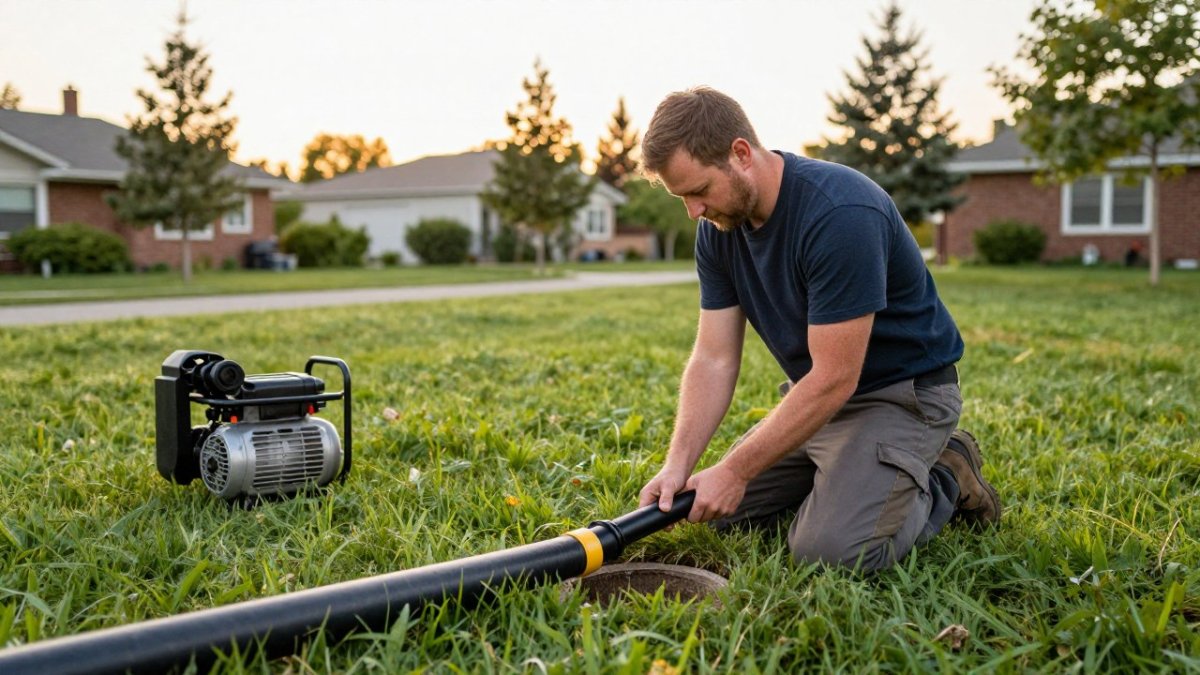
Trenchless sewer repair fixes a damaged sewer line without digging up the whole yard, driveway or foundation. Instead of excavating a long trench, a technician works through one or two small access pits and rehabilitates the pipe from the inside or replaces it along its existing path. For homeowners in North York, where lots can be narrow and landscaping is often valued, that difference matters. UMark Plumbing and Drain Inc. offers 24/7 emergency and routine plumbing and drain service, and our team is glad to walk you through which trenchless approach suits your home.
Most trenchless methods start the same way. A camera is run through the sewer lateral to find cracks, root intrusion, offset joints or collapses. Based on what the camera shows, the crew chooses a method. The main families are pipe lining, which adds a new pipe inside the old one, and pipe bursting, which breaks the old pipe apart and pulls a new one into its place.
The advantage is reduced property disruption. A few small pits replace a long open trench, so there is less damage to lawns, walkways and landscaping. Repairs also tend to take fewer days on site than full excavation, though the exact timeline depends on pipe length, depth and condition.
Trenchless does not suit every situation. Severe pipe collapse, a heavily offset line or a pipe that is too shallow for the equipment may still need traditional excavation. That is why an inspection comes first.
Start With a Sewer Camera Inspection in North York
Before choosing any repair, a camera inspection shows exactly what is wrong. A sewer camera inspection is one of the most useful ways to see pipe condition, diameter, material and the location of defects.
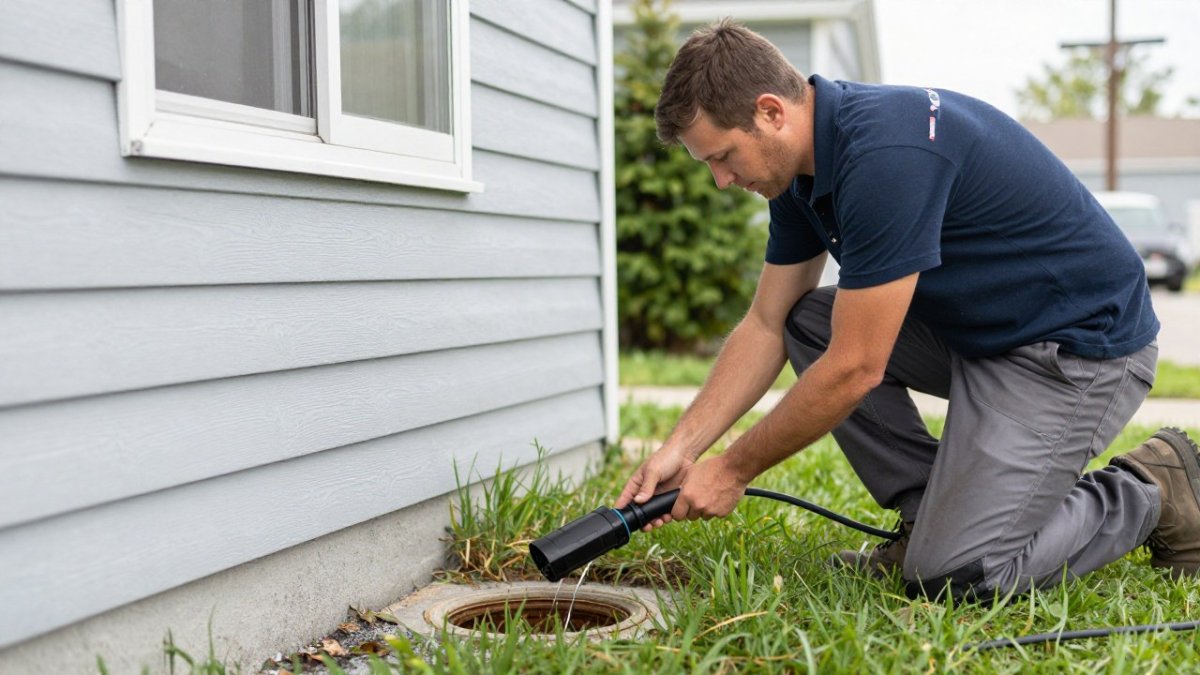
What separates a useful inspection from a quick look is whether the findings are tied to a method. The camera should answer four questions, and each answer narrows the options.
Pipe material. Clay tile, cast iron, PVC, and Orangeburg each fail differently. Cracked clay tile with intact alignment is often a lining candidate. Deteriorated cast iron with heavy corrosion may still line if it is cleaned first. Collapsed Orangeburg usually needs replacement, which points to bursting or excavation.
Alignment and grade. A pipe that has bellied or lost grade will not be fixed by a liner, because the liner follows the old shape. Offset joints beyond a small tolerance also rule out lining for that section. These findings push the decision toward bursting or open-cut.
Collapse and deformation. A localized collapse can sometimes be spot-repaired, but a run of collapsed pipe generally needs replacement. The camera should mark how many metres are affected, because that length drives both method and cost.
Root intrusion and blockage. Roots at joints can be cut and the pipe lined if the wall is still sound. Heavy root masses that have deformed the pipe are a different problem and usually mean replacement.
A camera inspection is worth paying for when you have recurring backups, slow drains throughout the house, sewage smells, or a known history of root problems. Our guide to whether a sewer camera inspection is worth the cost walks through the case for it before you book. It also gives you a record you can use to compare quotes. Ask the inspector to save the video and mark the distance to each defect from the cleanout. That information lets you compare methods on equal terms.
If you are unsure how to reach the line, our guide on Finding Sewer Cleanout Access: A Step-by-Step Guide explains where the access point usually sits.
Watch out: an inspection that produces only a verbal summary, with no video file and no distances, leaves you unable to verify later whether the recommended method actually matched the defect.
Pipe Lining North York: Cured-in-Place and Epoxy Options
Pipe lining is common for cracked, leaking or root-damaged pipes that are still structurally sound enough to host a new liner. The technician inserts a resin-saturated liner into the old pipe and cures it so it forms a tight pipe-within-a-pipe.
Cured-in-place pipe, often called CIPP, uses a felt or fibre liner soaked in resin. It is pulled or inverted into the line and cured with heat or UV light. Epoxy liners use a coating or thinner resin layer and suit smaller diameters or localized repairs.
Pros of lining:
- Limited excavation, usually at access points only
- Seals joints and small cracks
- Keeps the original pipe alignment
Cons of lining:
- Reduces internal diameter slightly
- Does not correct a badly bellied or collapsed pipe
- Requires careful pre-cleaning and inspection
Pipe Bursting Sewer Repair Versus Lining: Side-by-Side
Most North York homeowners end up comparing three paths, not two: pipe lining, pipe bursting, and conventional open-cut excavation. Our alternatives to full sewer line replacement guide lays out each option and what it typically involves. Lining and bursting are the trenchless options, but excavation still wins in some situations, and a fair comparison has to include it. The table below compares them on the factors that actually change the decision.
| Factor | Pipe Lining (CIPP/Epoxy) | Pipe Bursting | Conventional Excavation |
|---|---|---|---|
| Best for | Cracks, joint leaks, root intrusion, corrosion in a pipe that still holds its shape | Collapsed, broken, badly offset, or undersized pipe that must be replaced | Severe collapse, shallow lines, conflicts with utilities, or where trenchless equipment cannot reach |
| Access needed | One or two small access pits at the cleanout and any transition point | Launch pit and receiving pit, usually larger than lining pits | Continuous trench along the line |
| Diameter change | Slight reduction, typically a few millimeters depending on liner thickness | Can keep original size or upsize | New pipe matches or upsizes the old line |
| Disruption | Lowest: lawn and driveway damage limited to pit locations | Moderate: two pits plus soil displacement along the burst path | Highest: full trench, removed landscaping, driveway and walkway restoration |
| Expected service life | Long service life when the host pipe is prepared and the liner is properly cured | Comparable to a new pipe, since the old line is replaced | Comparable to a new pipe |
| Main trade-offs | Will not fix a bellied or collapsed line; reduces inside diameter slightly | Destroys the old pipe; can disturb nearby utilities if the line is shallow | Most reliable for severe damage but most expensive in restoration |
A few practical points sit behind that table. Lining works best when the camera shows the pipe is still round enough to host a liner. A pipe that has lost its shape, bellied, or collapsed in one section usually rules lining out for that stretch. Bursting replaces the pipe entirely, which is why it handles collapsed and undersized lines, but the launch and receiving pits are larger and the bursting head can affect nearby utilities if the old line runs shallow. Excavation remains the fallback when the line is too deep, too close to other services, or too damaged for either trenchless method.
Watch out: a contractor who recommends bursting without first confirming the depth and location of nearby gas, water, and hydro lines is skipping a step that can turn a straightforward job into a utility repair.
For North York properties, lot layout often decides the method before pipe condition does. Narrow lots with mature trees and shared driveways can make a receiving pit hard to place, which pushes the job toward lining. Wider lots with rear-yard access give bursting more room to work. The camera inspection and a site walk should settle which of the three paths is realistic before any quote is compared.
What Drives the Cost of Trenchless Repair in North York
Pricing depends on the work actually needed, so no price should be taken from this article as a fixed estimate.
The main cost drivers are:
- Length and depth of the affected line
- Method chosen: lining is often less site work than bursting
- Number of access pits and how much restoration they require
- Pipe condition, including collapses, offsets and root masses that need clearing first
- Access, obstacles such as driveways, decks or mature trees
- Permit and municipal requirements where they apply
Ask for an itemized quote that separates cleaning, inspection, the repair method and restoration. That makes it easier to see what you are paying for.
Permits, Municipal Responsibility and Restoration
Responsibility for a sewer line often depends on where the damage sits. Check with the City of Toronto before you assume who pays for a given section.
Work in the public right-of-way may require a permit. Ask your contractor whether permits are included in the quote and who applies for them.
Restoration matters too. Confirm how lawns, driveways and landscaping will be restored after the access pits are closed, and get that written into the agreement.
Questions to Ask a Sewer Repair Contractor Before You Book
Use these questions to compare contractors:
- Will you provide a camera inspection and written findings before recommending a method?
- Which repair method do you recommend, and why does it suit my pipe?
- What is included in the quote: cleaning, permits, restoration?
- Who is responsible for locating underground utilities?
- What warranty do you offer on the repair, and what does it cover?
- Are your technicians certified?
- How long will the job take, and how much access will I need to my yard?
Clear answers to these questions usually separate a careful contractor from a rushed one.
Booking Your Sewer Inspection With UMark Plumbing
If you suspect a sewer problem in North York, start with a camera inspection so the repair is based on evidence. UMark Plumbing and Drain Inc. offers 24/7 emergency and routine plumbing and drain service for homes and businesses, and we can run the inspection and explain the options. You can reach us through our plumbing services near me North York page, or find a local plumber North York for same-area service.
Ready to start? Book your sewer inspection with UMark Plumbing and Drain Inc. and get a clear picture of what your line needs before any digging begins.
Frequently Asked Questions
What trenchless sewer repair options are available in North York?
The main trenchless options are cured-in-place pipe lining, epoxy spot repairs, and pipe bursting. Lining works inside the existing pipe and suits cracks, root intrusion and minor misalignment. Pipe bursting replaces a failed pipe by pulling a new one through the old line, which suits collapsed or severely deteriorated pipe. A camera inspection decides which method fits your line, since the pipe's material, diameter, and condition all affect the result.
Is trenchless sewer repair suitable for every damaged sewer line?
No. Trenchless methods depend on the pipe being structurally able to hold a liner or be fractured and replaced. Lines with severe bellies, major offsets, or collapsed sections may still need traditional excavation at the failed point. A video inspection shows whether the pipe can be lined, needs bursting, or is better opened up, so ask for the footage and the reasoning before you agree to any method.
How much does trenchless sewer repair cost in North York?
Pricing depends on the pipe length, diameter, depth, access points, and the method chosen, so no single figure applies. UMark Plumbing and Drain Inc. provides estimates after an inspection, and current pricing is available on the company's website. Ask for a written estimate that lists the method, the length being repaired, access pit work, and restoration, so the final invoice in CAD matches what was quoted.
What should I ask a plumber before hiring them for trenchless sewer repair?
Ask whether the work includes a camera inspection and a copy of the footage, which method they recommend and why, and what the written estimate covers. Confirm who pulls permits where needed, what warranty applies to the repair, and how landscaping or driveway restoration is handled. Check that the technicians are certified and that the company can respond quickly if the line fails again after the repair.