 comparison
7 Signs It's Not Worth Repairing an Old Toilet
Last Updated: October 31, 2026
Quick Summary
It is worth repairing an old toilet when the failure is confined to the tank, such as a worn flapper, fill valve, or handle, and the fixture is otherwise sound. Replace it when the damage is structural, like a cracked bowl or leaking base, or when repairs keep repeating. A common rule of thumb is that replacement becomes the better choice when the repair bill approaches half the cost of a new fixture installed.
- A well-maintained toilet commonly lasts 20 to 30 years, and age alone is not a reason to replace it.
- Hairline cracks in the tank or bowl are the clearest replacement signal because porcelain does not heal.
- Two or more repairs in a year is a pattern that usually makes replacement the better long-term spend.
- A flapper that fails to seal is the most common cause of a quietly expensive running toilet.
- Ask your plumber to quote repair and replacement side by side on the same visit for a direct comparison.
Table of Contents
- Repair or Replace? How to Decide When Your Old Toilet Fails
- Signs a Toilet Needs Replacing, Not Another Patch
- How Long Does a Toilet Last, and Does Age Alone Decide It?
- Cost to Repair a Toilet vs. Replacement: The Break-Even Math
- Water Use and Ontario Utility Bills: What an Older Model Really Costs
- When Repair Still Makes Sense: Failing Parts That Are Cheap to Fix
- North York and Vaughan Housing Constraints That Affect the Decision
- Get a Repair Quote Before You Commit to Either Option
- Frequently Asked Questions
Repair or Replace? How to Decide When Your Old Toilet Fails
Is it worth repairing an old toilet? It depends on three things: what failed, how much water the fixture wastes, and what a repair costs relative to replacement.
The short version: a worn flapper, tired fill valve, or loose handle is a repair every time. A cracked bowl, leaking base, or twice-patched tank points toward replacement. The middle ground, old but sound, is where the real math happens.
The Three Questions That Settle It
Most repair-or-replace debates stall because people argue about age, the least useful variable. Ask these instead:
- Where is the damage? Parts inside the tank are replaceable. Porcelain is not.
- How often are you calling a plumber? Two repairs in a year is a pattern, not bad luck.
- What does the fixture cost you monthly in water? A running toilet is a bill you pay every billing cycle.
Signs a Toilet Needs Replacing, Not Another Patch
A toilet needs replacing when the damage is structural, when repairs keep repeating, or when the fixture is wasting water faster than a replacement would cost. Cosmetic wear is not a reason to replace anything.
Damage That Cannot Be Repaired Safely
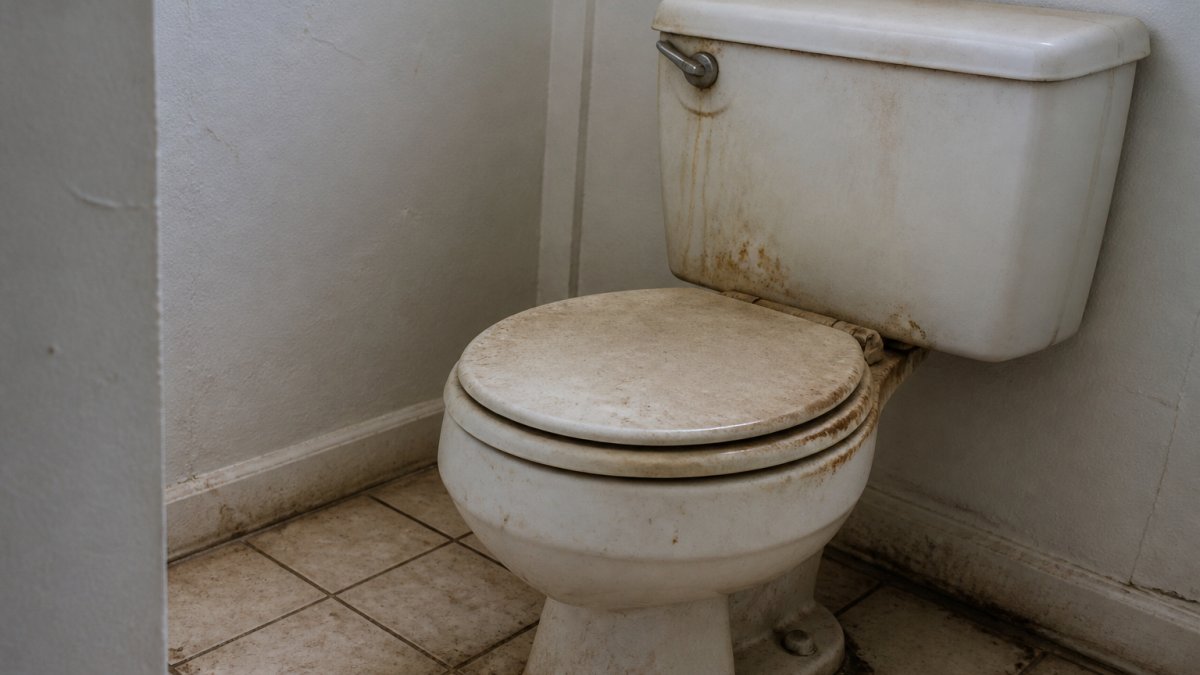
Hairline cracks in the tank or bowl are the clearest replacement signal.
Watch out: ignoring a slow leak at the base lets water rot the subfloor for months before it becomes visible.
If your fixture keeps clogging rather than leaking, the fault may not be the toilet at all. Our article on what causes recurring toilet clogs explains the reasons behind repeat blockages.
How Long Does a Toilet Last, and Does Age Alone Decide It?
A well-maintained toilet commonly lasts 20 to 30 years, and many older units keep working long past that.
The parts that wear out are inside the tank: the flapper, fill valve, and flush valve. These degrade with use and with minerals in local water.
What matters is whether the fixture still flushes cleanly, holds water without running, and sits solid on the floor.
Cost to Repair a Toilet vs. Replacement: The Break-Even Math
A common rule of thumb is that replacement becomes the better choice when the repair bill approaches half the cost of a new fixture installed. Here is how to run the numbers yourself, in Canadian dollars, before you commit.
What a Repair Actually Costs in North York and Vaughan
A toilet repair has two cost components: parts and labour. Parts are inexpensive; labour is what moves the quote.
- Flush valve seal: similar parts cost to a fill valve, but the tank usually has to come apart.
- Supply line and shutoff valve: these add up because the shutoff often seizes on older fixtures and must be replaced to isolate the water.
Labour is typically quoted per visit rather than per part, so bundling two or three failing tank components into one visit is usually more economical than separate calls.
What Replacement Actually Costs
A replacement quote has more line items than homeowners expect:
- The fixture itself: a basic two-piece toilet costs less than a one-piece or comfort-height model.
- Installation labour: removing the old unit, setting the new one, and testing.
- Removal and disposal: hauling the old porcelain away is a real cost, not a free add-on.
Because fixture choice and the condition of your shutoff and flange swing the total, the final cost depends on the job. Contact UMark Plumbing and Drain Inc. or visit our website for current prices or a quote.
A Transparent Break-Even Method
Instead of guessing, run this four-step comparison:
- Get the repair quote. Write down the total, including any parts the plumber expects to replace.
- Estimate repeat repairs. If the fixture has needed two or more repairs in the past year, assume at least one more in the next two years and add it to the repair column.
- Get the replacement quote. Include fixture, labour, disposal, wax seal, and supply line.
- Add the water savings. If the old fixture is high-volume, estimate the monthly water and sewer savings of a low-flow replacement and multiply by the months you expect to keep the toilet.
If the repair column plus likely repeat repairs is more than half the replacement column, replacement is the better long-term spend. If the repair column is small and the fixture is otherwise sound, repair wins.
The 50% Rule and When It Stops Applying
The 50% rule is a simple screen: if the repair costs more than half of a new installed toilet, replace it. It works well for a single, isolated failure.
It stops applying in three situations. First, when repairs are recurring, because cumulative spend over two years often exceeds replacement even if each bill looks reasonable. Second, when the fixture is an older high-volume model, because low-flow water savings change the math. Third, when the repair requires opening the floor or ceiling, because the labour dwarfs the part.
A quick comparison of what each path actually involves:
| Situation | Repair | Replace |
|---|---|---|
| Worn flapper or fill valve | Yes, low cost | No |
| Cracked tank or bowl | No | Yes |
| Leaking base, sound flange | Yes, new wax seal | No |
| Rocking bowl, soft floor | No | Yes, plus floor repair |
| Two or more repairs in a year | Unlikely to pay off | Yes |
| Older high-volume model, working fine | Optional | Worth pricing for water savings |
Water Use and Ontario Utility Bills: What an Older Model Really Costs
Water efficiency is where an old toilet quietly costs you money every month. Older models can use several times the water of a modern low-flow fixture per flush, and in a busy household that volume shows up on the utility bill. Most guides stop there. Here is what the difference actually looks like on an Ontario bill.
Flush Volume: Old Versus New
Toilets sold before the mid-1990s commonly used far more water per flush than modern low-flow models. Exact figures vary by model and vintage, but the pattern is consistent: an older high-volume toilet can use several times the water of a current low-flow unit for the same job.
That matters because a toilet is the most-used water fixture in most homes. A household of four flushing a conservative number of times per day multiplies any per-flush difference into a meaningful monthly volume.
How Toronto and York Region Bill Water
Many Ontario municipalities bill water and sewer together, so a running toilet can add noticeably to a water bill. A flapper that fails to seal lets water trickle continuously, and the meter does not care that nobody is home.
Water rates vary by municipality, so the most reliable way to estimate savings is to use your own bill: find the combined water and sewer rate per cubic metre, then estimate the volume difference between your old fixture and a low-flow replacement.
Running Toilets: The Silent Bill
A flapper that fails to seal is the most common cause of a quietly expensive toilet. The water trickles continuously, the fill valve cycles to top up the tank, and the meter records every litre. The fix is usually a flapper, and that is a repair, not a replacement. If your fixture is otherwise sound, renewing the tank components restores the water savings without the cost of a new unit.
When Efficiency Tips the Decision
If the bowl itself is an old high-volume design and the fixture is nearing the end of its life, the water savings of a low-flow replacement become part of the break-even math above. If the fixture is sound and only the tank parts are failing, repair keeps the water savings you already have. The efficiency argument is strongest when you are already leaning toward replacement for other reasons, it rarely justifies replacement on its own.
Disposal and the Environmental Trade-Off
Replacement is not free of environmental cost. The old porcelain has to be removed and disposed of responsibly, and a new fixture carries the material and manufacturing footprint of its production. Weigh that against the water saved over the life of the new toilet. In most Ontario households the water savings dominate over time, but replacement is a trade-off, not a pure win.
When Repair Still Makes Sense: Failing Parts That Are Cheap to Fix
Repair makes sense when the failure is confined to the tank and the fixture is otherwise sound. These are the jobs where a patch is genuinely the right call.
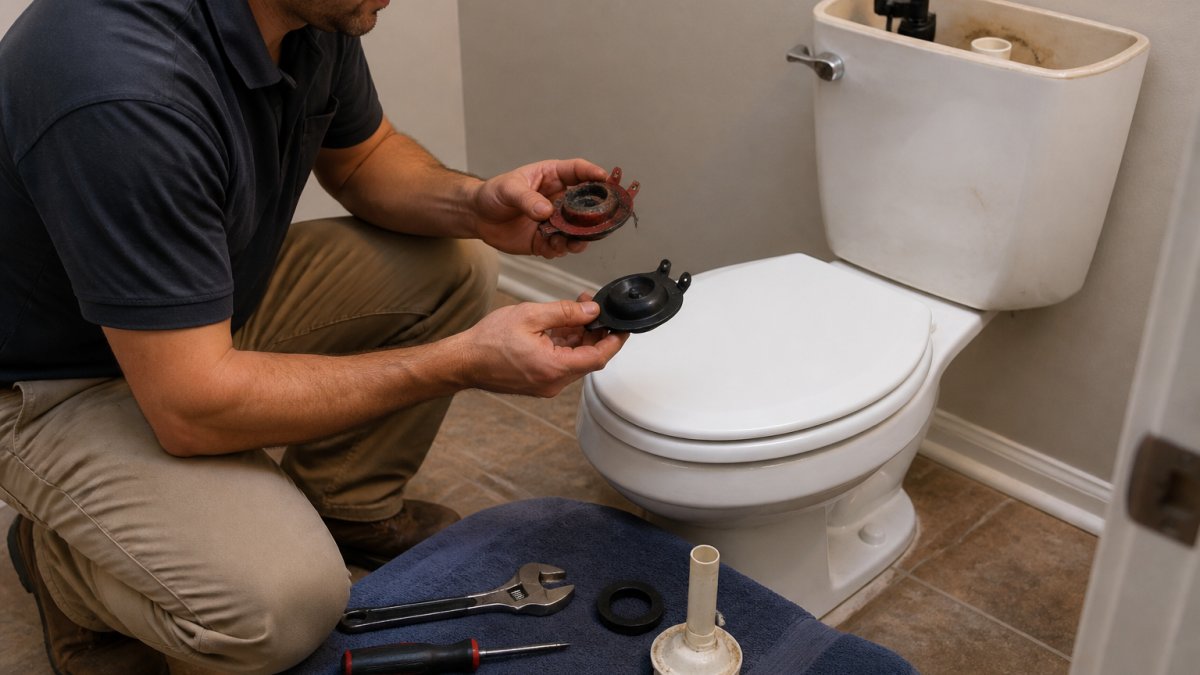
The replaceable parts are the flapper, fill valve, flush valve seal, supply line, and shutoff valve. A sticking handle, a leaking flapper, a hissing fill valve: all repairable.
Before you spend on another fix, it helps to understand why some repairs keep failing. Our article on why plumbing repairs fail repeatedly explains the underlying causes, from poor-quality parts to a shutoff valve that was never replaced alongside the fixture.
North York and Vaughan Housing Constraints That Affect the Decision
Housing stock in North York and Vaughan shapes this decision more than most guides admit.
A seized shutoff valve turns a simple flapper swap into a bigger job, because water cannot be isolated without replacing the valve.
If you are searching for a plumber near me in North York or Vaughan, ask whether the quote includes shutoff and flange inspection.
Get a Repair Quote Before You Commit to Either Option
The final step is the same whether you lean toward repair or replacement: get a quote on both. A plumber who inspects the tank, base, shutoff, and flange can tell you which path costs less, and the inspection takes minutes.
UMark Plumbing and Drain Inc. offers repair and replacement across North York and Vaughan, with 24/7 emergency service available when a leak will not wait. If the fixture fails on a Sunday, UMark Plumbing and Drain Inc. offers 24/7 emergency plumbing service.
Frequently Asked Questions
Is it cheaper to repair or replace a toilet?
It depends on the failure. A flapper, fill valve, or wax seal swap is a small repair and usually the cheaper path. Once you are looking at a cracked bowl, a leaking tank, or a third repair in two years, the combined repair bills can approach the price of a new fixture plus installation. Get a written repair quote first, then compare it against a replacement quote. If the repair costs more than half of a new install, replacement is usually the better long-term investment.
Can a cracked porcelain toilet be repaired?
A hairline crack in the tank or bowl is not something to patch and forget. Porcelain under pressure can fail suddenly, and a full tank release can cause significant water damage to floors, ceilings, and the unit below. Cracks around the base or the tank bolts are the highest risk. Sealants and epoxy may slow a leak but do not restore structural strength. In most cases a cracked toilet should be replaced rather than repaired.
How long does a toilet last, and is my old toilet worth keeping?
Most toilets last roughly 20 to 30 years with normal use, though a well-maintained older model can keep working past that. Age alone does not decide it. A 25-year-old toilet with sound porcelain, a quiet flush, and no leaks can stay. A newer fixture with structural damage or repeated seal failures should go. Weigh age against repair frequency, water use, and the condition of the bowl and tank.
What are the signs that a toilet is wasting water?
A running toilet is the clearest sign. If you hear water trickling after the flush finishes, the flapper or fill valve is likely leaking. Other clues include a bowl that refills on its own, a tank that hisses, or a water bill that climbs without a change in household use. Older models also use more water per flush than modern low-flow fixtures. A running toilet can waste a substantial volume of water over a month, so fix the leak or replace the fixture.
The decision comes down to damage type, repair frequency, and water waste, not the age on the fixture. If you are weighing a repair against a replacement and want a straight answer on which costs less over the next few years, get a free quote from UMark Plumbing and Drain Inc. and we will inspect the fixture, price both options, and tell you which one we would choose in your position.