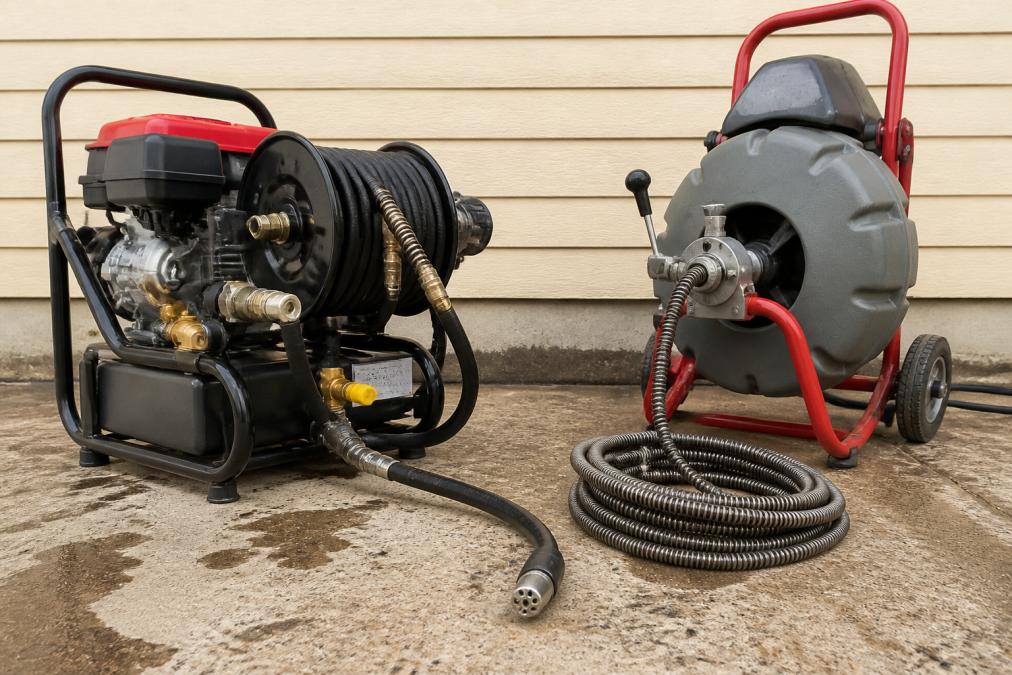
 comparison
Hydro Jetting vs Snaking: Which Drains Better
Table of Contents
- Hydro Jetting vs Snaking: Quick Comparison
- What Is Drain Snaking and How It Works
- What Is Hydro Jetting and How It Works
- Key Differences Between Snaking and Hydro Jetting
- Cost of Professional Drain Cleaning: Snaking vs Hydro Jetting
- Pipe Material Compatibility and Risk Assessment
- Signs of a Main Sewer Line Blockage and When Each Method Works
- How Often Should You Clean Residential Drains
- Frequently Asked Questions
Last Updated: September 19, 2026
Hydro Jetting vs Snaking: Quick Comparison
When your drain backs up, you need it cleared fast. The two most common professional methods are snaking and hydro jetting, and they work in fundamentally different ways. Snaking uses a rotating cable to punch through blockages. Hydro jetting blasts high-pressure water to scour the entire pipe wall clean. The choice between hydro jetting vs snaking depends on what's actually blocking your line, what your pipes are made of, and whether you want a quick fix or a long-term solution.
Here's what you need to know to make the right call.
| Method | Best For | Speed | Cost | Pipe Risk |
|---|---|---|---|---|
| Snaking | Soft clogs, localized blockages | Fast | Lower | Minimal |
| Hydro Jetting | Grease buildup, sludge, root intrusion | Slower | Higher | Higher on old pipes |
What Is Drain Snaking and How It Works
Drain snaking uses a rotating cable (auger) to break through or extract blockages. The cable spins as it advances down the drain, either breaking apart the clog or snagging it for removal.
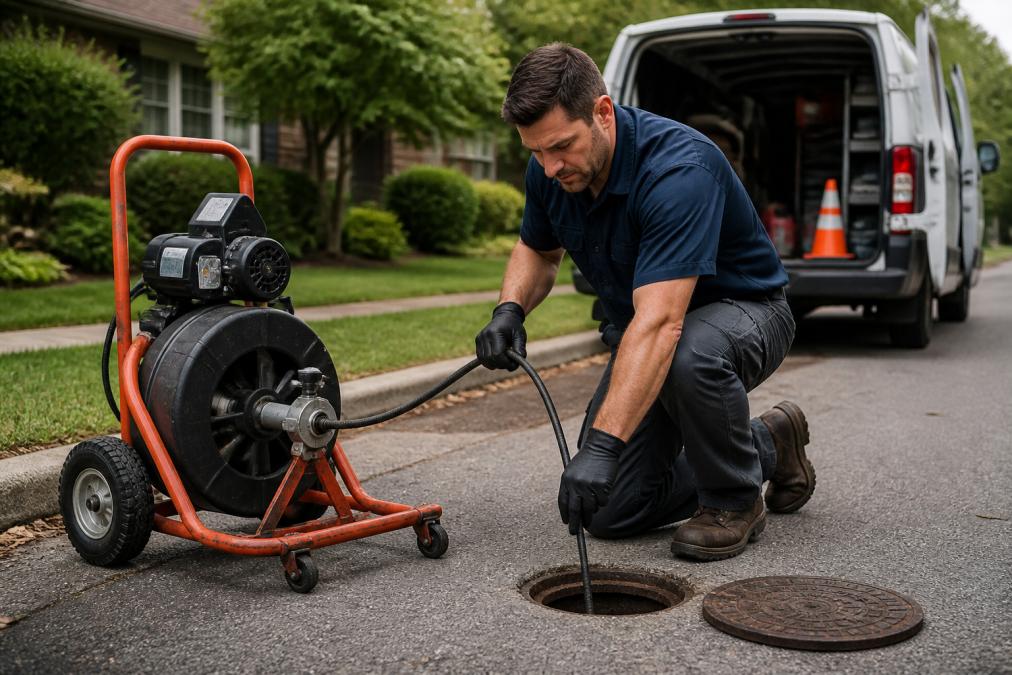
A technician feeds the cable down the pipe where it breaks apart or wraps around the blockage. Once disrupted, water flows again. The process typically takes 30 minutes to an hour.
Snaking is fast and affordable for soft clogs like hair, soap, or food debris. However, it only clears a path through the middle of the clog; grease residue, mineral deposits, and sludge remain on the pipe walls, causing clogs to return within weeks or months.
What Is Hydro Jetting and How It Works
Hydro jetting uses high-pressure water (3,000-4,000 PSI) to blast away blockages and scour the entire pipe wall, removing grease, mineral buildup, root fragments, and sludge completely, something mechanical tools cannot achieve.
After camera inspection confirms the pipe can handle the pressure, a specialized nozzle directs water jets backward and forward through the pipe, systematically cleaning every surface and flushing debris downstream. The process takes 1-2 hours depending on line length and severity.
Hydro jetting removes the blockage and the conditions that caused it, grease, roots, and sludge, restoring the pipe to near-original flow capacity. This is why it's recommended for recurring drain problems.
The trade-off is pressure: high-pressure water can damage compromised pipes like older clay, corroded cast iron, or cracked PVC. Professional assessment before jetting is essential.
Key Differences Between Snaking and Hydro Jetting
Snaking is mechanical (breaks or extracts blockages); hydro jetting is hydraulic (washes blockages away and cleans the pipe simultaneously).
Effectiveness on different clog types:
Snaking excels at soft blockages (hair, soap, food debris). For grease, mineral deposits, or root intrusion, it's less effective, it temporarily restores flow but leaves underlying buildup.
Hydro jetting handles all clog types and is especially effective on grease (standard for restaurants), cuts through tree roots entirely, and dissolves mineral scale.
Pipe wall cleanup:
Snaking leaves pipe walls coated with residual debris.
Hydro jetting scours the walls clean. The high-pressure water removes buildup that has accumulated over years. After hydro jetting, the pipe's interior is restored to near-original condition.
Maintenance frequency:
Snaked drains often need clearing again within 6-12 months. Hydro jetting extends the interval to 2-3 years or longer.
Speed:
Snaking finishes in under an hour; hydro jetting takes 2-3 hours total (including camera inspection).
Cost of Professional Drain Cleaning: Snaking vs Hydro Jetting
Snaking costs less upfront; hydro jetting costs more but often saves money over time by preventing repeat calls.
What drives the cost of snaking:
Cost factors include line length, clog severity, accessibility, and service call fees ($150-$300 base). Typical residential snaking ranges from $200-$500 for branch drains and $400-$800 for main lines.
What drives the cost of hydro jetting:
Cost factors include camera inspection ($150-$300), specialized equipment, line length, clog type, and debris removal. Typical residential main line jetting ranges from $400-$1,200; branch line jetting costs $300-$600.
The long-term cost calculus:
Repeat snaking for grease clogs can cost $800-$1,500 over 3 years. A single hydro jetting service ($600-$1,200) often extends the interval to 2-3 years or longer, preventing 2-3 repeat calls. For chronic grease issues or recurring clogs, the math favors jetting.
When snaking is the right economic choice:
- First-time clog caused by hair, soap, or food debris (soft blockage)
- Single drain backing up, not the main line
- Pipe material is unknown or likely old (clay, Orangeburg)
- Budget is tight and you need immediate relief
- Clog is recent and hasn't caused recurring problems
When hydro jetting makes economic sense:
- Recurring clogs in the same line (second or third occurrence)
- Grease-heavy kitchen or commercial use
- Main sewer line blockage
- Pipe material is confirmed as PVC or modern cast iron in good condition
- You want to avoid emergency calls and extended downtime
- You plan to stay in the home for 3+ more years
Preventative hydro jetting as maintenance:
Some homeowners choose to hydro jet the main sewer line every 2-3 years as preventative maintenance, even without a current clog. This removes buildup before it causes a blockage and is common in commercial kitchens, restaurants, and older residential properties with a history of issues. The cost is justified by avoiding emergency calls, extended downtime, and the stress of a backed-up sewer line. Think of it like a furnace inspection, you pay for prevention rather than emergency repair.
For accurate pricing, contact a licensed plumber for a free assessment. A reputable plumber will provide a written estimate breaking down service call fee, inspection cost, and cleaning method cost.
Pipe Material Compatibility and Risk Assessment
Not all pipes tolerate hydro jetting equally. This is where professional assessment becomes critical, and understanding your pipe material is the first step to avoiding costly damage.
How to identify your pipe material:
Exposed sections reveal material: clay (reddish-brown, segmented, pre-1970), cast iron (dark gray/black, heavy, rust staining), PVC (white/light gray, smooth, stamped), or Orangeburg (dark brown/black, lightweight, deteriorating). If uncertain, camera inspection is the only reliable confirmation.
Hydro jetting safety by pipe material:
Clay pipes (pre-1970s) are the highest risk; high-pressure water can crack sections or cause rupture. Snaking is the safer first choice. If hydro jetting is considered, pressure must be reduced to 1,500-2,000 PSI with mandatory camera inspection.
Cast iron pipes (1970s-1990s) can handle hydro jetting if in good condition, but corrosion weakens them. Camera inspection is essential to assess corrosion depth; if moderate to severe, snaking or pipe replacement should be discussed.
PVC pipes (1990s-present) are the safest choice for hydro jetting. PVC is durable, resists corrosion, and tolerates full-pressure jetting (3,500-4,000 PSI) without risk. Most modern homes have PVC main lines, and hydro jetting poses minimal rupture risk on these systems.
Orangeburg pipes (1950s-1970s) are particularly vulnerable and should never be hydro jetted. These bituminous fiber pipes degrade over time, become brittle, and can collapse under pressure.
Signs of a Main Sewer Line Blockage and When Each Method Works
A main sewer line blockage causes multiple drains to back up simultaneously (toilet, shower, sinks), water pooling in the yard, and sewage odor.
The inspection step:
How Often Should You Clean Residential Drains
Most residential drains don't need professional cleaning unless a problem occurs. For homes with no clog history, regular maintenance (avoiding grease, using screens, plunging) keeps drains clear. For recurring clogs, annual or biennial cleaning prevents backups.
Preventative hydro jetting:
When to call for professional cleaning:
Frequently Asked Questions
Is it better to snake or hydro jet a residential drain?
Snaking works best for localized clogs and costs less upfront, making it ideal for quick fixes. Hydro jetting cleans the entire pipe wall and prevents future blockages, making it better for recurring issues or heavy grease buildup. The choice depends on clog severity, pipe age, and whether you want a temporary fix or long-term solution. A professional inspection determines which method suits your drainage system.
Can hydro jetting damage older residential plumbing systems?
High-pressure water can damage pipes with existing cracks, corrosion, or deteriorated joints. Older cast iron and clay pipes are particularly vulnerable if they have structural weaknesses. Professional technicians assess pipe integrity before hydro jetting and adjust pressure settings accordingly. For homes with aging plumbing, snaking is often the safer choice, or hydro jetting with lower pressure settings under expert supervision.
How much does professional drain cleaning cost compared to DIY snaking?
Professional snaking and hydro jetting services vary based on clog location, severity, and your local market. DIY snaking tools have lower upfront costs but risk incomplete removal or pipe damage if used incorrectly. Contact a certified plumber for a free quote to compare costs for your specific situation.
What are the signs your main sewer line is blocked?
Main sewer line blockages cause multiple fixtures to back up simultaneously, sewage odors indoors, slow drainage throughout the house, and gurgling sounds from drains. Yard pooling, foundation cracks, or unusually lush patches of grass can indicate underground line problems. These issues require professional assessment because a blocked main sewer line affects your entire drainage system. Early detection prevents costly damage and emergency repairs.