 How-to
7 Common Causes of Restaurant Drain Backups in North York
Quick Summary
Restaurant drain backups are most often caused by grease, oil, and fat hardening inside drain lines, along with food scraps trapped in pipes. Grease trap and interceptor problems, tree roots, and damaged pipes also cause backups. Identifying the specific source makes the fix faster and cheaper.
- Grease from fryer oil and pan drippings is the most frequent cause of restaurant drain backups.
- Food scraps like rice, pasta, bones, and fibrous vegetable peels can trap and jam drain lines.
- A full or poorly maintained grease trap stops catching grease, which then hardens in the pipes.
- Pump a grease trap and jet the downstream line together, or hardened grease will cause a repeat backup.
- Do not use chemical drain cleaners on a backup, and call a licensed plumber if water is pooling.
Table of Contents
- How Restaurant Drain Backups Start and Why They Repeat
- Grease, Oil, and Fat Buildup in Drain Lines
- Food Scraps and Solid Waste Clogging Kitchen Sinks and Floor Drains
- Grease Trap and Interceptor Problems That Cause Backups
- Tree Roots, Damaged Pipes, and Main Sewer Blockages
- Step-by-Step Response Plan for Restaurant Staff
- Preventing Clogged Restaurant Drains and Keeping Maintenance Records
- Booking Restaurant Drain Maintenance and Emergency Service With UMark
- Frequently Asked Questions
How Restaurant Drain Backups Start and Why They Repeat
Last Updated: November 8, 2026
Restaurant drain backups rarely happen out of nowhere.
The common causes of restaurant drain backups usually fall into a few groups. Grease, food scraps, damaged pipes, and grease trap problems are among the most common causes.
Backups also tend to repeat. A drain cleared with a quick snake may hold for a week, then clog again. That happens because the source was never removed.
Watch out: Pouring hot water or chemical cleaners into a backed-up drain can make the problem worse and harm staff. Stop, and call a professional if water is already pooling.
Grease, Oil, and Fat Buildup in Drain Lines
Grease is the most frequent cause of restaurant drain backups. Hot cooking oil and fat flow easily through a pipe while warm. Once they cool, they stick to the inside walls and build up layer by layer.
Over time, the buildup narrows the pipe until water can no longer pass through. Food particles then catch on the grease and form a solid plug.
Common sources of grease in restaurant drains include:
- Fryer oil dumped or rinsed down the sink
- Pan drippings washed into floor drains
- Sauces and dressings poured out after service
- Greasy dishwater from pots and pans
Many businesses find that the problem gets worse during busy weeks, when staff are rushed and shortcuts happen.
The article points to a handful of everyday sources that send grease into restaurant drains.
| Grease source | Where it ends up | Why it causes trouble |
|---|---|---|
| Fryer oil dumped or rinsed down the sink | Sink and drain lines | Hardens as it cools and narrows the pipe |
| Pan drippings washed into floor drains | Floor drains | Sticks to pipe walls layer by layer |
| Sauces and dressings poured out after service | Sink drains | Traps food particles and forms a plug |
| Greasy dishwater from pots and pans | Kitchen drain lines | Builds up steadily during busy weeks |
Food Scraps and Solid Waste Clogging Kitchen Sinks and Floor Drains
Solid waste is the second big cause. Scraps like rice, pasta, bones, coffee grounds, and vegetable peels do not belong in a drain. Even small pieces can gather at a bend in the pipe and trap more debris.
Garbage disposals often get blamed, but they are not designed to handle everything. Fibrous foods such as celery, onion skins, and potato peels can wrap around the blades and jam the unit.
Good habits help a lot:
- Scrape plates into the garbage before washing
- Use strainers in every sink and floor drain
- Empty strainers into bins, not the drain
- Keep a clear rule for what goes in the disposal
Grease Trap and Interceptor Problems That Cause Backups
A grease trap, or grease interceptor, is designed to catch fats, oils, grease, and solids before they reach the main sewer line (Mandatory Grease Interceptors for Food Service Establishments). When it is full, undersized, or poorly maintained, it stops doing its job.
Interceptor problems often show up in a fairly predictable order: the trap smells, kitchen drains slow, and wastewater may eventually back up through the lowest floor drain.
Signs of a grease trap problem include:
- A foul smell near the kitchen, the trap lid, or the exterior manhole
- Slow-draining sinks and floor drains that worsen over a shift
- A visible grease layer on the surface of the trap when the lid is opened
- Backups that return soon after a cleaning or pumping
- Grease streaks or solids in the downstream line during a camera inspection
Inspection and Pumping Routine
A workable routine for a restaurant kitchen can look like this:
- Daily: staff check the trap lid area for smell and check that no grease is bypassing the baffle. Note it on the shift log.
- Weekly: the manager opens the trap, measures the grease and solids layer, and records the reading. When the layer builds up, schedule pumping.
- Monthly: confirm the pump-out date against the service provider's schedule and file the manifest or ticket.
- Annually: have the line downstream of the trap jetted and, if backups have repeated, camera-inspected.
Pumping frequency depends on trap size and kitchen volume, so a high-output fry kitchen may need service far more often than a small cafe. The trap's rated capacity and the volume of grease your menu produces set the real schedule, not a fixed calendar.
Records That Survive an Inspection
Keep a simple binder or digital folder with:
- The trap's make, model, and rated capacity
- Every pump-out ticket with date, volume removed, and hauler name
- Grease layer readings from the weekly checks
- Jetting and camera reports for the downstream line
- Repair invoices for any trap or line work
These records do two things. They show an inspector or landlord that the system is maintained, and they let a plumber see patterns in repeat backups. A trap that fills in three weeks instead of three months is telling you something about kitchen practice or trap sizing.
Local Compliance Context
Grease interceptor requirements are typically set at the municipal level, and restaurants should confirm the current requirements with the City of Toronto and their local plumbing authority before changing or resizing a trap.
Tree Roots, Damaged Pipes, and Main Sewer Blockages
Not every backup starts inside the restaurant. Tree roots can grow into cracks or loose joints in the sewer line. Roots feed on moisture, and once they get inside, they grow into a thick mat that catches waste.
Damaged or aging pipes cause similar trouble. Cracks, sagging sections, and collapsed pipes trap solids and grease. Sewage may back up into the lowest drains first, often the floor drains in the kitchen or washroom.
A camera inspection is usually the best way to find the cause. It shows where the blockage sits and whether the pipe itself has failed.
Step-by-Step Response Plan for Restaurant Staff
When a backup happens during service, staff need a clear sequence. A simple plan keeps people safe and limits damage.
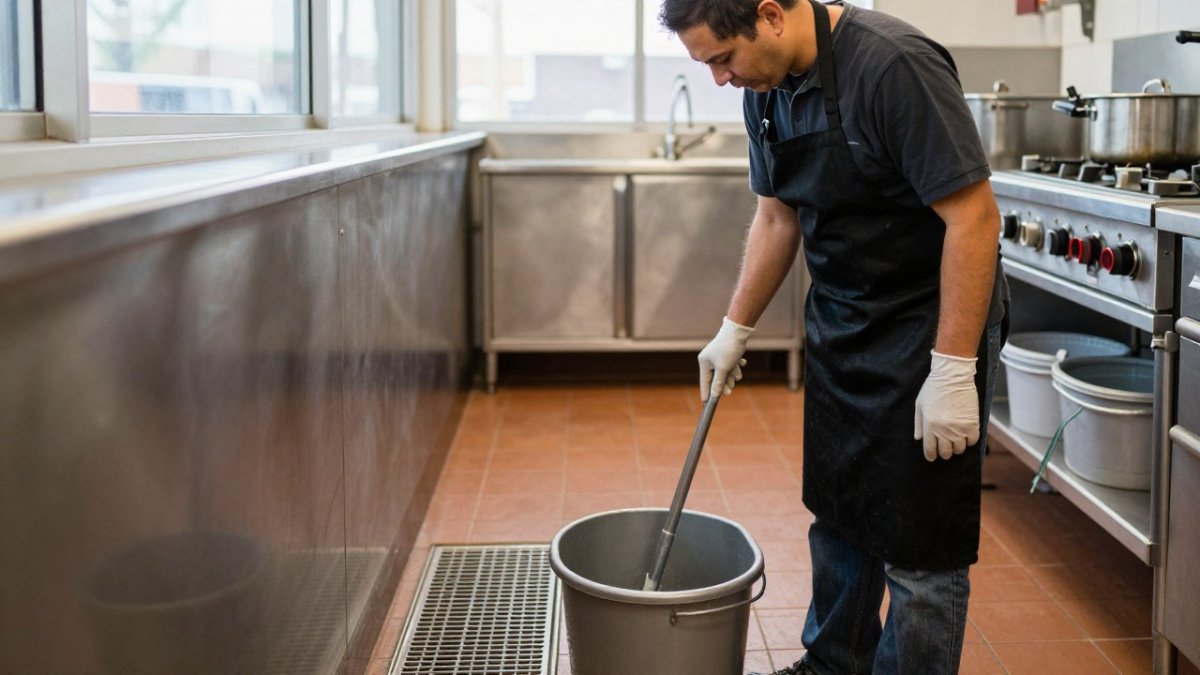
- Stop using all drains. Turn off dishwashers and avoid running water down any sink or floor drain.
- Keep people away from the area. Wet floors are slippery, and wastewater can carry bacteria.
- Check for simple causes. Look for a clogged strainer or visible debris in the sink.
- Do not use chemical drain cleaners. They can splash, and they often fail on solid blockages.
- Call a licensed plumber. Give them a clear description of when the problem started and what drains are affected.
- Log the event. Note the date, time, affected drains, and any actions taken.
- Clean and sanitize. After the water is removed, clean all surfaces to meet food-safety standards before reopening.
Keep a copy of this plan posted near the dish area and in the manager's office.
Preventing Clogged Restaurant Drains and Keeping Maintenance Records
Prevention costs far less than an emergency call, but generic advice to keep drains clean does not survive a busy Friday service. The restaurants that avoid repeat backups build prevention into the shift routine and into the maintenance calendar, and they keep records that show both are happening.
Diagnose by Symptom and Location First
Before treating a slow drain as a grease problem, work out where the blockage sits. The location tells you what you are dealing with and who needs to act.
- One sink slow, others fine: likely a local trap, strainer, or branch clog. Check the strainer and the P-trap before calling anyone.
- All kitchen sinks slow but washrooms fine: points to the kitchen branch line or the grease interceptor. Check the trap level and the downstream line.
- Floor drains backing up during dishwashing: often a shared branch or interceptor issue, and it can signal a partially blocked main.
- Washrooms and kitchen backing up together: likely the main sewer line or the lateral to the municipal sewer. Stop water use and call a plumber.
- Backup only after heavy rain: can point to a surcharged municipal sewer or a damaged lateral, which needs a camera inspection rather than a snake.
This triage keeps staff from pouring chemicals into a main-line problem and helps the plumber arrive with the right equipment.
A Prevention Routine Built for Restaurant Operations
- Scrape and strain every shift. Plates go into the garbage before washing, and every sink and floor drain has a strainer that is emptied into a bin, not the drain.
- Collect used cooking oil in sealed containers. Arrange pickup with a licensed renderer and keep the pickup tickets.
- Train by station, not by memo. Dish staff own the strainers, line cooks own the fryer oil, and the closing manager checks the floor drains. A short sign at each station beats a long policy document.
- Inspect at open and close. A 60-second check of strainers, floor drains, and the trap lid area catches most problems before service.
- Schedule interceptor pumping on a measured timeline. Base it on weekly grease layer readings, not a fixed date.
- Jet the line downstream of the trap on a set interval. Pumping alone does not remove hardened grease from the pipe.
- Book an annual camera inspection if the building is older or backups have repeated.
Watch out: A drain that is cleared with a snake but not jetted and inspected will often clog again within weeks, and each repeat backup pushes wastewater closer to food-contact surfaces and stored product.
Records and Food-Safety Follow-Through
Keep written records of all cleaning, pumping, jetting, and repairs, plus the weekly grease layer readings and the daily strainer checks. These records matter for three reasons: they show inspectors and landlords that the system is maintained, they help a plumber find patterns in repeat problems, and they support any insurance or warranty claim after water damage.
When a backup does reach the kitchen, treat the affected area as contaminated. For more on this, see our guide on how to prevent commercial drain clogs. A broader look at the benefits of ongoing service is covered in our commercial plumbing maintenance benefits for offices.
Booking Restaurant Drain Maintenance and Emergency Service With UMark
UMark Plumbing and Drain Inc. provides 24/7 emergency and routine plumbing service for residential and commercial clients. Our certified team has over 20 years of experience.
One client noted that the technician came on time, provided an estimate, and fixed the problem right away.
If your restaurant has recurring backups or a drain that is slowing down, do not wait for the next shutdown. Solve your plumbing problems in North York with UMark to book maintenance or an emergency visit.
Get a free quote from UMark Plumbing and Drain Inc. today, and keep your kitchen running without the next drain backup.
Frequently Asked Questions
What are the most common causes of restaurant drain backups?
The most common causes are grease and fat buildup in drain lines, food scraps and solid waste washed down sinks, and blockages in grease traps or interceptors. Less often, tree roots or damaged sewer pipes cause backups that affect several drains at once. Because a single cause often produces similar symptoms, a licensed plumber should inspect the system to confirm where the blockage sits before any repair work starts.
Can grease buildup cause a restaurant drain to back up?
Yes. Fats, oils, and grease poured down sinks and floor drains cool and solidify on pipe walls, narrowing the passage a little at a time. Over weeks, the buildup traps food debris and slows drainage until water backs up. Keeping grease out of drains and having the grease interceptor pumped on schedule prevents most of these backups.
When should a restaurant call a commercial plumber for a drain backup?
Call a commercial plumber as soon as water stops draining, when sewage odour appears, or when more than one fixture backs up at the same time. Those signs often point to a main sewer blockage rather than a simple sink clog. UMark Plumbing and Drain Inc. offers 24/7 emergency service in North York and Vaughan, so restaurants can get a technician on site quickly to limit downtime and property damage.