 listicle
Common Plumbing Code Violations in Rental Properties
Table of Contents
- What Are Plumbing Code Violations in Rental Properties?
- Landlord Plumbing Maintenance Responsibilities Under Building Code
- Supply Line Leaks and Water Damage
- Drain, Sewer, and Venting System Failures
- Plumbing Inspection Checklist for Landlords
- Tenant Rights Regarding Plumbing Repairs and Code Compliance
- Permits, Licensed Trades, and Documentation
- How to Address Code Violations Before Inspection
- Frequently Asked Questions
Last Updated: October 6, 2026
What Are Plumbing Code Violations in Rental Properties?
A plumbing code violation is any deviation from building code provisions governing water supply, drainage, venting, and fixture installation in a rental property. Violations range from paperwork failures (work done without a permit) to life-safety hazards (a missing temperature and pressure relief valve on a water heater), and can trigger failed inspections, fines, repair orders, and liability.
Which Code Actually Applies to Your Property
There is no single national plumbing code enforced uniformly across the country. The model document is the National Plumbing Code of Canada, published by the National Research Council Canada and updated every five years. It has no force of law on its own; it becomes enforceable only when a province or territory adopts it, often with provincial amendments.
In practice, that means the rules for your rental unit depend on three stacked layers:
- Provincial or territorial adoption. Each province adopts a code edition on its own timeline. The edition that applies is the one named in your province's regulation, not the newest one published.
- Municipal bylaws and property standards. Cities add property standards bylaws, zoning requirements, and backflow prevention programs beyond the provincial code; a municipality can require annual backflow testing even where the province does not.
- The permit and inspection regime. Who may pull a permit, what triggers one, and who inspects the work is set locally, so two properties with identical plumbing can face different requirements.
Why the Distinction Matters for Rental Properties
Rental properties sit at the intersection of two rule sets homeowners often do not face: the building code and residential tenancy or property standards legislation. A plumbing defect can be a code violation, a breach of the landlord's duty to maintain the unit in good repair, or both. A code violation is enforced by the building department through orders and fines; a maintenance failure is enforced by the tenant through the tenancy dispute process, which can result in rent abatement or a repair order.
Maintenance Issue vs. Code Violation
The line between the two is the standard the work must meet, not how the problem looks. A dripping faucet is a maintenance issue; a supply line that lacks proper support, uses unapproved fittings, or is undersized for the fixtures it serves is a code violation even if it is not currently leaking. The practical test: if the installation would fail a permit inspection today, it is a code concern.
Landlord Plumbing Maintenance Responsibilities Under Building Code
Landlords are legally responsible for maintaining plumbing systems in good repair: fixtures must function properly, supply lines must be secure, and drainage systems must operate without backups or leaks.
In most provinces, landlords must:
- Maintain all water supply lines free from leaks
- Ensure all fixtures drain properly without blockages
- Ensure water pressure stays within safe limits (typically 80 PSI maximum)
Property standards bylaws in many municipalities require inspections at lease renewal or when a tenant reports a problem.
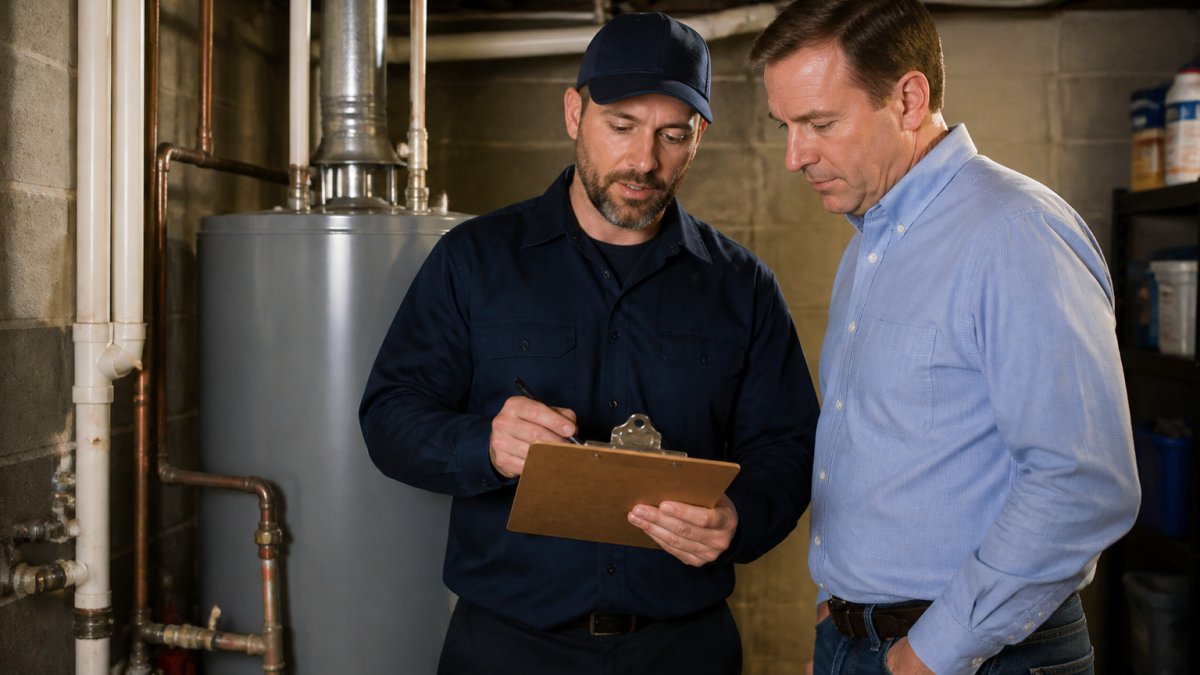
The responsibility doesn't shift to tenants simply because they live in the unit.
Supply Line Leaks and Water Damage
Supply line leaks are among the most common and damaging violations. A slow leak hidden inside a wall can go unnoticed for months, causing mold growth, structural rot, and water stains.
Common supply line violations include:
- Copper or PVC lines with pinhole leaks or corrosion
- Poly-B piping (used in homes built 1980-2000), which degrades over time and fails without warning
- Supply lines not properly supported, sagging or kinked
Water damage from supply leaks creates secondary code issues. Wet insulation loses its effectiveness. Damp framing attracts mold. Saturated drywall weakens and fails.
Look for water stains on ceilings or walls, soft drywall, musty odors, unexplained increases in water bills, or visible moisture around pipes.
Drain, Sewer, and Venting System Failures
Drainage systems must slope properly, remain clear of blockages, and vent gases safely.
Common violations in this category:
- Main drain line slope less than 1/4 inch per foot (creates standing water and blockages)
- Sewer line cracks or tree root intrusion causing backups
- P-traps missing or improperly sized (allows sewer gas to enter living spaces)
Venting is critical and often overlooked. Every fixture needs a vent to allow air into the drain line so water flows freely and sewer gases escape through the roof.
Stormwater and sanitary drainage must be completely separated. If your property has a combined system (older homes in some areas), this is a known violation that must be documented.
Plumbing Inspection Checklist for Landlords
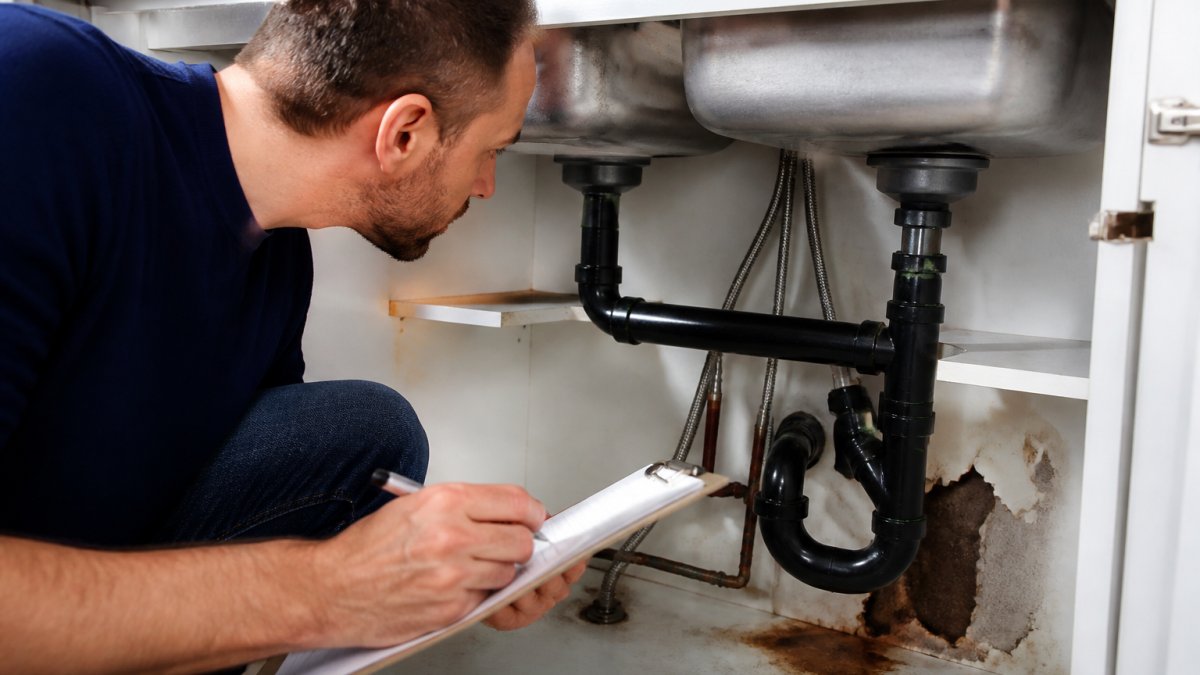
A systematic inspection helps you catch violations before a tenant complaint or official inspection. Walk through with a checklist, look for observable problems, and document findings with photos; this protects you if a tenant later claims the issue pre-existed.
| Inspection Item | What to Check | Code Concern |
|---|---|---|
| Supply lines | Leaks, corrosion, proper support, shutoff valves | Leaks cause water damage; missing valves prevent emergency shutoff |
| Water pressure | High pressure (above 80 PSI) causes fixture damage | Pressure-reducing valve required if pressure exceeds code limit |
| Fixtures | Drains flow freely, no leaks, caulking intact | Slow drains indicate vent or slope issues; leaks violate maintenance standard |
| P-traps | Present under all sinks and tubs, water seal visible | Missing or dry traps allow sewer gas into living spaces |
| Vents | Clear at roof penetration, no ice or debris blockage | Blocked vents cause drainage failure and gurgling |
| Main drain | No backups, proper slope visible in basement | Improper slope or blockages indicate code violation |
| Sump pump | Operating, discharge diverted away from foundation | Improper discharge violates stormwater management code |
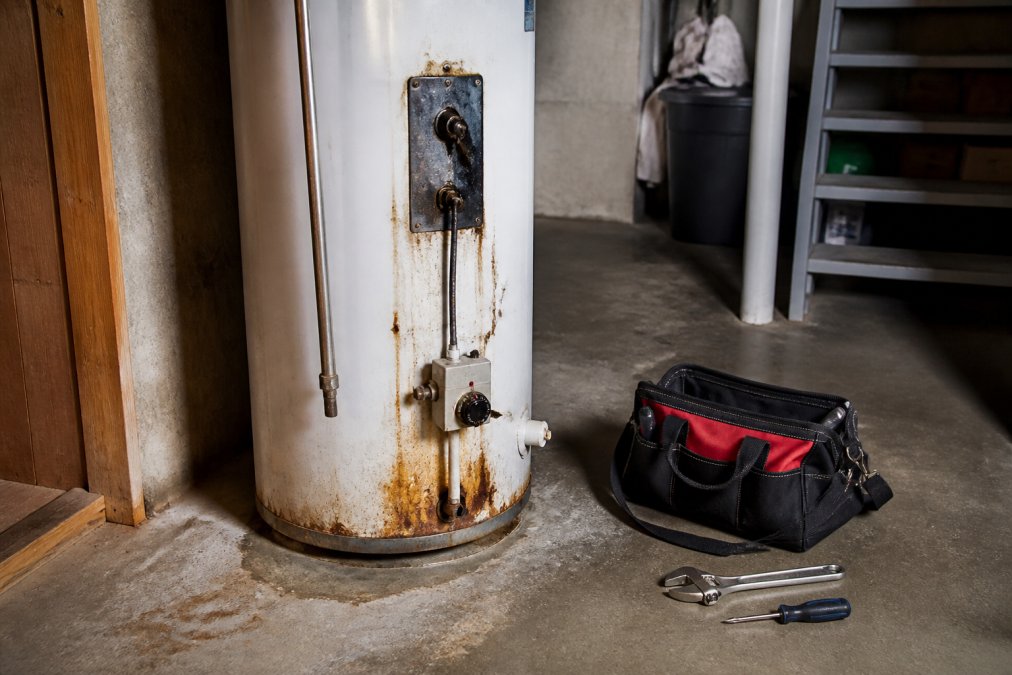
| Water heater | No leaks, proper venting, temperature/pressure relief valve present | Missing relief valve is a safety violation |
Walk through each bathroom and kitchen, running water in sinks, showers, and tubs, and flushing toilets while listening for unusual sounds.
Document findings in writing. Photograph violations and note the date; this creates a record that you identified the problem and took action.
Tenant Rights Regarding Plumbing Repairs and Code Compliance
Tenants have the legal right to safe, functioning plumbing and cannot be charged for repairs needed to meet building code.
Serious violations (no hot water, backed-up sewage, major leaks) must be addressed within days. Minor violations (slow drain, low pressure) typically have a 30-day window.
If a tenant reports a plumbing issue, respond promptly. Have a licensed plumber assess it and provide a written estimate.
Permits, Licensed Trades, and Documentation
Most plumbing work in rental properties requires a permit and must be performed by a licensed plumber.
Licensed plumbers carry insurance, follow code standards, and obtain permits on your behalf.
Keep all plumbing permits, inspection reports, and work invoices on file for at least seven years.
For major work, replacing supply lines, upgrading the main drain, installing a new water heater, get written quotes from at least two licensed plumbers.
How to Address Code Violations Before Inspection
Not every violation carries the same urgency. Sort findings into tiers, because a missing P-trap and a sewage backup should not sit on the same to-do list.
Tier 1: Immediate Health or Safety Risk
These require action within hours to days and, in most provinces, trigger the landlord's emergency repair obligations under residential tenancy legislation.
- No hot water or no water supply at all. A rental unit without hot water is generally considered uninhabitable; tenants in many provinces can apply for a rent reduction or arrange the repair and deduct the cost.
- Sewage backup into the unit. Raw sewage is a health hazard and a property standards violation, and risks contaminating the water supply if cross-connections exist.
- Gas odor or suspected venting failure. A blocked or broken vent can allow sewer gas or combustion byproducts into living space. Treat any gas smell as an emergency and contact the gas utility and a licensed plumber immediately.
Tier 2: Code Violations With Growing Risk
These are confirmed or likely code violations not yet causing active harm, but they will worsen and can fail an inspection.
- Missing or non-functioning temperature and pressure relief valve on a water heater
- Water pressure above the code limit with no pressure-reducing valve installed
- Missing shutoff valves at the meter or at fixtures
Tier 3: Documentation and Permit Gaps
These are not physical defects but are still violations, and the ones landlords most often overlook.
- Plumbing work performed without a required permit
- Work done by an unlicensed person
- No record of inspection sign-off for past renovations
- Missing backflow prevention test records where the municipality requires them
The Repair Process
Step 1: Get a professional assessment. A licensed plumber identifies the actual defect and provides a written scope.
Step 2: Confirm permit requirements with the local building department. Do not rely solely on the contractor's word.
Step 4: Get the work inspected and keep the sign-off. If a permit was issued, the municipality inspects.
Step 5: Retain records. Keep permits, inspection reports, invoices, and warranties together.
What Happens If You Do Not Comply
The consequences stack rather than replace one another:
- Municipal enforcement. A property standards or building inspector can issue a repair order with a compliance deadline, from a few days for urgent hazards to a few weeks for lesser defects. Failure to comply can lead to fines and, in serious cases, the municipality arranging the work and adding the cost to the property tax bill.
- Tenancy consequences. A tenant can apply to the provincial tenancy authority for an order to repair, a rent abatement, or authorization to repair and deduct. Repeated failures can affect a landlord's ability to increase rent or end a tenancy.
- Insurance and liability. Undisclosed or unrepaired code violations can void or limit coverage after a water damage or sewage claim, and can support a negligence claim if a tenant is injured or their property damaged.
- Resale and financing. Unpermitted plumbing work frequently surfaces during a pre-sale inspection or lender's appraisal, delaying or killing a transaction.
Frequently Asked Questions
What are the most common plumbing code violations in rental properties?
The most frequent violations include supply line leaks, improper drain venting, blocked or non-functioning drains, missing backflow preventers, incorrect water pressure settings, and non-compliant fixture installations. Water damage from unrepaired leaks and sump pump or stormwater system failures also rank high. Many violations stem from deferred maintenance rather than poor initial installation. A licensed plumber can identify which violations affect your property during a professional inspection.
Are landlords responsible for plumbing code compliance in rental units?
Yes. Landlords are legally responsible for maintaining rental properties in compliance with the National Plumbing Code of Canada and local municipal standards. This includes ensuring all fixtures function properly, supply lines do not leak, drains are clear, and venting systems work correctly. Tenants have the right to report violations, and landlords must address them within required timeframes. Failure to comply can result in fines, forced repairs, and liability for water damage.
What should I include in a plumbing inspection checklist for my rental property?
Check for visible leaks under sinks and around toilets, test all fixtures for proper water pressure and drainage, inspect ceilings and walls for water stains, look for gurgling drains or slow drainage, verify backflow preventers are installed, confirm water heater is functioning, check that downspouts and eavestroughs direct water away from the foundation, and inspect basement units for sump pump operation. Document findings with photos and dates. Have a licensed plumber perform a formal inspection annually or before tenant turnover.
Can a tenant withhold rent if there are unrepaired plumbing code violations?
Tenant remedies vary by province. Many provinces allow tenants to report violations to housing authorities or request repairs in writing. Some permit rent reduction or repair-and-deduct options if landlords fail to respond within statutory timeframes. Tenants should document the violation with photos and dates, provide written notice to the landlord, and follow provincial procedures before taking action. Contact your local residential tenancy board or housing authority for specific rules in your jurisdiction.