 How-to
Residential Drain Cleaning Tips for North York Homes
Quick Summary
Most household drain clogs come from grease, hair, soap scum, and food scraps, so prevention is the best drain cleaning tip. Keep grease out of every drain, use a strainer in each sink and tub, and flush kitchen drains with hot water weekly. For stubborn clogs, work through a plunger, hot water, and a hand auger before calling a plumber.
- Cooking grease, oil, and fat should be cooled and thrown in the trash, never poured down a drain.
- Pour a kettle of very hot water, not boiling, down kitchen drains once a week.
- Clear hair from bathroom drain covers every few days.
- Use a cup plunger with about 15 firm pushes and pulls on a kitchen sink.
- Call a professional if water backs up into a second fixture or you smell sewage.
Table of Contents
- Why Household Drains Clog and How to Prevent It
- How to Unclog a Kitchen Sink Drain Step by Step
- How to Unclog a Bathroom Drain, Shower and Tub Included
- Chemical Drain Cleaners: When They Help and When to Avoid Them
- Local Clog or Main Sewer Line? Signs to Watch For and When to Stop
- Professional Drain Cleaning Cost in North York and What to Ask a Plumber Before Hiring
- Booking Your Drain Service With UMark Plumbing and Drain Inc.
- Frequently Asked Questions
Why Household Drains Clog and How to Prevent It
Most household drain clogs come from a few simple sources: grease, hair, soap scum, and food scraps. Kitchen sinks, bathroom drains, and floor drains each collect different debris, which is why a little prevention goes a long way. A steady routine is usually less costly than an emergency call.
Clogs rarely form overnight. A thin layer of grease or soap builds up over weeks, and then one day the water stops moving. Catching the problem early keeps a slow drain from becoming a backup.
What Should and Should Not Go Down the Drain
Sinks and tubs handle water and small particles well. Other materials cause trouble fast.
Safe to rinse down with plenty of water:
- Small amounts of liquid dish soap
- Toothpaste and mouthwash
- Plain water from cooking pasta or vegetables
Keep out of every drain:
- Cooking grease, oil, and fat (let them cool, then toss them in the trash)
- Coffee grounds, eggshells, and rice
- Hair, dental floss, and cotton swabs
- "Flushable" wipes, which often do not break down
Use a drain strainer in every sink and tub to catch most of what causes clogs.
Routine Maintenance and Hot-Water Flushing
A simple monthly routine keeps drains moving:
- Pour a kettle of very hot (not boiling, for PVC pipes) water down kitchen drains once a week
- Clear hair from bathroom drain covers every few days
- Run hot tap water for 30 seconds after using the kitchen sink to clear residue
- Inspect drain stoppers and remove any buildup
Watch out: boiling water can soften PVC joints, so keep the water hot but not at a rolling boil.
How to Unclog a Kitchen Sink Drain Step by Step
A slow kitchen sink is usually a buildup of grease, food particles, and soap scum in the P-trap or the branch line. If you want to compare methods first, read our Hydro Jetting vs Snaking: Which Drains Better article.
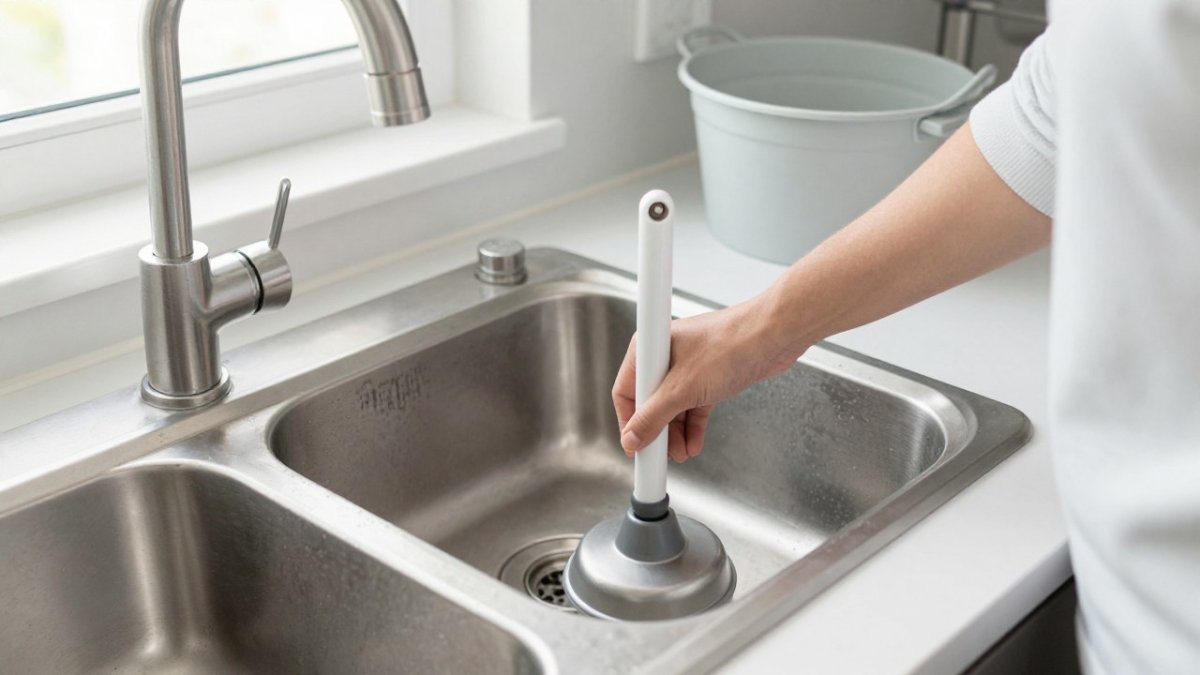
- Remove standing water. Bail out what you can with a cup or bowl into a bucket. Standing water adds weight and makes plunging messy.
- Clear the strainer and basket. Take out the stopper or basket and remove food debris by hand (wear gloves). On a double-basin sink, check both baskets before moving on.
- Seal the second drain. If you have a double sink, plug the other basin with its stopper or a wet rag. Otherwise the plunger just pushes water into the adjacent basin instead of down the clogged line.
- Try a cup plunger. Add enough water to cover the cup, then push and pull firmly about 15 times. The pull stroke is what dislodges the clog, so keep a good seal on the push.
- Flush with hot tap water. Run the hot tap for two to three minutes once water starts moving. Hot water melts the grease film that caused the clog in the first place.
- Check the garbage disposal, if you have one. With the disposal off and unplugged, look inside with a flashlight for food debris. Never put your hand in; use pliers or tongs. Run cold water and the disposal for 10 to 15 seconds to clear the grinding chamber.
- Use a hand auger if needed. Feed a drain snake into the drain, turn it slowly, and pull out debris. A 6- to 10-metre hand auger reaches most kitchen P-traps and branch lines.
- Test the flow. Run water for a full minute. If it still drains slowly, the clog may be deeper in the line.
Stop and call a professional if water backs up into a second fixture, if you smell sewage, if the sink drains slowly again within a day or two, or if your home has more than one slow drain at the same time.
The steps below walk through the process in order, with the key timing and actions for each stage.
| Step | What to do | Time or frequency |
|---|---|---|
| Remove standing water | Bail out water with a cup or bowl | Before plunging |
| Clear strainer and basket | Remove food debris by hand, wearing gloves | Before plunging |
| Seal second drain | Plug the other basin with its stopper or a wet rag | Before plunging |
| Try a cup plunger | Push and pull firmly | About 15 times |
| Flush with hot tap water | Run the hot tap once water moves | 2 to 3 minutes |
| Check garbage disposal | Look inside with flashlight, use pliers or tongs | Run cold water and disposal 10 to 15 seconds |
| Use a hand auger if needed | Feed snake in, turn slowly, pull out debris | 6 to 10 metre auger |
| Test the flow | Run water and check drainage | 1 minute |
How to Unclog a Bathroom Drain, Shower and Tub Included
Bathroom clogs are mostly hair and soap scum, and each fixture traps them differently. Treat each one on its own terms.
Shower and tub drains
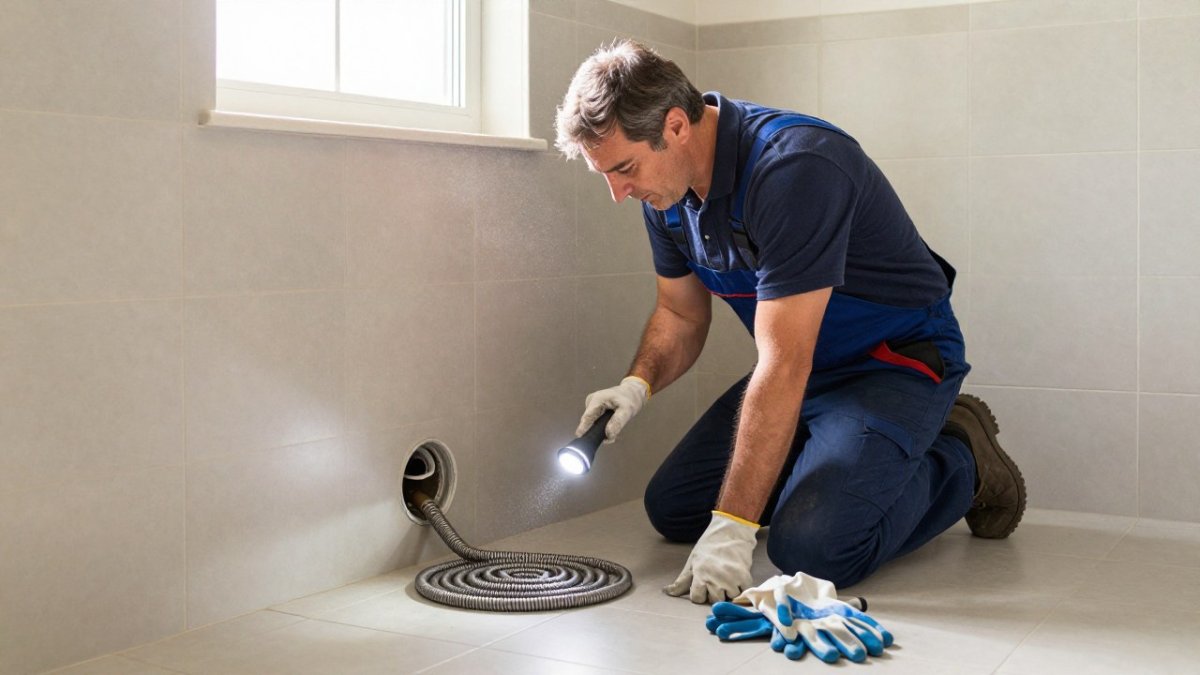
Hair binds with soap scum to form a mat just below the strainer. Remove the drain cover, then pull out hair with a plastic drain hook or your fingers (wear gloves). Pour hot tap water down the drain for a minute to loosen the soap film. If the tub still holds water, a 6-metre hand auger fed through the overflow plate often reaches the trap without removing the drain shoe.
Watch out: Do not pour boiling water into a tub or shower with a plastic or PVC drain assembly, because it can soften joints and warp the fitting.
Bathroom sink drains
Most bathroom sink clogs sit in the pop-up stopper assembly. Lift or unscrew the stopper, clean off the hair and soap buildup, and check the drain opening with a flashlight. Reassemble and run hot water for 30 seconds. If the sink is still slow, the clog is likely in the P-trap, which a hand auger can reach.
Toilets
Use a flange plunger, not a cup plunger. The flange folds out to seal the trapway. Push gently at first to avoid splashing, then work up to firm strokes for about 15 to 20 repetitions. If the bowl does not clear, a toilet auger (a short snake with a protective sleeve) is the next step; a regular drain snake can scratch the porcelain.
Watch out: Never plunge a toilet after pouring chemical cleaner into the bowl, and never use a drain snake in a toilet without the protective sleeve, because the cable can crack the porcelain.
Floor drains
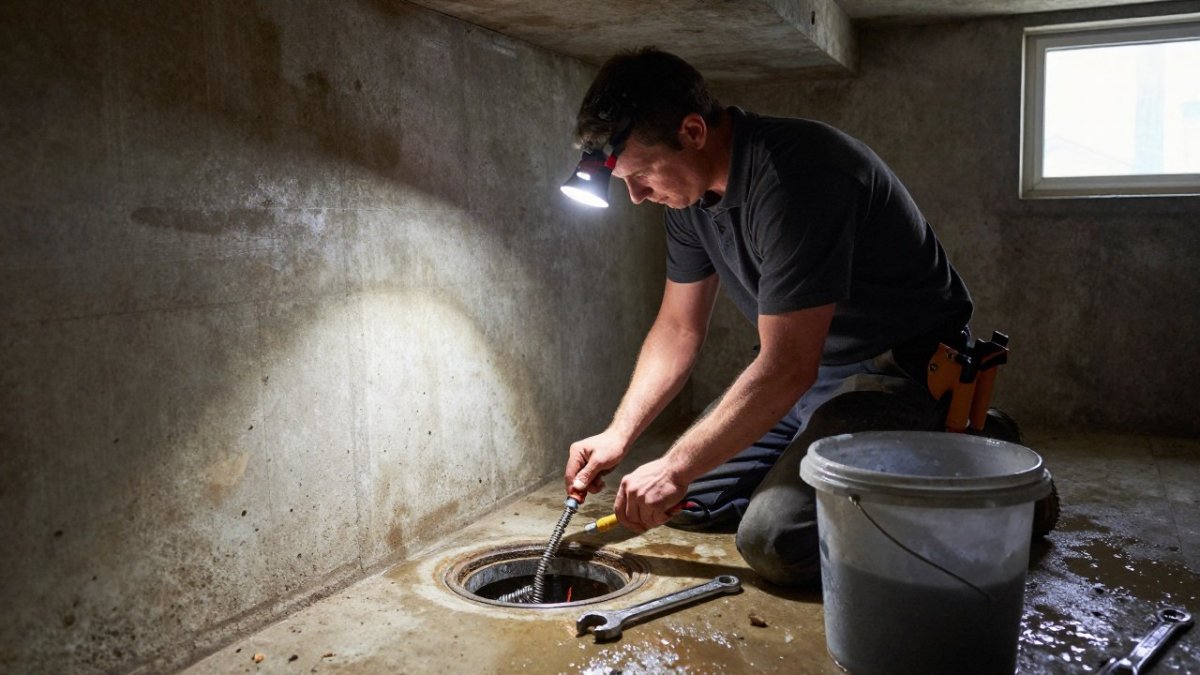
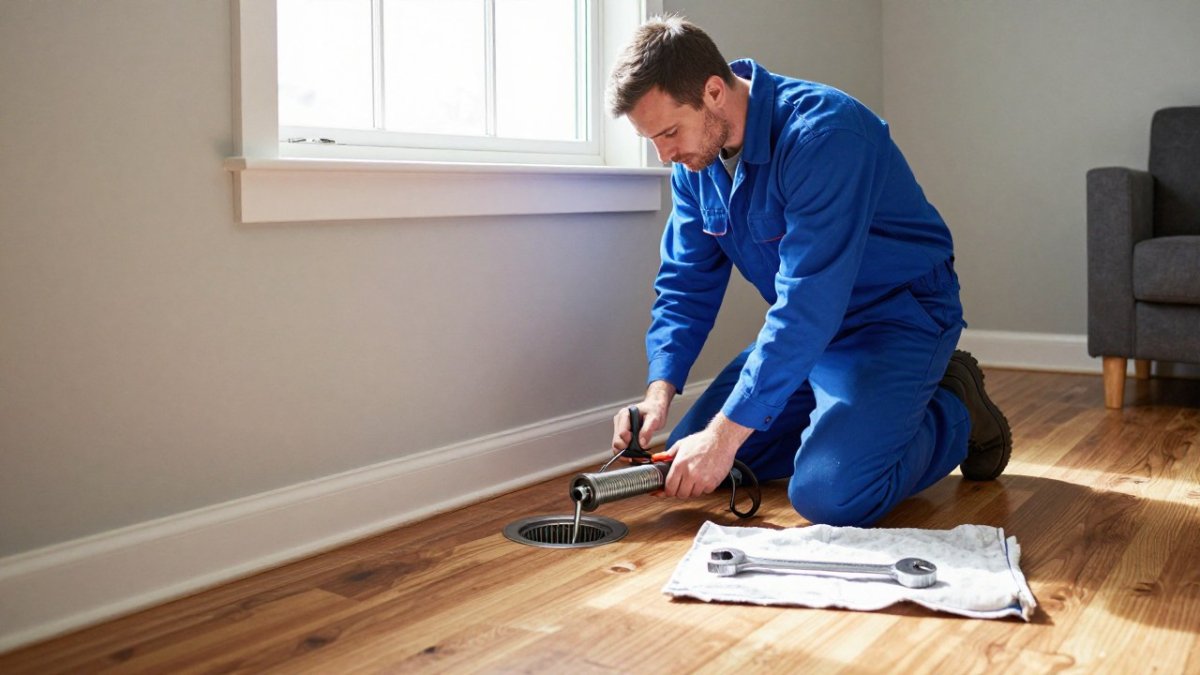
Floor drains in basements and laundry rooms collect lint, hair, and grit. Remove the grate, clear debris with a small brush, and flush with hot water. If the floor drain smells or backs up when other fixtures run, that points to a main-line issue rather than a local clog.
North York context
If a drain is still blocked after these steps, a hand auger or drain snake may help. Insert it slowly and turn it to catch the clog.
Chemical Drain Cleaners: When They Help and When to Avoid Them
Chemical drain cleaners can clear minor grease or hair clogs, but they carry real risks.
- Use them only for minor, fresh clogs that water and a plunger have not cleared.
- Never mix products. Combining chemicals can release dangerous fumes.
- Avoid repeated use. Strong products can damage older pipes and seals over time.
- Keep them away from children and pets, and wear eye protection when pouring.
If a chemical cleaner does not clear the drain in one application, stop. Do not keep adding more. Call a plumber instead.
Local Clog or Main Sewer Line? Signs to Watch For and When to Stop
Knowing the difference between a local clog and a main sewer-line problem saves time and money.
Probably a local clog if:
- Only one fixture drains slowly
- Other drains in the house work normally
Possibly a main sewer-line problem if:
- Several fixtures back up at the same time
- Water gurgles in drains when another fixture runs
- Sewage smells come up through floor drains
- Water pools in the yard or near the main cleanout
If you see any of these signs, stop using water in the home and call a licensed plumber. Continuing to run water can push waste into your home.
Professional Drain Cleaning Cost in North York and What to Ask a Plumber Before Hiring
Drain cleaning costs depend on the method, how deep the clog is, and the time of day you call. Ask for a written estimate before any work starts.
Ask these questions before you hire:
- Is the price a flat rate or hourly, and what does the estimate include?
- Are there extra fees for after-hours or emergency calls?
- Are your technicians licensed and insured?
- Will you show me the problem before you recommend a repair?
- What warranty do you offer on the work?
Clear answers to these questions help you avoid surprise bills.
Booking Your Drain Service With UMark Plumbing and Drain Inc.
If a clog keeps coming back or you suspect a main-line problem, professional help is the safer choice. UMark Plumbing and Drain Inc. has served homeowners and businesses for over 20 years, with 24/7 emergency service and certified technicians. For current pricing and a quick response, contact our team for a free quote. Our local plumber service in North York covers residential and commercial plumbing needs.
For a deeper look at methods and when to call, read our drain cleaning near me guide or review our drain cleaning service pricing guide.
Next step: Start with the routine maintenance tips above. If a drain still will not clear, call UMark Plumbing and Drain Inc. for a free quote before the problem gets worse.
Frequently Asked Questions
How can I safely unclog a household drain?
Start with the least aggressive method. Remove any visible debris from the drain opening or strainer, then use a cup plunger with a little water in the basin to create suction. Run hot tap water for a minute between attempts to help clear grease and soap. Avoid mixing cleaning products, and never pour boiling water into a porcelain sink or toilet bowl. If the water still drains slowly after two or three attempts, stop and call a licensed plumber rather than forcing the clog with tools that can scratch or crack pipes.
How much does professional drain cleaning cost in North York?
Costs depend on the drain location, the method needed, and whether the work happens during regular hours or after hours. Simple clearing of a sink or shower drain is usually the least expensive call, while main sewer-line work costs more. Ask for a written estimate before the technician starts, and confirm whether travel or after-hours fees apply. Visit the website or request a free quote for current pricing for your specific situation.
What should I ask a plumber before hiring them to clean a drain?
Ask whether the technician is certified and insured, whether they provide a written estimate before starting, and how long the job should take. Ask if the repair includes a guarantee and what happens if the clog returns within a few weeks. Confirm their arrival window, especially for emergency calls, and ask how they handle after-hours fees.
Are chemical drain cleaners safe for residential pipes?
Chemical drain cleaners can clear minor grease or hair clogs, but they generate heat and can damage older pipes, seals and fixtures, especially with repeated use. Never mix them with another drain product, bleach or a plunger residue, because the reaction can release harmful fumes. If you have already used a chemical cleaner and the drain is still blocked, avoid plunging with a tool that splashes the product, and call a plumber so the chemicals can be handled safely.