 How-to
How to Seal Crawl Space Vents for Winter Safely
Quick Summary
Close crawl space vents for winter only if the space is dry and the floor above is well insulated. Closing vents over a damp crawl space can trap moisture, so check for standing water, condensation, and a musty smell first. If those checks are clean, seal each vent with a snug, removable cover and remove it in spring.
- Sealing vents is not a complete fix on its own and can trap damp air under the house.
- Keep vents open if the crawl space is damp or has any water intrusion.
- Do not seal a crawl space that shows standing water, active condensation, or musty odor.
- Confirm the ground vapor barrier is present, intact, and sealed at the seams before sealing vents.
- Label each cover 'REMOVE IN SPRING' and remove it once the weather warms and hard frost has passed.
Table of Contents
- How to Seal Crawl Space Vents for Winter in North York
- What You Need Before You Start
- Should Crawl Space Vents Be Open or Closed in Winter?
- Check Moisture and Ground Conditions First
- Step-by-Step: Installing Crawl Space Vent Covers
- How to Prevent Pipes From Freezing in a Crawl Space
- Booking a Crawl Space Inspection With UMark Plumbing
- Frequently Asked Questions
How to Seal Crawl Space Vents for Winter in North York
Last Updated: November 22, 2026
Sealing crawl space vents for winter is a common step homeowners take to reduce drafts and help keep pipes from freezing. Before you tape or plug anything, you need to know that closing vents is not a complete fix on its own. Sealing vents without addressing moisture from the ground can trap damp air under the house, which causes its own problems. This guide walks through when sealing makes sense, how to check conditions first, and how to install vent covers safely.
Crawl space vents are openings in the foundation wall that let outside air move under the house. In a North York home, that air can get very cold in January and February. Closed vents can help hold in some heat, but the right choice depends on your crawl space. Keep reading to see how to decide.
What You Need Before You Start
Gather these items before you go under the house:
- A flashlight or headlamp
- Rigid foam vent plugs or insulated vent covers sized to your vents
- Weather-resistant tape or foam sealant
- Silicone caulk for small gaps
- A dust mask and gloves
- A tape measure
Plan for a dry day with temperatures above freezing so the materials seal properly. Wear old clothes, since crawl spaces are dusty and tight.
Watch out: Never seal a vent in a crawl space that already smells damp or shows standing water. Trapped moisture can lead to mould and wood rot.
Should Crawl Space Vents Be Open or Closed in Winter?
Whether to close crawl space vents depends on your home. A common approach is to keep vents open if the crawl space is damp, and close them only when the space is dry and well insulated. A crawl space vent guidance source warns that closing vents alone does not solve crawl space problems.
Closing vents can reduce cold drafts and help pipes stay warmer. Blocking them can also trap moisture. That is why the decision should follow a check of the crawl space, not a calendar date.
- Close vents when the crawl space is dry and the floor above is well insulated
- Keep vents open when the space is damp or has any water intrusion
- Ask a professional if you are unsure which situation you have
Check Moisture and Ground Conditions First
Before any vent gets covered, run a moisture diagnosis. The goal is simple: do not seal a crawl space that is already wet. Trapped moisture under a North York home can lead to mould, wood rot, and musty air that rises into the living space all winter. Work through the checks below and write down what you find, because the results decide whether you seal, fix first, or call a professional.
1. Standing water and damp soil. Look for puddles, saturated soil, or dark wet patches along the foundation wall. Press a dry paper towel onto the soil in two or three spots, leave it for a day, then check underneath. A towel that comes up damp means moisture is rising from the ground. In a North York winter, freeze-thaw cycles can also push water through foundation cracks, so check the wall joints and the base of the wall after any rain or snowmelt.
2. Condensation and frost. Look at the joists, subfloor, and ductwork for beads of water, white staining, or frost. Frost on the wood in cold weather is a strong sign that warm, moist air is condensing on cold surfaces. That pattern usually gets worse, not better, when vents are closed.
3. Musty odors. A musty or earthy smell that lingers after the space has aired out points to ongoing moisture. Odor alone is not proof, but combined with damp soil or condensation it is a reason to pause.
4. Ground vapor barrier. A ground vapor barrier, typically heavy polyethylene sheeting laid over the soil, is the single most important moisture control in a vented crawl space. Check whether it is present, whether it is torn or pulled back, and whether it is lapped and sealed at the seams and edges. If the barrier is missing or damaged, repair or replace it before you seal any vents. Sealing vents over bare, damp soil traps moisture rather than keeping it out.
5. Drainage and exterior grade. Look for downspouts that discharge next to the foundation, soil that slopes toward the house, or window wells that collect water. These send water toward the crawl space and should be corrected before winter.
6. Existing damage. Check for sagging insulation, stained or soft wood, and rusted fasteners or ductwork. These suggest long-term moisture exposure and warrant a professional look.
Watch out: If you find standing water, active condensation, or widespread musty odor, do not seal the vents. Fix the moisture source first, or have a qualified contractor assess the crawl space. Sealing a wet crawl space makes the problem worse.
Use the results as a simple decision rule. If all six checks are clean, dry soil, no condensation, no odor, an intact vapor barrier, good drainage, and no damage, seasonal vent closure is reasonable. If any check fails, treat that as the priority and postpone sealing until it is resolved. When you are unsure, a professional inspection can help you decide.
Step-by-Step: Installing Crawl Space Vent Covers
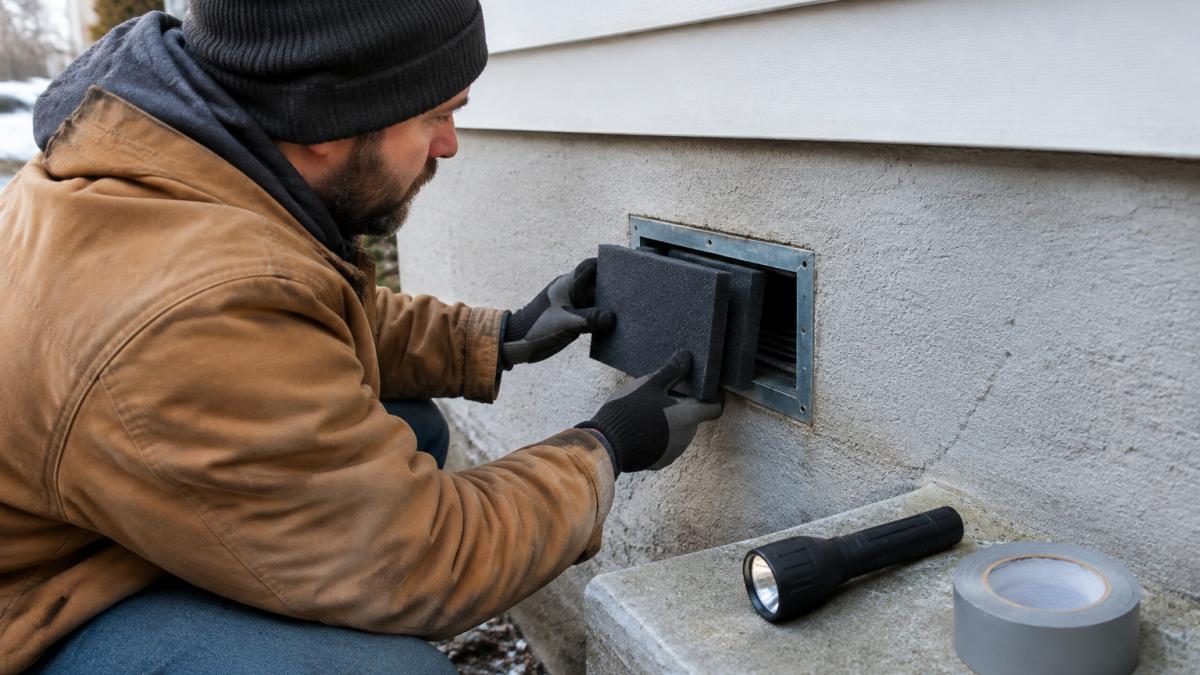
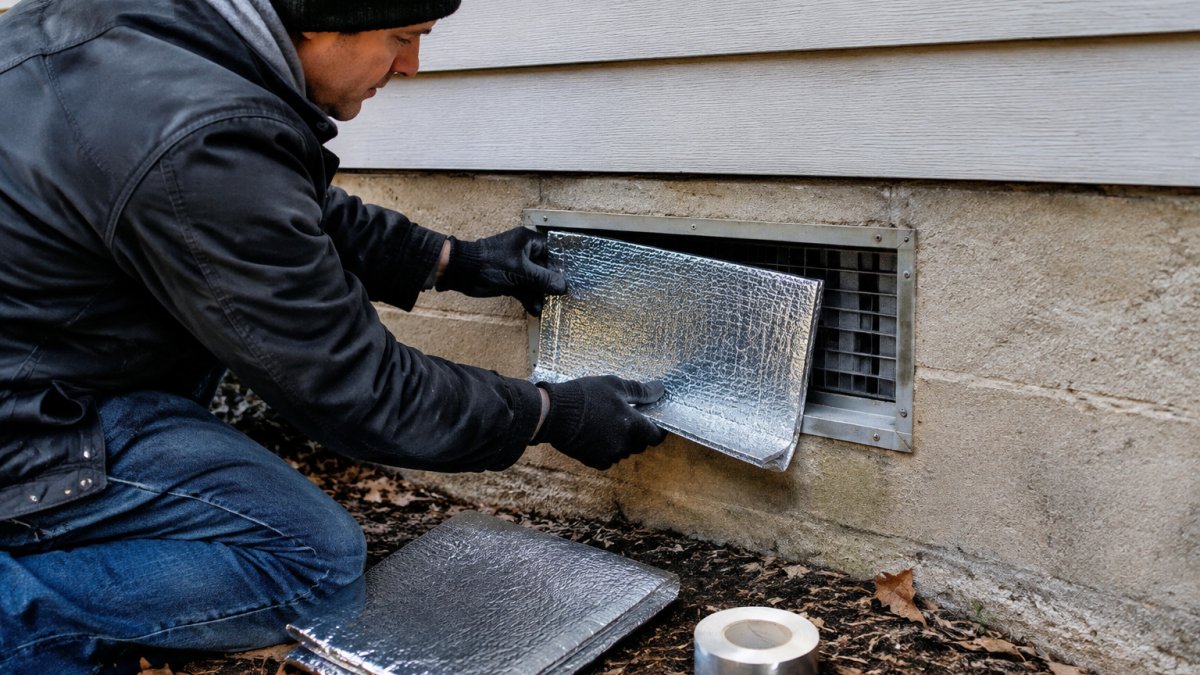
The best winter vent covers are removable, fit snugly, and do not damage the foundation. Purpose-made foam vent plugs and insulated vent covers are a common choice because they can be measured, cut, and pulled out in spring. Improvised materials, plastic sheeting, cardboard, or taped-over foam board, are common, but they can sag or tear. If you use an improvised cover, label it clearly.
- Confirm the crawl space is dry. Complete the moisture diagnosis above first. Do not proceed if any check failed.
- Measure every vent opening. Record the width and height of each opening, plus the depth of the recess, because a plug that sits flush can be hard to remove. Measure each vent separately, openings in older North York homes are often not uniform.
- Choose the cover type. Use rigid foam plugs or insulated covers sized to your measurements. For irregular openings, cut rigid foam slightly oversized so it compresses into place. Avoid fiberglass batt stuffed into vents, since it can hold moisture and is hard to remove cleanly.
- Fit the cover snugly. The cover should sit in the opening without gaps at the edges. A loose fit lets cold air bypass the cover and defeats the purpose.
- Seal the edges, not the masonry. Run weather-resistant tape or a bead of silicone caulk around the edge of the cover where it meets the frame. Keep sealant on the cover or frame, not spread across the brick or block, so it can be removed later. Do not use spray foam to glue a cover permanently into a foundation vent.
- Caulk small gaps around the frame. Use silicone caulk for small openings around the vent frame and any penetrations nearby. This is also a good time to seal gaps where pipes or wires enter the foundation.
- Keep drainage paths clear. Make sure the cover does not block the weep holes or drainage path at the base of the wall. Water needs a way out even in winter.
- Label each cover. Mark the date and the word 'REMOVE IN SPRING' so the covers come out when the weather warms.
- Check after a week, then monthly. Look for condensation, damp smells, frost on the joists, or covers that have shifted. After a storm, confirm the covers are still seated and the sealant has not failed.
Remove the covers in spring as soon as the weather warms and the risk of hard frost has passed, so the crawl space can dry out. Store the covers flat and labeled so they are ready for next fall.
Watch out: Do not drill into or anchor covers through masonry if you are not confident in the wall condition, and never block drainage or weep holes. If a cover requires fasteners into the foundation, or if the vent opening is damaged, have a qualified contractor advise on the safest approach for your home.
How to Prevent Pipes From Freezing in a Crawl Space
Pipes in a crawl space are at risk when cold air moves in freely. Insulating the pipes is often more effective than relying on vent covers alone. Wrap exposed pipes with foam pipe insulation and seal any gaps where cold air enters near the plumbing. Compare insulation materials for cold basements and crawl spaces to choose the right wrap.
Keep a small amount of warmth in the space by sealing air leaks around the rim joists. For a fuller prevention guide built for unheated crawl spaces, see crawl space pipe freezing prevention. Let the faucets drip slightly during very cold snaps. This keeps water moving so it is less likely to freeze.
If a pipe freezes, do not use an open flame to thaw it. Call a licensed plumber.
Booking a Crawl Space Inspection With UMark Plumbing
If you are not sure whether your vents should be open or closed, a professional inspection can give you a clear answer. A professional inspection can check your crawl space for moisture, ventilation problems, and pipe risks. You can also contact a North York plumber to arrange a visit. Visit the business's website to request a quote or book a visit.
Get Free Quote from UMark Plumbing and Drain Inc. for a crawl space inspection.
Frequently Asked Questions
Should crawl space vents be closed in winter in Ontario?
Not always. Closing vents without checking moisture can trap humidity under the house, which can lead to condensation, mould and wood damage. Before sealing, confirm the crawl space is dry, the ground is covered with a vapour barrier, and there is no standing water or existing mould. If the space is damp, address the moisture source first. A plumber or building inspector in North York can assess the crawl space and tell you whether sealing or partial closure suits your home.
What is the best material for covering crawl space vents?
Rigid foam insulation board or purpose-made foam vent plugs are the most common choices. Cut the foam so it fits snugly in the opening, then seal the edges with weather-resistant tape or silicone caulk. Avoid plastic sheeting or rags, which can tear and trap moisture. Remove the covers in spring so the crawl space can ventilate again. Check the covers during the winter for shifting or gaps.
How do you keep pipes in a crawl space from freezing?
Insulate exposed water lines with foam pipe sleeves and seal gaps around pipe penetrations to limit cold air entry. Keep the crawl-space door closed and weather-stripped. Where pipes run close to the foundation wall, consider heat tape rated for plumbing use. If a pipe freezes, shut off the water supply and call a licensed plumber rather than applying open flame to the line.
Can closing crawl space vents cause moisture or mould?
It can. Sealed vents stop the airflow that carries humidity out of the crawl space, so moisture from the soil can build up. This is most likely where the ground has no vapour barrier or where drainage around the foundation is poor. Check for damp insulation, musty smells and water stains before sealing.