 How-to
How Do You Prepare for a Plumbing Service Visit?
Last Updated: November 17, 2026
Quick Summary
To prepare for a plumbing service visit, write down the problem and when it started, clear the area around the fixture and under the sink, find your main water shutoff and fixture shutoffs, and confirm the appointment window and parking access. Securing pets and unlocking the gate or door also helps the visit run smoothly.
- Ask for an arrival window, not just a day, and whether the visit includes a diagnosis fee.
- Document symptoms like leaks, slow drains, gurgling sounds, low water pressure, and drain smells.
- Clear access is the biggest time-saver, so empty the cabinet under the sink before the plumber arrives.
- Never stack boxes or valuables in front of the main shutoff, which you may need to reach in seconds.
- Get the scope of work in writing and authorize only what you agreed to.
Table of Contents
- Start With a Plumbing Service Appointment Checklist
- Document Plumbing Problem Symptoms Before the Truck Arrives
- Clear the Work Area and Protect What Stays
- Find Your Main Water Shutoff and Fixture Shutoffs
- Questions to Ask a Plumber Before Work Begins
- What to Expect During a Plumbing Service Visit
- Book Your Plumbing Service Visit With Confidence
- Frequently Asked Questions
Start With a Plumbing Service Appointment Checklist
A plumbing service visit goes better when you do a little prep first. The right preparation saves time, prevents damage, and helps the plumber fix the problem on the first trip. Prepared homes tend to get faster, cleaner results from any plumbing service visit.
Here is the short version of what to do before the truck arrives:
- Write down the problem and when it started
- Clear the area around the fixture and under the sink
- Find your main water shutoff and the shutoff for the fixture
- Note any past repairs or repeat issues
- Confirm the appointment window and parking access
- Secure pets and unlock the gate or door
That list covers most of it. The rest of this guide walks through each step, plus the questions worth asking before work starts.
Booking Details That Prevent Return Visits
What you say when you book decides how well the visit goes. A vague "my sink is leaking" can send a plumber out without the right part. A clear description helps the office book the right amount of time and the right technician.
When you call, have these ready:
- What is broken, and where in the home
- When you first noticed it
- Whether water is actively leaking right now
- The fixture or appliance brand, if you can see it
- Whether you rent or own, and any building rules
Ask for an arrival window, not just a day. Then ask whether the visit includes a diagnosis fee. A good plumber will tell you how the visit is priced before they come out.
Condo and Multi-Unit Coordination
Condo and apartment plumbing adds a step: building access and shared shutoffs. In many North York buildings, the shutoff for your unit sits in a service closet or needs building staff to access it. Call your property manager before the visit.
Ask three things:
- Does the plumber need to sign in at the front desk?
- Is there a service elevator or loading zone to use?
- Can building staff reach the shared shutoff if needed?
For property managers and facility managers, book the visit around your lowest-traffic hours. Downtime costs money, and a planned window beats a surprise shutdown.
Document Plumbing Problem Symptoms Before the Truck Arrives
Write down what you see and hear before anything gets moved or wiped up. That record helps the plumber find the cause faster. Plumbing problem symptoms to document include leaks, slow drains, gurgling sounds, low water pressure, and any smell near drains or the water heater.
Use your phone. A short video of a dripping joint or a backed-up drain says more than a paragraph of description. Then note:
- Where the water shows up, and whether it spreads
- Whether the problem happens all the time or only after use
- If more than one fixture is affected
- Any recent repairs, new fixtures, or work nearby
- Whether the water looks clean or cloudy
One detail most people skip: check whether the issue gets worse after a shower, laundry load, or dishwasher cycle. That timing often points straight to the cause.
Clear the Work Area and Protect What Stays
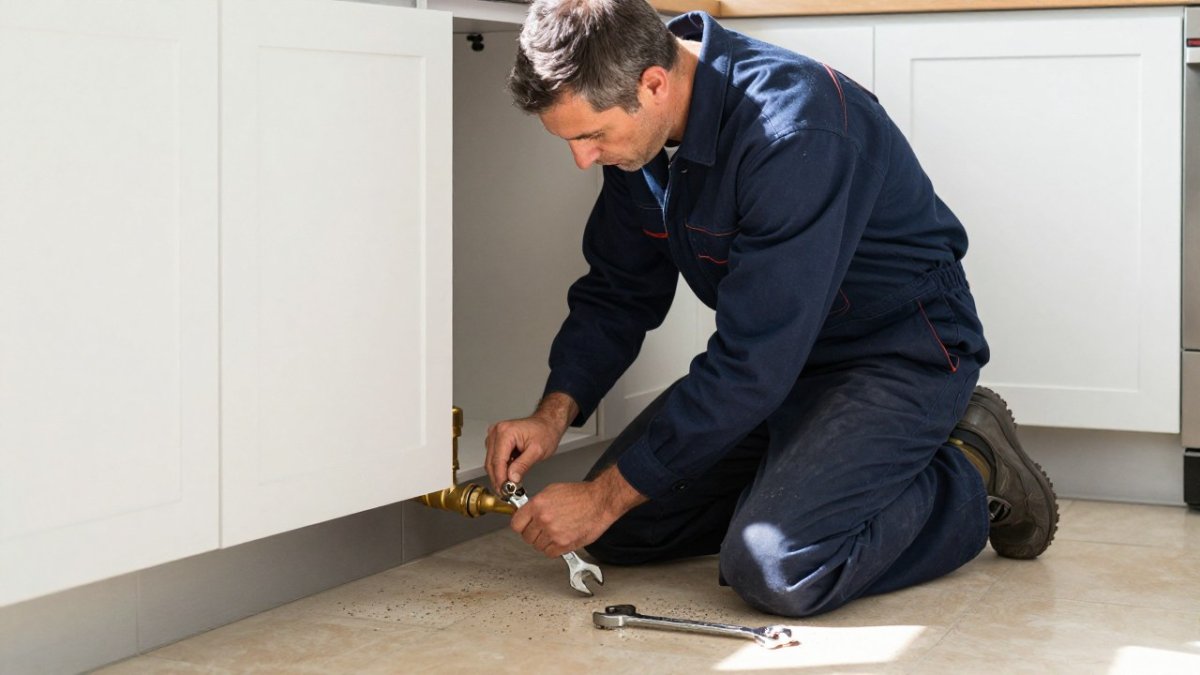
Clear access is the single biggest time-saver on a plumbing service visit. A plumber who can reach the fixture without moving boxes works faster and charges less time. Clear the cabinet under the sink, move cleaning products and stored items, and pull back anything fragile.
Start with the space around the fixture. Empty the cabinet under the kitchen or bathroom sink. Move bottles, bins, and cleaning products to another room. If the water heater is the problem, clear a path to it and remove anything stored on top.
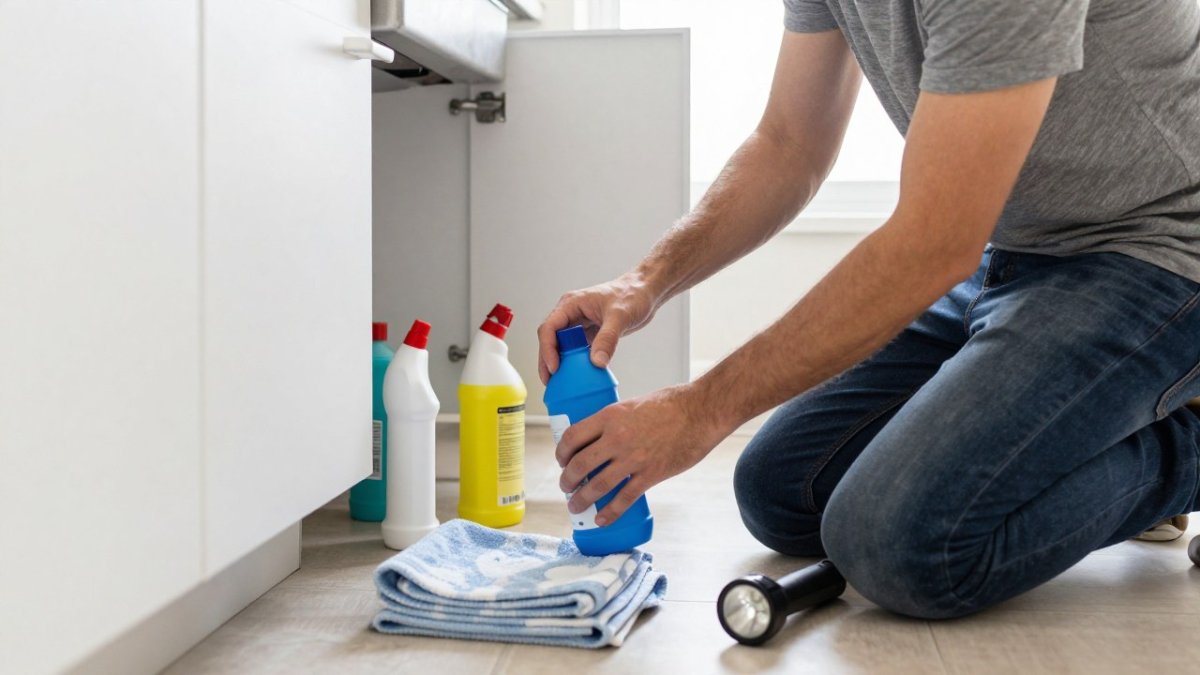
Then protect what stays:
- Lay old towels or a plastic sheet on the floor
- Move rugs, mats, and small furniture out of the splash zone
- Cover nearby counters or shelves with a sheet
- Keep pets and kids out of the work area
Watch out: never stack boxes or valuables in front of the main shutoff. If a pipe bursts, you need to reach that valve in seconds, not minutes.
Find Your Main Water Shutoff and Fixture Shutoffs
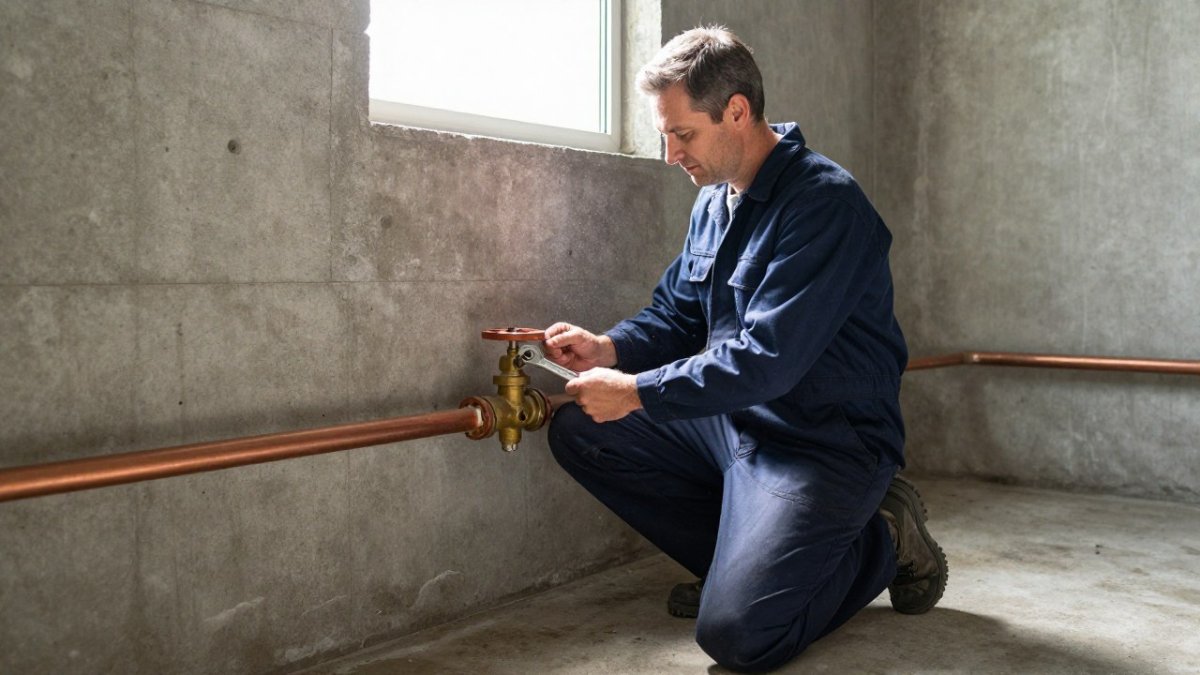
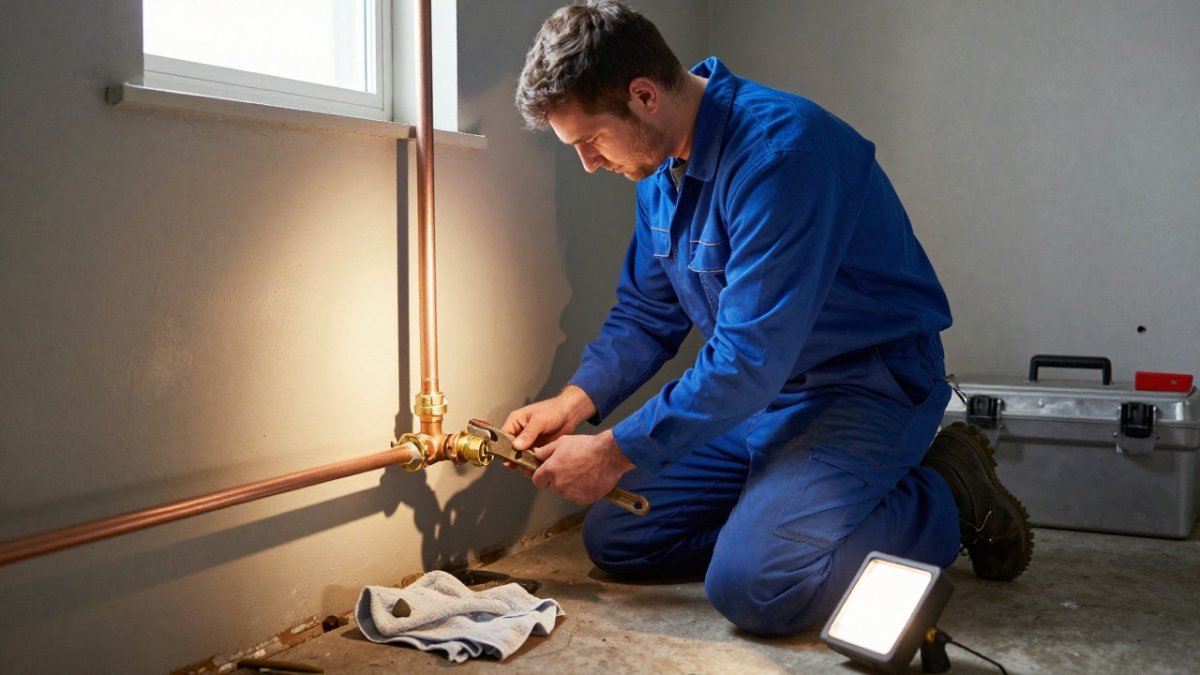
Knowing where your shutoffs are lets you stop the water fast if something goes wrong. The main water shutoff is the valve that cuts water to the whole home.
The main valve usually sits where the water line enters the home, often in the basement, utility room, or a closet near the front. Turn it clockwise to close it.
Fixture shutoffs are easier. Look under the sink or behind the toilet. You will see a small oval handle or a screw slot. Turn it clockwise to shut off that fixture only.
If you are not sure how to shut off your main valve safely, follow our step-by-step guide to shutting off the main water valve before the visit.
After you shut off a supply, open the faucet to drain the line. This releases pressure and stops drips while the plumber works. Keep a wrench and pliers handy too.
Questions to Ask a Plumber Before Work Begins
A good plumbing service visit starts with clear answers, not a surprise invoice. Before anyone starts work, ask these questions. They protect your wallet and set expectations for both sides.
- What is the diagnosis, and what caused it?
- Is this an estimate or a fixed price?
- Does the price include parts and labor?
- Will you call me before starting anything beyond the quote?
- How long will the repair take?
- What happens if you find a second problem?
- Is the work covered by a warranty?
Ask about travel fees and after-hours charges up front. If you want cost context before you talk numbers, read what a plumber charges for a few hours of work. It helps you ask better questions. It also helps to know whether plumbers charge for travel, and to watch for hidden repair fees before you approve anything.
Get the scope of work in writing. Then authorize only what you agreed to. A plumber who respects that boundary is one you can call again.
Diagnostic Fees, Written Estimates, and Approval
Ask whether there is a diagnostic or call-out fee, whether it is separate from the repair price, and whether it is credited toward the work if you approve the job.
Ask for the estimate in writing, even for a small repair. A written estimate should list the diagnosis, the proposed work, the parts, the labor, and the total.
Watch out: never approve open-ended work with language like "fix whatever you find." Approve a defined scope, and ask what the price will be if the diagnosis changes once the fixture is opened up.
For condo owners, confirm whether the building requires a work order or a certificate of insurance before the plumber starts. Property management often needs both on file, and a missing document can stall the visit at the door.
Keep the written estimate and the final invoice together. If a dispute comes up later, the paper trail shows what you approved and what was actually done.
What to Expect During a Plumbing Service Visit
Expect a short inspection first, then a diagnosis, then an estimate before any repair. A plumber typically checks the fixture, tests the water supply, and looks for related issues. Then they explain the cause and the fix, and give you a price to approve.
Here is the usual flow:
- Arrival and walk-through. The plumber confirms the problem and checks the area.
- Inspection and diagnosis. They test shutoffs, check for leaks, and trace the cause.
- Estimate and approval. You get a price and scope before work starts.
- Repair. The fix happens, often with a quick test of the fixture.
- Cleanup and handover. The plumber explains what was done and any follow-up.
Ask for a short written summary at the end. Note what was repaired, any parts replaced, and what to watch for. That record helps if the same issue returns. It also gives the next technician a head start.
Visit-Day Logistics and Service Expectations
Plumbing visits are often booked as an arrival window rather than an exact time. Confirm the window when you book and ask whether the office will call or text before the technician heads your way.
Parking and entry matter more than people expect.
Secure pets before the doorbell rings. A dog that is friendly at home can react badly to a stranger with tools, and a cat can slip out an open door.
Ask how the work area will be protected.
Watch out: do not let anyone start work before you have seen the written estimate and approved it.
At the end of the visit, walk through the work with the plumber. Test the fixture while they are still there, ask what to watch for over the next few days, and confirm the warranty terms in writing.
Book Your Plumbing Service Visit With Confidence
Preparation turns a stressful plumbing service visit into a quick, clean job. Clear the area, find your shutoffs, document the symptoms, and ask the right questions. Do those four things and most visits run smoother from start to finish.
If you are in North York or Vaughan and need a plumber who shows up and fixes it right, UMark Plumbing and Drain Inc. is ready. Our certified team brings more than 20 years of experience. We offer 24/7 emergency service for burst pipes and severe leaks, and routine plumbing and drain repair for homes and businesses.
Get started with UMark Plumbing and Drain Inc. and book a visit. If you are still deciding who to call, read how to find a plumber close to me and hire right.
Frequently Asked Questions
What should I do before a plumber arrives?
Clear the path to the affected fixture, move stored items out of the cabinet below the sink, and note when the problem started. Write down what you have already tried, such as plunging or tightening a fitting. If water is actively escaping, shut off the main water shutoff valve and open a low faucet to drain the line. Have your address, buzzer code, and parking details ready so the plumber is not delayed at the door.
Should I turn off the water before the plumber arrives?
Turn off the water only if it is actively leaking, spraying, or pooling where it can damage floors and ceilings. For a slow drip or a blocked drain, leave the supply on so the plumber can test water pressure and confirm the diagnosis during the plumbing service visit. If you do shut it off, open a cold faucet afterward to drain the faucet and relieve pressure. Know where both the main water shutoff and the fixture shutoff sit before you need them.
What plumbing problem symptoms should I document?
Record when the problem started, whether it is constant or intermittent, and any sounds such as banging or gurgling. Note leaks, clogs, drainage speed, water pressure changes, and whether the hot water system is affected. Photograph water stains and take a short video of a leak in action. Mention previous repairs and recurring issues, since repeat problems often point to a cause the last repair did not address.
How long does a plumbing service visit usually take?
The length of a visit depends on the repair. Hidden leaks behind walls and water heater work can take longer than a simple fixture or drain fix. Ask about the appointment window and expected time required when you book, and confirm whether the estimate covers diagnosis only or the full scope of work. Clear access and accurate symptoms are the two things that most often shorten a visit.