 how-to
How to Test Home Water Quality the Right Way
Last Updated: November 3, 2026
Quick Summary
To test home water quality, collect a sample in the bottle your lab specifies and submit it to an accredited laboratory, since strip kits cannot reliably detect lead or bacteria. For lead, many labs ask for a first-draw sample from a tap that has not run for at least six hours. Match the test panel to your concern rather than buying every test at once.
- Run cold water for two to three minutes before filling a flushed sample bottle.
- Never use hot water for a sample because it dissolves more metal from pipes.
- Bacterial samples should be delivered cool, not frozen, and on time.
- Test well water for bacteria twice yearly and nitrates yearly.
- Retest after plumbing work, after moving, or when water changes color, taste, or smell.
Table of Contents
- Why Testing Your Water Matters Before You Buy a Filter
- How to Collect a Water Sample Without Skewing the Results
- Choosing a Home Water Testing Kit: DIY Strips vs. Lab Kits
- Drinking Water Testing Ontario: Where to Submit Samples and What It Costs
- Well Water Testing Ontario: A Different Checklist for Private Systems
- Reading Your Results: Lead, Bacteria, Hardness and What to Fix First
- When to Test Your Water Again
- Book a Plumbing Inspection to Act on Your Results
- Frequently Asked Questions
Why Testing Your Water Matters Before You Buy a Filter
A water test kit sold at a hardware store can tell you a few things. It cannot tell you what is coming out of your own kitchen tap with any real certainty.
Municipal water reports describe the system, not your tap. The U.S.
Before you spend money on a filter, you need a baseline. A proper test tells you whether the problem is hardness, lead, bacteria, or something else entirely.
For current pricing on filtration services, see the UMark Plumbing and Drain Inc. pricing page or request a quote.
Municipal Water in North York and Vaughan: What the Report Does Not Tell You
Municipal water quality reports are useful, but they describe the whole system, not what happens between the treatment plant and your kitchen faucet.
Older homes often still have lead service lines or lead solder on copper pipes. A system report showing low lead levels citywide says nothing about a specific older house. That is the gap many guides overlook.
How to Collect a Water Sample Without Skewing the Results
The most common mistake is collecting a sample after the water has been sitting in the pipes, which gives you a false reading.
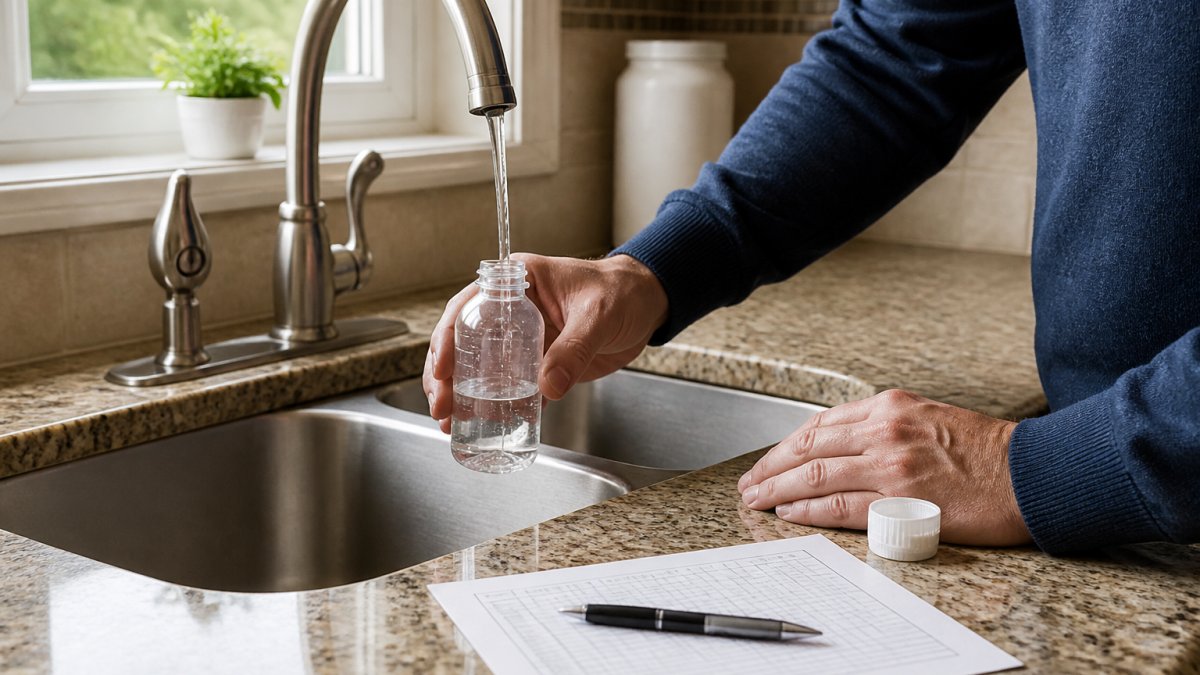
Start by asking the lab or public health unit which bottle they require.
For a flushed sample (the standard for most chemical and bacterial tests), follow these steps:
- Remove the aerator from the faucet and set it aside.
- Run cold water for two to three minutes to flush the line.
- Fill the sterile bottle to the line without touching the inside of the cap.
- Cap it immediately and label it with the date and time.
- Keep the sample cool and deliver it to the lab the same day.
Watch out: never use hot water for a sample. Hot water dissolves more metal from your pipes and will give you a lead reading that does not match what you actually drink.
First-Draw Versus Flushed Samples for Lead
Lead testing is the exception to the flush rule. Lead leaches into water while it sits in the service line or interior plumbing, so a flushed sample can read low even when your pipes are the problem.
A common pattern is to collect two samples, a first-draw and a flushed sample, so the lab can see both the standing-water lead level and the level after the line clears. Ask the lab which protocol they want before you collect; submitting the wrong type of sample is the most frequent reason a lead result comes back inconclusive.
Storing and Transporting Samples
Bacterial samples have the tightest window. Labs typically want bacterial samples delivered within a short window of collection, kept cool but not frozen, and may reject samples that arrive warm or late.
Keep samples in a cooler with an ice pack, out of direct sun, and never in a hot car. Label every bottle with the date, time, and tap location (kitchen, bathroom, outdoor hose) so the lab report maps back to the right fixture.
Submitting Samples to a Lab
Testing laboratories handle lead, copper, nitrate, hardness, and broader chemical panels; you request the bottle, collect per their instructions, and either drop it off or ship it in the supplied container.
Before you collect, confirm three things with the lab: the bottle type, the hold time, and whether they want a first-draw or flushed sample. Getting those right the first time saves a repeat collection and a second lab fee.
Choosing a Home Water Testing Kit: DIY Strips vs. Lab Kits
A home water testing kit comes in two main forms, and they answer different questions.
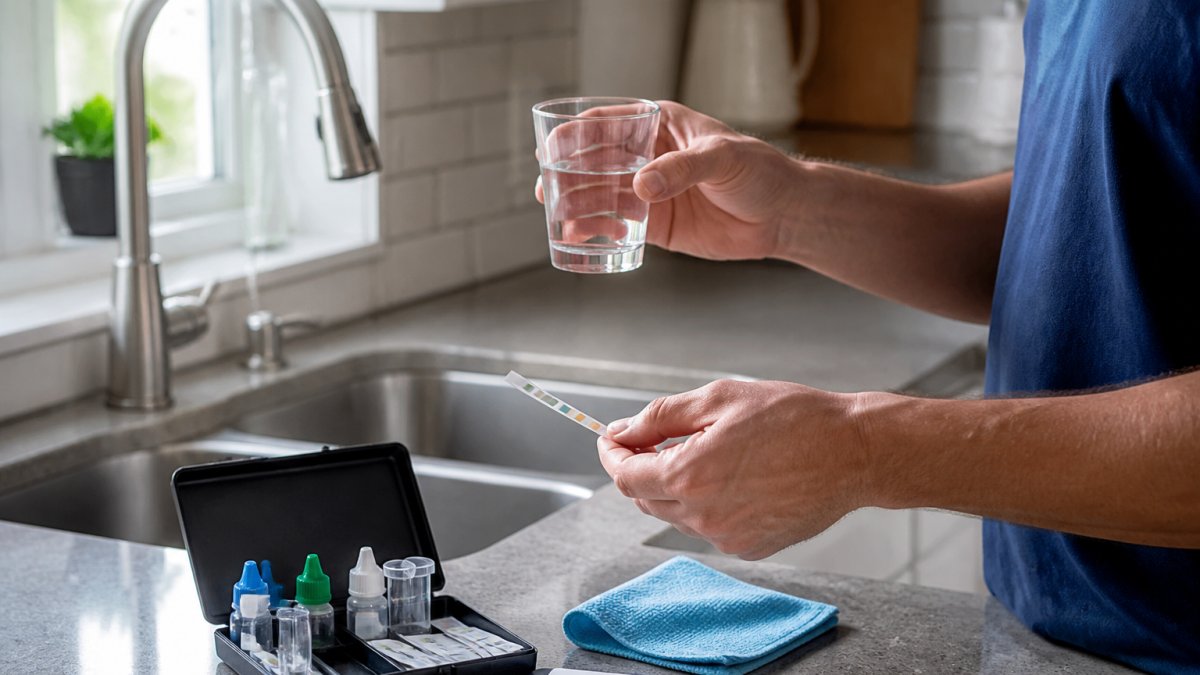
Strip kits are cheap and fast. You dip, wait, and compare colors. They are fine for a rough check on hardness or pH. They are not reliable for lead or bacteria.
A 2024 study led by N. Malina in ACS Environmental Au looked at commercial kits measuring at least four water-quality parameters. The takeaway for homeowners is simple: not all kits measure the same things, so check what yours actually tests.
What a Strip Kit Can and Cannot Detect
A strip can flag hardness and pH changes. It cannot reliably detect lead, nitrates at low levels, or bacterial contaminants like total coliform and E. coli. For those, you need a lab.
Drinking Water Testing Ontario: Where to Submit Samples and What It Costs
Ontario splits water testing into two tracks, and knowing which track you need is the difference between a free result and a paid one.
Bacterial testing. Bacterial samples such as total coliform and E. coli are typically collected in a sterile bottle, delivered within the time window the testing lab specifies, and analysed within a few business days.
Chemical and metals testing through private labs. Lead, copper, nitrate, hardness, and broader chemical panels go to accredited laboratories.
For a full picture of an older home, consider requesting lead and copper testing alongside a bacterial test.
What to Ask the Lab Before You Pay
A quote is only useful if it matches your goal. Ask four questions before you commit:
- Which parameters does this price include, and which are add-ons?
- Do you want a first-draw or flushed sample for lead?
- What is the hold time, and how do I transport the sample?
- What does the report look like, and will it flag results against Ontario drinking water standards?
Matching the panel to the concern, rather than buying every test at once, is often the more efficient approach. Match the panel to the concern, lead in an older home, nitrate near a septic system or agricultural runoff, hardness if fixtures are scaling, rather than buying every test at once.
DIY Kits Versus Lab Testing: What Each Actually Proves
A home water testing kit comes in two main forms, and they answer different questions.
Strip kits are cheap and fast. You dip, wait, and compare colors. They are fine for a rough check on hardness or pH. They are not reliable for lead or bacteria.
A 2024 study led by N. Malina in ACS Environmental Au looked at commercial kits measuring at least four water-quality parameters.
A strip can flag hardness and pH changes. It cannot reliably detect lead, nitrates at low levels, or bacterial contaminants like total coliform and E. coli.
Reading the City of Toronto and Vaughan Reports Alongside Your Lab Result
Municipal water quality reports are worth reading, but they describe the system, not your tap. A municipal report summarizes results across the distribution system; it cannot see lead solder inside an individual older home.
Use the municipal report as a baseline for what the source water and treatment plant deliver, then use your own lab result to see what your plumbing adds. If the city report shows low lead systemwide and your first-draw sample shows lead, the difference is your service line or interior pipes, and that is the finding worth acting on.
Well Water Testing Ontario: A Different Checklist for Private Systems
If you are on a private well, you are responsible for monitoring your own water.
Testing well water regularly for bacteria is a common recommendation, and nitrate testing is worth considering if you have a septic system or nearby agricultural runoff. Checking the wellhead for cracks and ensuring surface water drains away from it are also sensible steps.
Here is a quick reference:
| Test Type | How Often | Best Method |
|---|---|---|
| Bacteria (total coliform, E. coli) | Twice yearly | Public health lab |
| Nitrates | Yearly | Certified lab |
| Lead and copper | Every few years | Certified lab |
| Hardness | Once, then as needed | Strip or lab |
Reading Your Results: Lead, Bacteria, Hardness and What to Fix First
Your results will usually fall into one of three buckets. Fix them in this order.
Bacteria first. Any presence of total coliform or E. coli is a health issue, so stop drinking the water and address it before anything else.
Lead second. Lead and copper testing matters most in homes built before the mid-1950s. If lead shows up, a certified filter or line replacement is the fix.
Hardness third. Hard water is not a health risk, but it scales up fixtures and shortens appliance life. Readers who prefer to avoid salt can explore alternatives to salt-based water softeners.
Lead and Copper Testing for Older Homes
Lead often comes from pipes and plumbing rather than the water source. Homes built in earlier decades are commonly the ones to check first. A lab test is the reliable way to know for sure.
When to Test Your Water Again
Retest after any plumbing work, after moving into a new home, and whenever the water changes color, taste, or smell. If you notice a sudden drop in pressure or a spike in your bill, a hidden leak may be the cause. See this guide on how to detect hidden water leaks in basement.
For most homes, an annual test is enough. Wells need the twice-yearly schedule noted above.
Book a Plumbing Inspection to Act on Your Results
A test tells you what is in the water. It does not tell you why, or what to do about it. That is where a plumbing inspection earns its keep.
If your results show lead, hardness, or a pressure problem, the cause is often in the pipes, the service line, or a failing fixture.
If you are in North York or Vaughan and want a plumber near you who will show up, give a clear estimate, book a plumbing inspection with UMark Plumbing and Drain Inc. today.
Frequently Asked Questions
Can I test tap water at home with a kit?
Yes, but understand the limits. A home water testing kit using strips or drops can flag hardness, pH, chlorine and some metals in minutes, and a 2024 study in ACS Environmental Au reviewed commercial kits that measure four or more parameters. Strips are a screening tool, not a verdict. For lead, bacteria or nitrates, send a sample to an accredited laboratory. If a strip result looks off, confirm it with lab testing before buying a treatment system.
Where can I get drinking water tested in Ontario?
Samples can be submitted to licensed private laboratories. For chemical analysis, including lead and copper testing, choose an accredited lab. Ask about the chain of custody paperwork and turnaround time before you collect the sample, since some tests require specific bottles or preservation.
How often should I test well water in Ontario?
Testing for bacteria is commonly recommended at least twice a year, and after heavy rain, flooding, or any work on the well or plumbing. Chemical testing for nitrates and metals is often done every few years, or sooner if you notice taste, odor or staining. Well water maintenance, including inspecting the cap and checking for surface runoff reaching the casing, matters as much as the test itself.
What should I do if my water test shows a problem?
Match the fix to the finding. Bacteria is typically addressed through disinfection and retesting, plus a check of the well casing. Lead usually points to older plumbing or service lines, so a plumbing inspection is a sensible first step before buying a filter. Hardness and iron are handled with softening or filtration. Bring the lab report to a licensed plumber so the treatment recommendation fits the actual contaminant level rather than a guess.
Water problems rarely fix themselves, and a bad test result is not something to sit on. Get a clear answer from a certified team, then act on it. Get started with UMark Plumbing and Drain Inc. and get your water and pipes back to where they should be.