 how-to
Why Plumbing Repairs Fail Repeatedly
Table of Contents
- Why Plumbing Repairs Fail Repeatedly: Root Causes Behind Repeat Issues
- Common Plumbing Repair Mistakes That Lead to Failure
- How to Diagnose Plumbing Root Cause Issues
- Signs of a Bad Plumbing Repair You Should Never Ignore
- Aging Pipes and Corrosion: When Repair Becomes Replacement
- How to Prevent Plumbing Problems Before They Repeat
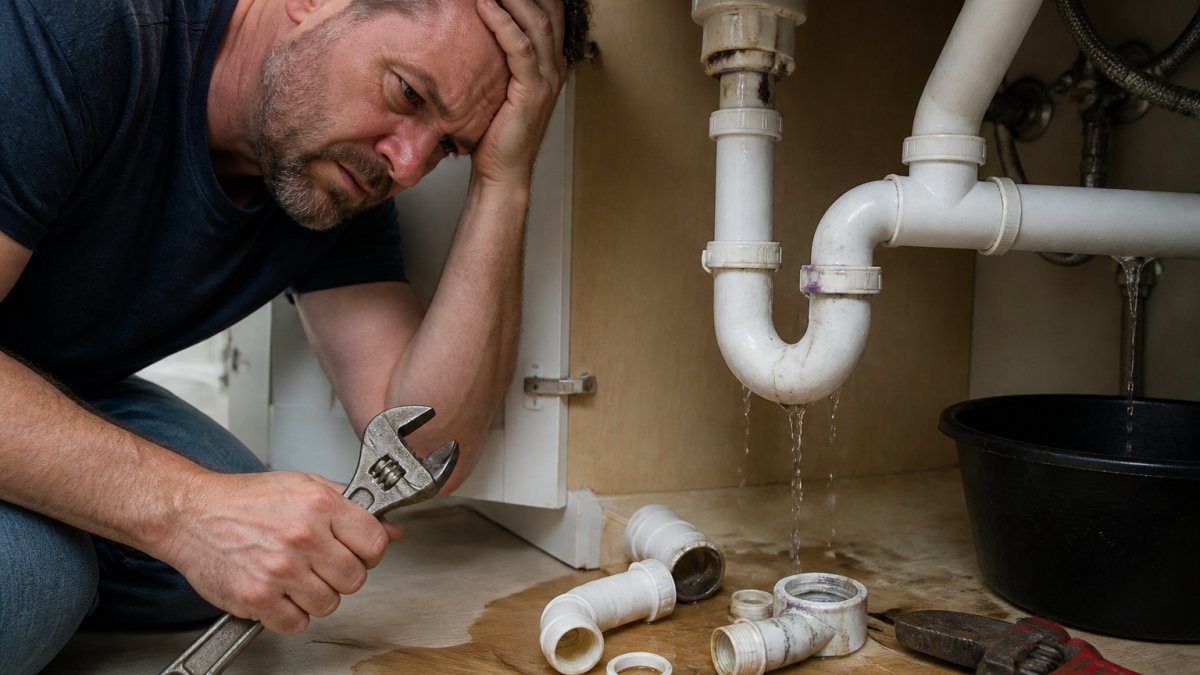
- What to Do When Your Plumbing Repair Fails Again
- Frequently Asked Questions
Last Updated: October 13, 2026
Why Plumbing Repairs Fail Repeatedly: Root Causes Behind Repeat Issues
When a plumbing repair fails repeatedly, it usually isn't bad luck. Most repeat failures trace back to two root causes: the repair addressed the symptom, not the underlying issue, or the work was done incorrectly.
Understanding why plumbing repairs fail repeatedly helps you avoid throwing money at temporary fixes. A leak that returns weeks later, pressure that drops after work is done, or mold near a "fixed" area are red flags.
Incomplete diagnosis and temporary fixes
The most common reason plumbing repairs fail repeatedly is simple: the technician fixed what they saw instead of what caused it.
A leaky faucet might point to a worn gasket. Replace it and the leak stops, for a few weeks.
This pattern repeats across all plumbing problems:
- A clogged drain clears after a cleaning, but backs up again because tree roots are still growing into the line
- A pipe leak is patched, but the entire section is corroded and will fail elsewhere soon
- A toilet tank stops running, but the fill valve is damaged and the real fix requires replacement, not adjustment
Temporary fixes feel like solutions until the same issue returns, the repair treated the symptom, not the root cause.
Poor workmanship and incorrect installation
The second major reason plumbing repairs fail repeatedly is installation error. Even with a correct diagnosis, a repair fails if it's done wrong.
Common installation mistakes include:
- Overtightening connections, which cracks fittings and creates new leaks
- Using the wrong materials (mixing copper and galvanized steel, for example, causes corrosion)
- Failing to use thread tape or sealant properly on threaded connections
Poor workmanship often goes unnoticed until weeks later, when the repair fails under normal pressure and usage, and you're paying for another repair.
Common Plumbing Repair Mistakes That Lead to Failure
Certain mistakes appear again and again. Knowing what to watch for helps you judge whether a repair was done right the first time.
Overtightening connections and damaging fittings
One of the easiest mistakes is tightening a connection too much. Tighter seems better, but overtightening cracks fittings and strips threads.
A cracked fitting looks fine at first. Water doesn't leak immediately.
The right approach is snug, not cranked down with all your strength. Most professionals stop when they feel resistance.
Using incorrect materials or cutting corners
Plumbing materials matter. Mixing incompatible materials causes corrosion, wrong pipe sizing creates pressure problems, and skipping a required fitting or support bracket weakens the system.
Common corner-cutting mistakes:
- Using PVC fittings on copper pipe without proper adapters
- Installing a patch instead of replacing a corroded section
- Skipping the shut-off valve on a fixture repair
- Not supporting long pipe runs, which causes sagging and joint stress
Each shortcut saves time and money now but increases the chance of failure, and the second repair often costs more than proper work would have initially.
Failing to address underlying pipe corrosion or damage
A leaky connection might be fixable, but if the pipe itself is corroded, the leak returns elsewhere on that line.
Corroded pipes develop pinhole leaks and weak spots. Sealing one leak doesn't stop corrosion, and within weeks another section fails.
The same applies to pipes damaged by freezing, impact, or age. A patch buys time but doesn't fix the damage.
How to Diagnose Plumbing Root Cause Issues
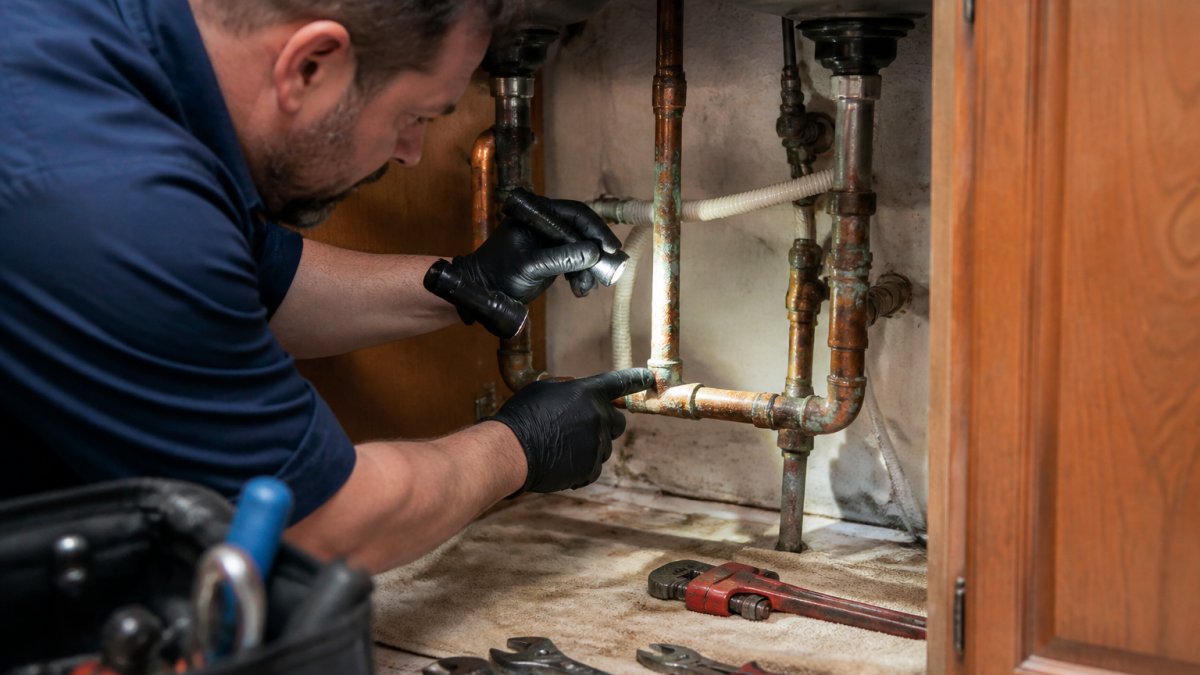
When a plumbing repair fails, diagnosis matters more than the second repair. Here's how to investigate.
Step 1: Document the failure pattern
Track when and where the problem returns. Same spot or different one? Does it happen under specific conditions, like when the washing machine runs?
A leak in the exact same spot suggests the repair wasn't done properly or the fitting was damaged during installation.
Write down:
- When the original repair was done
- When the problem returned
- Exact location of the leak or issue
- Whether it's worse at certain times of day
This helps a professional diagnose whether the repair failed or the underlying problem was never fixed.
Step 2: Inspect for systemic causes
Look around the failed repair for water damage, rust, or corrosion beyond the repair site.
Green oxidation spreading across copper pipe means corrosion is the systemic cause. Mineral buildup or rust near a water heater points to water quality or age.
Check for:
- Discolored or rusty water (suggests corroded pipes)
- Visible corrosion, mineral deposits, or green oxidation on pipes
- Water damage or mold near the repair site (suggests ongoing leaks)
- Soft spots or bulges in pipes (indicates internal corrosion)
Systemic causes require systemic fixes, repairing one connection won't solve corrosion affecting the entire pipe.
Step 3: Evaluate the previous repair
Look at how the repair was done. Is the connection tight or loose? Are the materials correct for the pipe type? Is the fitting the right size?
Signs of poor workmanship:
- Visible cracks or damage on the fitting
- Mismatched materials (copper fitting on galvanized pipe, for example)
- Pipe that isn't fully supported or sags under its own weight
- A patch or temporary fix instead of a proper replacement
If the repair looks rushed or incorrect, poor workmanship likely caused the failure. A second repair should address both the original problem and the installation error.
Signs of a Bad Plumbing Repair You Should Never Ignore
Certain warning signs appear shortly after a repair and predict failure. Don't wait for the leak to worsen.
Leaks return within weeks of repair
If water appears again within two to four weeks, the repair didn't work, the clearest sign the diagnosis was wrong or the work was done incorrectly.
A proper repair should hold for years, not weeks. Leaks that return quickly need a different approach, not another attempt at the same fix.
Water pressure drops or changes after repair
When water pressure suddenly drops after a repair, something is blocking the line:
- Debris left inside the pipe during work
- A partially closed shut-off valve that wasn't fully reopened
- A fitting installed backward or upside down
- Internal corrosion loosened by the repair work
Low pressure after repair isn't normal, the repair created a new problem. Call back the technician and describe the timing: pressure dropped right after the repair, not gradually. This tells them where to look.
Visible water damage or mold growth near the repair site
Mold appears when moisture persists. Mold near a repair site means the repair isn't holding, water is still leaking, even if you don't see it dripping.
Mold is also a health hazard. Don't ignore it, the underlying leak must be fixed and the mold addressed by a professional. This sign of failure needs immediate attention.
Aging Pipes and Corrosion: When Repair Becomes Replacement
Not every repeat problem is a repair failure. Sometimes the pipes are too old or corroded to repair reliably.
How corroded pipes lead to repeat leaks
Corroded pipes develop weak spots. Sealing one leak doesn't stop corrosion, it spreads, and new leaks develop elsewhere on the same pipe.
This is especially common with:
- Galvanized steel pipes older than 40-50 years
- Copper pipes in areas with acidic water
- Cast iron drain lines that have deteriorated internally
A pipe with widespread corrosion can't be reliably repaired. Each repair is temporary, and the pipe keeps failing in different locations.
Repair versus replacement decision criteria
Ask yourself these questions:
- How old are the pipes? (If older than 40 years, replacement may be more cost-effective)
- Is this the second or third repair on the same pipe? (Repeated repairs suggest replacement is needed)
- Is corrosion visible on the outside of the pipe? (Visible corrosion means internal damage is likely extensive)
- How much of the pipe needs work? (If more than 30% of a line is corroded, replace the entire section)
Replacing a corroded section costs more upfront than one more repair, but it eliminates repeat failures and saves money over time. A professional can evaluate the condition and recommend repair or replacement.
How to Prevent Plumbing Problems Before They Repeat
The best fix is prevention. Regular maintenance catches small problems before they become repeat failures.
Maintenance checklist and monitoring schedule
Check these items quarterly:
- Look under sinks for soft spots, water stains, or corrosion
- Feel pipes for rough spots or corrosion
- Check water pressure (should be steady, not fluctuating)
- Listen for sounds: hissing, banging, or constant dripping
Annual tasks:
- Have a professional inspect the main water line
- Test water pressure with a gauge (should be 40-80 PSI)
- Flush the water heater to remove sediment
- Have drain lines professionally cleaned if you've had blockages
Tracking these items catches problems early, small issues are cheaper and easier to fix than repeat failures.
When to call a professional for inspection
Call a professional if you notice:
- Water discoloration or rust in the water
- Recurring leaks on the same fixture or pipe
- Low or fluctuating water pressure
- Mold or water damage near pipes
A professional inspection costs less than a failed repair. It identifies problems before they become emergencies and tells you whether repair or replacement is right.
What to Do When Your Plumbing Repair Fails Again
If a repair fails, don't assume you must pay for the same work again. Take these steps.
Contact the technician who did the original repair. Most professionals guarantee their work for 30 days to one year.
Describe the failure clearly:
- When it started
- Where the leak or problem appears
- Whether it's in the same spot as before or a different location
- What you've noticed about water pressure, color, or sounds
If the original technician can't be reached or won't stand behind the work, get a second opinion.
Repeat plumbing repairs are frustrating and expensive.
At UMark Plumbing and Drain Inc., our certified team diagnoses the root cause, not just the symptom. When you need a repair you can trust, get a free quote and let us show you the difference proper diagnosis and quality workmanship make.
Frequently Asked Questions
Why does the same plumbing problem keep coming back?
Repeat plumbing failures usually stem from an incomplete diagnosis where the technician fixed the symptom rather than the root cause. Common culprits include corroded pipes that leak elsewhere, faulty valves that weren't replaced, or poor installation that didn't account for water pressure changes. If your repair lasted only weeks, the underlying issue, such as aging pipes or a pressure regulator malfunction, likely remained untreated. A thorough inspection by a certified plumber can identify whether the problem is truly fixed or if systemic damage requires replacement.
Can a plumbing repair fail because the root cause was missed?
Absolutely. Many plumbing repair mistakes occur when a technician addresses only the visible leak or clog without investigating what caused it. For example, a leaky faucet might indicate a worn gasket, but it could also signal high water pressure that will damage the new fixture too. Similarly, a clogged drain might be a temporary blockage or a sign of corroded pipes shedding debris. Without root cause diagnosis, the repair is temporary. Professional plumbers inspect the entire system to find the real problem, not just the obvious symptom.
How can you tell if a plumbing repair was done properly?
Signs of a good plumbing repair include: no leaks within the first month, consistent water pressure, no new water damage or mold growth, and connections that are snug but not overtightened. Poor repairs often show immediate warning signs such as dripping within days, changes in water pressure, or visible corrosion around fittings. Ask your plumber to explain what they found, what they replaced, and why. A certified technician will provide documentation and confidence that the repair addresses the root cause, not just the symptom.
How can you prevent plumbing repairs from failing again?
Prevention starts with regular maintenance: monitor water pressure, inspect visible pipes for corrosion, and address small leaks before they worsen. Keep a record of all repairs to identify patterns, if the same issue recurs, the root cause was likely missed. Have a certified plumber inspect your system annually, especially if your home has aging pipes. When a repair is made, ask for a detailed explanation of what was fixed and why. This helps you understand whether the repair is truly complete or if systemic issues (like corroded pipes or faulty valves) need future attention.