 how-to
What to Do During Basement Flooding: Step-by-Step
Table of Contents
- Immediate Safety Precautions During Basement Flooding
- Shut Off Electricity and Utilities
- Identify the Source of Flooding
- Water Removal and Extraction Methods
- Basement Flood Cleanup Steps and Sanitization
- Drying Out and Preventing Mold Growth
- How to Prevent Basement Flooding and Recognize Sump Pump Failure Signs
- Filing Insurance Claims for Basement Flooding
Last Updated: August 28, 2026
Immediate Safety Precautions During Basement Flooding
Basement flooding is a genuine emergency. Your first priority is protecting yourself and your family from serious hazards: electrical shock, contamination, structural collapse, and toxic gas exposure.
Evacuate the basement immediately if water is rising rapidly or you're unsure of its source. Standing water can conceal debris, sharp objects, or structural damage. Never wade through floodwater without protection, it may contain sewage, chemicals, or other contaminants.
If you must return, wear personal protective equipment: rubber gloves, steel-toed boots, and a respirator mask rated for mold spores. If you have respiratory issues or are elderly, avoid the flooded area entirely until professionals assess it.
Document everything with photos and video for your insurance claim, but only after ensuring the area is safe. Take pictures from a safe distance.
Shut Off Electricity and Utilities
Locate your main electrical panel and shut off power to the basement, or the entire house if water is rising near the panel. Electricity and water are a lethal combination.
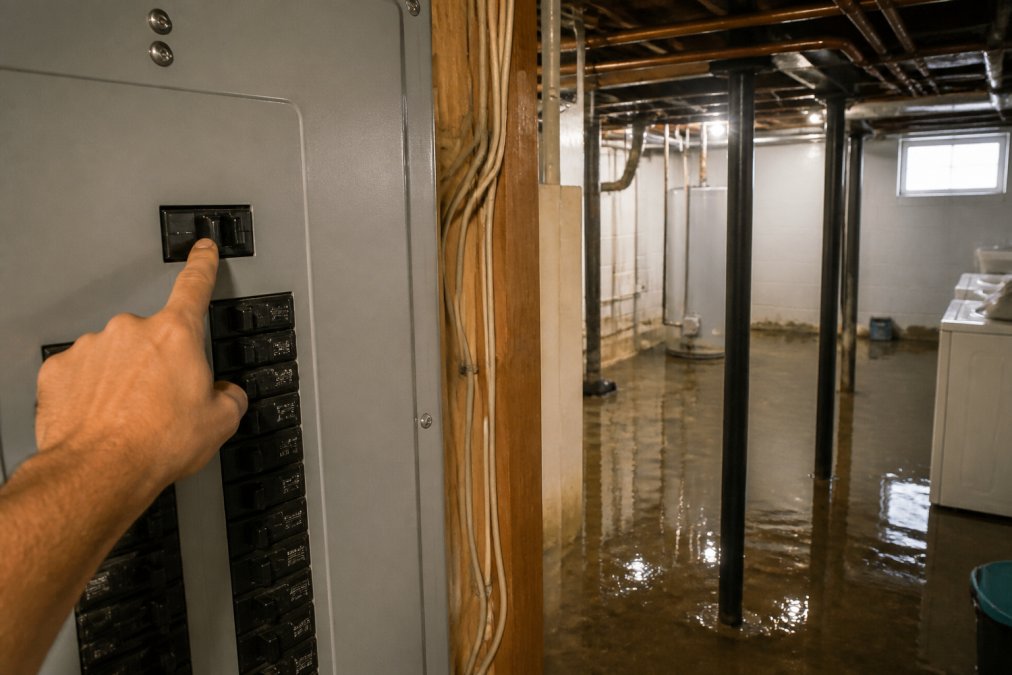
If your electrical panel is in the flooded basement, do not attempt to reach it. Call your local utility company or a certified electrician. If you can safely access the panel from an unaffected area, flip the main breaker to the "off" position.
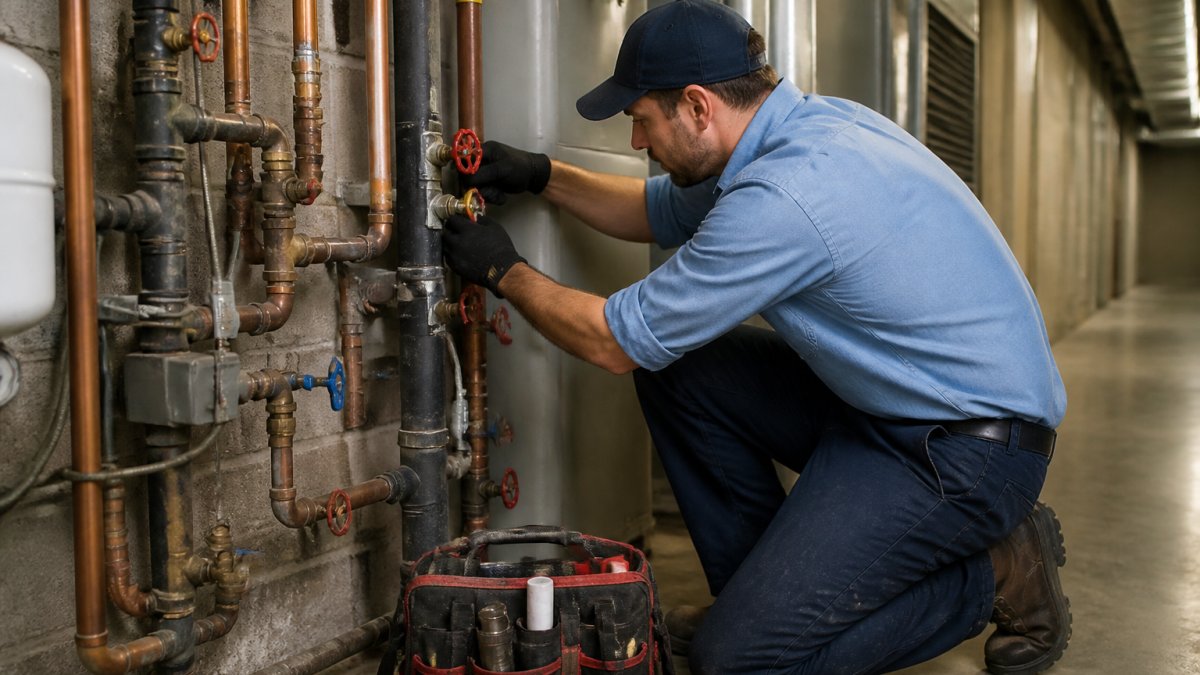
Next, shut off your water supply at the main valve. The main water shutoff is typically located near the water meter or where the supply line enters your house. Turn the valve clockwise until it stops. If you can't locate it or the valve is stuck, contact a licensed plumber. UMark Plumbing and Drain Inc. offers 24/7 emergency services.
If flooding is caused by a burst pipe or severe leak, shutting off the water supply is critical. Document the location of your water shutoff valve now, before an emergency happens.
Finally, shut off your natural gas supply if you smell gas or suspect a leak. The gas shutoff valve is typically located near your meter. Turn it perpendicular to the pipe (a quarter-turn) to close it. Do not turn it back on yourself; call your gas utility or a certified technician.
Identify the Source of Flooding
Understanding where the water is coming from determines your next steps and supports your insurance claim.
Surface water or heavy rainfall is the most common cause. During intense storms, water overwhelms drainage systems and seeps through foundation cracks, basement windows, or around the foundation perimeter.
Sump pump failure leaves your basement defenseless against groundwater accumulation. Check whether the pump is running. Listen for the pump's normal humming sound. If it's silent, the pump may have failed.
Sewage backup occurs when municipal sewer lines become overwhelmed or blocked. If water is backing up through floor drains, toilets, or lowest-level fixtures, sewage backup is the likely source. This water is highly contaminated and poses serious health hazards. Avoid contact and call a professional immediately.
Groundwater and hydrostatic pressure develop when the water table rises above your basement floor level. If water is seeping through walls or the floor rather than pouring in, groundwater is the source.
Burst pipes or plumbing leaks create localized flooding. Check visible pipes for cracks, holes, or actively spraying water. UMark Plumbing and Drain Inc. responds to burst pipe emergencies 24/7.
Leaking foundation walls or cracks allow water to penetrate during heavy rain or when groundwater pressure increases. Inspect visible foundation walls for active water seepage, cracks, or efflorescence (white mineral deposits indicating past water intrusion).
Look for these clues: Does water appear only during rain, or does it seep in continuously? Is it coming through the floor, walls, or fixtures? Is there a musty smell suggesting prolonged moisture? These details help professionals diagnose the problem.
Water Removal and Extraction Methods
Once immediate hazards are controlled, removing standing water becomes your priority. The faster you extract water, the less damage occurs. Water removal also prevents mold growth, which can begin within 24 to 48 hours (CDC information on mold and health).
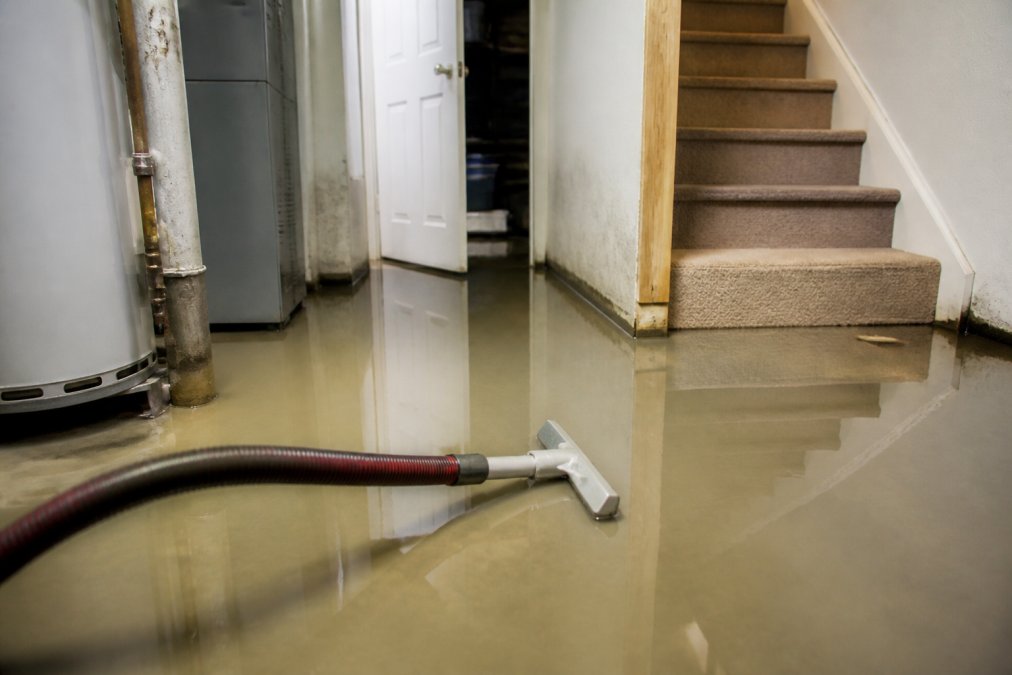
Submersible pumps are the fastest way to remove large volumes of water. These pumps sit directly in standing water and discharge it outside. Submersible pumps typically move thousands of litres per hour. Place the intake in the deepest water and run the discharge hose away from your foundation.
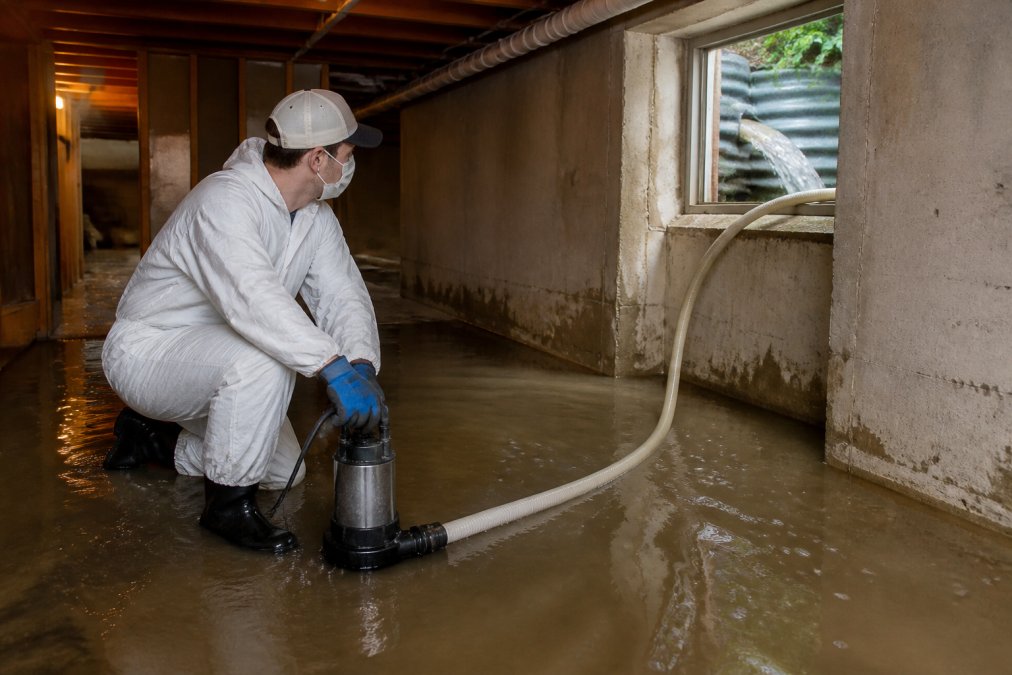
Wet-dry vacuums handle smaller volumes of water and are useful for the final stages of water removal. These vacuums extract water from floors, carpets, and tight spaces that pumps can't reach. Empty the tank frequently.
Air movers and dehumidifiers work together after standing water is removed. Air movers circulate air across wet surfaces, accelerating evaporation. Dehumidifiers pull moisture from the air, reducing relative humidity and preventing mold growth.
Professional water extraction services are worth considering for serious flooding. Restoration companies use industrial-grade equipment that removes water faster and more thoroughly than consumer-grade tools. If your basement is completely submerged or you're dealing with contaminated water, professional extraction is the safest choice.
Remove standing water within the first 24 hours. After that window, mold spores begin active colonization and structural materials start deteriorating.
Basement Flood Cleanup Steps and Sanitization
After water removal, thorough cleanup and sanitization prevent mold growth, eliminate odors, and restore safe conditions.
Remove saturated materials. Drywall, insulation, and flooring that have been submerged typically cannot be salvaged. Wet drywall loses structural integrity and becomes a perfect environment for mold. Remove these materials to the studs or subfloor.
Scrub and sanitize all surfaces. Use a solution of bleach and water (one part bleach to ten parts water) to disinfect hard surfaces, concrete floors, foundation walls, and surviving structural elements. Wear gloves, eye protection, and a respirator during this work.
Clean and disinfect belongings. Wipe down furniture, boxes, and personal items with disinfectant. Launder textiles in hot water. Dispose of items that cannot be cleaned; porous materials like books, upholstered furniture, and mattresses often harbor mold.
Address contaminated water. If sewage backup occurred, do not attempt to clean this yourself. Call a professional water damage restoration company.
Dispose of materials responsibly. Contact your local waste management authority to learn about bulk pickup or special disposal locations for flood debris.
The cleanup phase typically takes one to two weeks, depending on flooding severity.
Drying Out and Preventing Mold Growth
Mold prevention is the critical phase that many homeowners underestimate. Even after visible water is gone, moisture trapped in walls, floors, and materials creates ideal conditions for mold colonization.
Measure moisture content in structural materials using a moisture meter. Target readings should be below 20% for wood and below 12% for drywall. Continue running dehumidifiers and air movers until moisture levels stabilize. This process can take two to four weeks.
Ventilate continuously. Open windows and doors (weather permitting) to allow air circulation. Run exhaust fans. Position air movers to direct air across all wet surfaces.
Monitor relative humidity levels. Use a hygrometer to track basement humidity. Aim for relative humidity below 50%. If humidity remains above 60% after a week of drying, increase dehumidifier capacity.
Check for hidden moisture. Inspect wall cavities, under flooring, and inside structural cavities for trapped moisture. Mold grows in hidden spaces where you can't see it until it becomes a serious problem.
Apply mold-inhibiting treatments to surfaces that were underwater. Commercial mold inhibitors can be sprayed on exposed wood and concrete to slow mold growth while drying continues.
Seal foundation cracks once the basement is dry. Concrete crack sealant or epoxy injections can prevent water from entering through these openings.
Consider installing a permanent dehumidifier. Many basements naturally accumulate moisture. A permanent dehumidifier connected to a floor drain prevents moisture buildup year-round.
How to Prevent Basement Flooding and Recognize Sump Pump Failure Signs
Prevention is far more cost-effective than recovery.
Grade your yard away from the foundation. Soil should slope downward as it moves away from your home. This directs surface water away from your foundation.
Install or maintain gutters and downspouts. Gutters direct roof runoff away from the foundation. Downspouts should discharge water at least 1.5 to 2 meters away from the house. Clean gutters twice yearly.
Maintain your sump pump. Test your sump pump monthly by pouring water into the sump pit. The pump should activate automatically and discharge water outside. If the pump doesn't activate or sounds unusual, it needs service.
Recognize sump pump failure signs. A failing sump pump may make grinding, squealing, or rattling sounds. It might run continuously without shutting off. If water is pooling around the sump pit or the pump isn't turning on during wet weather, failure is imminent.
Install a backup sump pump. A secondary battery-powered backup pump activates if the primary pump fails, providing essential protection during emergencies.
Inspect your foundation regularly. Look for new cracks, efflorescence, or signs of water seeping through walls. Small cracks can be sealed before they become major problems.
Install a backwater valve if sewage backup is a risk in your area. This valve allows sewage to flow out of your home but prevents it from flowing back in when municipal sewer lines are overwhelmed.
Ensure proper drainage around the foundation. Weeping tile (perforated drainage pipe) around your foundation's exterior should direct groundwater away from the basement. Professionals can assess whether your drainage system is functioning properly.
Filing an Insurance Claim for Basement Flooding
Filing an insurance claim requires documentation and quick action. Your insurance company will need proof of damage, evidence of the flooding cause, and itemized lists of damaged property.
Document everything with photos and video. Photograph water levels on walls, damaged items, and structural damage. Timestamp these images if possible; they prove the damage occurred when you claim it did.
Gather receipts and proof of ownership. For damaged items, collect original purchase receipts, credit card statements, or photos showing you owned the items before flooding.
List all damaged property in detail. Create an itemized inventory of everything damaged or destroyed. Include descriptions, approximate ages, and estimated replacement costs.
Report the claim promptly. Most insurance policies require claims to be reported within a specific timeframe (often 30 days). Contact your insurer immediately after the emergency.
Preserve damaged items. Don't throw away damaged property immediately. Insurance adjusters may want to inspect items to verify the damage.
Obtain repair estimates. Get quotes from restoration companies and contractors. These estimates support your claim and demonstrate the actual cost of recovery.
Review your policy carefully. Understand what your homeowner's insurance covers. Standard policies often exclude certain types of flooding. If your flooding isn't covered, you may need separate flood insurance.
Consider hiring a public adjuster. For major claims, a public adjuster represents your interests with the insurance company. They often recover more than you would alone.
Keep detailed records of all communication. Document every conversation with your insurance company, dates, names of representatives, and what was discussed.
Working with UMark Plumbing and Drain Inc., you'll have a professional partner who understands the urgency of basement flooding emergencies. Our certified team responds 24/7 to burst pipes, sump pump failures, and water intrusion issues that cause flooding. We help identify the source of flooding, recommend immediate solutions, and connect you with restoration professionals when needed.
Frequently Asked Questions
Q: What should I do immediately if my basement is flooded?
A: First, ensure your safety: never enter standing water if electricity is on. Turn off the main breaker if water is near electrical panels. Identify whether the flood is from a burst pipe, sump pump failure, or sewage backup. If sewage is involved or water is contaminated, leave the area and call a professional. For clean water from heavy rain or pipe bursts, begin water extraction using a wet-dry vacuum or submersible pump, and open windows for ventilation. Document the damage with photos for your insurance claim.
Q: Is it safe to enter a flooded basement?
A: Only if water is shallow, electricity is off, and the water is clean (from rain or pipe leaks). Never enter if sewage backup is suspected, electrical hazards exist, or contaminated water is present. Wear personal protective equipment including rubber gloves and boots. If water is murky, discolored, or has an odor, treat it as contaminated and call professionals. Hydrostatic pressure from groundwater can also damage your foundation, so assess structural integrity before entering.
Q: How long does it take for a flooded basement to dry out?
A: Drying time depends on water volume, humidity, and ventilation. Small floods may dry in 24-48 hours with dehumidifiers and air movers running continuously. Larger floods or basements with poor drainage can take 5-7 days or longer. Monitor moisture content with a moisture meter; target relative humidity below 50% to prevent mold. If drying takes longer than a week or moisture remains high, mold remediation may be needed. Professional restoration equipment speeds drying significantly.
Q: What documents do I need for an insurance claim after basement flooding?
A: Gather photos and videos of all water damage, damaged items, and the flood source. Keep receipts for any emergency repairs, water extraction services, or replacement items. Document the date, time, and cause of flooding. List all affected areas, structural damage, and personal property losses. If the flood resulted from a burst pipe or sump pump failure, get a professional assessment of what caused it. Contact your insurer within 24-48 hours to report the claim and ask about coverage limits for water damage restoration and contaminated water removal.
This article was written using GrandRanker