 How-to
How to Troubleshoot Common Water Heater Issues at Home
Last Updated: November 5, 2026
Quick Summary
To troubleshoot common water heater issues, shut off the power or gas first, then match the symptom to its cause: no hot water means checking the pilot light on gas units or the breaker and reset button on electric ones, while leaks, noise, and temperature problems each have their own checks. Stop and call a certified plumber for a gas smell, a leaking tank, repeated breaker trips, or scalding water.
- Shut off the breaker or gas valve before any check, and never ignore even a faint gas smell.
- Popping and rumbling usually mean sediment buildup, which flushing the tank can remove.
- A failed lower heating element often gives some hot water that then goes cold quickly.
- Rusty water from the hot tap only points to a corroded tank or worn anode rod.
- If the tank shell itself leaks, no repair fixes it and replacement is the only option.
Table of Contents
- Start With Safety Before You Troubleshoot Your Water Heater
- Water Heater Not Producing Hot Water: Gas vs Electric Checks
- Water Heater Leaking From Bottom: What to Inspect First
- Water Heater Making Noise: Popping, Rumbling and Sediment
- Temperature Problems: Water Too Hot or Running Out Fast
- Rusty, Discoloured or Foul-Smelling Hot Water
- Your Water Heater Troubleshooting Checklist
- When to Stop Troubleshooting and Call a Certified Plumber
- Frequently Asked Questions
Start With Safety Before You Troubleshoot Your Water Heater
Before you touch anything, know this: a water heater can hurt you. Gas leaks cause explosions. A failing tank can scald you with scalding water. A loose electrical connection can shock you. So how to troubleshoot common water heater issues safely starts with a few simple checks.
Shut off the power or gas first. For electric units, flip the breaker. For gas units, turn the gas valve to "off" and let the area air out.
A small gas smell is the one call you should never delay.
Stop and call a pro right away if you notice:
- A gas smell, even faint
- Water pooling near the tank base
- Sparks, buzzing, or a burning smell
- Water that is scalding hot
For everything else, keep reading. Below, we walk through each symptom one at a time so you can decide what to check and when to stop.
Water Heater Not Producing Hot Water: Gas vs Electric Checks
No hot water is the most common complaint, and the cause depends on your heater type. Gas and electric units fail for very different reasons, so start by checking which one you have.
Gas Water Heater Checks: Pilot Light and Gas Supply
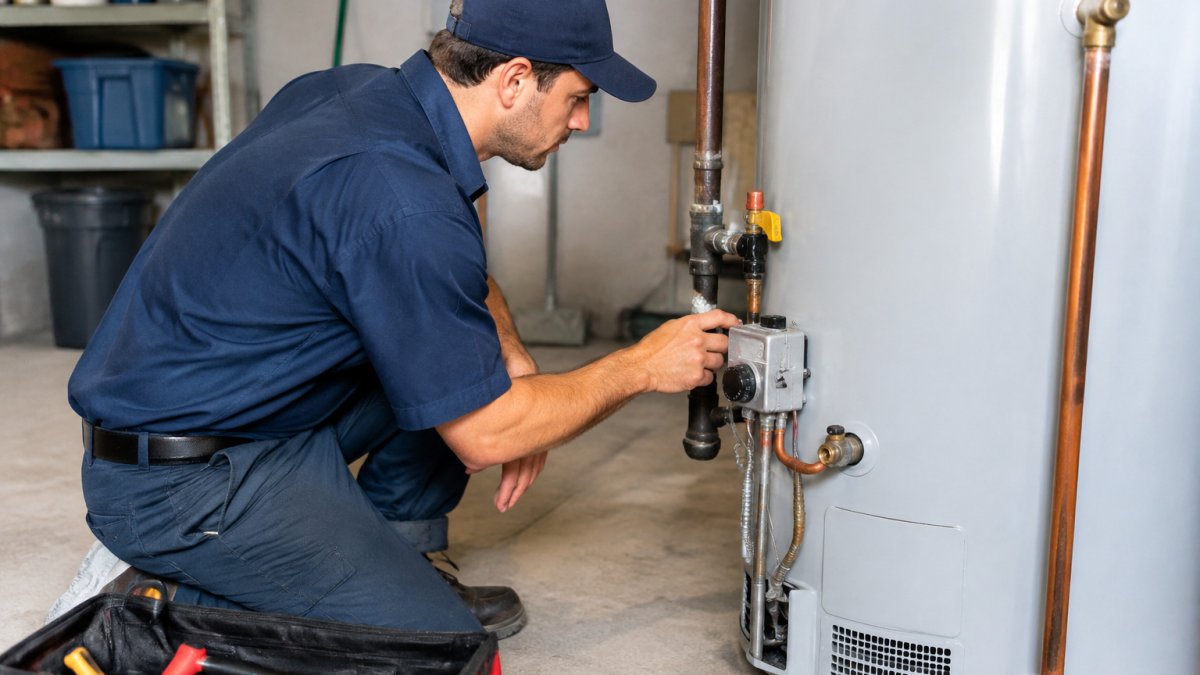
A gas water heater with no hot water usually has a pilot light or gas supply problem. Check the pilot light first. If it's out, follow the relight steps on the label.
Then check the gas supply. Is the gas valve open? Is another gas appliance, like your stove, working? If the stove works, gas is reaching the house.
Watch out: if you smell gas while relighting, stop and leave the area. Call your gas provider or a certified plumber.
Electric Water Heater Checks: Power Supply and Reset
An electric water heater with no hot water often has a tripped breaker or a bad heating element. Check the circuit breaker first. A tripped breaker means too much current draw, or a faulty component.
Reset it once. If it trips again, stop. That points to an electrical fault you should not fix yourself.
Next, check the reset button on the unit. If it keeps tripping, a heating element may have failed. Testing elements requires a multimeter and some electrical know-how.
Water Heater Leaking From Bottom: What to Inspect First
A water heater leaking from bottom is often a sign of trouble, but not all leaks mean the same thing.
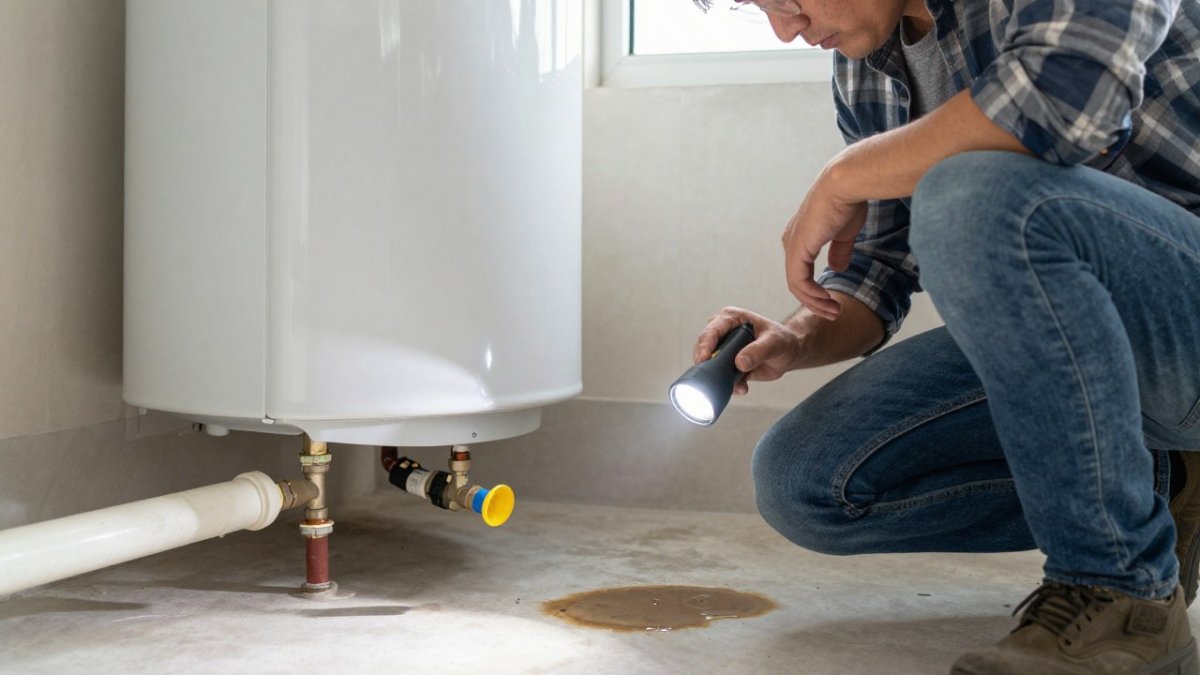
Step 2: Check the pressure-relief valve and its discharge pipe. The relief valve is the brass fitting near the top with a pipe running down the side of the tank.
Step 3: Check the inlet and outlet connections at the top. Loose unions and failing dielectric nipples are common on older tanks.
Step 4: Check the drain valve at the bottom. A dripping drain valve is usually a worn washer or a valve left partly open after a flush. Close it firmly and see if the drip stops.
Step 5: Look at the tank shell itself. If water seeps from the tank body, the inner steel has corroded through. No repair fixes a cracked or rusted-through tank, and replacement is the only option.
Step 6: Rule out condensation and plumbing above. On a cold basement floor, a tank can sweat, and a leak from a nearby pipe or fitting can run down to the base.
Watch out: if the leak is fast, the water is pooling near electrical components, or you cannot shut off the inlet valve, treat it as an emergency and call a licensed plumber rather than continuing to troubleshoot.
Not sure if it's really the heater? Our guide on how to tell if your water heater is leaking walks you through confirming the source.
Water Heater Making Noise: Popping, Rumbling and Sediment
Popping and rumbling sounds usually mean sediment buildup inside the tank. Over time, mineral deposits and limescale settle at the bottom. Trapped water boils under the sediment, and that makes the popping noise.
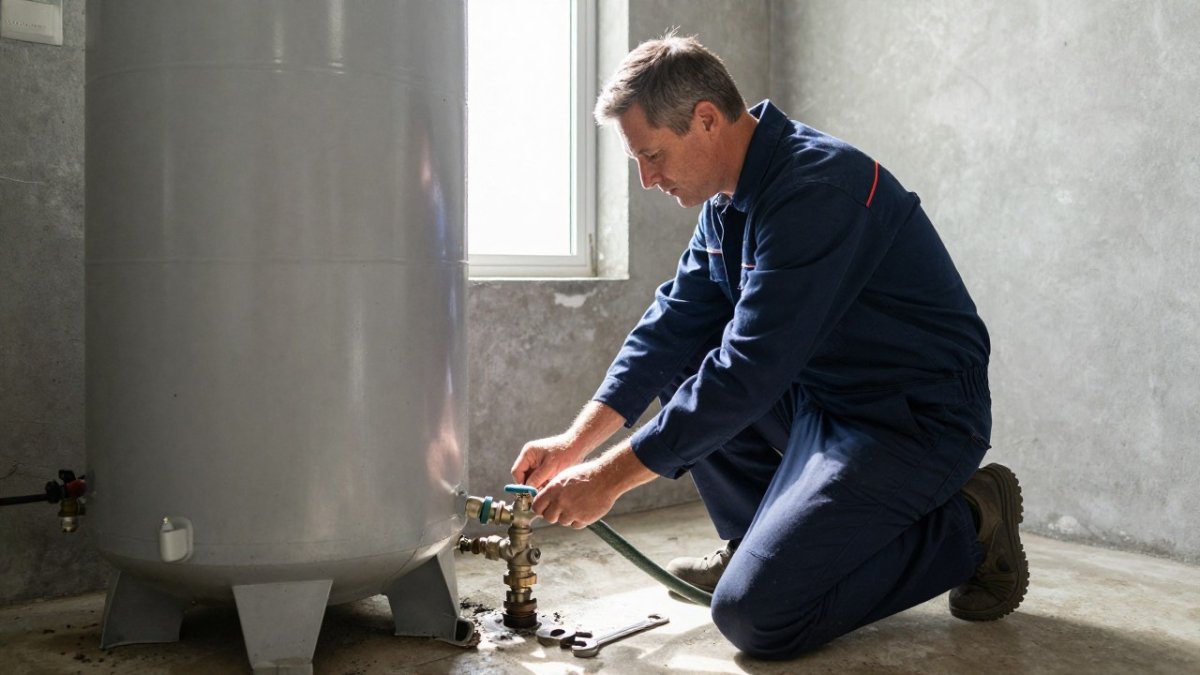
Flushing the tank removes the sediment. Turn off the power or gas, connect a hose to the drain valve, and let the tank empty. Then refill and repeat if needed.
Strange noises can also come from a faulty heating element or high water pressure. If flushing doesn't fix it, have a pro check the element and pressure.
For a closer look at why popping happens and what to do, read our guide on why your water heater makes a popping sound.
Temperature Problems: Water Too Hot or Running Out Fast
Water that is too hot or runs out fast points to a thermostat or heating element problem, but the two symptoms have different causes and different safe checks. Work through them separately.
Water That Is Too Hot
A thermostat set too high causes scalding water. Water at high temperatures at the tap can scald. Check the temperature setting on the thermostat dial or control panel first. Many units are set higher than needed, so turn it down and wait a few hours for the tank to stabilize.
If the temperature stays high after you lower the setting, the thermostat may be stuck closed or the control may have failed. On a gas unit, a stuck gas control valve can overheat the tank, which is a safety issue. On an electric unit, a failed thermostat can keep the upper element energized.
Watch out: if the water is scalding hot and the setting is already low, stop using the hot water and call a licensed plumber. A stuck thermostat or gas valve is not a homeowner fix.
Water That Runs Out Fast
If hot water runs out fast, the tank may be too small for the household, or a heating element has failed. Sediment buildup also reduces how much hot water the tank holds, because the burner or element has to heat through the mineral layer.
On an electric tank, the upper element heats the top of the tank and the lower element handles the rest. A failed lower element often shows as a tank that gives some hot water and then goes cold quickly. Testing an element needs a multimeter and the power off at the breaker; if you are not comfortable with that, call a certified plumber.
On a gas tank, a weak flame or a dirty burner can slow recovery, so the tank never keeps up with demand.
A faulty thermostat is a common culprit. Testing it needs a multimeter. If you are not comfortable with that, call a certified plumber.
Rusty, Discoloured or Foul-Smelling Hot Water
Rusty or discoloured hot water can come from a corroded tank or a failing anode rod. The anode rod protects the tank from rust. When it wears out, the tank starts to corrode.
Foul-smelling hot water is often a sign of bacteria in the tank. This is more common when the heater sits unused for long periods.
If the rusty water only comes from the hot tap, the heater is the likely cause. If it comes from both taps, the problem may be in your pipes.
A plumber can check the anode rod and flush the tank. If the tank is already rusted through, replacement is the only option.
Your Water Heater Troubleshooting Checklist
Use this checklist to work through symptoms in order. It keeps you safe and helps you describe the problem clearly when you call for help.
| Symptom | First Check | Next Step | When to Call a Pro |
|---|---|---|---|
| No hot water (gas) | Pilot light and gas valve | Relight or check gas supply | Pilot won't stay lit |
| No hot water (electric) | Circuit breaker | Reset once, check reset button | Breaker trips again |
| Leaking from bottom | Pressure-relief valve and fittings | Tighten loose connections | Tank itself is leaking |
| Popping or rumbling | Sediment buildup | Flush the tank | Noise continues after flush |
| Water too hot | Thermostat setting | Lower the setting | Temperature stays high |
| Water runs out fast | Tank size and element | Check for failed element | Element or thermostat faulty |
| Rusty or smelly water | Anode rod and tank | Flush the tank | Tank is corroded |
Quick safety reminders:
- Shut off power or gas before any check
- Never ignore a gas smell
- Do not test electrical parts without training
- Write down what you find before calling
When to Stop Troubleshooting and Call a Certified Plumber
Some problems are safe to check yourself. Others need a certified plumber, and knowing the difference saves you money and risk.
Call a pro if you see a tank leak, smell gas, or keep tripping the breaker. These are signs of a faulty component or a safety hazard.
If your unit is old and keeps breaking down, replacement may cost less than repeated repairs. Our guide on the 10 signs your water heater needs replacement helps you decide.
Worried about cost? Our water heater repair cost estimate breaks down what to expect before you book.
For homeowners in North York and Vaughan, UMark Plumbing and Drain Inc. offers 24/7 emergency service with a certified team and over 20 years of experience. If you need a plumber in North York, we're ready to help.
Frequently Asked Questions
Why is my water heater not producing hot water?
The cause depends on the type of unit. On a gas water heater, a pilot light that has gone out, a faulty thermocouple or an interrupted gas supply are the usual culprits. On an electric water heater, a tripped circuit breaker, a failed heating element or a faulty thermostat are more likely. Check the power supply or gas supply first, then the thermostat setting, before assuming the unit has failed. If the tank is cold and none of these checks restore hot water, a plumber can test the components with a multimeter.
What should I check if my water heater is leaking from the bottom?
First, shut off the cold water supply and the power or gas to the unit. A leak from a valve, the pressure-relief valve pipe or a loose water connection is often repairable. A leak from the tank itself usually means the tank has corroded through, and that calls for replacement rather than repair. Wipe the area dry and watch where water reappears to narrow down the source. Any active leak near electrical parts should be treated as an emergency.
Why is my water heater making popping or rumbling noises?
Popping and rumbling usually point to sediment buildup on the bottom of the tank. As the burner or element heats the water, trapped water under the sediment layer boils and pops. In areas with hard water, limescale can also coat the heating element and cause kettling sounds. Flushing the tank removes loose sediment, and a plumber can assess whether the element or tank needs attention. Ignoring the noise lets sediment thicken and shortens the tank's life.
How do I reset an electric water heater safely?
Turn off the power at the circuit breaker first, then remove the access panel and locate the red reset button on the high-limit switch. Press it once, replace the insulation and panel, and restore power. If the reset trips again shortly after, a faulty thermostat or heating element is likely and the unit should be checked by a certified plumber. Never reset the switch repeatedly without finding the underlying electrical fault.
A water heater problem can go from a small annoyance to a flooded basement fast. If you've checked the basics and the issue is still there, don't wait it out. UMark Plumbing and Drain Inc. offers 24/7 emergency service, a certified team, and over 20 years of experience serving North York and Vaughan. We give clear estimates before work starts, so there are no surprises. Get started with UMark Plumbing and Drain Inc. and get your hot water back today.