 How-to
Signs of Foundation Water Damage Homeowners Should Not Ignore
Last Updated: November 24, 2026
Quick Summary
Signs of foundation water damage include puddles or wet soil near the foundation, damp or clammy basement walls, white powdery efflorescence, water stains, peeling paint, and musty odours that persist. Catching these early can keep a small leak from becoming costly structural repair.
- Check for standing water within a few feet of the foundation that lasts more than a day after rain.
- Vertical cracks with dampness or staining below them mean water is finding a path.
- Horizontal cracks deserve more concern because they can indicate soil or water pressure.
- Tape plastic to a basement wall for two days; beaded moisture on it means vapour is moving through.
- Call a professional for active water through walls, bowing walls, or water backing up through drains.
Table of Contents
- What Are the Signs of Foundation Water Damage?
- Visible Water and Dampness Around the Foundation
- Signs of Basement Water Damage Inside Your Home
- Foundation Cracks and Water Leaks: Telling Water Damage From Normal Settling
- Foundation Inspection Checklist for Homeowners
- How to Prevent Foundation Water Damage in North York Homes
- When to Call a Professional About Water Near Your Foundation
- Frequently Asked Questions
What Are the Signs of Foundation Water Damage?
Foundation water damage shows up as dampness, standing water, cracks, white mineral deposits, and musty smells in your basement or along the outside of your foundation walls.
Water finds weak points. It enters through cracks, joints, and gaps where the wall meets the floor. Over time, that moisture weakens concrete, feeds mould growth, and can damage belongings stored downstairs.
Many homeowners ignore early warnings because they look minor. A faint stain or a slightly damp corner often seems harmless. In practice, these small signs usually point to a bigger problem behind the wall.
Here is what to watch for:
- Puddles or wet soil next to the foundation
- Damp patches or a cool, clammy feel on basement walls
- White, powdery mineral deposits called efflorescence
- Water stains and peeling paint or wallpaper
- Musty odours that do not go away
- Cracks that widen or let in water
Acting early usually costs less than waiting.
Visible Water and Dampness Around the Foundation
Start your check outside. Walk the perimeter of your home after heavy rain or snowmelt.
Standing water is a clear warning sign. If water sits within a few feet of your foundation for more than a day after rain, drainage is not carrying it away.
Check these areas:
- Grading: Soil should slope away from the house. If it slopes toward the wall, water collects there.
- Downspouts: Extensions should carry rain at least a few feet from the foundation.
- Window wells: Look for debris, pooled water, or cracked covers.
- Soil colour: Dark, saturated soil near the wall suggests moisture is building up.
A common mistake is to fix the inside damp spot without addressing the outside source. If the water keeps coming from the soil, the inside problem will return.
Signs of Basement Water Damage Inside Your Home
Inside, moisture leaves clues on walls, floors, and stored items. Walk the basement slowly and look closely at the corners and the bottom few feet of each wall.
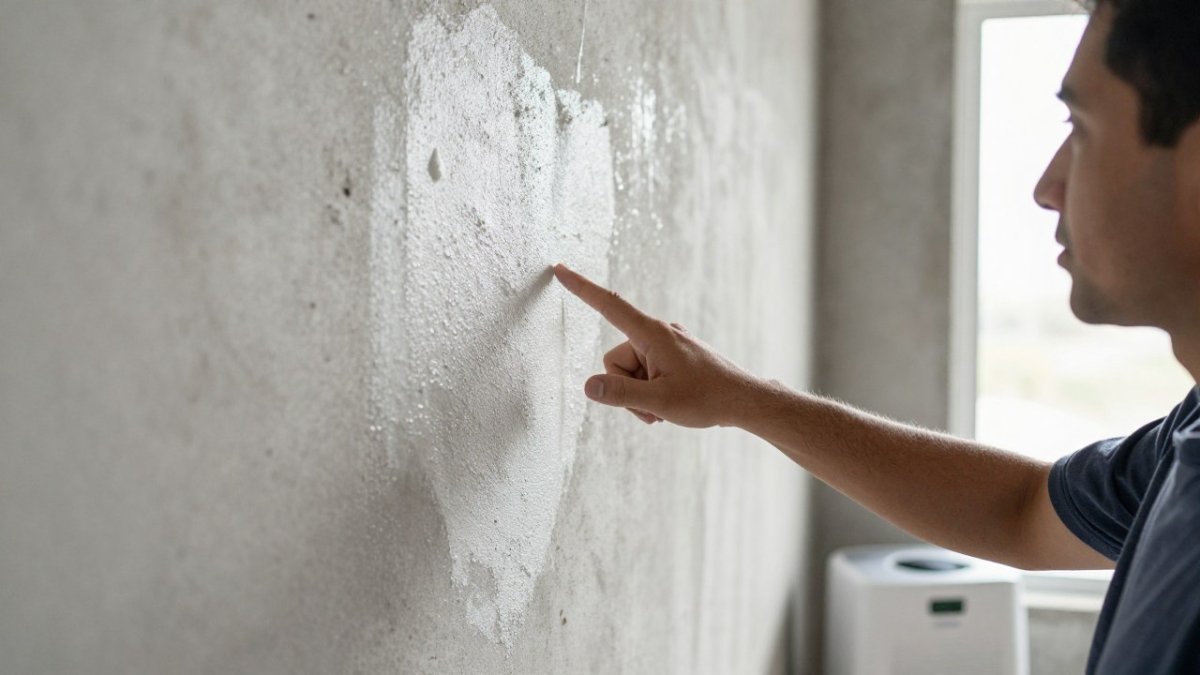
Common indoor signs include:
- Efflorescence: A pale, chalky white residue on concrete or block walls. It forms when water moves through the wall and leaves minerals behind.
- Bubbling or peeling paint: Paint that lifts or blisters often means moisture is pushing through from behind.
- Water stains: Brown or yellow marks, especially along the floor line or at cracks.
- Musty smells: A damp, earthy odour usually signals hidden moisture or early mould.
- Visible mould or mildew: Dark spots on walls, boxes, or carpet.
- Warped flooring or stored items: Cardboard that softens or wood that cups can show moisture is present.
Here is a quick way to spot a hidden problem. Tape a piece of plastic to a basement wall for two days.
Some leaks do not show on the surface at all. If you notice dampness or odd smells but cannot find the source, you may have a hidden water leak.
Foundation Cracks and Water Leaks: Telling Water Damage From Normal Settling
Not every crack means your foundation is failing, and not every dry crack is harmless.
Why cracks form
- Shrinkage: As concrete cures it loses volume, producing narrow vertical cracks, often near the middle of a wall. These usually appear early in a home's life and stabilize.
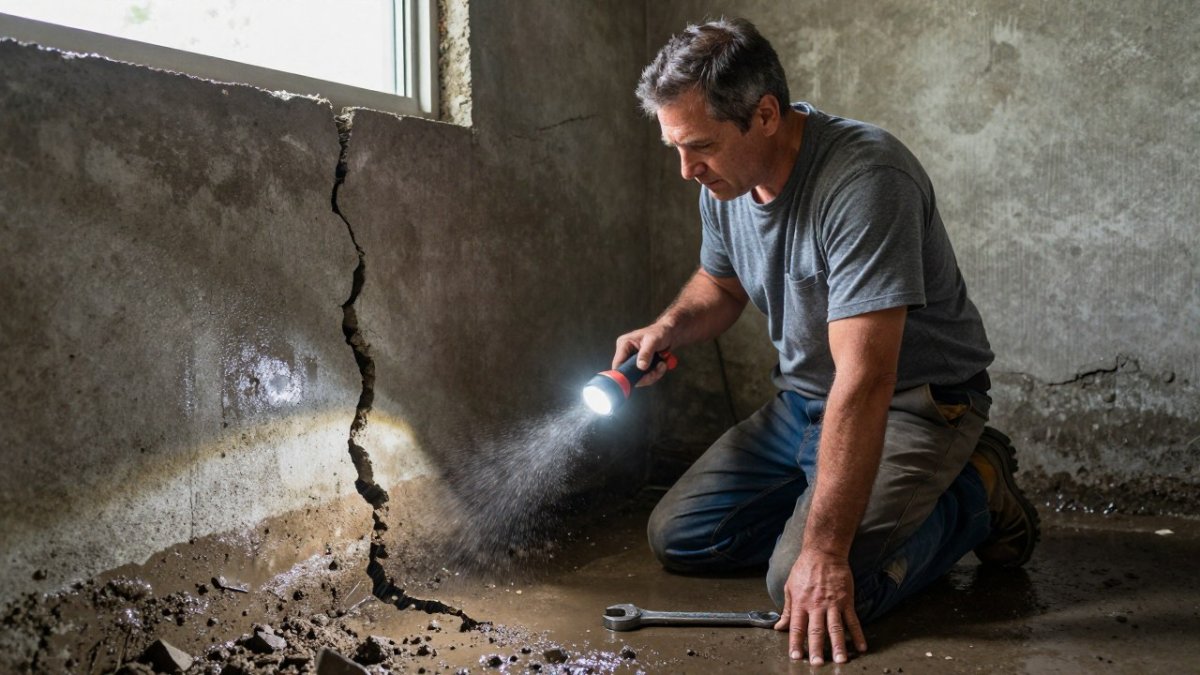
- Hydrostatic pressure: Saturated soil pushes against the wall. This tends to produce horizontal cracks, especially in the upper half of a basement wall, and is a pressure problem rather than a shrinkage problem.
- Frost heave and freeze-thaw: In North York, water in soil and in cracks expands when it freezes. Repeated cycles can widen existing cracks and open joints.
- Differential settlement: Soil under part of the footing moves differently from the rest, producing stair-step cracks in block walls or diagonal cracks that follow mortar joints.
- Shrinkage of backfill: Loose backfill settles and can pull soil away from the wall, creating a path for surface water.
Reading the pattern
- Hairline vertical cracks that stay dry: Often cosmetic. Monitor them rather than panic.
- Vertical cracks with dampness, staining, or efflorescence below them: Water is finding a path. The crack may be a symptom of a drainage problem outside.
- Horizontal cracks: Treat with more concern. They can indicate soil or water pressure and, in serious cases, wall movement.
- Stair-step cracks in block walls: Often point to movement or settlement and deserve a professional look.
- Cracks that are wet, widening, crumbling, or displacing: Act promptly. Active seepage and deteriorating concrete are clear signs of damage.
A simple monitoring method
Measure the crack width with a ruler, mark both ends with a pencil, and write the date beside each mark. Photograph the crack with a coin or ruler for scale.
What a single observation does not prove
A crack alone does not establish structural failure, and a dry crack does not prove the foundation is sound. What matters is the combination: pattern, movement over time, moisture, and whether water appears after rain or snowmelt.
Watch out: sealing a wet crack from the inside without fixing the water source outside often traps moisture in the wall and pushes the problem to another weak point. If leaks keep returning, why pipes leak repeatedly and how to fix the root causes covers the underlying causes.
Foundation Inspection Checklist for Homeowners
Use this checklist for a visual inspection, two or three times a year and after heavy storms.
Outside
- Soil slopes away from the foundation on all sides
- No standing water within a few feet of the walls
- Downspouts discharge at least a few feet from the house
- Window wells are clear and not holding water
- No visible cracks in the exterior foundation wall
Inside
- No damp patches or cool, wet spots on basement walls
- No white, chalky efflorescence on concrete or block
- No peeling paint, bubbling, or wallpaper lifting
- No musty smell or visible mould
- Floor drains are clear and dry
- Stored items are off the floor and dry
Drains and Sewer
- Floor drains do not smell or back up
- Toilets, sinks, and tubs drain at normal speed
- No gurgling sounds from drains during heavy rain
Write down anything you find and take dated photos. These records help a professional understand how fast the problem is developing.
Use this checklist for a visual inspection two or three times a year and after heavy storms.
| Area | What to check | Frequency |
|---|---|---|
| Outside | Soil slopes away from the foundation; no standing water near walls | Two or three times a year |
| Outside | Downspouts discharge at least a few feet from the house | Two or three times a year |
| Outside | Window wells clear and not holding water | After heavy storms |
| Inside | No damp patches, efflorescence, peeling paint or musty smell | Two or three times a year |
| Inside | Floor drains clear and dry | Two or three times a year |
| Drains | No backups or gurgling during heavy rain | After heavy storms |
How to Prevent Foundation Water Damage in North York Homes
North York's wet springs, heavy summer storms, and snowmelt put soil around foundations through repeated wet-dry and freeze-thaw cycles. When soil is saturated, water pushes against basement walls; when it freezes, it expands in cracks and joints. Prevention is mostly about controlling where that water goes before it reaches the wall.
Manage roof water first
- Extend downspouts: Carry roof water at least a few feet from the foundation, and further where grading is flat. Water dumped at the wall is one of the most common preventable causes of basement dampness.
- Keep gutters and leaders clear: Clogged gutters overflow at the foundation line. Check them in late fall after leaf drop and again in spring.
- Check discharge points: Make sure downspouts do not feed into a window well or a low spot that holds water.
Fix grading and surface drainage
- Regrade soil: Soil should slope away from the house so surface water runs off rather than pooling. Settled backfill often creates a low trough along the wall.
- Watch paved surfaces: Patios, walkways, and driveways that slope toward the house direct water at the foundation.
- Keep window wells clear: Remove debris and confirm covers and drains are working; a filled window well is a direct path to the basement.
Maintain the foundation and interior
- Seal cracks early: Small cracks are easier and cheaper to address before water is actively moving through them.
- Keep floor drains working: Clear them and confirm they drain, especially before spring thaw.
- Control basement humidity: A dehumidifier helps keep basement humidity in check and slows mould growth.
- Keep stored items off the floor: Use shelving or pallets so belongings are not sitting in any seepage.
- Mind planting near the wall: Large roots and heavy shrubs can disturb soil and drainage; keep them back from the foundation.
A seasonal cadence
- Spring (after thaw): Check for standing water, re-grade low spots, confirm downspouts and floor drains are clear.
- Summer (after heavy storms): Walk the perimeter, look for new cracks or damp patches, and check window wells.
- Fall (before freeze): Clear gutters, disconnect or extend hoses, and confirm drainage paths are open before snow arrives.
Watch out: adding soil against the wall without correcting the slope can trap water against the foundation rather than move it away. Maintenance is usually far cheaper than emergency repair, and a few hours each season can prevent months of damage.
When to Call a Professional About Water Near Your Foundation
Some signs are a reason to call a professional right away. Do not wait for the problem to get worse.
Call for help if you notice:
- Active water coming through a wall or floor
- Cracks that are wet, widening, or letting in water
- Bowing or leaning basement walls
- Doors or windows that suddenly stick, along with other structural signs
- Persistent musty smells or mould you cannot clean
- Water backing up through floor drains or sewer lines
If you are dealing with active flooding, act first to protect yourself and your belongings. For step-by-step guidance on what to do while you wait for help, read our guide on what to do during basement flooding.
Some water problems come from pipes rather than the soil. If you suspect a plumbing leak near the foundation, signs you need professional plumbing can help you decide whether to call someone today.
When you call, describe what you have seen, when it started, and where the water appears. Photos and dates help the technician work faster. UMark Plumbing and Drain Inc. offers 24/7 emergency service.
Frequently Asked Questions
What are the first signs of water damage to a foundation?
The earliest signs are usually visible moisture outside and inside the home. Look for pooling water or soggy soil against the foundation, a damp or musty basement, white mineral deposits (efflorescence) on concrete walls, and paint or wallpaper that bubbles or peels along the lower walls. Doors and windows that begin to stick can also signal that the foundation is shifting. Catching these early makes repairs simpler and less costly.
How can I tell if a foundation crack is caused by water?
Water-related cracks often show dampness, staining, or efflorescence along the crack line, and the area may feel cool or smell musty. Cracks that leak or seep after rain, or that widen during wet seasons, point to water involvement. Normal concrete cracking is typically hairline, dry, and stable over time. If a crack is wet, growing, or accompanied by other signs, have it assessed by a professional.
When should I call a professional about water near my foundation?
Call a professional if you see water entering the basement during or after rain, cracks that are wider than a few millimetres or growing, bowing or leaning walls, or persistent mould and musty odours that return after cleaning. Sinking floors, sticking doors, or water pooling against the foundation also warrant prompt attention. To discuss your situation, contact UMark Plumbing and Drain Inc. for a free quote before work begins.