 How-to
Finding Sewer Cleanout Access: A Step-by-Step Guide
Quick Summary
A sewer cleanout is usually a short vertical pipe with a removable cap, often flush with the ground, that gives access to the main sewer line. To find one, walk the foundation perimeter at ground level, check the side of the house nearest the street, and look for a round or hexagonal cap or small cover.
- Start your search at the foundation, since most buried cleanouts sit close to the house.
- Look on the side of the house where the sewer line leaves the building, usually nearest the street.
- Clear mulch, leaves, and soil with a hand trowel rather than a shovel near the pipe.
- Do not pry off a cap or dig until you have confirmed what the pipe is.
- Call Ontario One Call to have underground utilities marked before any digging.
Table of Contents
- What a Sewer Cleanout Is and Why It Matters
- Where the Main Sewer Cleanout Is Usually Located
- Step-by-Step: How to Find a Buried Sewer Cleanout
- How to Locate a Sewer Cleanout Without Digging
- Checking Municipal Records and Marking Utilities Before You Dig
- What to Do If You Can't Find a Sewer Cleanout
- Booking Help to Locate and Access Your Cleanout
- Frequently Asked Questions
What a Sewer Cleanout Is and Why It Matters
Last Updated: November 13, 2026
A sewer cleanout is an access point on your drain line, usually a short vertical pipe with a removable cap, that lets a plumber reach the main sewer line without tearing up the house.
Cleanouts matter because they give a plumber a direct way into the line.
Older homes may not have a cleanout, and the age of the house can affect where it is placed.
Watch out: Do not remove a cleanout cap during a backup without a plan. Raw sewage can come up through the opening.
Where the Main Sewer Cleanout Is Usually Located
The main cleanout is most often found near the foundation, on the side of the house where the sewer line leaves the building. It may sit in the yard, along a side wall, or near the back of the property.
Other common spots include:
- Beside the foundation wall, at ground level
- In a garage, near where the drain passes through the floor
- Near the property line, closer to the street
- Under a small access cover in the lawn or driveway edge
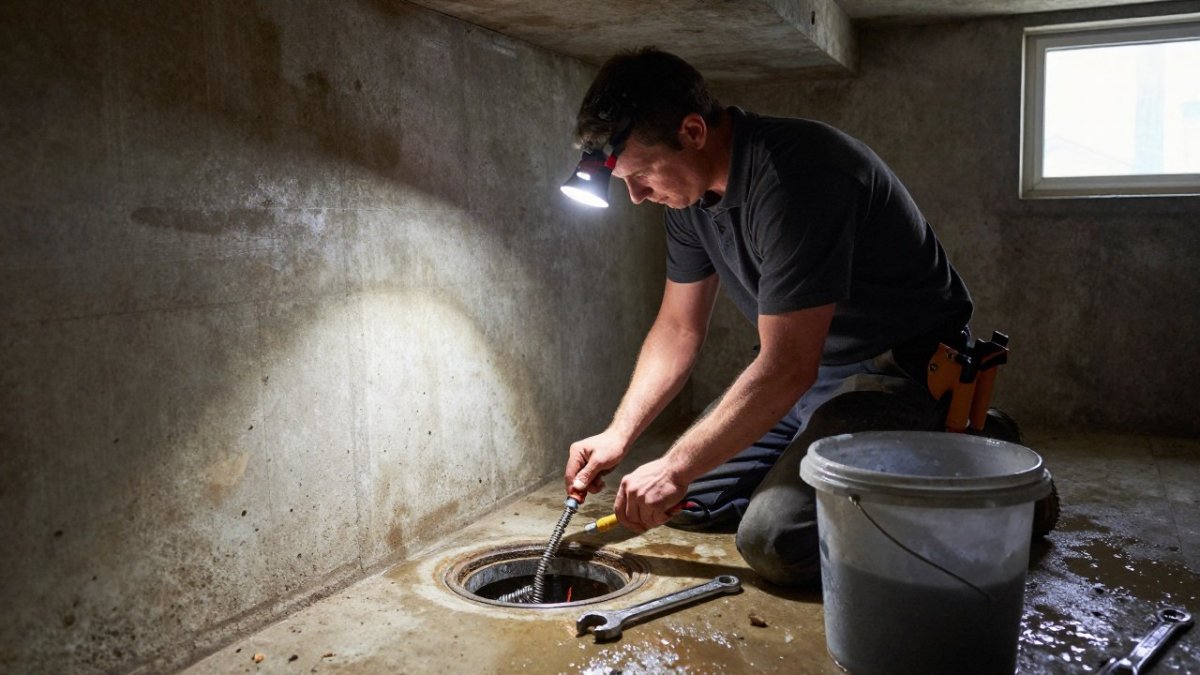
If the house has a basement, check the floor drain and the nearby pipes first. Cleanouts on indoor drain lines are often easier to reach than buried ones.
Step-by-Step: How to Find a Buried Sewer Cleanout
Start at the house and work outward. Most buried cleanouts sit close to the foundation, so the search should begin there.
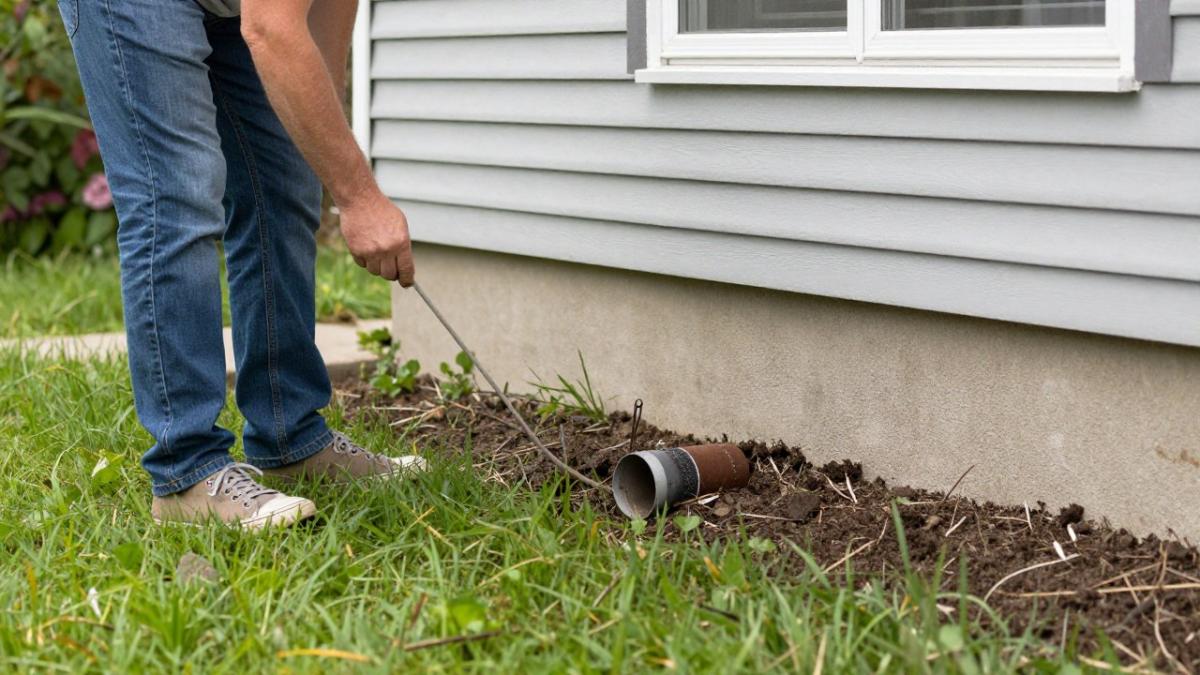
Walk the Foundation Perimeter
- Walk slowly around the outside of the house, looking at ground level.
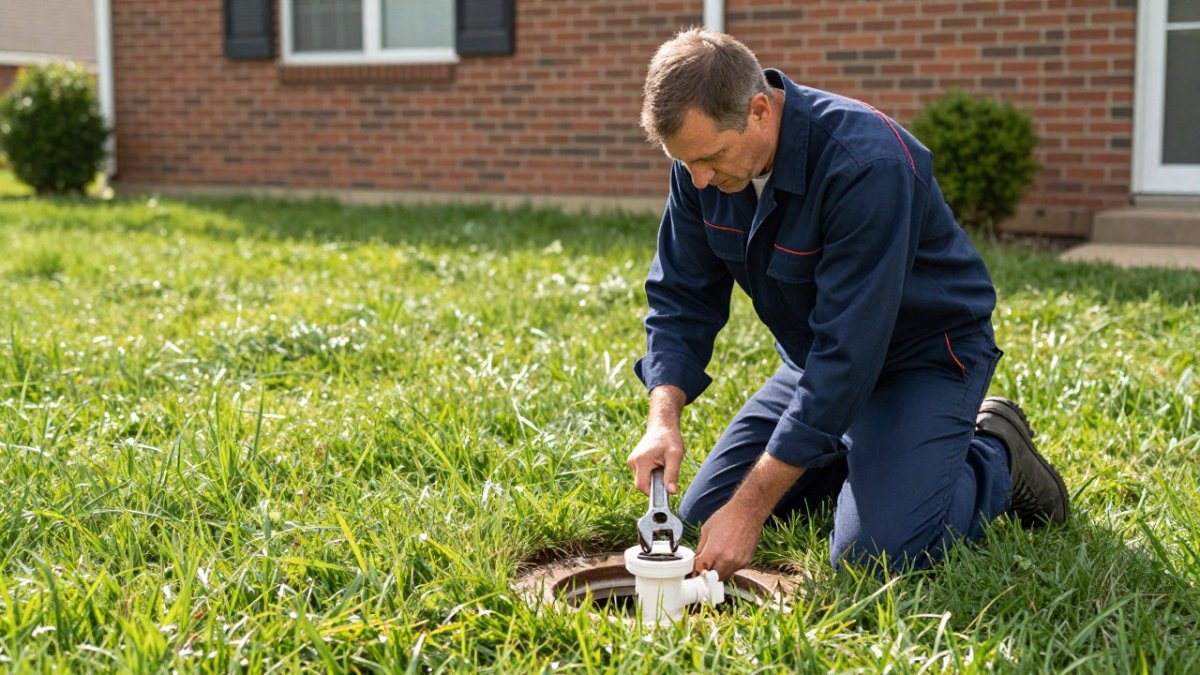
- Look for a short pipe, a metal or plastic cap, or a small round cover.
- Check where the sewer line would most likely leave the house, usually the side nearest the street.
- Clear away mulch, leaves, and soil with a hand trowel. Do not use a shovel near the pipe.
Many homeowners miss cleanouts because they are partly buried. A cap that looks like a bolt head or a plumbing stub is worth a closer look.
Trace the Sewer Line Toward the Street
- Once you find one access point, follow the probable path of the line toward the street.
- Look for changes in the ground, such as a slight dip or a patch of greener grass that may mark old trench lines.
- Note any other caps, covers, or stubs along the way.
A sewer line usually runs in a fairly straight line from the house to the municipal connection. Sudden turns often mean a cleanout is nearby.
The table below summarises the search steps covered in this section, so you can work through the process in order.
| Step | What to do | Time or note |
|---|---|---|
| Walk the foundation perimeter | Look at ground level for a short pipe, metal or plastic cap, or small round cover | Start at the house; most cleanouts sit close to the foundation |
| Check where the line leaves the house | Look on the side nearest the street | Usually the side nearest the street |
| Clear debris | Remove mulch, leaves and soil with a hand trowel | Do not use a shovel near the pipe |
| Trace toward the street | Follow the probable line path and note other caps or stubs | Sudden turns often mean a cleanout is nearby |
| Look for ground changes | Check for slight dips or greener grass marking old trenches | Signs of the old trench line |
How to Locate a Sewer Cleanout Without Digging
You can often narrow down a cleanout's location without turning a shovel. The goal is to confirm what the pipe is before you disturb soil, because a capped pipe near a foundation is not automatically a sewer cleanout. Where a lot has been expanded with additions, the cleanout may sit under a deck, a paved parking pad, or a landscaped bed added after the house was built.
Identify the cap by shape, material, and size
A sewer cleanout cap is typically a round or hexagonal fitting, roughly 3 to 4 inches across, threaded or solvent-welded onto a vertical pipe. Common materials are white or black PVC, ABS plastic, or cast iron on older homes. The cap usually sits flush with the ground, a few centimeters above grade, or under a small round cover. Compare that with other capped pipes you may find around a North York home:
- A water-service valve or curb stop is usually a smaller metal fitting, often with a square operating nut, set in a round metal box near the property line.
- A floor drain or backwater valve cover inside a basement is a flat, grated, or bolted plate, not a threaded pipe cap.
- A gas or telecom marker is a thin stake or a small plastic pedestal, not a capped drain pipe.
- A sump discharge or downspout adapter is usually a smaller-diameter pipe aimed away from the foundation.
A cleanout is almost always connected to a pipe that runs horizontally below grade toward the municipal sewer. If the capped pipe is vertical and sits directly over the probable sewer path, it is a strong candidate.
Use non-invasive search methods
- Walk the foundation perimeter at ground level and look for a pipe stub, a round cover, or a cap that sits slightly proud of the soil.
- A metal detector may help locate a cast-iron cap, though PVC and ABS caps will not register.
- Check the basement, garage, and utility room along the wall where the main drain exits, especially near the floor drain or where the drain passes through the foundation.
- Review any pre-purchase home inspection report, survey, or older drawings you have; these sometimes note the cleanout or the sewer line path.
- Look for a slight dip, a strip of greener grass, or a patch of gravel that marks an old trench line running toward the street.
Cleanouts are often located close to the foundation, on the side of the house nearest the municipal sewer connection. On a corner lot or a lot with a rear-lane sewer, that side may not be the front of the house, so trace the likely path rather than assuming.
When to stop and call for a camera or locator
If you have checked the likely indoor and outdoor spots and still cannot confirm a cleanout, a sewer camera inspection can show the line's path and where a cleanout or access point connects.
Watch out: Do not pry off a cap or dig around a suspected cleanout until you have confirmed what the pipe is and, if digging is needed, requested utility locates through Ontario One Call.
Checking Municipal Records and Marking Utilities Before You Dig
Before any digging, call Ontario One Call to have underground utilities marked. This free service helps prevent damage to gas, electrical, and telecom lines. Check with your municipality about permits, records, or past sewer work on your property.
Do not dig until the utilities are marked (Achieve compliance on construction sites). Hitting a gas line or buried cable can cause serious harm and expensive repairs.
What to Do If You Can't Find a Sewer Cleanout
Some North York homes genuinely have no visible cleanout, especially older houses built before cleanouts were commonly required or homes where an addition, deck, or driveway was built over the original access point. Work through this decision path before assuming the worst.
Step 1: Re-check indoor locations with fresh eyes
- Inspect the basement wall where the main drain exits, including behind shelving, paneling, or stored items.
- Look near the floor drain, laundry standpipe, and any utility sink for a capped pipe or a cleanout fitting.
- Check the garage, especially where the drain line passes through the floor or foundation wall.
- Look for a cleanout that has been painted over, taped, or capped with a recessed plug that sits flush with the floor.
A cleanout hidden behind finished basement walls may not be recoverable without opening the wall, which is usually not worth doing just to locate it.
Step 2: Confirm whether the line has any access point
If no cleanout is visible, a plumber can run a camera down an accessible drain, such as a floor drain or a stack cleanout, to confirm the line's path and condition. Compare alternatives to full sewer line replacement to see which options fit your situation. A locator can then trace the line underground and mark where a cleanout should be.
Step 3: Decide whether a new cleanout is needed
A new cleanout is usually warranted when:
- The line has no access point at all and backups require repeated snaking through a floor drain or roof stack.
- The existing cleanout is buried under a permanent structure, such as a deck or paved pad, and cannot be accessed without demolition.
- A camera inspection shows a problem area that would be easier to service from a dedicated access point.
Installation may involve cutting into the sewer lateral and fitting a capped access riser. Confirm the scope and any permit requirements with the contractor before work begins.
Step 4: Know when to stop DIY work
Stop and call a licensed plumber if you see multiple slow drains, sewage backing up into fixtures, or persistent sewer odors. Read a safety guide on whether hydro jetting a septic system is safe before choosing a clearing method.
Watch out: Do not dig blindly to find a missing cleanout. Request utility locates through Ontario One Call first, and let a plumber confirm the line's path before any excavation. Learn how to unclog a toilet without making the mess worse while you wait for help.
Booking Help to Locate and Access Your Cleanout
If you are stuck, a professional inspection can save time and avoid guesswork. A camera inspection shows the line's condition and where the cleanout should be. Is Professional Sewer Line Camera Inspection Worth It? explains what to expect from that kind of service.
If you want a local plumber to find and access the cleanout for you, search for a plumber in Vaughan to compare options near you.
Frequently Asked Questions
Where is the sewer cleanout usually located in a house?
Sewer cleanouts are most often found outdoors near the foundation, in the side or rear yard, or close to the property line where the sewer lateral meets the municipal line. Indoors, they are commonly in a basement floor near the main drain, in a utility room, or in an attached garage. Start by checking the spot where the main drain exits the house, then follow the pipe outward. Look for a capped pipe, a round cover, or a small access port at ground level.
How do I find a buried sewer cleanout in my yard?
Begin at the foundation where the main drain pipe leaves the house and walk outward in a straight line toward the street. Many cleanouts sit within a few metres of the foundation, so probe lightly with a metal rod or screwdriver in soft soil. Look for a metal or plastic cover, a recessed ground box, or a capped pipe. Before digging, contact your local utility locate service to confirm nothing else is buried nearby.
Can I open a sewer cleanout myself?
Many homeowners can locate a sewer cleanout, but opening one takes care. Remove the cap slowly, because wastewater can release pressure or odours, and wear gloves and eye protection. If the line is backed up, sewage may flow out. A licensed plumber can open the cleanout, inspect the line, and clear blockages safely, which is often the better choice when drains are slow or backing up.
Who should I call to locate a buried sewer cleanout in North York?
A licensed plumber with drain-locating equipment is the most reliable option for finding a buried cleanout in North York, especially if the pipe is deep, hidden under landscaping, or hard to trace. UMark Plumbing and Drain Inc. offers 24/7 emergency and routine plumbing service and can help you locate and access your cleanout. Request a free quote on the company website before work begins.