 blog
Best Tools for Clearing Stubborn Toilet Clogs
Last Updated: November 7, 2026
Quick Summary
The best tools for stubborn toilet clogs are a flange plunger for soft, shallow blockages and a closet auger for deep or solid ones. A bellows plunger suits low-water clogs, while a toilet auger reaches past the trap where a plunger cannot.
- A cup plunger seals poorly on toilets because it has no flange.
- A bellows plunger moves more water per push than a flange model.
- Feed the auger cable down the trap and crank slowly, letting the head do the work.
- If two plunges fail, move to an auger rather than plunging again.
- Call a plumber if the clog returns within days or multiple fixtures drain slowly.
Table of Contents
- Why Some Toilet Clogs Resist a Standard Plunge
- The Best Toilet Plunger for Stubborn Clogs
- Toilet Auger for Deep Clogs: How a Closet Auger Works
- Toilet Snake vs. Plunger: Which Tool Fits the Clog
- Tool Comparison by Clog Type, Severity, and Cost
- Chemical-Free Methods and the Damage Drain Cleaners Cause
- When to Call a Plumber for a Clogged Toilet
- Getting a Clog Cleared in North York
- Frequently Asked Questions
Why Some Toilet Clogs Resist a Standard Plunge
A plunger works by forcing water back and forth through the toilet trap. It only helps when the blockage sits close to the bowl and stays soft. That is why so many stubborn toilet clogs survive a hard plunge: the clog is either too deep, too solid, or wedged in a way water pressure cannot shift.
The tools below are the ones a professional would typically reach for.
A standard cup plunger is built for sinks. On a toilet, it does not seal the outlet properly, so the force leaks away. The other common causes of a failed plunge:
- A foreign object in the trap. Feminine hygiene products, a plastic applicator, or a child's toy will not move with water pressure.
- Hard paper blockage. Too much paper packs into a solid mass that flexes instead of breaking up.
- A deep clog in the drain line. The blockage sits past the toilet trap, where a plunger cannot reach.
- Low water level. A weak flush leaves too little water to work with.
If your first plunge failed, stop and read our guide to unclogging a toilet without making the mess worse before you try again. Repeated plunging on a full bowl is how bathrooms flood.
The Best Toilet Plunger for Stubborn Clogs
The best toilet plunger for stubborn clogs is a flange plunger with a rubber flap that folds out to seal the toilet trap. The flange is the part that makes it a toilet tool rather than a sink tool. Without that seal, you are pushing water around the clog, not through it.
Flange, Bellows, and Cup Plungers Compared
| Plunger type | Seal quality | Best for | Main drawback |
|---|---|---|---|
| Cup plunger | Poor on toilets | Sinks and tubs | No flange, weak seal |
| Flange plunger | Good | Most household clogs | Flange can wear out |
| Bellows plunger | Strongest | Stubborn, low-water clogs | Bulkier to store |
A bellows plunger moves more water per push than a flange model, which helps when the water level is low. The trade-off is size and stiffness. For everyday use, a flange plunger is the reliable choice.
Toilet Auger for Deep Clogs: How a Closet Auger Works
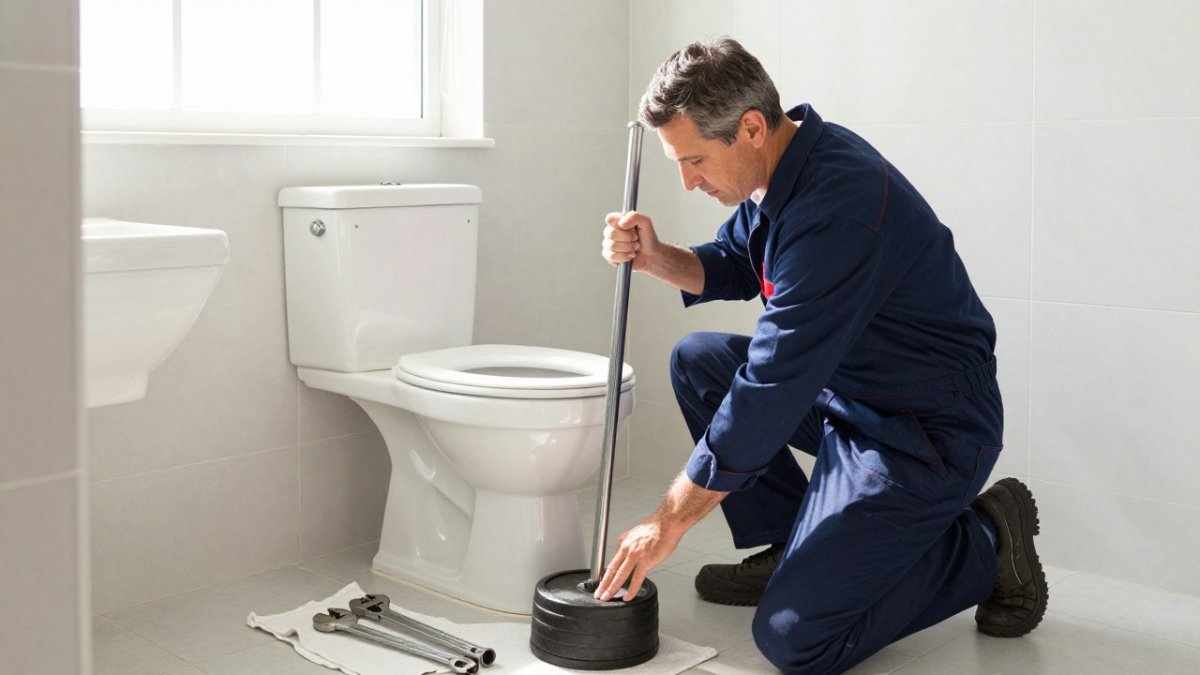
A closet auger is a hand-cranked cable inside a sleeve, and it is the tool that clears clogs a plunger cannot reach. Plumber magazine's tool guidance names the closet auger as the best tool for stubborn toilet and urinal clogs because it goes through the toilet quickly. Lowe's unclogging guide makes the same point: an auger can break up clogs a plunger will not clear.
You feed the cable down the trap, crank the handle, and the rotating head grabs or breaks up the blockage. Because the cable is enclosed in a sleeve, it stays inside the bowl instead of scraping the porcelain.
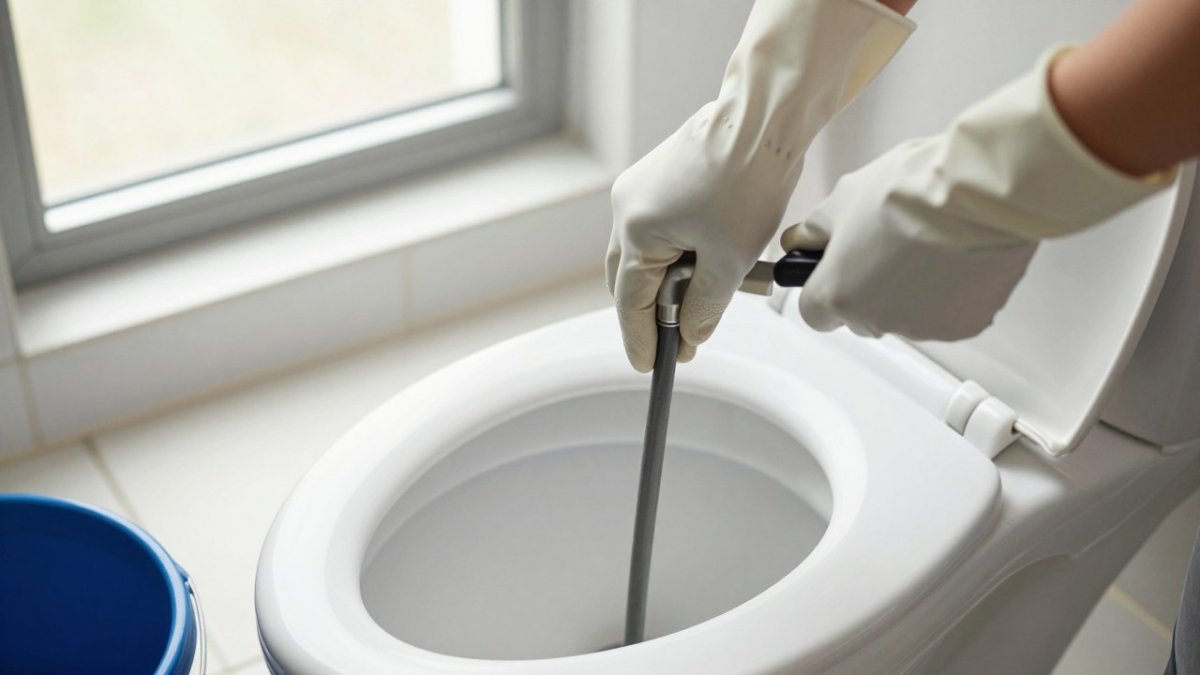
Using a Toilet Auger Without Scratching the Bowl
The sleeve is what protects the porcelain, so keep it against the bowl outlet and never force the cable. Crank slowly and let the head do the work. Watch out: cranking hard against a solid object can crack the trap or kink the cable, and a cracked toilet means replacement, not repair.
Toilet Snake vs. Plunger: Which Tool Fits the Clog
Use a plunger first for soft, shallow clogs, and a toilet snake or auger when the blockage is deep or resists pressure. That single rule settles most cases.
A drain snake is the better choice when you suspect a foreign object or a clog past the trap. A plunger is faster and safer when the blockage is close and soft. For a full breakdown of snaking against other drain methods, see hydro jetting vs snaking.
Tool Comparison by Clog Type, Severity, and Cost
Match the tool to the clog, not to the shelf at the hardware store. The table below adds Canadian price ranges and a clear escalation path so you can decide before you leave the house.
| Clog type | Best tool | Severity | Typical Canadian price (CAD) | When to escalate |
|---|---|---|---|---|
| Soft, shallow | Flange plunger | Low | $15-$35 | If two plunges fail, move to an auger |
| Low water, stubborn | Bellows plunger | Medium | $20-$45 | If the bowl stays full after 5 pushes, stop |
| Deep or solid | Closet auger (toilet auger) | High | $40-$120 | If the cable kinks or will not advance, call a plumber |
| Foreign object | Closet auger, then a plumber | High | $40-$120 for the tool; repair cost if forced | If you feel a hard stop, stop cranking |
| Recurring clog | Camera inspection by a plumber | High | Service call varies; ask for an estimate | If the clog returns within days |
Where to Buy Tools in North York
North York has several options within a short drive. Home improvement stores along Wilson Avenue and near Yorkdale carry flange and bellows plungers and closet augers in the plumbing aisle. Independent hardware stores in the area often stock sturdier augers and can advise on cable length. For a one-off stubborn clog, renting a closet auger from a local tool rental shop is often cheaper than buying a low-end model that may fail.
Tool Comparison by Clog Severity
Use this decision path:
- Low severity (soft, shallow): start with a flange plunger. If the water drains within two plunges, stop.
- Medium severity (low water, stubborn): switch to a bellows plunger. If the bowl stays full after five pushes, stop and move to an auger.
- High severity (deep or solid): use a closet auger. If the cable will not advance or kinks, stop and call a plumber.
- Foreign object: use a closet auger only if you can feel the object and it moves. If you hit a hard stop, stop cranking and call a plumber.
Watch out: forcing an auger against a solid object can crack the trap or kink the cable, and a cracked toilet means replacement, not repair.
Typical Canadian prices for toilet clog tools
Chemical-Free Methods and the Damage Drain Cleaners Cause
Chemical drain cleaners are generally not recommended for toilet clogs, as they may not clear a solid blockage and can pose risks to older pipes and skin. If the bowl is already backed up, read how to stop an overflowing toilet quickly first.
Chemical-free options that work, with the mechanism behind each:
- Hot water and dish soap. A small squirt of soap followed by a jug of hot, not boiling, water can loosen a greasy clog. The soap reduces surface tension so water penetrates the blockage instead of sitting on top. Boiling water can crack a porcelain bowl, so let it cool slightly first.
- A bucket flush. Pour water from waist height to add pressure without overfilling the bowl. The added head pressure can push a soft clog past the trap. Use a large bucket and pour in one steady motion.
- The correct plunger. A proper seal does more than any bottle of chemicals. A flange or bellows plunger forces water through the clog rather than around it.
- A toilet auger for deep clogs. The cable reaches past the trap where water pressure cannot. Crank slowly and let the head grab the blockage.
Safe Use and Damage Prevention
Porcelain scratches when metal or grit is dragged across it, so keep the auger sleeve against the bowl outlet and never force the cable. Splashback happens when you plunge a full bowl, so bail water into a bucket first if the level is high. Overflows are most likely when you keep flushing a blocked toilet, so stop after the first failed flush. Drain chemicals are unsuitable for toilets because they sit in the bowl rather than reaching the clog, and they can burn skin or damage older pipes.
When DIY Tools Are Not Enough
Stop DIY attempts and call a plumber when:
- The clog returns within days.
- More than one fixture drains slowly.
- Sewage backs up into the tub or floor drain.
- You suspect a foreign object that will not move.
- You have already tried a plunger and an auger without success.
Those signs point to a blockage in the main drain line, not the toilet, and a camera inspection is the next step.
When to Call a Plumber for a Clogged Toilet
Call a plumber when the bowl fills instead of draining, when water backs up into the tub or floor drain, when the clog returns within days, or when you have already tried a plunger and an auger. Those signs point to a blockage in the main drain line, not the toilet.
Recurring clogs can have underlying causes in the drain line, and a camera inspection can help identify the actual cause rather than repeatedly clearing the same spot. Our guide to drain cleaning near me covers costs, methods, and when to call.
Getting a Clog Cleared in North York
If the tools above have not solved it, the clog is past the point where DIY is safe. UMark Plumbing and Drain Inc. offers 24/7 emergency and routine plumbing services with over 20 years of experience and a certified team.
For a local crew that handles both residential and commercial drains, see our plumbing company in North York page and get a free quote.
A clog that keeps coming back is telling you something the plunger cannot. UMark Plumbing and Drain Inc. brings over 20 years of experience, 24/7 emergency availability, and a certified team to every call, with affordable pricing and an estimate up front. Get started with UMark Plumbing and Drain Inc. and get your drain cleared properly the first time.
Frequently Asked Questions
What is the best tool for clearing a stubborn toilet clog?
A flange plunger handles most soft blockages, but a closet auger is the tool professionals reach for when a plunger fails. A closet auger is generally considered suitable for stubborn toilet clogs because it reaches into the trap where a plunger cannot seal. Start with a flange plunger, then move to a toilet auger if water still rises after several attempts.
Is a toilet auger better than a plunger for tough clogs?
They solve different problems. A plunger uses water pressure to push a soft clog through, which works well for paper and waste near the trap. A toilet auger for deep clogs feeds a cable into the drain line to break up or pull back a blockage a plunger cannot move. An auger can clear clogs a plunger does not, so keep both on hand and try the auger second.
Can chemical drain cleaners damage a toilet or its pipes?
Chemical cleaners generate heat and can harm older pipes, plastic components inside the toilet, and septic systems. They also leave a caustic pool in the bowl that splashes when you plunge afterward. Mechanical tools, a plunger or auger, clear the clog without chemicals and let you see what caused it. If a clog returns, the cause is usually a foreign object or a drain line issue that chemicals will not fix.
When should I call a plumber for a clogged toilet?
Stop and call a professional if water overflows despite shutting off the supply, if several fixtures drain slowly at once, if you suspect a foreign object is lodged in the trap, or if the same toilet clogs repeatedly. Recurring clogs in older homes often point to scale buildup or a failing drain line. A certified plumber can camera the line and clear the cause rather than the symptom.