 how-to
How to Unclog a Toilet Without Making the Mess Worse
Last Updated: November 4, 2026
Quick Summary
To unclog a toilet, first check whether the blockage is in the bowl or deeper in the drain line, then use a flange plunger with a tight seal, pushing down slowly and pulling up fast 10 to 15 times. Lay towels around the base and keep a bucket within reach to control overflow.
- A bowl clog affects one toilet, while a line blockage causes gurgling or backups in other fixtures.
- A flange plunger seals the toilet drain; a cup plunger is built for sinks and cannot seal a toilet bowl.
- Let the bowl sit five minutes so the water level drops before you start plunging.
- For soft clogs, dish soap and warm water can work, but never use boiling water on porcelain.
- Stop and call a professional if multiple fixtures back up, sewage smells appear, or the clog keeps returning.
Table of Contents
- Diagnose the Clog Before You Touch the Plunger
- Tools You Need to Unclog a Toilet and Protect the Floor
- Choosing the Best Plunger for Toilet Blockages
- How to Plunge a Toilet Without Overflowing It
- No-Plunger Methods: Dish Soap, Warm Water, Baking Soda and Vinegar
- Using a Toilet Auger When Plunging Fails
- Signs of Main Sewer Line Blockage You Should Not Ignore
- When to Call Emergency Plumbing Services in North York
- Frequently Asked Questions
Diagnose the Clog Before You Touch the Plunger
Knowing how to unclog a toilet starts with one fact: a clogged toilet is rarely just a clog. It is a symptom, and the fix depends on where the blockage sits. Before you grab a plunger, work out whether the problem is in the bowl or deeper in the drain line. That single check saves you from making the mess worse.
Across many homes, the pattern is often the same: people plunge first and diagnose later. Here is how to flip that order.
Is It a Bowl Clog or a Line Blockage?
A bowl clog sits in the trapway or the toilet's internal channel. A line blockage sits further down the drain line or the main sewer line. The two behave differently.
- Bowl clog signs: water rises fast in the bowl, then drains slowly. One toilet is affected. Other fixtures run fine.
- Line blockage signs: gurgling from the tub or sink, water backing up in other drains, or a slow flush that never fully clears.
- Main line signs: sewage smell, multiple fixtures backing up at once, or water rising in the basement drain.
If more than one fixture is acting up, stop plunging. You are dealing with a line issue, and a plunger will not touch it. Our guide on what causes recurring toilet clogs walks through the seven most common root causes, which is the right place to start if this is not your first clog this month.
Tools You Need to Unclog a Toilet and Protect the Floor
The right tools make the job faster and cleaner. Most homes already have them. Gather these before you start:
- Rubber gloves to keep your hands clean
- Old towels and paper towels to protect the floor around the base
- A flange plunger with a rubber seal
- A bucket for overflow control
- A toilet auger if the plunger fails
- Dish soap and warm water for the no-tools method
Lay the towels around the base of the toilet before anything else. If water spills over, the towels catch it instead of your floor. Keep the bucket within reach. This is the step most people skip, and it is the one that decides whether you have a small spill or a flooded bathroom floor.
Choosing the Best Plunger for Toilet Blockages
The best plunger for toilet clogs is a flange plunger, not a cup plunger. A flange plunger has a soft rubber flap at the bottom that folds into the drain hole and forms a seal. A cup plunger is flat-bottomed and built for sinks, not toilets.
Here is how the two compare:
| Plunger Type | Best For | Seal Quality | Where It Fails |
|---|---|---|---|
| Flange plunger | Toilets, bowl clogs | Strong, folds into drain | Awkward on flat sink drains |
| Cup plunger | Sinks, tubs, flat drains | Weak in a toilet bowl | Cannot seal the toilet drain |
| Accordion plunger | Hard clogs, high pressure | Very strong | Stiff, harder to control |
A flange plunger seals the drain and pushes air and water through the blockage. A cup plunger in a toilet bowl just pushes water around the edges. If you only own a cup plunger, fold the cup inward to mimic a flange, but buy a proper flange plunger for next time. It is the single cheapest upgrade for any household.
How to Plunge a Toilet Without Overflowing It
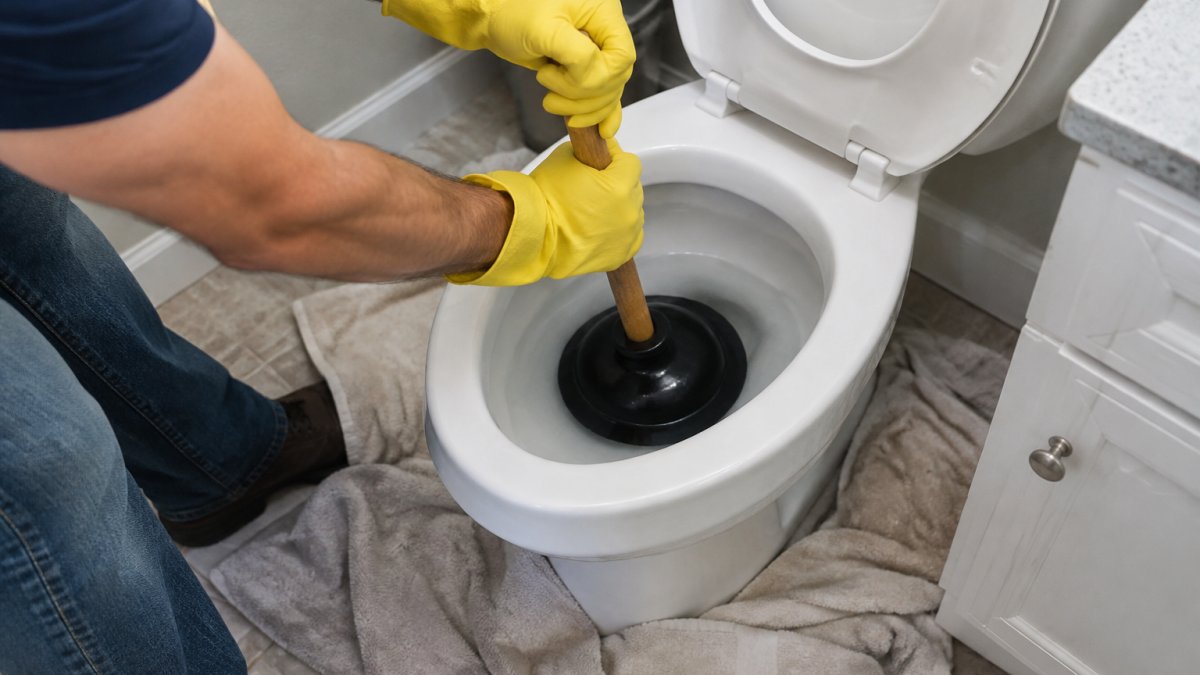
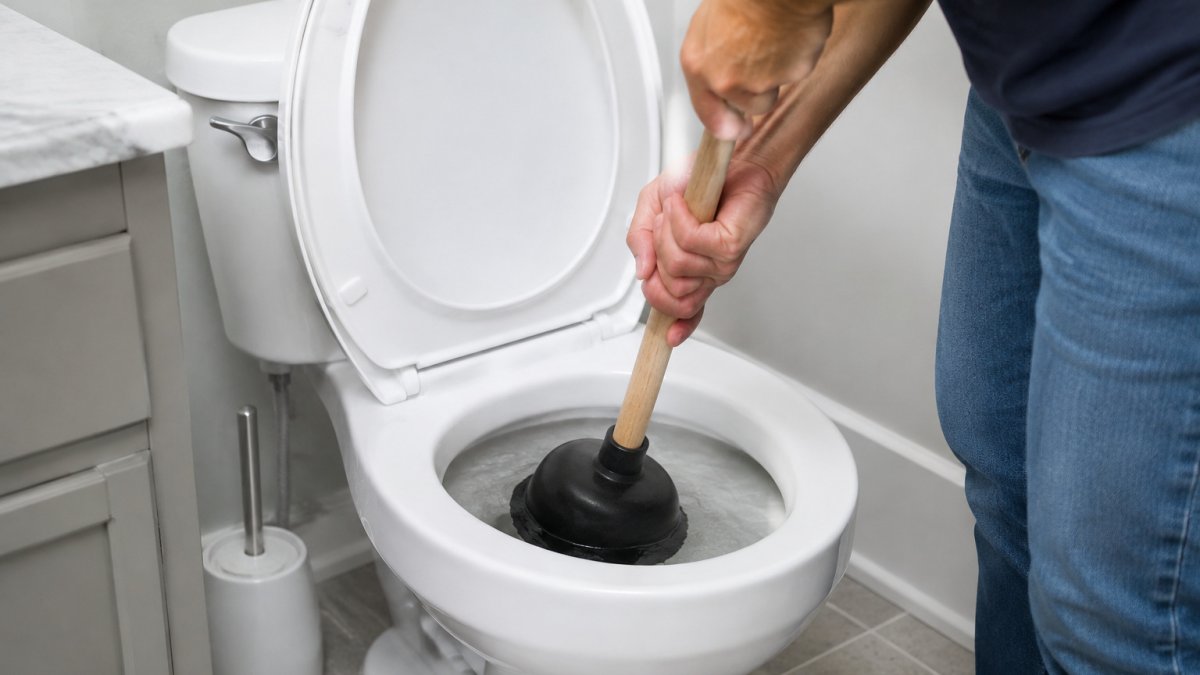
The safest way to plunge a toilet is to stop before the water overflows. Watch the water level as you work. If it starts climbing toward the rim, stop and let it settle. Never keep plunging a bowl that is about to spill.
Step-by-Step Plunging Technique
- Wait for the water to settle. Give the bowl five minutes so the level drops.
- Seal the plunger. Set the flange into the drain hole and press down gently to form a seal.
- Push down slowly, pull up fast. The down stroke pushes; the fast up stroke pulls the clog loose.
- Repeat 10 to 15 times. Keep the seal tight the whole time.
- Flush test. Remove the plunger, then flush. If the water clears, you are done. If it rises again, repeat.
A common mistake is plunging too fast and breaking the seal. Slow down on the push. The pull is where the clog breaks free.
No-Plunger Methods: Dish Soap, Warm Water, Baking Soda and Vinegar
No plunger on hand? Two household methods can loosen soft clogs made of toilet paper or waste. Both need patience, and neither works on a hard blockage, a foreign object, or a line blockage. Before you try either, confirm the water level in the bowl is stable and not climbing toward the rim.
Dish soap and warm water: Squeeze a generous amount of dish soap into the bowl, then pour in a pot of warm water from waist height. The soap lubricates the trapway and the warm water softens the toilet paper. Wait 15 to 20 minutes, then flush. Repeat once if needed.
Baking soda and vinegar: Pour half a cup of baking soda into the bowl, then one cup of vinegar. The fizzing action loosens light buildup. Let it sit for 30 minutes, then flush with hot water. This method is gentle and works best on a partial clog where water still drains slowly.
Safe chemical use and method compatibility: Never mix these household methods with chemical drain cleaners. The reaction can splash back and burn your skin, and mixing bleach with an acid-based cleaner can release dangerous gas (Reduce your risk from toxic gases: Never mix bleach with other cleaning products).
Clear stop conditions: Stop any no-plunger method if the water level rises instead of falling, if you see sewage backing up in another fixture, or if the clog does not clear after two attempts. At that point, move to a flange plunger or a toilet auger rather than adding more products to the bowl. For more household-safe options, see our guide on how to clear a clogged drain naturally.
Using a Toilet Auger When Plunging Fails
A toilet auger is the next step when a plunger cannot reach the clog. It is a flexible cable with a crank handle that feeds through the trapway and breaks up or pulls out the blockage. This is the tool for foreign objects, toy parts, and wipes that a plunger just pushes deeper.
Here is how to use one safely:
- Feed the cable slowly into the drain until you feel resistance.
- Crank clockwise while applying light pressure.
- Hook and pull the object back out rather than pushing it down.
- Flush test once the cable is out.
Watch out: forcing the cable can crack the porcelain or scratch the trapway. If the auger meets solid resistance, stop. If a manual auger is not enough, compare your options in our guide on hydro jetting vs snaking before you call anyone.
Signs of Main Sewer Line Blockage You Should Not Ignore
A main sewer line blockage is not a DIY job. It sits under your floor or lawn, and the wrong tool can make it worse. The signs below point to a blockage beyond the toilet trapway, and they should change how you respond.
- Multiple fixtures backing up at the same time
- Gurgling sounds from drains across the home
- Sewage smell inside or outside the house
- Water rising in the basement floor drain when you flush
- Slow drains everywhere, not just one toilet
Rental, condo, and shared-plumbing considerations: If you rent or live in a condo, stop here and contact your landlord or building manager before you try any tool. In apartments and multi-unit buildings, the clog may sit in a shared stack or a line you do not own, and plunging or augering from your unit can push the blockage into a neighbor's line or cause an overflow in another unit. Building managers often have a preferred drain contractor and may need to coordinate access to a common cleanout.
What to do during an overflow: If water is actively backing up, stop flushing immediately and shut off the toilet's water supply at the valve behind the bowl. Keep everyone out of the affected area, and do not run water in sinks, showers, or laundry machines until the line is cleared. If sewage is present, wear gloves and avoid contact with skin. Our guide on the best drain cleaning method for main line clogs explains how professionals clear these safely.
When to Call Emergency Plumbing Services in North York
Call emergency plumbing services in North York when water is rising fast, when sewage is backing up, or when the clog keeps returning after you clear it. A recurring clog is a sign of a deeper problem: a failing pipe, tree roots in the line, or a blocked main.
We handle these calls around the clock at UMark Plumbing and Drain Inc. Our certified team has over 20 years of experience with residential and commercial drains, and we serve North York and Vaughan. If you are searching for an emergency plumber near me at 2 AM, we answer. For urgent help, reach our emergency plumber in North York.
Frequently Asked Questions
What is the fastest way to unclog a toilet without a plunger?
Start with a squirt of dish soap into the bowl, then pour in a bucket of warm water from waist height. The soap lubricates the blockage and the water weight pushes it through. Wait 15 to 20 minutes, then flush. If the bowl is already near the rim, stop and remove water first with a cup or bucket so it does not overflow. If two rounds of this do not clear the clog, move to a plunger rather than repeating the method.
Can I use dish soap to unclog a toilet?
Yes. Dish soap works as a lubricant that helps a soft blockage, usually toilet paper, slide through the trapway. Add about two tablespoons to the bowl, follow with warm water, and wait. It will not dissolve solid objects, wipes, or a buildup of paper deeper in the drain line. If the toilet drains slowly after flushing rather than clearing fully, the clog is likely past the bowl and needs a toilet auger or a plumber.
Is it safe to use chemical drain cleaners in my toilet?
Be cautious. Caustic drain cleaners generate heat and can damage older porcelain, plastic fittings, and septic systems, and they are dangerous if a plumber later needs to open the drain. Never mix a chemical cleaner with a plunger or auger, and never use one if the bowl is already close to overflowing. Mechanical methods are safer first steps.
How do I know if my toilet clog is actually a main sewer line issue?
Watch for the signs of main sewer line blockage: several fixtures draining slowly at once, gurgling from other drains when you flush, sewage smell in the basement, water backing up in a floor drain or tub, or the same toilet clogging repeatedly within weeks. A single toilet that clears with a plunger is usually a local clog. Multiple fixtures affected at the same time point to the main line and warrant a camera inspection from a licensed plumber.
A toilet that keeps clogging is telling you something. Do not ignore it, and do not keep plunging the same bowl week after week. Get a free quote from UMark Plumbing and Drain Inc. and let our certified team find the real cause. We offer 24/7 emergency service, routine drain repair, and solutions for every plumbing need, day or night.