 How-to
7 Sewage Backup Cleanup Steps to Sanitize a Bathroom
Last Updated: November 11, 2026
Quick Summary
Sewage backup cleanup means shutting off power and water, wearing full protective equipment, removing standing water, and discarding all porous materials that touched wastewater. Wash hard surfaces with detergent and hot water first, rinse, then disinfect with diluted bleach at the label's contact time, and dry thoroughly while checking grout and caulking for hidden moisture.
- Turn off the bathroom circuit at the electrical panel before touching anything if water reaches outlets or cords.
- Wear rubber gloves, boots, goggles, an N95 respirator, old clothing, and a waterproof apron before entering.
- Bag and discard carpets, drywall, baseboards, towels, particleboard, and any exposed food or toiletries.
- Never mix bleach with ammonia, acids, or vinegar, and keep surfaces visibly wet for the label contact time.
- Call a professional if the backup came through a floor drain or the water reached carpet, drywall, or the subfloor.
Table of Contents
- Sewage Backup Cleanup Steps: Start With Safety, Not Bleach
- Sewage Cleanup Protective Equipment: What to Wear Before You Enter
- Remove Standing Water and Wastewater From the Bathroom
- What to Throw Away After Sewage Backup (and What Can Be Saved)
- Wash With Detergent First, Then Disinfect Hard Surfaces
- Sewage Backup Cleanup Drying Time and Hidden Moisture
- DIY or Call a Professional? Deciding for Your North York Bathroom
- Book a Certified Sewage Backup Assessment
- Frequently Asked Questions
Sewage Backup Cleanup Steps: Start With Safety, Not Bleach
Raw sewage in your bathroom is a health hazard, not a cleaning challenge. Wastewater carries bacteria, viruses, and parasites, and every minute you spend deciding what to do next is time those pathogens spend spreading across tile and grout.
Bleach should not be your first step. Homeowners often reach for bleach first, and in our experience the mess can smear and the contamination spread.
This guide walks you through seven sewage backup cleanup steps in the right order. We will show you exactly how to safely sanitize a bathroom after sewage backup, from shutdown to drying.
Sewage backup cleanup is the process of removing wastewater, contaminated solids, and affected materials from a flooded space, then washing, disinfecting, and drying every surface the water touched. Order matters more than effort.
Health Canada's guidance on safe household cleaning and disinfecting
Shut Off Power and Water Before You Touch Anything
Water and electricity do not mix. If standing water reaches outlets, baseboards, or a fixture cord, turn off the bathroom circuit at your electrical panel first. If you cannot reach the panel safely, stop and call an electrician.
Next, shut off the water feeding the flooded fixtures. If the backup is still rising, close the main valve. Our guide on how to shut off your main water valve step by step covers the full process if you have never done it.
Ventilate the Bathroom and Keep Others Out
Open a window and run an exhaust fan if it is on a separate circuit. Keep children and pets out, and close the door behind you. Sewage gas and airborne bacteria travel further than most people expect.
Here is the order of the seven cleanup steps, from shutdown to drying.
| Step | What to do |
|---|---|
| Shut off power and water | Turn off the bathroom circuit at the panel, then close the fixture or main valve |
| Ventilate and isolate | Open a window, run an exhaust fan, keep children and pets out |
| Wear protective equipment | Gloves, boots, goggles, N95 respirator, old clothing, waterproof apron |
| Remove standing water | Use a wet/dry shop vacuum, working from far corner toward the drain |
| Discard porous materials | Bag carpets, drywall, baseboards, towels, particleboard, exposed food and toiletries |
| Wash, then disinfect | Detergent and hot water first, rinse, then diluted bleach at label contact time |
| Dry and check for moisture | Run fans, keep windows open, check grout and caulking by hand |
Sewage Cleanup Protective Equipment: What to Wear Before You Enter
Sewage cleanup protective equipment is the layer between you and wastewater pathogens, and skipping any piece of it is the most common mistake we see. Wear all of the following before you step inside:
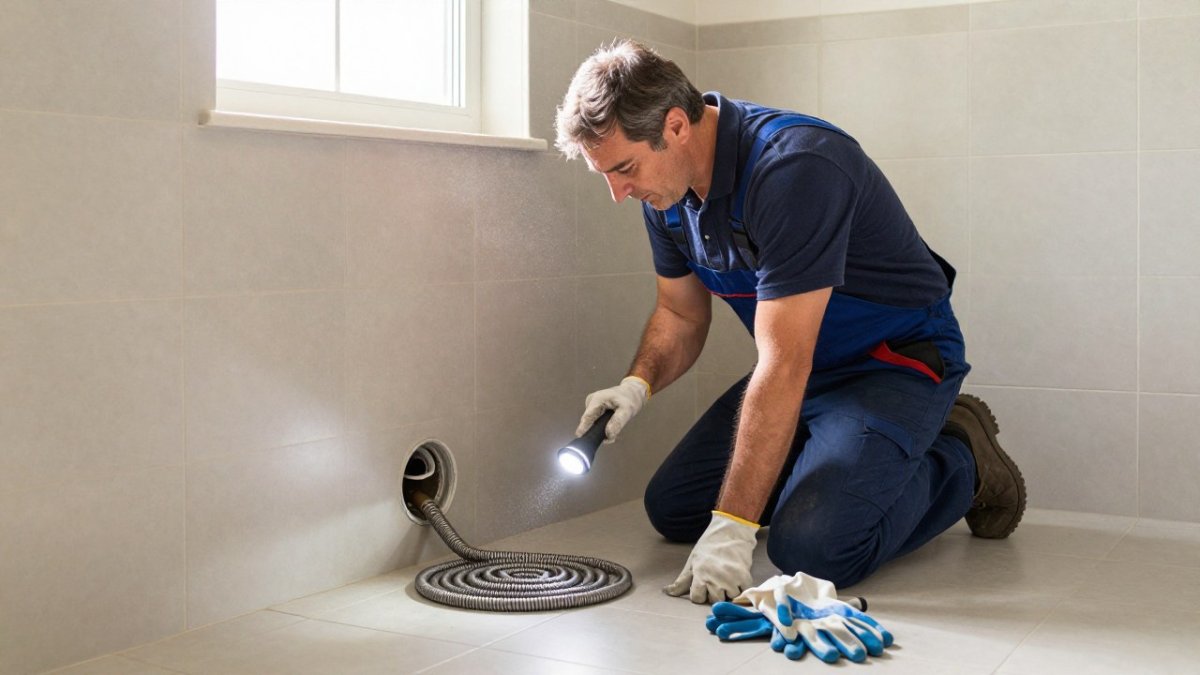
- Rubber gloves that reach past your wrist
- Rubber boots with a washable sole
- Eye protection or sealed goggles
- An N95 respirator for odor and airborne particles
- Old clothing you can wash hot or throw out
- A waterproof apron for heavy spills
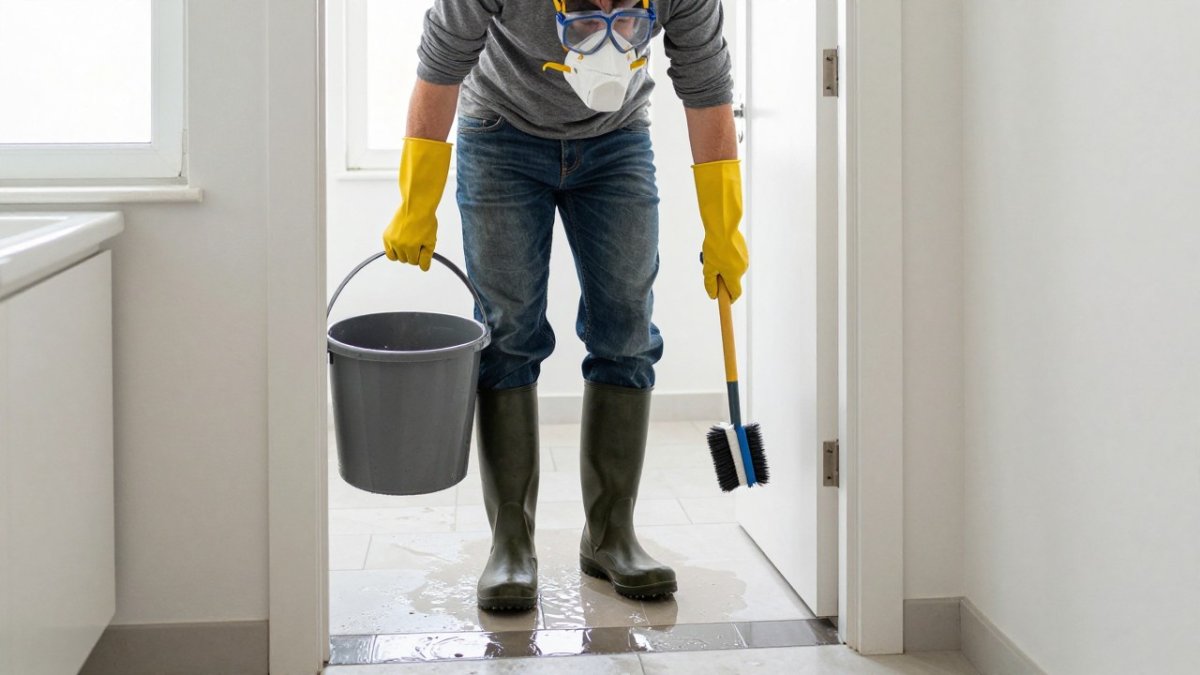
Change out of contaminated gear before you walk through the rest of the house. Cross-contamination is how a bathroom spill becomes a hallway problem.
Remove Standing Water and Wastewater From the Bathroom
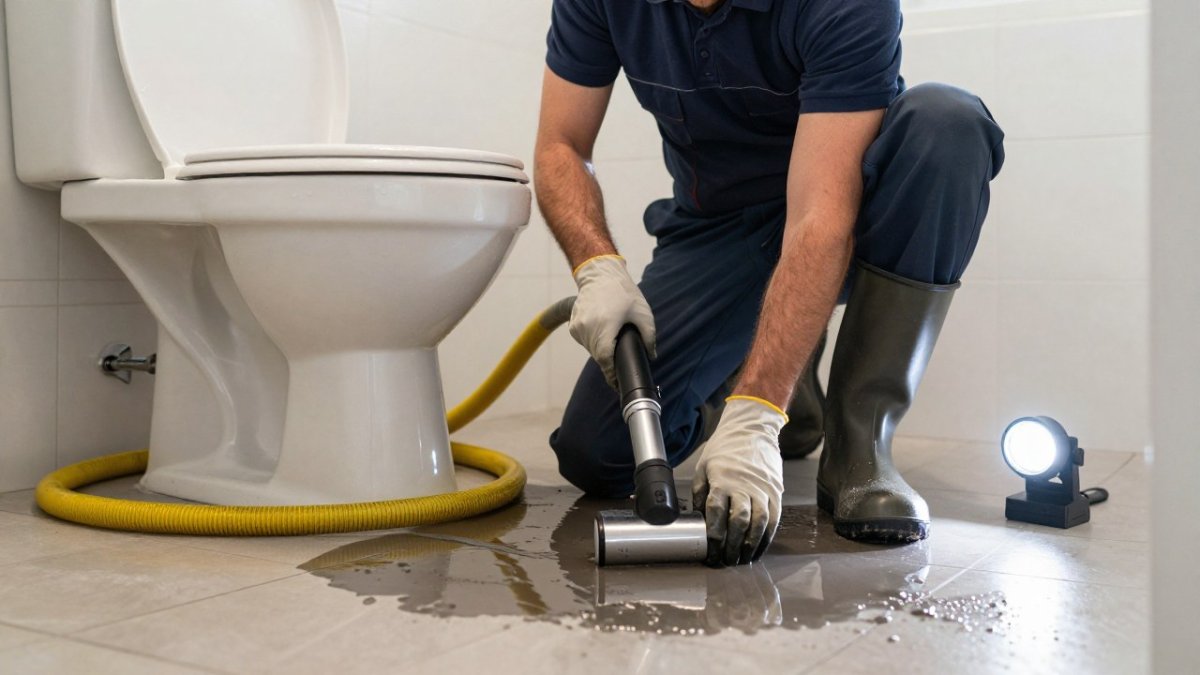
Get the standing water out before you scrub anything. A wet/dry shop vacuum can remove standing water from a bathroom backup.
Work from the far corner toward the drain. Bag solid waste separately in heavy garbage bags and tie them closed. Never use a household kitchen vacuum for this job.
Do not let wastewater sit overnight. Moisture can wick into grout, drywall, and baseboards within hours.
What to Throw Away After Sewage Backup (and What Can Be Saved)
What to throw away after sewage backup comes down to one rule: porous materials that touched wastewater cannot be saved. Bag and discard these:
- Carpets, rugs, and bath mats
- Drywall and baseboards that absorbed water
- Toilet paper, towels, and fabric shower curtains
- Particleboard cabinets and swollen trim
- Any food, medication, or toiletry that was exposed
Hard, non-porous items can usually be saved. Ceramic tile, glass, metal fixtures, and solid plastic can be washed and disinfected. When in doubt, discard the item.
Wash With Detergent First, Then Disinfect Hard Surfaces
Detergent comes before disinfectant, every time. Disinfectant cannot cut through soil, so a dirty surface stays contaminated no matter how much bleach you pour on it. The bathroom is where this rule is most often broken, because the fixtures, grout, and caulk hold soil in places a quick wipe will not reach.
Work through the bathroom in a fixed sequence so you do not re-contaminate a surface you already cleaned. A practical order is: toilet (tank, bowl exterior, base, and the floor around the flange), then tub and shower surround, then sink and vanity top, then walls and baseboards, then the floor from the farthest corner toward the drain, and finally the drain cover and nearby grout.
For each fixture, wash with hot water and a detergent made for hard surfaces, scrub grout lines and caulk seams with a stiff brush, and rinse with clean water before any disinfectant touches the surface. Pay attention to the underside of the toilet rim, the base of the toilet where it meets the floor, the shower door track, and the seam where the tub meets the wall.
Health Canada's guidance on safe household cleaning and disinfecting supports the same order: clean with detergent and water first, then disinfect, and follow the product label for dilution and contact time.
Mixing a Bleach Solution and Respecting Contact Time
Use a diluted chlorine bleach solution only after surfaces are clean and rinsed. Follow the dilution ratio printed on the bleach label, and never mix bleach with ammonia, acids, vinegar, or other cleaners. The reaction can produce toxic gas, and bathroom cleaners often contain acids or ammonia without saying so on the front of the bottle.
Contact time matters as much as dilution. Most disinfectants need the surface to stay visibly wet for the time stated on the label, which is often several minutes. Read the directions and wait. If the surface dries before the contact time is up, reapply.
Watch out: do not pour bleach into a toilet bowl that still has a bowl cleaner in it, and do not store a mixed bleach solution in an unlabeled container. Mix only what you will use in one session, and keep the bathroom ventilated while it works.
Hidden Contamination Beyond the Visible Surface
Surface cleaning alone may not be enough. Sewage wicks beneath flooring, behind baseboards, into the wall cavity around the toilet flange, and into the caulk and grout pores. If the backup reached the subfloor or the drywall, the visible surface can look clean while the material behind it stays wet and contaminated. Probe the base of the wall and the floor around the toilet with a gloved hand; if it is soft, swollen, or still damp after cleaning, that material likely needs to be removed rather than disinfected.
Sewage Backup Cleanup Drying Time and Hidden Moisture
Drying time varies with airflow and conditions. Anything still damp after a day or two may need a dehumidifier or a professional moisture check.
Hidden moisture is the part most people miss. Water sits behind the toilet base, under the vanity, and inside wall cavities. Mold growth begins in damp, dark spaces long before you smell it. Run fans, keep windows open, and check grout lines and caulking by hand.
DIY or Call a Professional? Deciding for Your North York Bathroom
A useful decision rule helps you judge when to call a professional. Use these criteria instead, and stop cleaning the moment any of them applies.
Source of the backup. A backup from a fixture, such as an overflowing toilet with clear water, is a different problem from a backup from the sewer line.
Extent and affected materials. A small spill contained to tile and a solid-surface floor is reasonable to handle yourself.
Electrical and safety risk. If water reached outlets, a fixture cord, or the panel area, or if the ceiling below the bathroom is sagging, stop and call for help. Do not enter a room where water and electricity may still be in contact.
Health and exposure. If anyone in the home is pregnant, immunocompromised, very young, or elderly, or if anyone has an open wound or develops gastrointestinal symptoms after exposure, err toward professional remediation and seek medical advice.
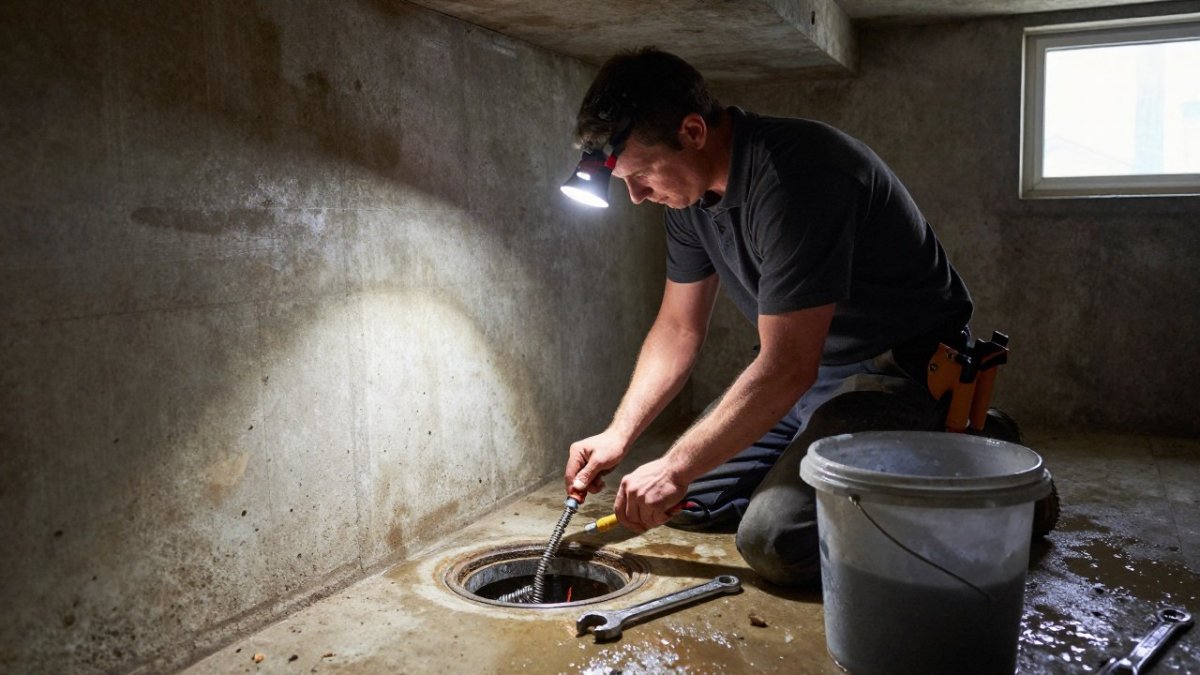
Recurrence. If the backup keeps returning, the cause is usually a blockage deeper in the line. A sewer line camera inspection shows whether the problem is roots, grease, or a collapsed pipe, and clearing the blockage is what stops the next backup.
For a small, contained spill from a fixture, DIY is reasonable. If you want to understand what a pro call involves, read our guide on what to expect from emergency plumbing services. When you are ready to hire, our article on how to find reliable emergency plumbers covers the questions to ask, including whether the contractor handles both the plumbing cause and the contaminated-material removal.
Book a Certified Sewage Backup Assessment
A sewage backup that keeps coming back is a drain problem, not a cleaning problem. UMark Plumbing and Drain Inc. offers 24/7 emergency service, and our certified team serves North York and Vaughan.
We clear the blockage and check the line. If you are searching for a plumber near me in North York, book a sewage backup assessment with our local team and request a free quote.
Sewage in your bathroom is stressful, and the cleanup order matters more than the effort. If the backup came from the sewer line or the water keeps rising, call us. We answer around the clock, give you an estimate before we start, and fix the cause, not just the mess. Get started with UMark Plumbing and Drain Inc. and get your bathroom back to normal.
Frequently Asked Questions
Can you use bleach to sanitize a bathroom after a sewage backup?
Bleach can disinfect hard surfaces, but only after you remove soil and wash with detergent and warm water. Chlorine bleach loses strength on dirty surfaces, so skipping the wash step wastes the disinfectant. Follow the product label for dilution and contact time, keep the area ventilated, and never mix bleach with ammonia or other cleaners. Porous items such as drywall, carpet and baseboards should be discarded rather than bleached.
How long does it take for a bathroom to dry after sewage cleanup?
Drying time depends on airflow, humidity, and the materials involved. Check for moisture with a meter before you replace baseboards or repaint. Any wall cavity or subfloor that stays damp past 72 hours is a mold risk and warrants a professional assessment.
What protective equipment should you wear when cleaning sewage?
Wear rubber gloves, rubber boots, eye protection and an N95 respirator, plus protective clothing you can wash or discard. Cover any cuts with waterproof bandages before you start. Wash hands with soap and warm water after removing gear, and keep children and pets out of the bathroom until the area is fully dry and disinfected.
When should you call a professional for sewage backup cleanup?
Call a certified plumber or remediation team if the backup covers more than a small area, has soaked into drywall, carpet or subfloor, or keeps returning after you clear the drain. Recurring backups usually point to a blockage or a problem in the main sewer line that surface cleaning cannot fix.