 How-to
Kitchen Drains Keep Clogging: Causes, Fixes, and Prevention
Last Updated: November 9, 2026
Quick Summary
Kitchen drains keep clogging because grease, food particles, and soap scum build up on the pipe walls over time, narrowing the pipe until water stops flowing. Grease is the leading culprit: it goes down warm and liquid, then cools and hardens into a sticky coating that traps food. Coffee grounds, rice, pasta, and potato peelings pack down and add to the blockage.
- Hot water alone does not dissolve grease; it can push it further down the pipe.
- A gurgling sink or slow drainage after clearing the P-trap points to a deeper blockage.
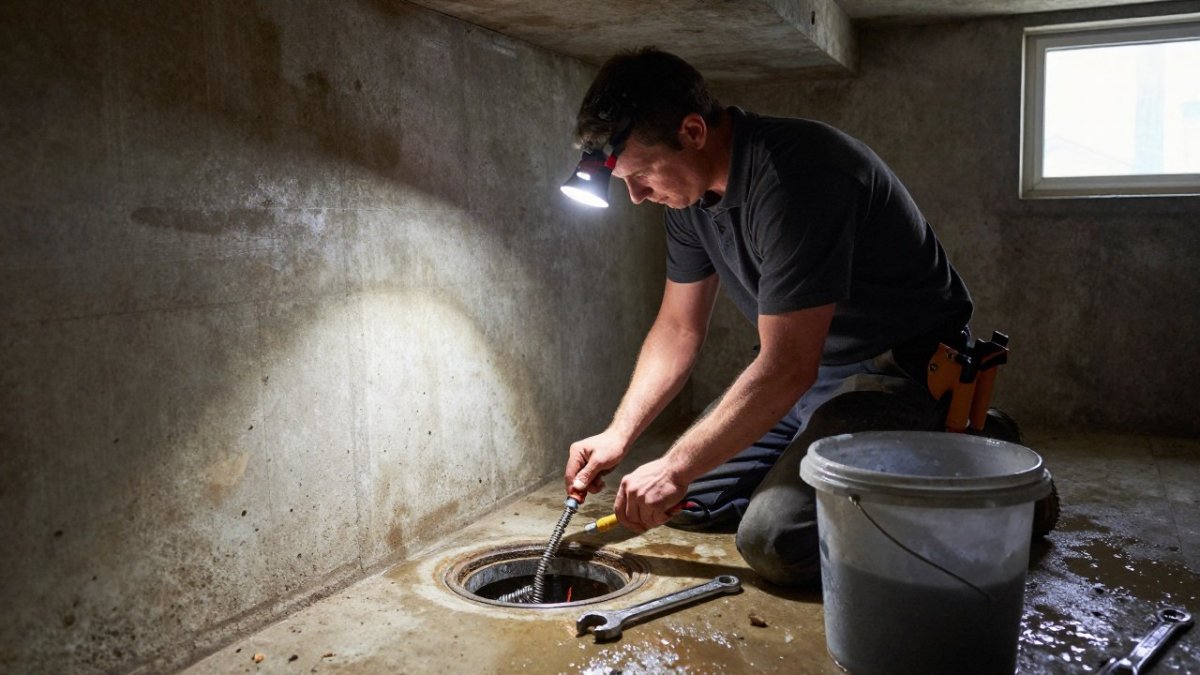
- Water rising in a basement floor drain signals a main sewer line restriction.
- Flush the drain weekly with hot water and a baking soda and vinegar rinse.
- Call a plumber when water backs up into other fixtures or you smell sewage.
Table of Contents
- Why Your Kitchen Drains Keep Clogging: The Real Causes
- Signs of a Deeper Pipe Blockage (And Why the Trap Isn't Always the Problem)
- How to Unclog a Kitchen Sink: Step-by-Step Methods That Work
- Kitchen Sink Draining Slowly After Cleaning the Trap? Here's Why
- How to Prevent Kitchen Sink Clogs: A Maintenance Schedule That Sticks
- When to Call a Plumber for a Clogged Kitchen Sink
- Eco-Friendly Disposal Alternatives That Keep Grease Out of Your Pipes
- Book a Drain Inspection Before the Next Backup
- Frequently Asked Questions
Why Your Kitchen Drains Keep Clogging: The Real Causes
If you keep asking yourself why do my kitchen drains keep clogging, the answer usually sits in the sink strainer. Kitchen drains clog because grease, food particles, and soap scum build up on the pipe walls over time.
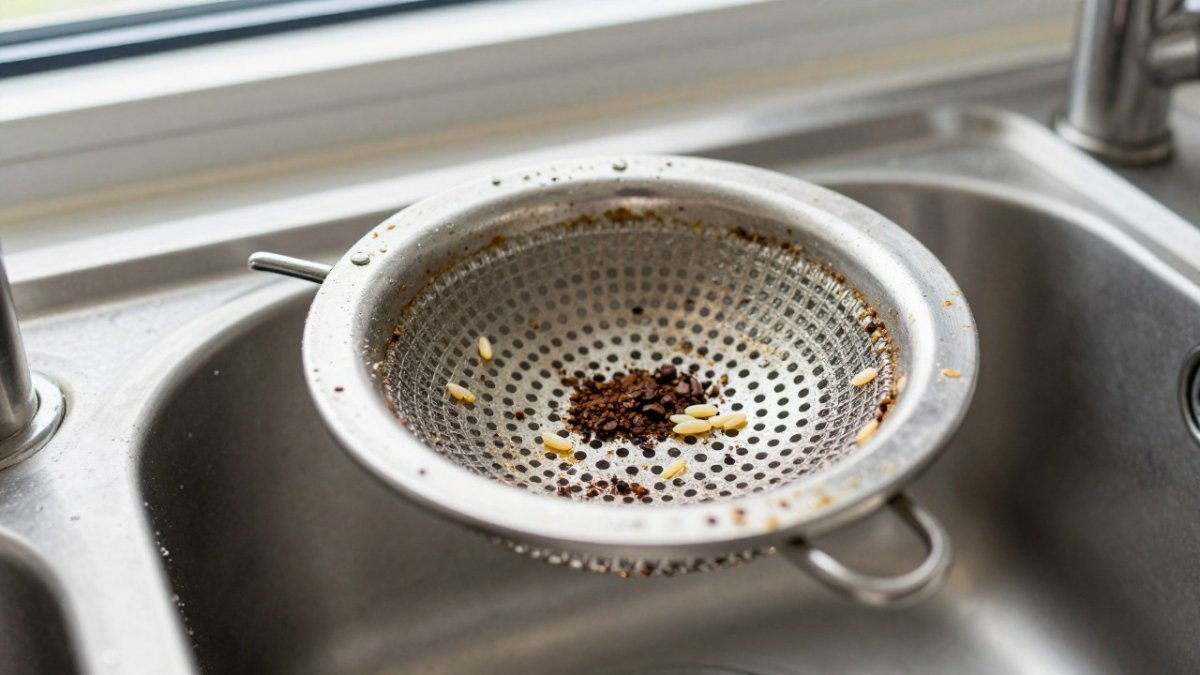
The pipe doesn't block overnight. Layers stick, narrow the pipe, and slow the water flow. Then one day the sink stops draining at all.
Grease, Fats, and Oils (FOG): The Leading Culprit
Grease is the number one cause. FOG (fats, oils, and grease) goes down warm and liquid. Then it cools inside the drain pipe and hardens into a sticky coating. That coating traps every food particle that follows.
Common FOG sources you may be pouring out without thinking:
- Cooking oil and bacon fat
- Butter and margarine
- Pan drippings and gravy
Watch out: hot water alone does not dissolve grease. It can push the grease further down the pipe, where it may cool and set.
Food Waste, Coffee Grounds, and Starchy Foods
Food waste is the second big cause. Coffee grounds look harmless, but they settle and pack down like silt. Starchy foods such as rice, pasta, and potato peelings swell with water and turn into a paste that grips the pipe walls.
Fibrous scraps make it worse. Celery strings, onion skins, and eggshells catch on existing buildup and start a full blockage.
Signs of a Deeper Pipe Blockage (And Why the Trap Isn't Always the Problem)
A gurgling sink or slow drainage after clearing the P-trap points to a blockage deeper in the line. But "deeper" can mean three very different things: the horizontal run past the trap, the vertical stack, or the main sewer line under the floor.
The P-trap is the curved pipe under the sink. It catches most debris, which is why it's the first place to check.
Sink-Level Clog vs. Main-Line Blockage: A Visual Diagnostic
| What you see or hear | What it usually means | What to do |
|---|---|---|
| Water drains slowly from one sink only | Clog in the P-trap or the horizontal run just past it | Remove and clean the trap; snake the horizontal run |
| Water backs up in two fixtures at once (e.g., kitchen sink and dishwasher) | Restriction in the shared branch line | Snake the branch or call a plumber |
| Gurgling from a floor drain or tub when the kitchen sink drains | Venting issue or partial main-line blockage | Check the vent stack; camera inspection if it recurs |
| Water rises in the basement floor drain when you run the kitchen sink | Main sewer line restriction downstream of the kitchen branch | Stop using water; call a plumber for a camera inspection |
| Sewage smell that lingers after cleaning | Dry P-trap, blocked vent, or main-line backup | Re-prime the trap; if smell persists, inspect the vent and main line |
| Repeat clogs in the same spot within weeks | Pipe scale, bellies, or root intrusion | Camera inspection to see the pipe interior |
The Mechanism Behind Each Sign
A single slow sink is almost always a local clog.
When two fixtures on the same branch back up together, the clog has moved past the point where their drains meet. A blockage there affects both.
Gurgling is a venting symptom. Every drain needs air behind the water to flow freely.
Water rising in a basement floor drain is the clearest sign of a main-line problem.
When the Trap Is Clean but the Sink Still Drains Slowly
If you've removed the P-trap, cleared it by hand, and reinstalled it, and the sink still drains slowly, the restriction is in the horizontal run between the trap and the stack.
Multiple slow fixtures usually mean a restriction in the main sewer line. That is not a DIY job.
Watch out: if you see water rising in a floor drain or smell sewage in the basement, stop using water immediately.
How to Unclog a Kitchen Sink: Step-by-Step Methods That Work
Start with the gentlest method and work up. Most blockages clear with a plunger or a drain snake before you need anything stronger.
- Boil a pot of water. Pour it slowly down the drain in stages. This melts light grease.
- Try baking soda and vinegar. Pour half a cup of baking soda in, then one cup of vinegar. Cover the drain for 15 minutes, then flush with hot water.
- Use a plunger. Seal the overflow hole with a wet cloth. Plunge firmly five to ten times.
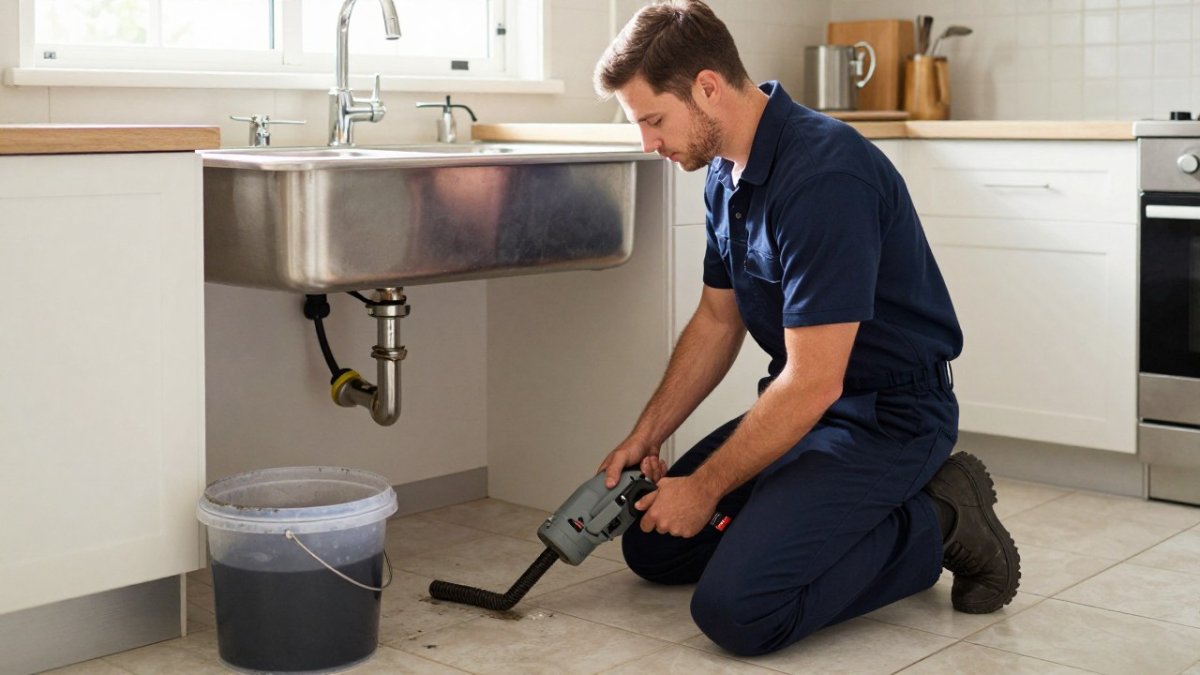
- Run a drain snake. Feed a plumbing snake into the drain and crank through the trap. Pull out the debris.
- Remove and clean the P-trap. Place a bucket underneath first. Unscrew the slip nuts and clear the trap by hand.
Watch out: chemical drain cleaners can damage older pipes and rarely clear a full blockage. If you prefer a chemical-free route, our guide on how to clear a clogged drain naturally walks through each method in detail.
Kitchen Sink Draining Slowly After Cleaning the Trap? Here's Why
If your kitchen sink is draining slowly after cleaning the trap, the blockage is further down the drain pipe. A clean trap only removes what collects at the low point.
The usual suspects after a trap cleaning:
- Grease coating the horizontal pipe run
- Debris packed past the trap
- Pipe corrosion narrowing the inside wall
Soap scum adds to this. It binds with grease and food particles and hardens into a film that water can't push past. Left alone, that film becomes a solid plug.
How to Prevent Kitchen Sink Clogs: A Maintenance Schedule That Sticks
Prevention beats repair every time, but most advice stops at "don't pour grease down the drain." A schedule that actually sticks has to account for how you live, whether you're in a detached home in North York or a condo tower in Vaughan, whether you cook with a lot of oil, and whether your building shares a stack with neighbors.
Here is a maintenance schedule built around the mechanisms that cause clogs, not just the symptoms.
| Frequency | Task | Why It Works |
|---|---|---|
| Every day | Scrape plates into the green bin and wipe pans with a paper towel before washing | Removes FOG and food solids before they ever reach the strainer |
| Every week | Flush the drain with a full kettle of hot (not boiling) water, then follow with a baking soda and vinegar rinse | Hot water melts light grease film; the fizzing action lifts debris from the pipe wall |
| Every two weeks | Pull the strainer and scrub it with a brush and dish soap | Strainers trap coffee grounds and rice that pack down and restrict flow |
| Every month | Remove and clean the P-trap (bucket underneath, unscrew slip nuts, clear by hand) | Catches debris that settles at the low point before it hardens |
| Every season | Run hot water through every drain in the home for two minutes | Keeps the whole system clear, not just the kitchen sink |
| Every fall | Book a camera inspection if you've had two or more clogs in the past year | Identifies pipe scale, bellies, or root intrusion before a backup |
Why This Schedule Works in North York and Vaughan
Two local factors make kitchen drains clog faster here than in many other parts of Canada. First, the Greater Toronto Area sits on some of the hardest water in the province. Hard water leaves calcium and magnesium deposits on the inside of pipes, and grease sticks to that mineral scale far more readily than to clean pipe walls.
Second, many North York and Vaughan homes were built between the 1950s and 1980s, when cast-iron and early ABS drain lines were standard. Cast iron corrodes from the inside out, creating a rough surface that catches every coffee ground and bit of rice.
A Note for Condo and Apartment Dwellers
If you live in a multi-unit building, your kitchen drain connects to a shared stack. A clog in your unit can back up into a neighbor's sink, and vice versa.
Watch out: boiling water can soften PVC or older ABS joints over time.
For a fuller set of habits, see our seven tips on how to prevent recurring drain clogs. Small changes add up fast.
When to Call a Plumber for a Clogged Kitchen Sink
Call a plumber when water backs up into other fixtures, when you smell sewage, or when repeat clogs return within weeks. Those point to a main sewer line problem or a pipe defect, not a simple trap clog.
Signs it's time to call:
- Multiple drains draining slowly at once
- Sewage smell in the kitchen or basement
- Water rising in a floor drain
Before you book, it helps to understand the difference between hydro jetting vs snaking so you know what the job involves. For local costs and methods, see our guide to drain cleaning near me.
Eco-Friendly Disposal Alternatives That Keep Grease Out of Your Pipes
Keeping grease out of the drain protects your pipes and the local water system.
Try these habits:
- Pour cooled grease into a jar, then bin it
- Scrape plates into the green bin before washing
- Compost vegetable scraps and coffee grounds
These steps cut grease buildup and reduce the load on your plumbing system. They also help you avoid burst pipes and costly repairs down the road.
Book a Drain Inspection Before the Next Backup
A slow drain is a warning, not a small annoyance.
At UMark Plumbing and Drain Inc., we have over 20 years of experience and offer 24/7 emergency plumbing service. For current pricing or a quote, visit our website.
If you're weighing the cost, our article on whether a professional sewer line camera inspection is worth it explains what the camera finds and why it matters.
Stop guessing why your kitchen drains keep clogging.
Frequently Asked Questions
Why does my kitchen sink keep clogging even when I'm careful?
Small amounts of grease, soap scum, and food particles coat the inside of the drain pipe over time, narrowing the passage until water slows and backs up. Even if you avoid pouring oil down the sink, cooking residue on plates and pans adds up. A strainer catches solids, but FOG still slips through. If clogs return within weeks of clearing, the buildup is likely deeper than the P-trap and needs a drain snake or hydro-jetting to clear properly.
Can grease really cause recurring kitchen sink clogs?
Yes. Grease, fats, and oils (FOG) pour down as liquids but solidify as they cool inside the drain pipe. Once stuck to the pipe walls, they trap food particles and coffee grounds, forming a sticky blockage that water cannot push through. Hot water only moves the problem further down the line. Wiping pans with a paper towel and disposing of grease in a container is the single most effective way to prevent kitchen sink clogs from returning.
Is it safe to use chemical drain cleaner in a kitchen sink?
Chemical drain cleaners can damage older pipes, and they rarely clear a full blockage, they just open a channel through it. Repeated use can corrode pipe joints and harm the seals in your P-trap. For a kitchen sink, a plunger, a drain snake, or a baking soda and vinegar flush is safer. If the clog keeps coming back, a certified plumber can inspect the pipe and clear it without risking damage.
When should I call a plumber for a clogged kitchen sink?
Call a plumber when the clog returns within a few weeks, when multiple fixtures drain slowly at once, when you hear gurgling from other drains, or when a plunger and snake do not clear the blockage. These point to a restriction in the main sewer line or a venting issue rather than a simple trap clog. A professional inspection finds the actual cause so the same problem does not come back.